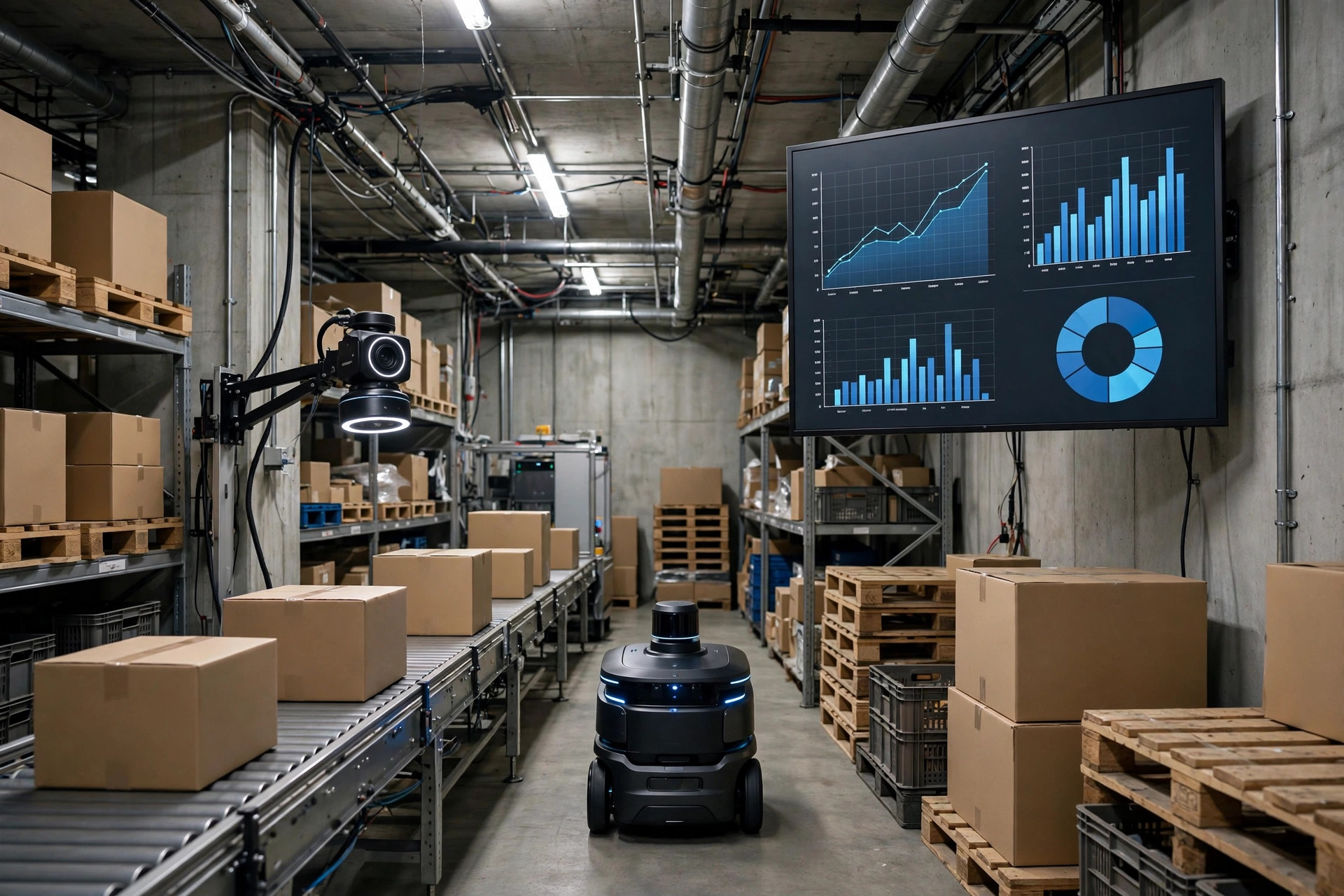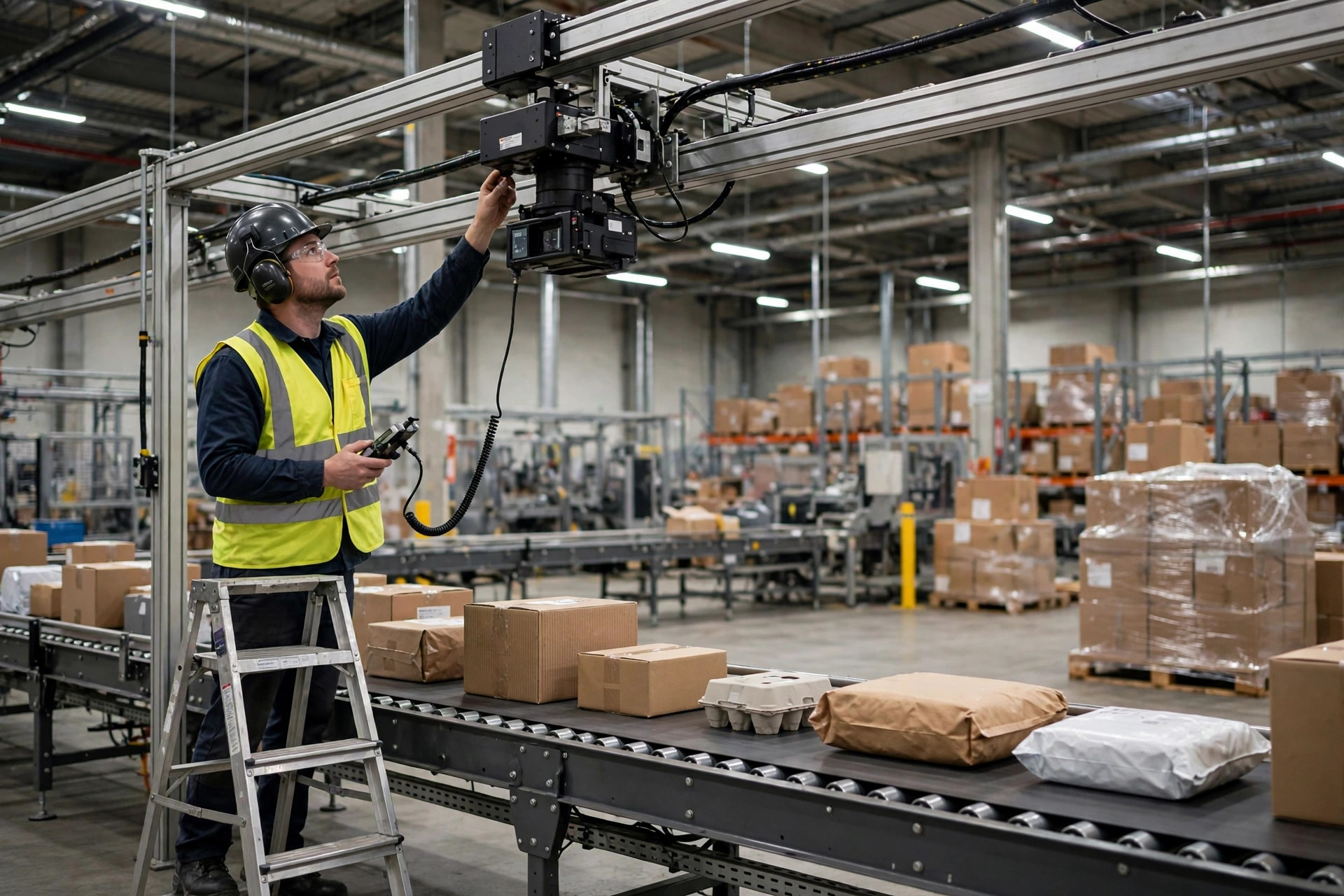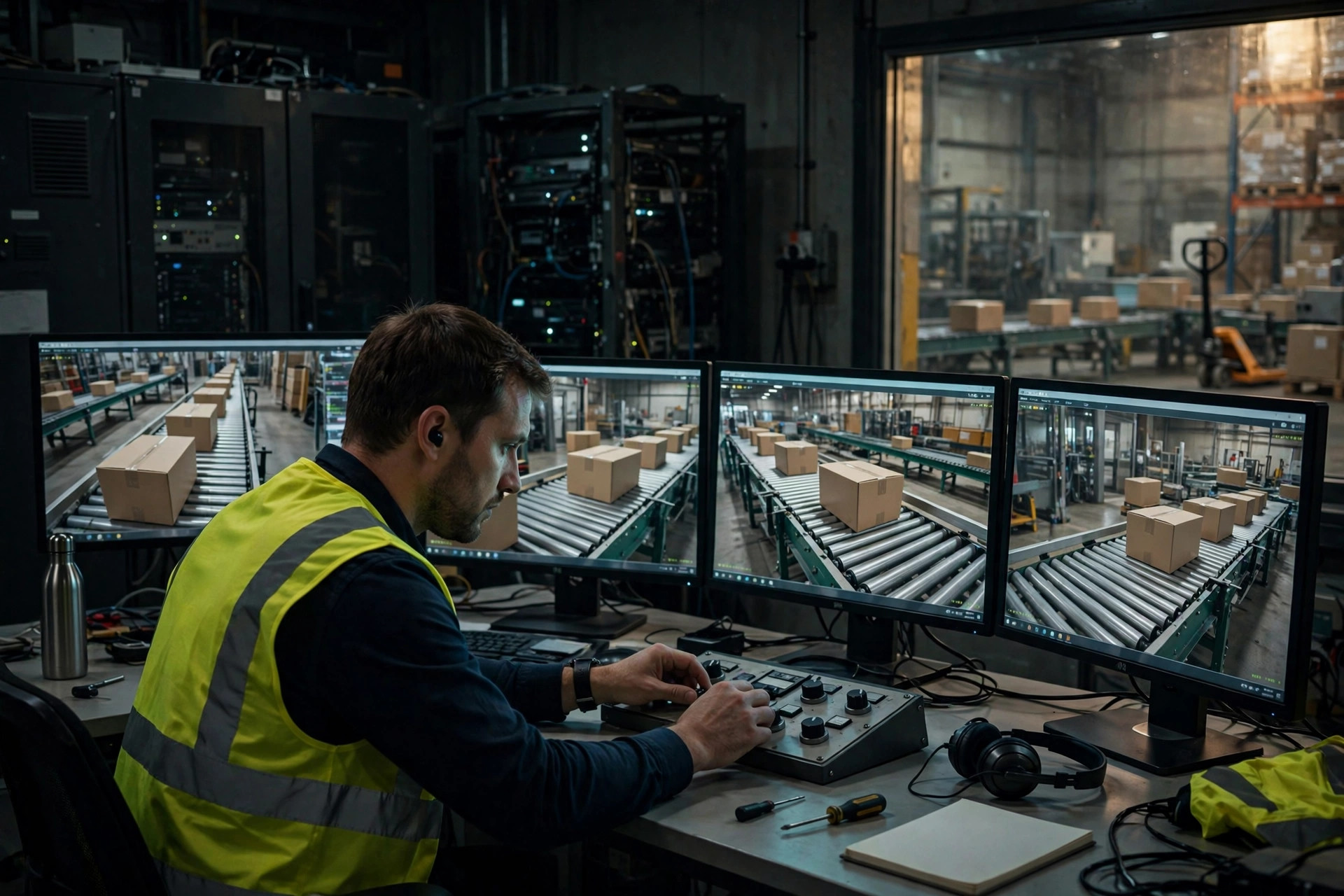
In the fall of 2022, a friend of mine who runs an auto parts distribution warehouse in Fontana called me, excited. They had just deployed AI vision inspection at receiving: industrial cameras over the inbound lane, catching missing parts, wrong labels, and damaged cartons automatically, way faster than manual checks. I congratulated him, but something nagged at me — the company behind the system was a startup that had just closed its Series A.
A year later, that startup went under. Cloud services shut down, model updates stopped, and worst of all, the inspection system was tied to the vendor's cloud API. When the service died, the entire inspection line went dark overnight. My friend spent more than three months re-bidding and re-deploying. Peak season came and went. What he lost, he told me later, wasn't the cost of the system — it was three months of manual rework during peak and the customers who walked away.
Since then, I've added one mandatory question for every client considering AI: what happens if your vendor disappears? This isn't about being negative. Buying AI is not like buying equipment. When you buy a conveyor, it's yours. With an AI system, the models, the data, and the source code belong to the vendor by default. While the vendor is alive, everything is fine. When it's gone, you can't even open the system.
A Contract Without Exit Clauses Is No Contract at All
Most AI vendor contracts have exactly one line about exit: "Services will cease within 30 days of termination." That might as well be blank. Four things actually need to be in there.
First, source code escrow. The source code, model weights, and deployment documentation go to a neutral third-party escrow agent, with release triggers spelled out: vendor bankruptcy, maintenance lapses beyond an agreed number of days, product line discontinued after an acquisition. Any one of those fires, and the escrow releases to you. Without this, on the day your vendor folds, you can't even see what the system looks like inside.
Second, data return. Format, timeline, and completeness all need to be specified: in what format do the raw and labeled datasets come back (not some proprietary format you can't open), how many days after termination, and the vendor must delete its copies afterward. Skip this clause and your operational data is a free gift.
Third, model weight ownership. A model trained on your data — who owns the weights? Many contracts default to the vendor, or use weasel words like "jointly owned." Push for clean language: models and derivative weights trained on the customer's data belong to the customer. If the vendor won't agree, get at minimum a perpetual, irrevocable license that survives termination.
Fourth, transition support. After termination, the vendor provides several months of read-only operational support, or grants the right to self-host. Migration doesn't happen overnight. Without a transition window, the old system is dead before the new one is live, and nobody covers the gap in between.
Salespeople will tell you during signing that they're a big company, that they just raised money, that they'll never go under. Don't believe it. Plenty of well-funded AI startups have died in the last few years, and plenty more were acquired only to have their product lines killed. The outcome for you is the same: nobody maintains your system.

The Only Thing Truly Yours Is the Data
Step back: even with a perfect contract, if the vendor is truly gone, what keeps your operation running? The data. Models can be replaced, vendors can be replaced. What can't be replaced is the labeled data and business rules you've accumulated over the years.
Labeled data is your core asset. Defect samples from vision inspection, correction logs from voice picking, historical orders feeding demand forecasting — the vendor built these on your business, and the contract must say they belong to you. With data in hand, retraining with a new vendor takes months. Without it, you're starting from zero, and that takes years. During peak season, that gap is the difference between surviving and not.
Business rules are just as valuable. The thresholds, exception-handling logic, and process-specific rules baked into the AI system — which product categories get which inspection standards, for example — should be exported as documentation on a regular schedule, not left sitting in the vendor's system. The worst case I've seen wasn't a lost model; it was three years of inspection standards living entirely in the vendor's configuration database. When the vendor left, the standards left with it, and the replacement vendor had to relearn everything.
So can open-source models take over? My take: it depends on the use case. Mature scenarios like visual inspection and OCR have plenty of open-source options, and the migration cost is mostly re-labeling and re-integration — a couple of in-house ML engineers can handle it. But deeply coupled use cases like scheduling optimization or demand forecasting, where the business logic is tangled with your warehouse systems, are a different story. Switching vendors there means rebuilding half the project. Ask this during selection: if this vendor disappeared, could I take over at a reasonable cost? If the answer is no, either don't deploy it, or price the exit cost into the total cost of ownership.
Run an Exit Drill Every Year — For Real
Clauses written, data secured, one step left: practice. Nobody thinks a fire drill is a curse, and an exit drill is the same thing. Once a year, simple exercise: assume the vendor vanishes tomorrow, and spend a few days verifying three things — can the data be exported completely, can the models run in your own environment, and do critical business processes have a manual fallback that doesn't depend on the vendor?
The first drill almost always fails: exported data is missing fields, the model depends on the vendor's proprietary libraries, some critical report only exists in the vendor's portal. Failure is good news — it means the plan has holes, and you can fix them while the vendor is still around. Trying to fix them after the vendor is gone is too late.
It doesn't need to be elaborate. Your IT lead runs it, operations participates, once a year, half a day to a full day. Cheap insurance, and the only proof that the plan isn't just paper. One side benefit: keep the drill report on file. Next time you renew, it's leverage — when the vendor knows you can walk away, price increases get a lot more modest.
So, back to the original question: is AI worth it? Yes — but only if you have a way out. During vendor selection, don't just marvel at the demo. Ask one more question: if your company isn't around next year, what happens to my system? The answer tells you whether this vendor deserves your signature.
Three things you can do tomorrow: first, add a source code escrow clause with release triggers to any AI contract you're negotiating; second, for systems already live, request a full data export and verify it's actually usable; third, put a yearly exit drill on the calendar, with the first one next month. Don't wait — when that day comes, nobody sends you a warning.