The Conclusion Up Front: AI Project Failure Is an Org Problem, Not a Tech Problem
In three years across seven warehouse AI projects — vision verification, demand forecasting, AGV dispatch — not one died on technical grounds. Six died on organizational grounds: the CEO signed off but the floor wouldn't use it, nobody owned the data, KPIs fought each other, training was a checkbox, and a pilot couldn't scale.
So this article isn't about technology. Five pitfalls, each with a story I've lived through and a checklist you can copy verbatim. When an AI project fails, audit the organization before you audit the technology.
Pitfall 1: The CEO Mandate Nobody on the Floor Follows
I've seen this one three times.
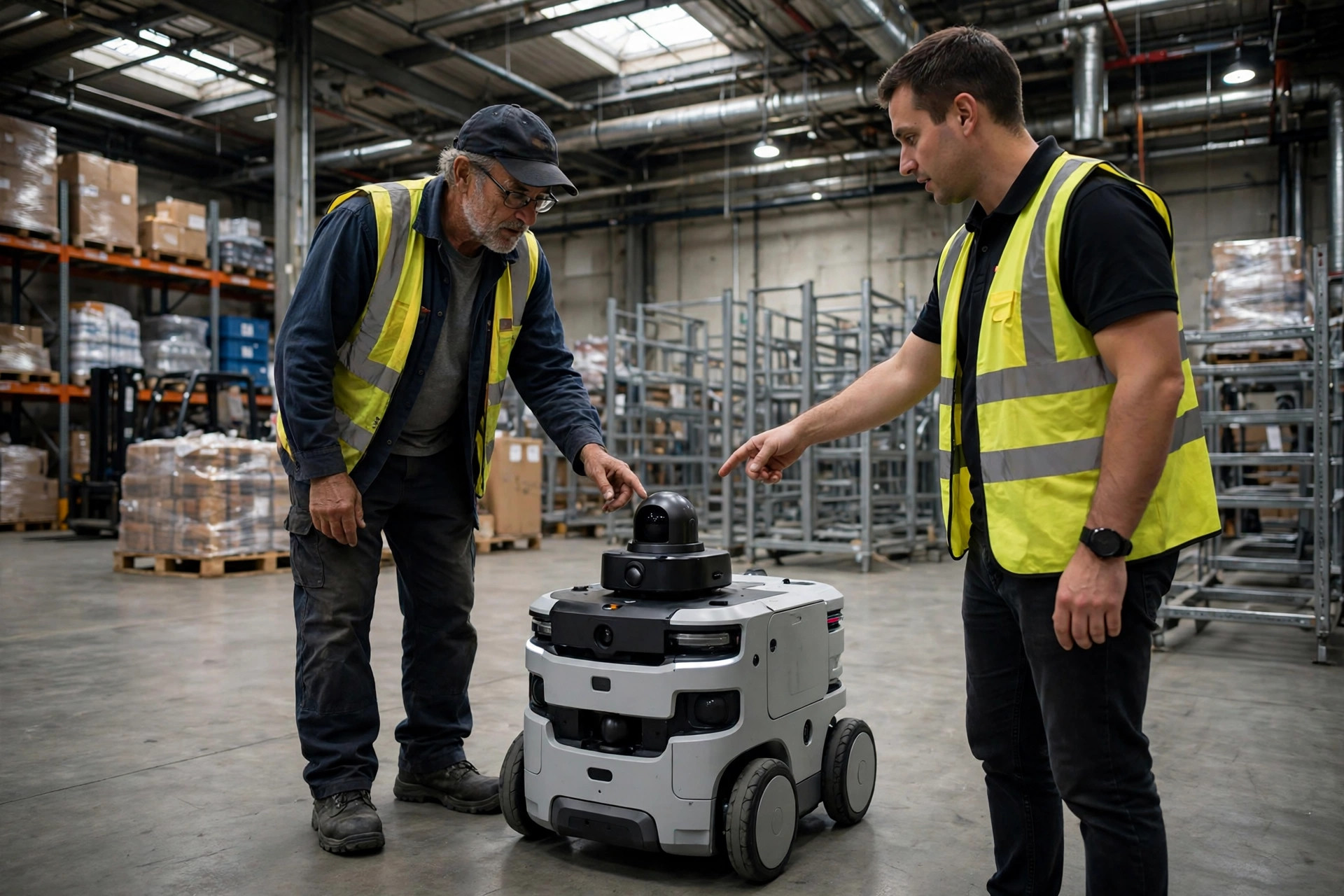
Fall 2024. An apparel 3PL. The CEO saw a vision-verification demo at a summit and signed on the spot: 40+ cameras across 28 packing stations. Week one: 11% of orders flagged. Week three: operators covered cameras with cardboard — every flag meant a 2-minute re-check, roughly an unpaid extra hour per person daily at peak.
Over half the cameras were covered before we caught it. The CEO said "make them use it"; supervisors said "you come do it." Two weeks of stalemate — project dead.
Here's exactly how we brought it back:
- Convert the extra 2 minutes into money. A mis-shipped order costs $5–7 to fix (return shipping, service, reshipment); the 2-minute re-check costs under $0.30 in wages. We posted that comparison at every station.
- Change the pay, not the people. Operators were on piece rate. We added verification compliance to the formula: high-compliance crews got an 8% bump per piece. The cardboard vanished the next day.
- Put the floor on the go-live checklist. Before relaunch, three veterans ran 200 orders by hand, tagging every false positive. The rate fell from 11% to under 4% — then they signed off.
Prevention checklist: Before go-live, answer three — ① does it cost the floor time or save it? ② If it costs time, is that compensated in dollars? ③ Has the floor touched it pre-launch? One unanswered — don't go live.
Pitfall 2: Data Nobody Owns, Models Fed Garbage
Early 2025. A food distributor wanted forecasting AI to cut out-of-stocks from 6% to under 3%. The data looked complete: three years of sales, a promo calendar, inventory transactions.
Two months in, the model stalled. The audit: four months of 2023 sales manually backfilled, the promo calendar missing regional deals (they lived in the sales manager's chat app), 12% of adjustments with no reason codes.
Worse — nobody owned the data. IT blamed the business, the business blamed the system, the CEO blamed us. Six weeks of finger-pointing, then pause. Of all AI project failure causes, orphaned data is the most expensive — it always surfaces mid-project, after most of the budget is spent.
Now every contract I write includes a data-owner clause:
- Go-live checklist item one: name the data owner. Not the IT department — one specific person in the business, name in the project document, with a KPI line: core field completeness ≥ 98%.
- Audit first, model second. Week one is auditing only: sample three months, check every field for missing rates and consistency. Fields over 15% missing get backfilled or cut.
- Budget cleansing as its own line item. Rule of thumb: cleansing is 30–40% of total AI project effort. If it's not a separate line in the quote, you'll argue about it later.
Pitfall 3: Conflicting KPIs Send AI Recommendations to the Trash
The sneakiest pitfall — everything looks fine on the surface.
- An auto-parts 3PL deployed AI replenishment: daily 8 AM recommendations, 82% test accuracy. One month later, adoption was 23% — the lead said quantities "didn't match my experience."
The lead was measured on out-of-stock rate; purchasing on inventory turns. The AI recommended higher safety stock — out-of-stocks fell, turns took the hit. Caught in the middle, the lead ignored most recommendations. KPIs measure outcomes, not "did you listen to the AI."
I've seen this three times, same script: AI optimizes for the global goal, but every person's KPI is a local goal. What's globally optimal looks like sabotage locally.
The only fix: align KPIs before go-live.
- Draw a KPI conflict map. List every role the AI touches; mark whether each recommendation helps or hurts its KPI. Conflicts become obvious immediately.
- Give "AI adoption rate" a formal name. Add it to the lead's quarterly review: adoption ≥ 70%, reasoned rejections excluded, 10% weight. Enough to put "listening to the AI" in review language.
- Set a 30-day protection period. For the first month, KPI swings caused by AI recommendations don't count. Without it, the floor switches the system off on day one.
Pitfall 4: Checkbox Training Makes the System a Decoration
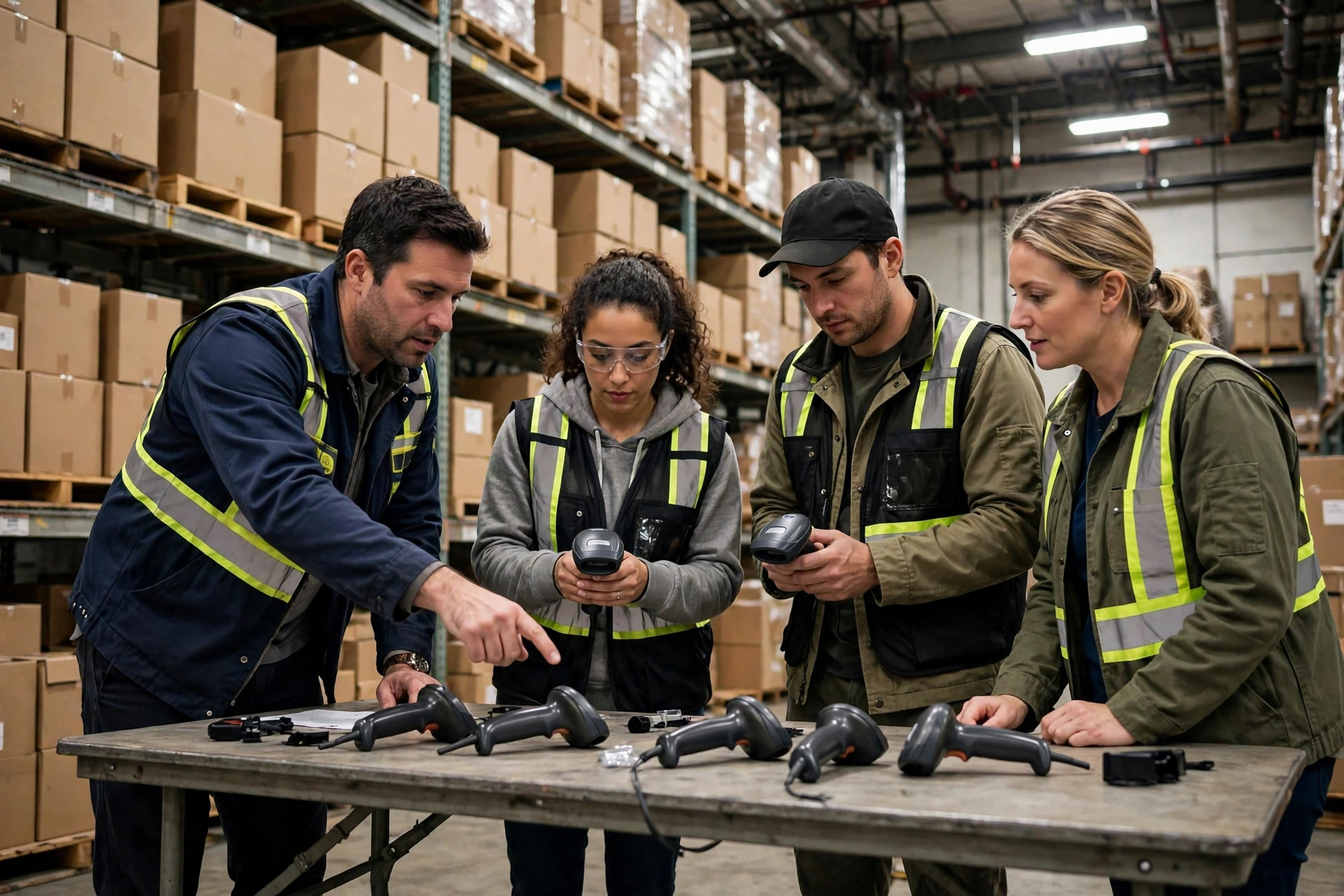
Typical AI training: the afternoon before go-live, two hours of vendor slides, the floor on their phones, attendance sheet signed. Done. Then nothing.
Summer 2025. A beauty e-commerce warehouse deployed AI wave planning, targeting 15% less picker travel. Two weeks in: down 3%. Pickers ignored the system waves and batched by gut feel — "training went too fast." They'd never clicked "one-click wave build": afraid of clicking wrong and getting blamed.
Not a people problem; a training-design problem. My standard now:
- No slides — hands on keyboards. Go-live rule: every operator completes 20 full orders hands-on. More than 3 errors, no clearance. Attendance sheets are void; practical exams count.
- Publish a "safe to misclick" policy. First two weeks are a trial period: misclicks won't be punished, the project team is on site. Fear blocks harder than laziness.
- Keep one "translator" per shift. One respected veteran per crew learns first, then teaches the rest. The floor asks colleagues questions they'd never ask a vendor.
Pitfall 5: The Pilot Succeeds, Then Nothing Scales
Dodge the first four and this one is still waiting.
Late 2024. A supermarket chain's regional DC ran a beautiful forecasting pilot: out-of-stocks 5.2% → 2.8%, standing ovation at the group conference, CEO ordered rollout to all 12 DCs. A year later, 2 were live.
The pilot manager was on loan and left. The pilot DC's data was hand-cleaned for three months; nobody cleaned the rest. Each DC had different mixes and rhythms — parameters needed retuning, nobody scheduled it. And the big one: the team was disbanded. A "pilot project" has no headcount, no budget, no owner.
Counterintuitive call: a successful pilot is sometimes where AI project failure begins — management assumes "the model is proven" and underestimates replication's organizational cost. Copying tech is Ctrl+C; copying an org is founding a startup again.
- Write the replication plan when you charter the pilot. DC #1 pilots, DCs #2–3 start when, who's responsible, what's the budget — all in the charter. A pilot without a replication plan is a demo.
- Convert the pilot team into a permanent team. Keep the core 2–3 people as a rollout team with dedicated headcount and budget. Twelve DCs at 6–8 weeks each is a year of work.
- Document the "one DC, one tuning" playbook. Which parameters are universal, which must be retuned per DC, the standard retuning procedure. Without it, every new DC re-learns the same lessons.
The Five-Pitfall Self-Check: Go-Live Night Checklist
One table. Print it, check every box on go-live night. Any box unchecked — don't go live:
| # | Pitfall | Self-check question | Pass standard |
|---|---|---|---|
| 1 | Floor won't use it | Does the system cost the floor time or save it? | Extra time compensated in dollars; floor tested it by hand |
| 2 | Orphaned data | Who is the data owner — name in the document? | Named person, KPI-linked, audit before modeling |
| 3 | Conflicting KPIs | Do the AI-touched roles' KPIs conflict? | Conflict map drawn, adoption in reviews, 30-day protection |
| 4 | Checkbox training | How many orders has each operator run hands-on? | ≥20 orders; 3+ errors means no clearance |
| 5 | Can't replicate | Replication plan, team, budget, playbook — all four? | Charter has a replication chapter; rollout team staffed |
One Last Thing on AI Project Failure
When the post-mortem says "the technology wasn't mature," nine times out of ten the real cause went unwritten. Org problems aren't shameful — misaligned goals, dirty data, conflicting KPIs are natural. Stepping into the same pit a third time is.
Each of these five pits, I've seen at least three times. I hope you never see a single one.
By Lin Xiao, WMS Implementation Consultant