In April 2025, Locus Robotics announced its warehouse robots had completed 5 billion picks. It is the kind of headline that makes a warehouse director reach for the phone.
Here is the part the headline leaves out: for every deployment that hits those numbers, there is a warehouse somewhere with an AI system gathering dust — bought with enthusiasm, shelved quietly six months later. I have watched it happen from the floor, not from a conference stage. The difference between the two outcomes is rarely the technology. It is the buying decision.
The demo is not the product
A 3PL I know in Southern California signed an AI vision system for outbound quality inspection in early 2024. Cameras over the pack stations, software that promised to catch mislabeled cartons and damaged boxes. The demo was flawless — because the demo ran on standard cartons.
Their building was full of irregular freight. On standard boxes the model was scary accurate; on odd-sized pallets it cried wolf all day. Within three months the packers had learned their most important new skill: ignoring the alerts. The system is still mounted above the stations. Nobody looks at it.
Demos run on the vendor's best data. Your warehouse runs on your worst data. Every vendor evaluation should start from that gap. If a supplier will not test against your messiest SKUs during the pilot, that tells you everything about how the rollout will go.
Buy what the industry has already debugged
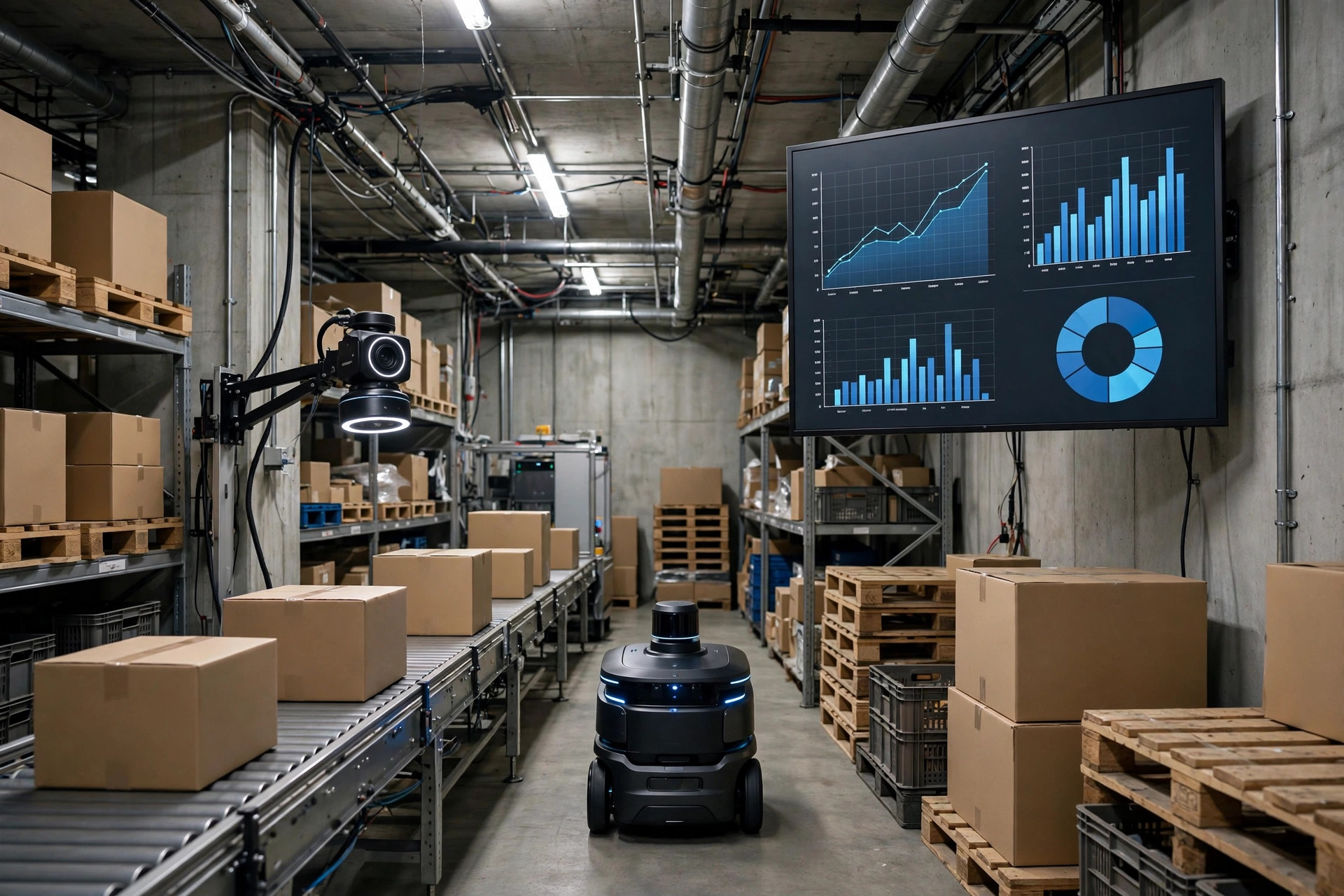
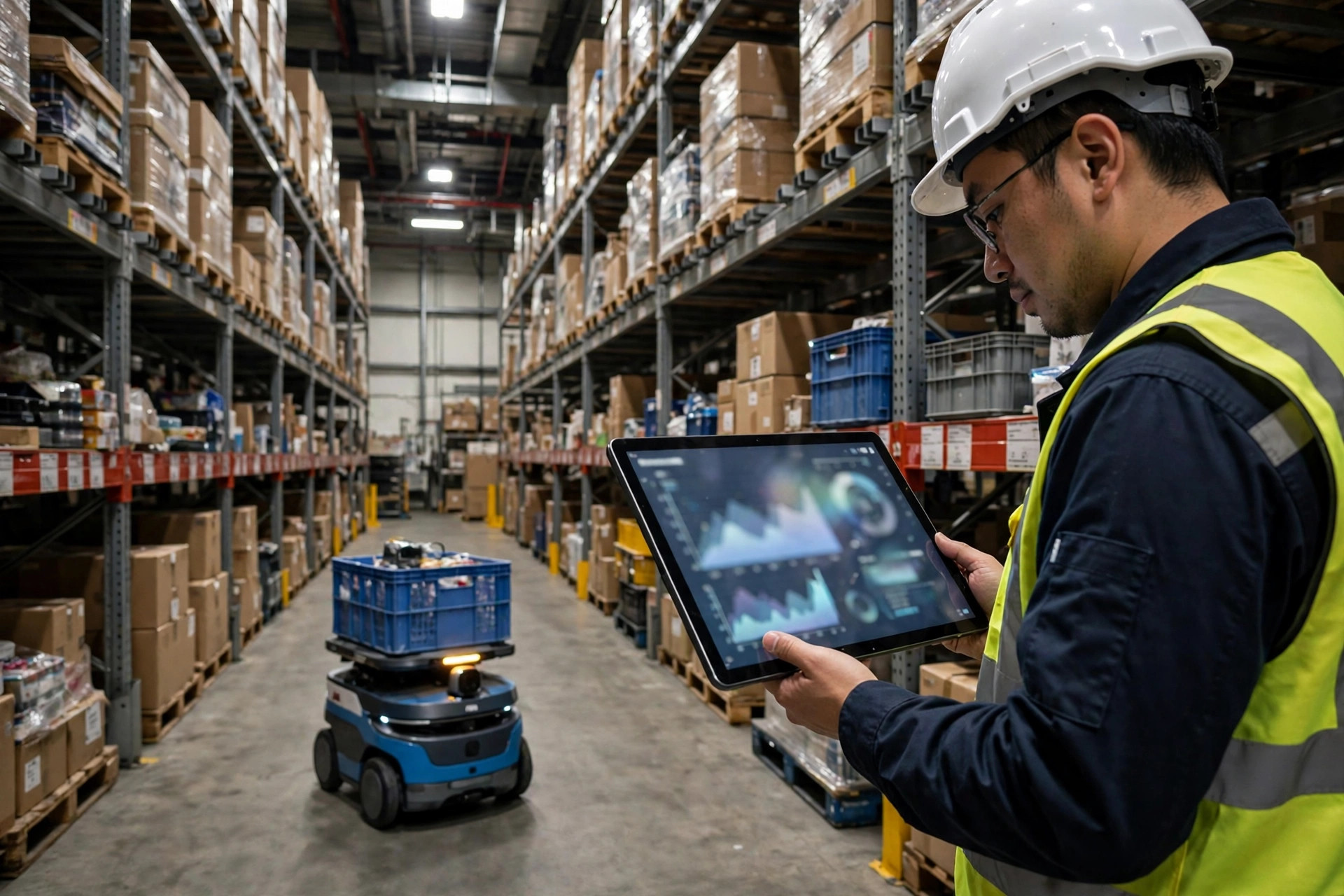
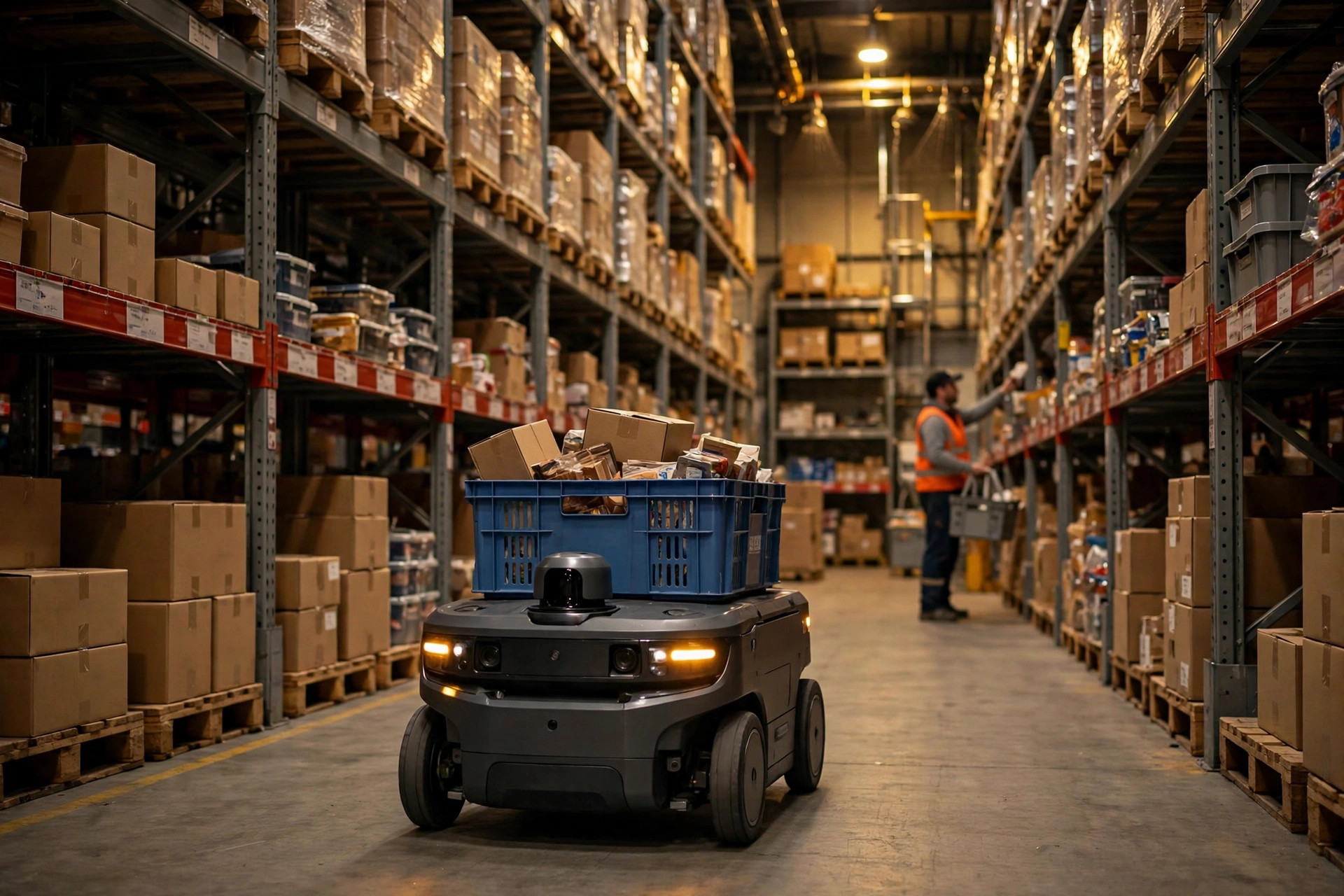
Some warehouse problems have been solved so many times that buying is simply buying other people's tuition. AMR-based picking and goods movement is the clearest example — those 5 billion Locus picks did not happen in a lab. Radial runs nearly 300 LocusBots across its network, with its Shepherdsville, Kentucky site as the showpiece. Voice picking, standard-parcel dimensioning, basic vision QA: same story.
Buy when three things are true: the problem is generic across the industry, you have no machine-learning team in-house, and you need results this peak season rather than next year. And pay attention to how you buy, not just what. Heavy-asset AI like AMRs increasingly ships as RaaS — robotics as a service — with monthly pricing, bots added for peak and pulled back after. For a seasonal operation that flexibility is worth more than a discount on a purchase order. Software AI, meanwhile, usually means an annual subscription, which means the year-two price uplift has to be negotiated now, not discovered later.
A pilot I still reference: DHL and Ricoh put smart glasses on 10 pickers in Bergen op Zoom, Netherlands, for a three-week vision-picking trial. More than 20,000 items picked across 9,000 orders, efficiency up 25%. Notice what they bought first: not a rollout, but evidence. Pilot small, measure honestly, then decide whether the checkbook comes out.
Build what makes you you
Now the other side. Your replenishment logic, your wave strategy, your 3PL billing rules — that is your moat, and no off-the-shelf product was designed around it. Buy a generic demand-forecasting suite and you will spend a year bending it to your SKU mix and customer contracts. Half the time you end up rebuilding the logic anyway, on top of a license fee.
I watched a mid-size operator skip the AI marketplace entirely: one IT lead, three years of WMS order history, open-source tooling, a simple forecast driving safety stock and wave consolidation. No press release. Stockouts visibly down. Nothing about that model would have survived as a vendor's generic product, because the value was in how tightly it fit one operation.
Build when the logic is proprietary, the data exists nowhere else, or the market simply does not sell what you need. The honest prerequisite is headcount: you need at least one person who can own the model after the consultant leaves. A model with no owner is a liability with a dashboard.
Read the contract like a divorce lawyer
Sales decks are not binding. Paper is.
Data ownership: who owns the model trained on your orders? Plenty of contracts quietly assign it to the vendor — meaning you paid to train someone else's product. Insist that your raw data stays yours and that you hold a perpetual license to anything trained on it.
SLA with teeth: accuracy rates and uptime mean nothing without remedies. Fee credits or a termination right when the numbers miss — pick one, get it in writing. A verbal "we run at 99 percent" is marketing.
POC exit criteria: which SKUs, how many weeks, what metric counts as success, and whether you can walk away cleanly if it misses. Write this before the big contract, not after. Every pilot I have seen die had fuzzy success criteria.
Price protection: cap the year-two uplift on subscriptions now. Ask whether data exports cost extra, and what API calls are priced at. The questions you skip today become the invoice you cannot dispute tomorrow.
Write the breakup letter on day one
No vendor relationship lasts forever; the only question is whether you planned the ending. Get the exit mechanics into the contract while you still have leverage.
Data out: exports in open formats — CSV or a documented API — never a proprietary dump you cannot read. Transition runway: how many months the system keeps running after termination while you migrate. Handover package: API docs, data dictionary, model documentation, all of it. If the stakes are high, ask for source-code or model escrow with a third party, so a vendor bankruptcy does not take your operation down with it.
And keep a shortlist of alternative vendors warm before you sign. It is the cheapest negotiating leverage you will ever own.
So here is the verdict, plain as I can make it.
Buy the finished product when the problem is industry-generic, you have no data-science bench, and you need it working before peak. Build it yourself when the logic is your competitive edge, the data exists nowhere else, or the market simply does not sell what you need. Rent it as a service when volumes swing with the seasons and you refuse to sink capital into steel.
One thing you can do tomorrow morning: ask your WMS vendor for the data dictionary and confirm you can export orders, inventory, and locations on a schedule. If you cannot get your own data out, every AI conversation after that is theater. If you can, you are finally negotiating from strength.