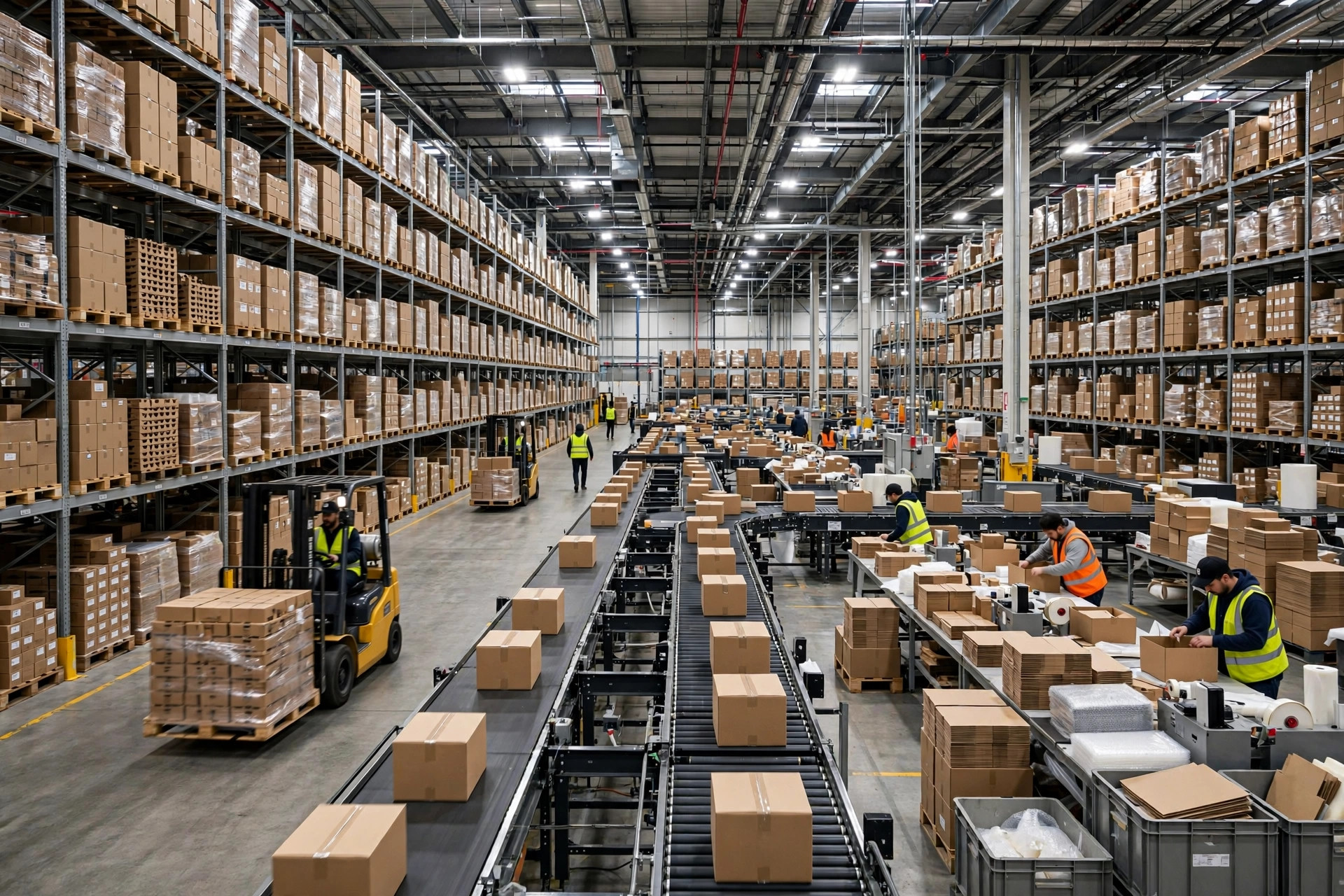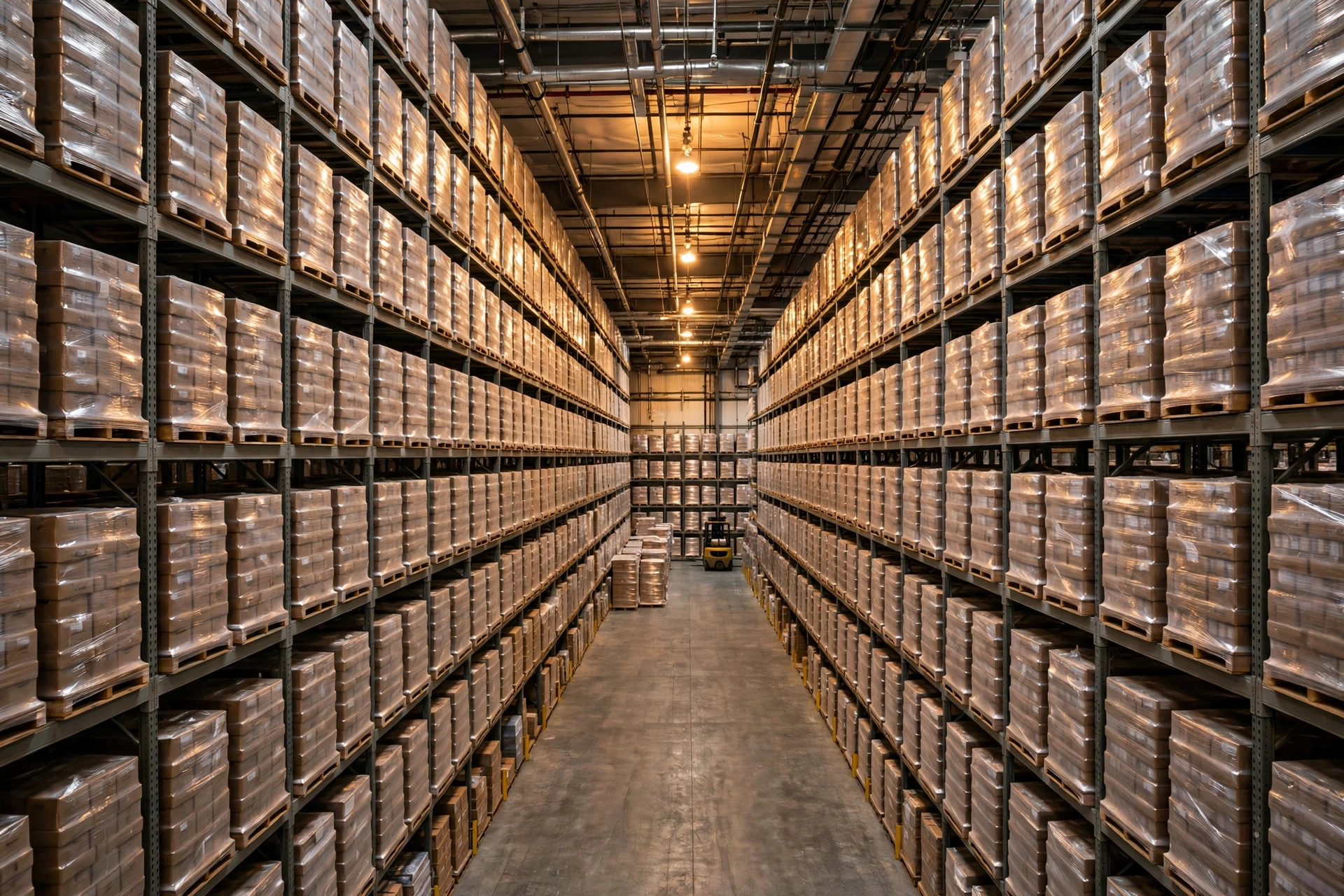
Run the numbers first — on what a warehouseman's lien really costs. Early 2024, a home-goods brand owed its 3PL four months of invoices — $47,000, sitting unpaid. Then the email: no outbound shipments until the balance clears. In that warehouse: 12,000 units, $310,000 of inventory, peak season days away. $8,000 in daily sales, evaporating. One week of stalemate: the $47,000 debt hadn't shrunk a dollar, but stockout losses had burned $56,000 in sales.
The 3PL wasn't bluffing. That's a warehouseman's lien, written into UCC Article 7, Section 7-209. No lawsuit. No court order. Goods in their hands means goods they can hold. Most shippers first hear this term the day they get the "shipments paused" email. By then, it's too late.
When the Warehouseman's Lien Kicks In: Reading UCC 7-209
Section 7-209(a) gives the warehouse a lien on goods covered by a warehouse receipt or storage agreement (and their proceeds) in its possession, securing: storage and transportation charges — including demurrage and terminal charges — insurance, labor, other present or future charges relating to the goods, necessary preservation expenses, and the reasonable costs of a lawful sale.
Three points, each one hitting your wallet directly:
First, this right exists by statute, contract or no contract. The belief that "no hold clause in the contract means they can't" is wrong. The contract's real job is the opposite: to limit it, not create it.
Second, the lien only reaches goods in the warehouse's possession. What's already shipped out is beyond reach — which is why a 3PL sensing you're about to walk freezes outbound first, securing leverage before you move.
Third, a general lien needs explicit contract language. Section 7-209 adds: if you owe similar charges on other goods, and the receipt or storage agreement states that a lien is claimed for charges on other goods, the warehouse can use your current inventory to secure old debts from other batches — even batches that shipped long ago. Plenty of standard 3PL contracts bury this clause. You owe on Batch A; Batch B's inventory becomes the hostage.
The counterintuitive part: most shippers assume a 3PL must sue before selling their goods. Wrong. Section 7-210 provides a complete enforcement procedure that never enters a courtroom. Follow the steps, and the sale is lawful. That's the 3PL's real leverage — not whether they'll sue, but that they don't have to.
From Notice to Auction: The Section 7-210 Playbook
To sell held goods, the warehouse must complete every step. Skip one, and the sale is unlawful — and you can claim damages:
- Written notice to everyone known to claim an interest, including: an itemized claim, a description of the goods, a demand for payment within not less than 30 days of receipt, and a conspicuous warning that the goods will be sold if unpaid.
- The waiting period: at least 30 days. Your window — and your last negotiating chip.
- The sale: public or private, on commercially reasonable terms. The warehouse may bid at its own public auction.
- Right of redemption: until the moment of sale, anyone with a right in the goods can pay the lien plus reasonable expenses — and the sale stops.
- Surplus returned: proceeds satisfy the lien first; the balance is held for you to claim.
- The price of cheating: sell without the procedure and the warehouse owes you damages; a willful violation is conversion.
Section 7-206 adds a companion route: a warehouse that wants out can demand payment and removal on not less than 30 days' notice; fail to remove, and the goods go to sale under 7-210. Perishables can move faster — but that's the warehouse's problem, not yours.

The Real Cost of Held Inventory, Dissected
Owing $47,000 costs far more than $47,000:
| Cost line | What it is | Who bleeds |
|---|---|---|
| Principal owed | The invoice — not a dollar goes away | The shipper |
| Disputed amount | Questionable surcharges: no interest, but they don't vanish | The shipper |
| Storage during the freeze | Goods still in their hands; rent accrues daily | The shipper |
| Stockout losses | Peak-season daily sales gone, plus listing-rank decay | The shipper |
| Auction discount | Forced sales rarely fetch fair value; surplus returns but goods are gone (confirm with counsel and your state's law) | The shipper |
| Enforcement costs | Notices, advertising, auction logistics — lawfully deducted from proceeds | The shipper, ultimately |
The pattern: time is on the 3PL's side. Each day of delay grows the rent, grows the stockout loss, shrinks your position. That's how $47,000 of debt became $100,000+ of damage in a week. Money for nothing.
Trigger Conditions × Shipper Response
| Trigger | Legal consequence | Do within 48 hours |
|---|---|---|
| Overdue invoice, 3PL warns | Lien already exists under 7-209(a); outbound can freeze anytime | Reconcile line by line; reply in writing with a payment timeline |
| Formal 7-210 notice (30-day clock) | Lawful sale possible at expiry | Pick one of the three paths below — don't wait |
| Contract has a general-lien clause | Other batches on hand freeze too | Inventory every batch; size total exposure |
| Shipper enters bankruptcy | Automatic stay may freeze the sale | Get bankruptcy counsel; specifics need legal advice |
| Perishable goods | Accelerated sale available | Move fastest — shortest window |
Disputed Invoice? Free Your Goods First: Three Paths, Priced
$13,000 in "peak-season labor surcharges" and "system onboarding fees" — nowhere clear in the contract. Paying stings; not paying freezes your goods. Price each path:
Path one: dig in. Pay nothing, wait out the 7-210 clock. Cost = 30 days of accruing storage + stockout losses + you'll likely pay anyway (maybe plus an auction discount). Negative expected value unless you're certain the 3PL botched the procedure.
Path two: pay under protest, then fight. State in writing that you dispute the line items, reserve all rights, and pay the full — or undisputed — amount to get goods moving. Take the $13,000 to negotiation or small claims separately. Cost: capital tied up briefly. Return = $310,000 of inventory flowing, $8,000 a day in sales protected. Usually the highest-expected-value move: a little capital cost to redeem the liquidity of $310,000 in goods.
Path three: hire a lawyer. Right when the disputed amount is large and you can prove the 3PL breached. But do the arithmetic: counsel routinely costs more than a mid-size dispute (get a real quote). Fighting over $13,000 while paying thousands in fees, waiting months, with rent accruing — the math fails. Unless the amount is big or you need the precedent, skip it.
One decision rule: if disputed amount < legal fees + accruing storage + stockout losses, pay under protest and free the goods first. Fill in the four numbers; the answer writes itself. Be allergic to "this feels wrong." Never be allergic to numbers.
Negotiate the Lien in the Contract: One Conversation, Years of Savings
Prevention beats rescue. Three clauses — one pays for itself:
- Kill the general lien, or fence it in. Rewrite "lien claimed for charges on other goods" as "lien limited to charges on the goods covered by this agreement" — a specific lien. The 3PL may want consideration, like a higher prepayment or a deposit. The trade-off: a little tied-up capital for risk isolation between batches. Worth it.
- Agree on a notice and escalation ladder before any freeze. Written notice at 15 days overdue, freeze only after 30. Stacked on 7-210's own 30-day auction notice, that buys weeks.
- Write in a disputed-invoice mechanism: pay the undisputed portion and outbound can't pause; the disputed portion goes to reconciliation. This removes "path one" entirely — legally the lien only covers what's actually owed, and the contract locks that in early.
Bottom Line: A Computable Conclusion
The warehouseman's lien reduces to three lines of logic:
- The lien is statutory (7-209) — no contract needed; the general lien is contractual — no clause, no reach. An hour at signing beats a month with lawyers.
- The 3PL needn't sue to sell your goods — notice, 30 days, commercially reasonable sale, done. Your window is those 30 days. Numbers, not emotions.
- The decision formula: disputed amount < legal fees + accruing storage + stockout losses → pay under protest, free the goods. Liquidity always beats pride.
Next invoice, skip the anger. Open the contract, search "lien," check specific or general. Then run two numbers: inventory value sitting in their warehouse, and one day of stockout cost. Once those are clear, you'll know exactly how to answer that email.
By Lao Zhou, Logistics Cost Analyst