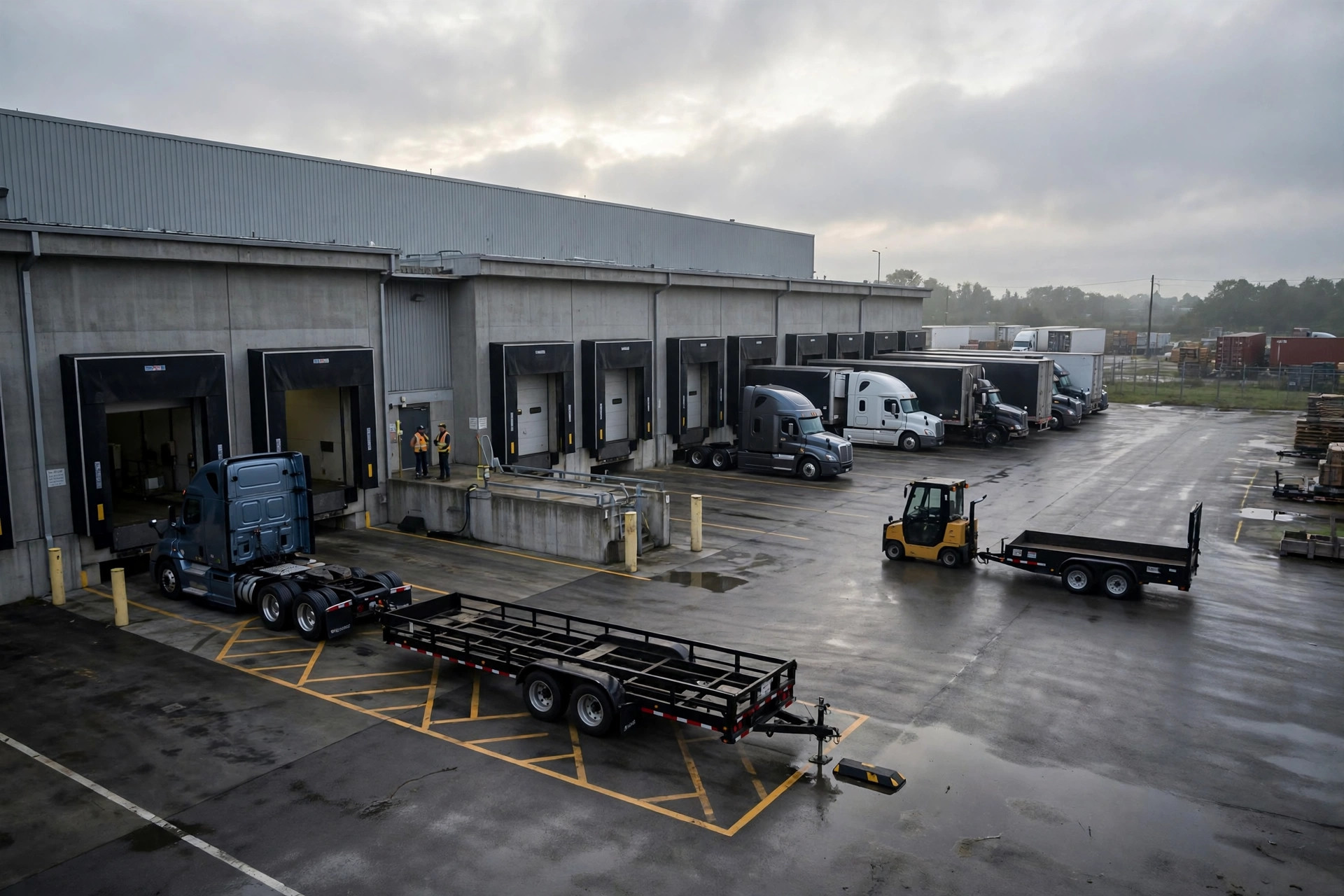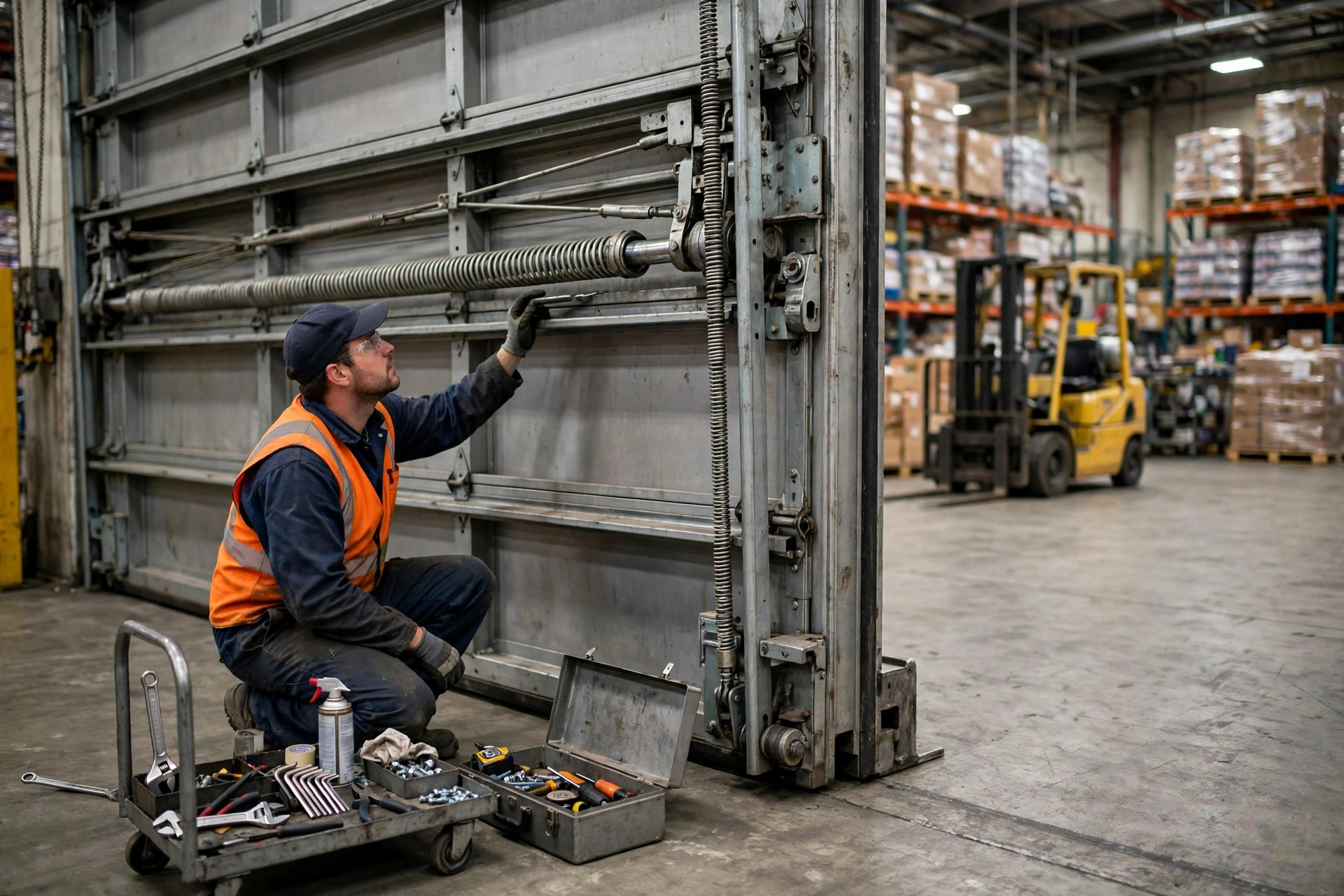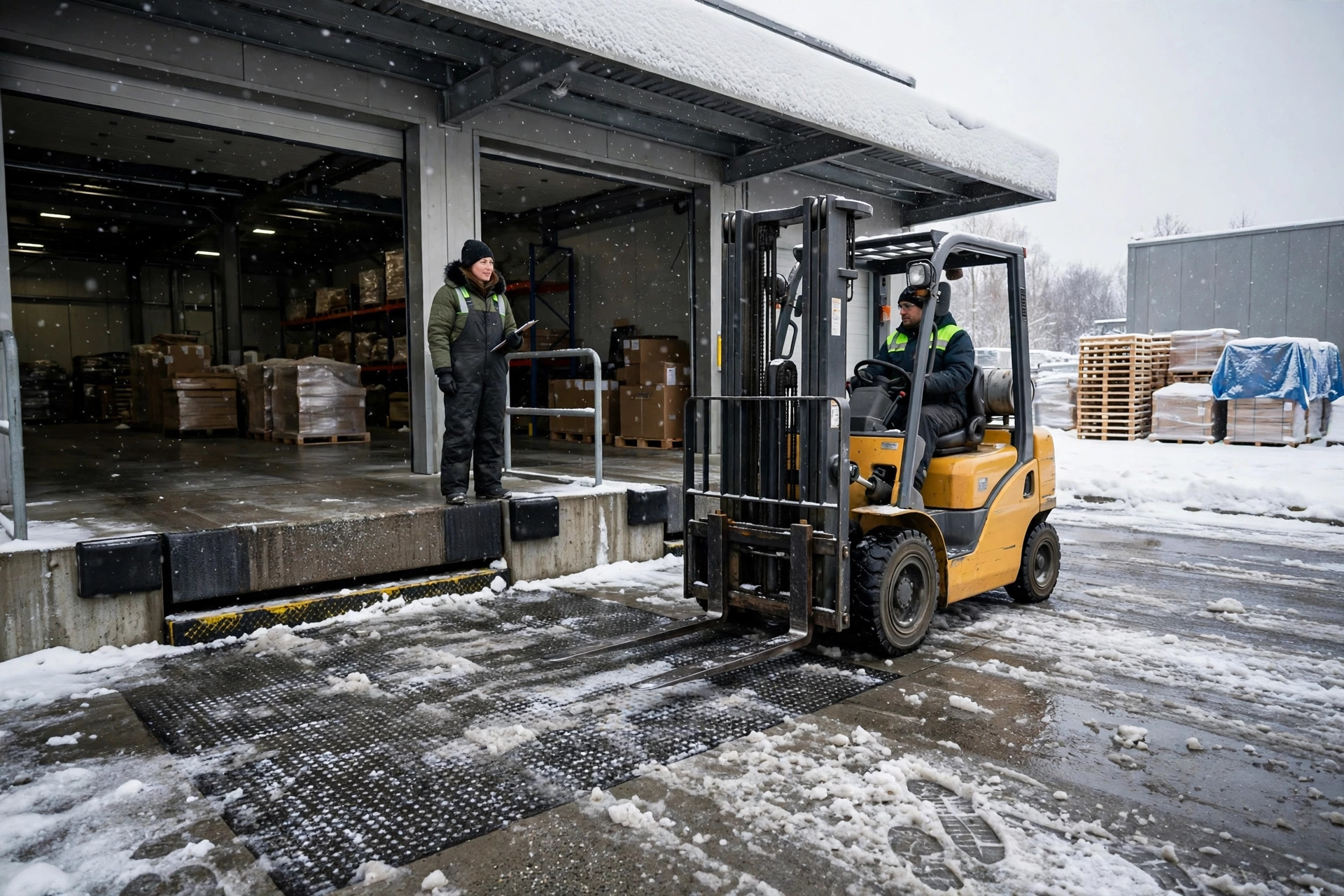
Last December, a third-party warehouse in northern China got exactly one snowstorm. A thin sheet of ice formed on the dock, a forklift slipped at the dock door, and the door was out of service for two days. Inbound and outbound freight had to be moved by hand for those two days, and temp labor, overtime and late-delivery penalties added up to nearly $13,000. Doing the winter prep for the same site beforehand — dock anti-slip treatment, drainage clearing, cold-start checks — had been quoted at under $3,000. That is the first ledger entry in any winter warehouse operations plan: preparation costs a small, known amount, while an accident costs a large, unknown amount, and the second kind never announces itself.
The accident bill breaks down further, and the breakdown is what makes the decision easy. A dock accident typically has four cost lines: equipment repair, manual handling during downtime, penalties for late orders, and medical and lost-time costs if someone is hurt. The first three can be tallied the same day. The last one is the most expensive and the least controllable. The preparation bill, by contrast, is entirely quotable in advance: anti-slip materials, drainage labor, inspection hours, battery warming, warm gear and rotation. One side is a fixed small expense; the other is an open-ended risk. A ledger like that does not need to be calculated twice.
The Winter Warehouse Operations Ledger: Preparation vs. One Bad Day
Put preparation spending and accident costs side by side and the decision makes itself:
| Item | Preparation cost | Cost of one accident or stoppage |
|---|---|---|
| Dock anti-slip treatment and de-icing supplies | One-time purchase, priced by dock area | Forklift slide into a dock door, repair plus manual handling |
| Canopy and drainage clearing | Half a day of labor | Standing water that refreezes on the dock surface |
| Equipment cold-start inspection | Half an hour of labor per truck | Cold-start damage to hydraulics and motors |
| Battery warming and rotation | Heated charging area plus spare batteries | Trucks dying mid-shift, orders stuck before cutoff |
| Warm gear and worker rotation | Gear plus extra rotation hours | Frostbite, slips, and overtime to recover lost pace |
Read the table one way only: every line in the preparation column has a quote, and no line in the accident column has a ceiling. The cost discipline here is simple. Spending that can be priced in advance gets approved first; risk that cannot be priced gets prevented first. Winter preparation is, at its core, swapping an open-ended bill for a quoted one.
A Winter Warehouse Operations Checklist, in Order of Risk
Order the checklist by accident probability, not by purchasing convenience. First, the dock. Walk the dock floor, ramps and canopy drip lines before winter, fix low spots first, and put anti-slip material on ramps and turns rather than decoratively by the door. Keep de-icing supplies at the dock where hands can reach them; supplies buried in a storeroom during a storm might as well not exist. Second, canopies and drainage. A canopy leak dripping onto the dock freezes overnight into a sheet of ice, and a drain blocked by leaves and packaging scrap leaves meltwater with nowhere to go, so it becomes ice again the next day. Clearing takes half a day before winter; after winter sets in, the clearing job itself becomes high-risk work on ice.
Third, the cold-start procedure for equipment. Hydraulic fluid thickens in the cold, and forcing a cold truck straight into loaded work is what damages it. Make the cold start a fixed pre-shift routine: warm up in place, drive one slow unloaded loop, confirm steering and brakes before loading, and post the procedure on the truck instead of relying on any one operator's habits. Fourth, batteries. Cold weather cuts battery endurance, and the symptom is unmistakable: trucks run fine in the morning and start dying in bunches before cutoff. The fix is a heated charging area, spare batteries on rotation, and a charging schedule written into the shift plan — not borrowing a battery after a truck has already stalled. Fifth, people. Outdoor dock workers should get warm gear issued per person, not pooled per shift, and rotation intervals should be shortened. Two straight hours in the cold and one hour in the cold produce entirely different pace and accident rates. Exact temperature thresholds and rotation lengths should follow local weather conditions and the equipment manufacturer's requirements; copying another warehouse's numbers is the same as having none. A winter warehouse operations plan that lives only in a manager's head will not survive the first storm; write it down, post it, and rehearse it once before the first freeze.
Icy Dock Controls and Shift Adjustments
Control lines must be written down and posted before the snow, not negotiated during it. On an icy dock, forklifts slow down, turning radiuses widen, and loaded travel on ramps stops — those three are the floor. After de-icing, re-inspect before returning to normal speed; ice that was not fully cleared does not count as cleared. When wind and snow reduce visibility past the dock edge, or when a ramp stays icy after de-icing fails, outdoor loading pauses and the shift moves to indoor picking and staging. Put the stop-work criteria in the duty roster so the shift manager applies them without calling for permission. That is why the winter warehouse operations plan treats speed limits and stop-work criteria as pre-approved decisions, not as judgment calls made in a snowstorm.
Cold also changes pace, and the shift plan has to absorb that honestly. The same crew handling the same order volume will take longer per trip in low temperatures. Holding the summer shift plan through winter leaves only two outcomes: overtime, or rushed errors before cutoff. The cheaper move is to lower expected per-shift throughput by one notch for winter, pull cutoff times forward by thirty minutes to an hour, and add rotation to night and early-morning shifts. One extra line on the shift plan costs far less than scrambling for temp labor before cutoff.
The following winter, the same northern warehouse ran the full checklist in November: dock anti-slip treatment, drainage clearing, cold-start procedures, battery rotation and worker rotation. It went the whole winter without a single dock accident and without missing a cutoff to a dead truck. The preparation cost came in under a quarter of what the previous year's single accident had cost. That is the real return on winter preparation — not luck, but accident probability and accident cost pushed down at the same time.
The counterintuitive point is that the most expensive thing in winter is often not heating, but slowness handled badly. Many managers assume stopping work entirely is the safest option. In practice, a dock that stops and restarts lets ice melt and refreeze into a slicker surface, and the first truck back after a restart is the likeliest to slip. Running slow under speed limits is frequently cheaper and safer than stopping and restarting. The savings lever is never one fewer jacket; it is one fewer accident and one fewer missed cutoff.
Before winter, run one calculation on your own site. Price every checklist item and add up the preparation total. Then estimate the cost of half a day of stoppage, including manual handling, order penalties and average repair cost. If the preparation total is below the half-day stoppage loss, approve it outright. If it is above, cut items one by one until it falls below, keeping three non-negotiables: dock anti-slip treatment, cold-start checks and worker rotation. Once that calculation is done, there is nothing left to debate about how winter gets handled.
By Lao Zhou, Logistics Cost Analyst