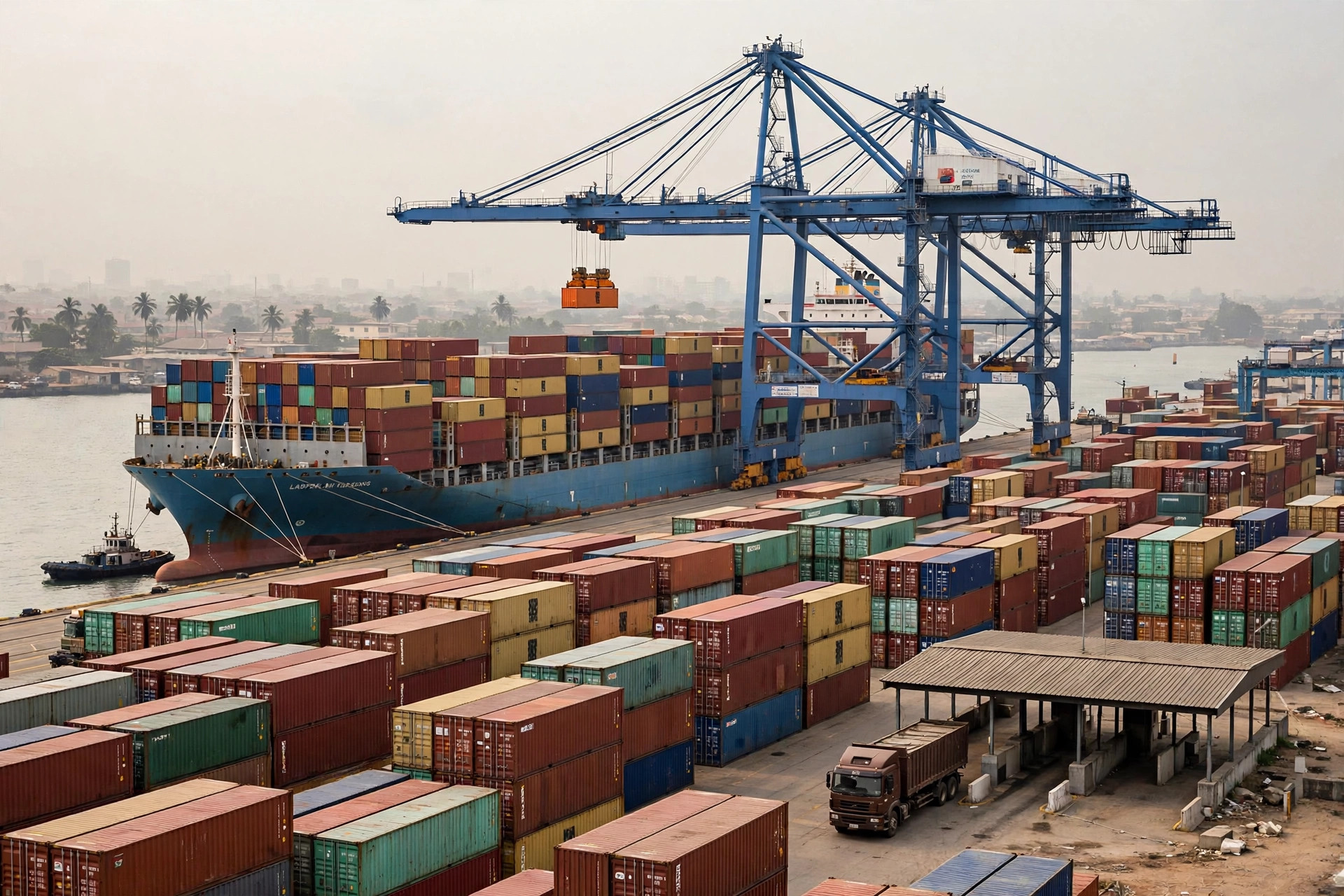
Of every African market I've worked, Nigeria's import clearance has the most rules on paper — and the least mercy in practice. Today: the Nigeria import customs clearance process, end to end.
Here's a painful one: last year a friend shipping LED lights had his container sit at Lagos Apapa port for 19 days. Not because he couldn't pay duty. Because one letter was wrong on his SONCAP certificate. Nineteen days of demurrage, storage, and shipping-line penalties burning cash — in the end it cost more than the profit on the whole shipment.
Form M, SONCAP, PAAR. Skip none of them.
Step One: Form M — Don't Book the Vessel Without It
Form M is the birth certificate of a Nigerian import, opened through an authorized dealer bank. Without Form M, your goods can't even move foreign exchange, and your shipment doesn't exist in the customs system. The entire Nigeria import customs clearance process starts here — Form M is the shipment's ID in that system. To open one you need: proforma invoice, insurance certificate, and your HS code.
Let me stress the HS code — it's the foundation everything else stands on. Wrong HS code means your SONCAP won't match, your PAAR won't match, the physical exam won't match. One wrong step, every step wrong. My friend's shipment got detained because the HS code on the Form M didn't match the one on the SONCAP. If you're unsure about a code, check the Nigeria Customs tariff schedule or have a reliable clearing agent confirm it first. Don't guess.
One more heads-up: Form M is tied to foreign exchange — the amount on the Form M has to line up with what you actually remit. If it doesn't, the bank stops you cold. Exchange policy per the latest published guidance from the Central Bank of Nigeria.
Step Two: SONCAP — Where the Nigeria Import Customs Clearance Process Usually Breaks
SONCAP is Nigeria's mandatory product certification, in two parts: the PC (Product Certificate), issued in the country of origin before shipment; and the SC (SONCAP Certificate), issued per shipment against the PC plus shipping documents.
Here's the counterintuitive part: most people assume certification happens after arrival. Wrong — the PC must be in hand before the goods leave China. No PC, no SC. No SC, no release. Trying to fix it after the container lands at Apapa? Game over.
Most people obsess over duty rates and ignore the real variables in this process: time and paperwork. Get the documents right and the process is a formality. Get one letter wrong and it's a 19-day tuition bill.
And here's the 2026 twist: on March 27, 2026, Nigeria launched its National Single Window (nsw.gov.ng), moving SON and NAFDAC permit applications onto one platform. In six months it processed over 156,000 licenses (reported by Nigerian media in October 2026), more than 100,000 of them SON-related. Translation: applications move faster online now — but if your documents are wrong, the system rejects them just the same. No favors in any system.
Step Three: PAAR and the Physical Exam
Before the vessel berths, Nigeria Customs issues the PAAR (Pre-Arrival Assessment Report), usually within 24 to 72 hours (per the latest published guidance on the Nigeria Customs Service website). The PAAR states customs' assessed value and the duties payable. Heads-up: customs' assessed value may differ from your invoice — they have their own valuation database. Get caught under-declaring and they assess at their price plus penalties. Not worth it.
Then the physical examination. Apapa exams are real — examination rates are not low. What do they check? Product name, quantity, HS code, SONCAP certificate, one by one. Do the first two steps properly and the exam is a formality. Fudge any step and the exam is a mirror.
Once the PAAR is out, the legwork belongs to your clearing agent (licensed customs agent). Don't pick on price alone — the difference between an Apapa veteran and a rookie isn't a few hundred dollars in agency fees, it's three days versus thirteen. My criteria: first, a real office in the Apapa port area; second, willingness to itemize fees (agency fee, exam fee, transport — separately; anyone quoting one bundled price, pass); third, ask for their average clearance time over the last few months. Can't answer? Walk away.
The Math: In the Nigeria Import Customs Clearance Process, What Costs More — Duty or Delay?
First, the duty. Three main components: customs duty per your HS code, with tariff bands ranging from 0 to 35% (check the latest published schedule on the Nigeria Customs Service website); VAT at 7.5% (Nigeria's 2026 tax reforms kept the rate at 7.5%, where it has stood since 2019); plus various surcharges — again, per the latest official published terms.
Example (illustrative — always verify against the latest official schedule): a shipment with $100,000 CIF value, assuming 20% duty and 7.5% VAT. Duty is $20,000; VAT on (CIF + duty) is about $9,000. Total tax near $30,000 — thirty percent of cargo value. So build duties into your costing. I've watched too many sellers quote on "cargo value plus freight" and discover at the port that tax ate the entire margin.
Now the wait. My friend's 19 days: free demurrage time is usually only a few days (per the shipping line and terminal's latest published terms), after which demurrage and storage accrue daily — check the current published rates, they're not small. What he burned in 19 days would have paid for a whole new round of certification. The lesson in one line: have every document 100% ready before the vessel arrives. Delay shipment a week if you must — never let cargo wait at the port for paperwork. Duty is a visible bill. Waiting is money burned with no receipt.
This one's battle-tested: build a checklist per shipment — Form M, PC, SC, PAAR, insurance certificate, invoice and packing list. Six items green before you book the vessel. Nigerian clearance doesn't punish slowness. It punishes rework. Get the Nigeria import customs clearance process down pat and this lane becomes your moat — while others are still paying tuition at the port, your goods are already on the shelves in Lagos.
One last thing — after the cargo clears. Getting goods out of Apapa doesn't mean the business is done. Lagos distribution splits two ways: into e-commerce platforms like Jumia, or into wholesale markets like Ladipo and Trade Fair. The two demand completely different packaging and replenishment rhythms — Jumia has its own inbound packaging and labeling specs (check the platform's latest published requirements), while wholesale markets need you to build the channel yourself. My play: lock the distribution channel while clearance is running, split the cargo the moment it lands, and use the warehouse as a cross-dock, not a parking lot. Every day your goods sit in a rented warehouse is cost.
By Ah K, E-commerce Seller (5 yrs)