If you've ever Googled "how long does it take to unload a 40ft container," you're asking the wrong first question. The unload itself is the short part. The waiting, the labor bill, and the fee clock ticking at the port — that's where your money actually goes.
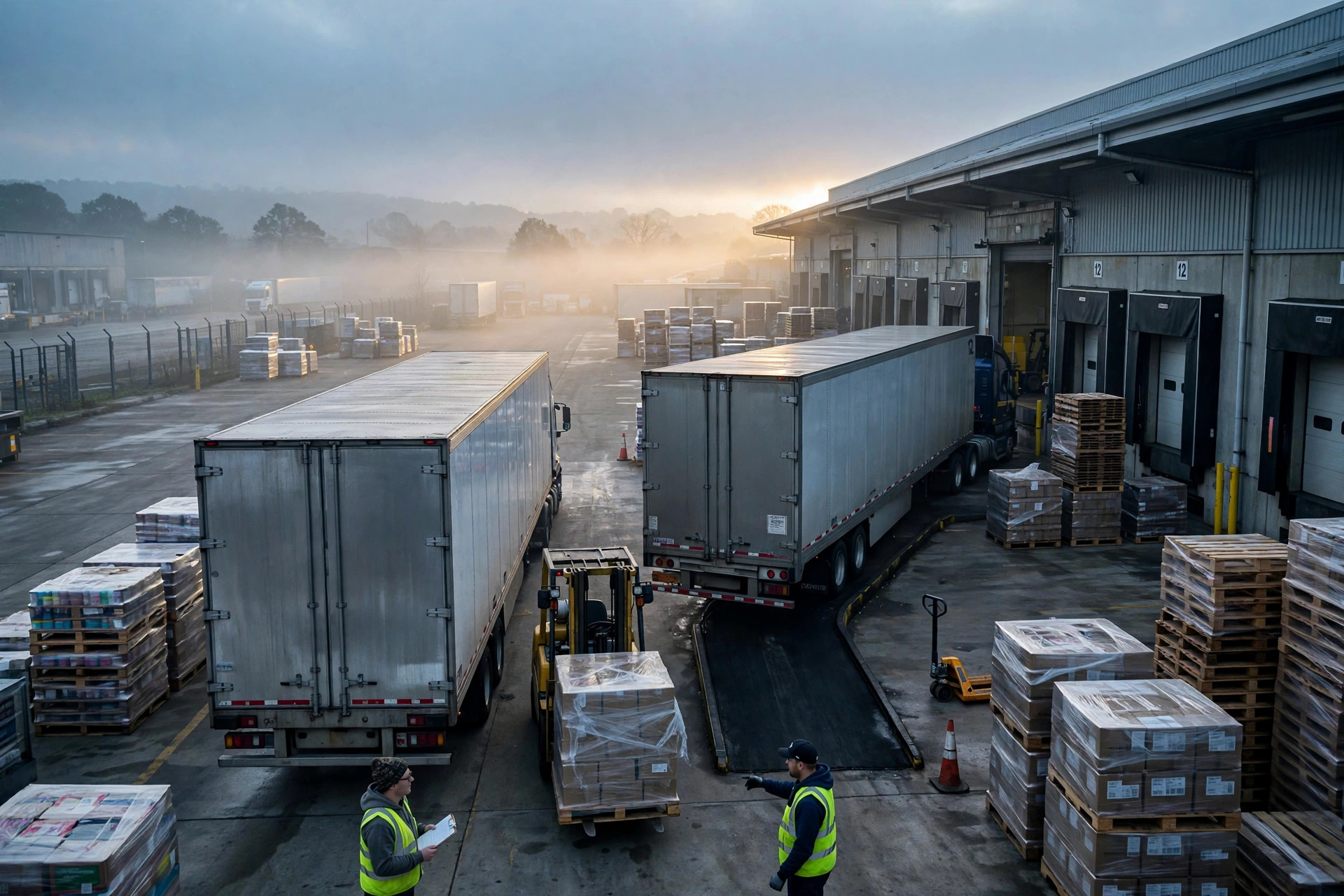
Last June, right before Prime Day, I watched my container of Bluetooth speakers land at the Port of Los Angeles on the carrier's tracking app and breathed a sigh of relief. Then my forwarder hit me with one line: "Container's here, but the warehouse can't unload for five days. Earliest slot." Five days. Demurrage free time is four. My box sat baking in the sun while my money burned a few hundred dollars a day.
Five years as a cross-border e-commerce seller taught me this the expensive way. Here are the three real timelines — floor-loaded, palletized, mixed — and the demurrage traps to dodge. Every number below is either from a public source or off one of my own bills.
How Long Does It Take to Unload a 40ft Container? Three Real Timelines
Same 40-footer, different loading method, and the unload time swings 3–4x. Straight to the table:
| Loading method | Pure unload | With counting & putaway | Crew | Unload fee reference |
|---|---|---|---|---|
| Floor-loaded | 2 people, 1–2 hours | 3–4 hours | 2–3, all manual | $150–300/container |
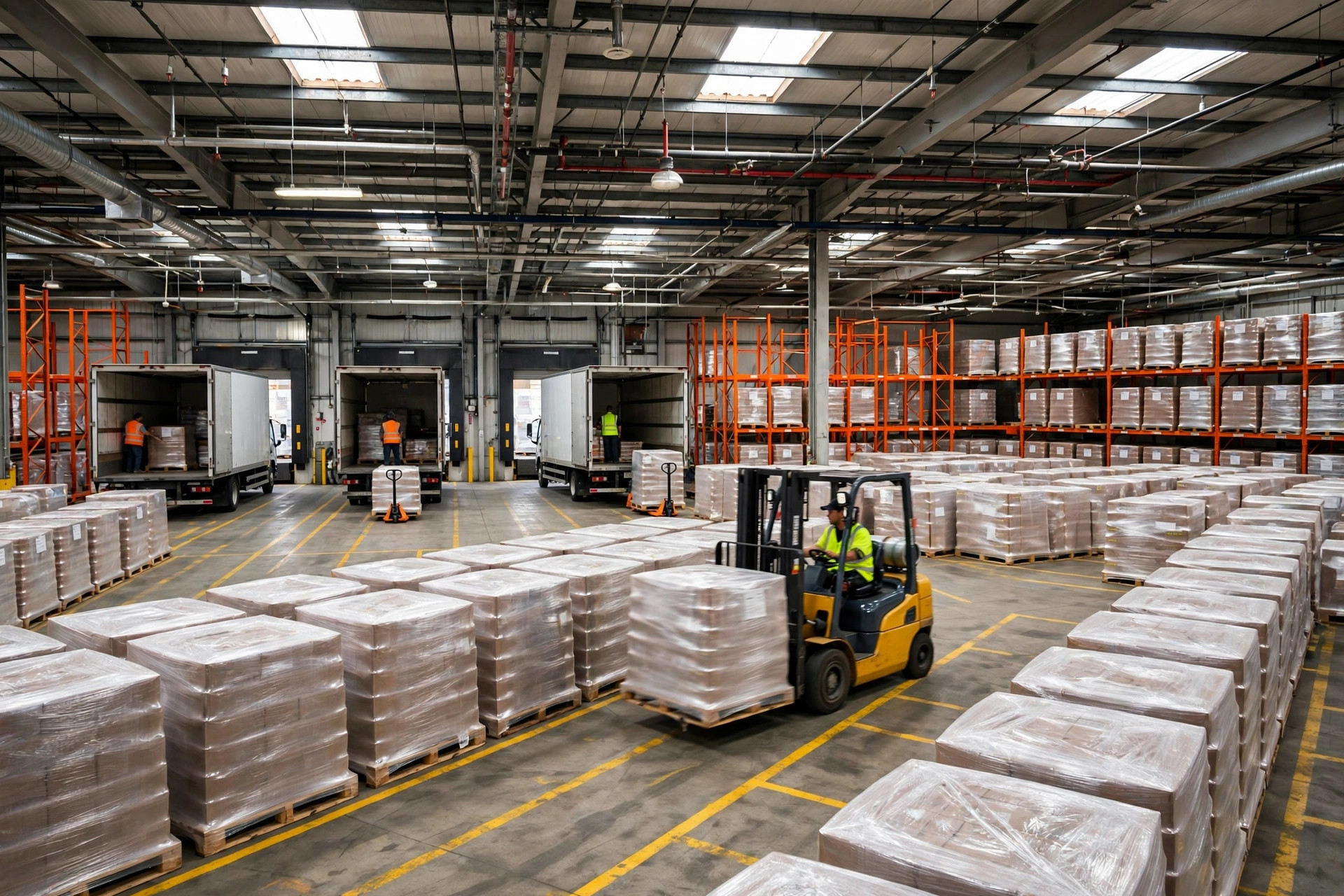
| Palletized | Forklift, 30–45 min | 1–1.5 hours | 1–2 | $100–200/container |
| Mixed | 2.5–4+ hours | 4–5+ hours | 2–3 | $200–400/container |
Where do these numbers come from? Container News summed it up well: a floor-loaded 40ft takes a two-person crew one to two hours to unload, sort, and stage; a palletized box the same size clears in 30–45 minutes because a forklift does the work instead of hands. A 40ft high-cube typically holds 24–30 standard pallets — and that pallet count, not the container length, is what really drives the clock.
And that's the best case. In real life, the warehouse receiving your container doesn't mean unloading it right away. Appointments, queues, counting, putaway — it all eats time.
Floor-Loaded: The 1–2 Hour Job That Turns Into 4
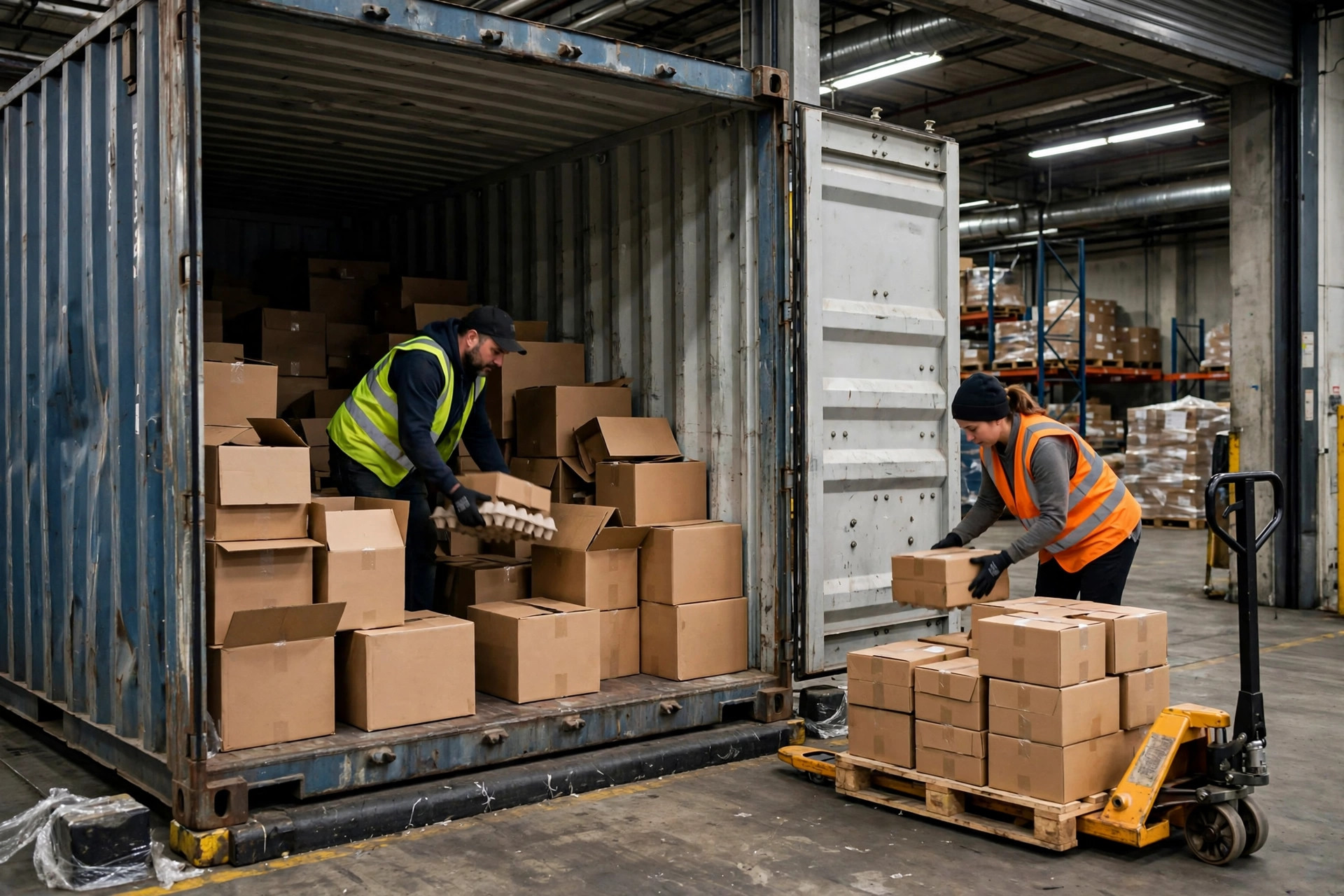
Floor-loaded means cartons stacked loose, one by one, at origin. Cheap to load, brutal to unload: one person climbs inside passing boxes out, one or two outside catching, breaking down, and restacking onto pallets. A 40ft floor-loaded box can hold anywhere from 1,500 to 4,000+ cartons depending on box size — equipment maker Gorbel's field cases show 1,500 boxes in a standard 40ft and up to 4,000–5,000 small cartons in a high-cube.
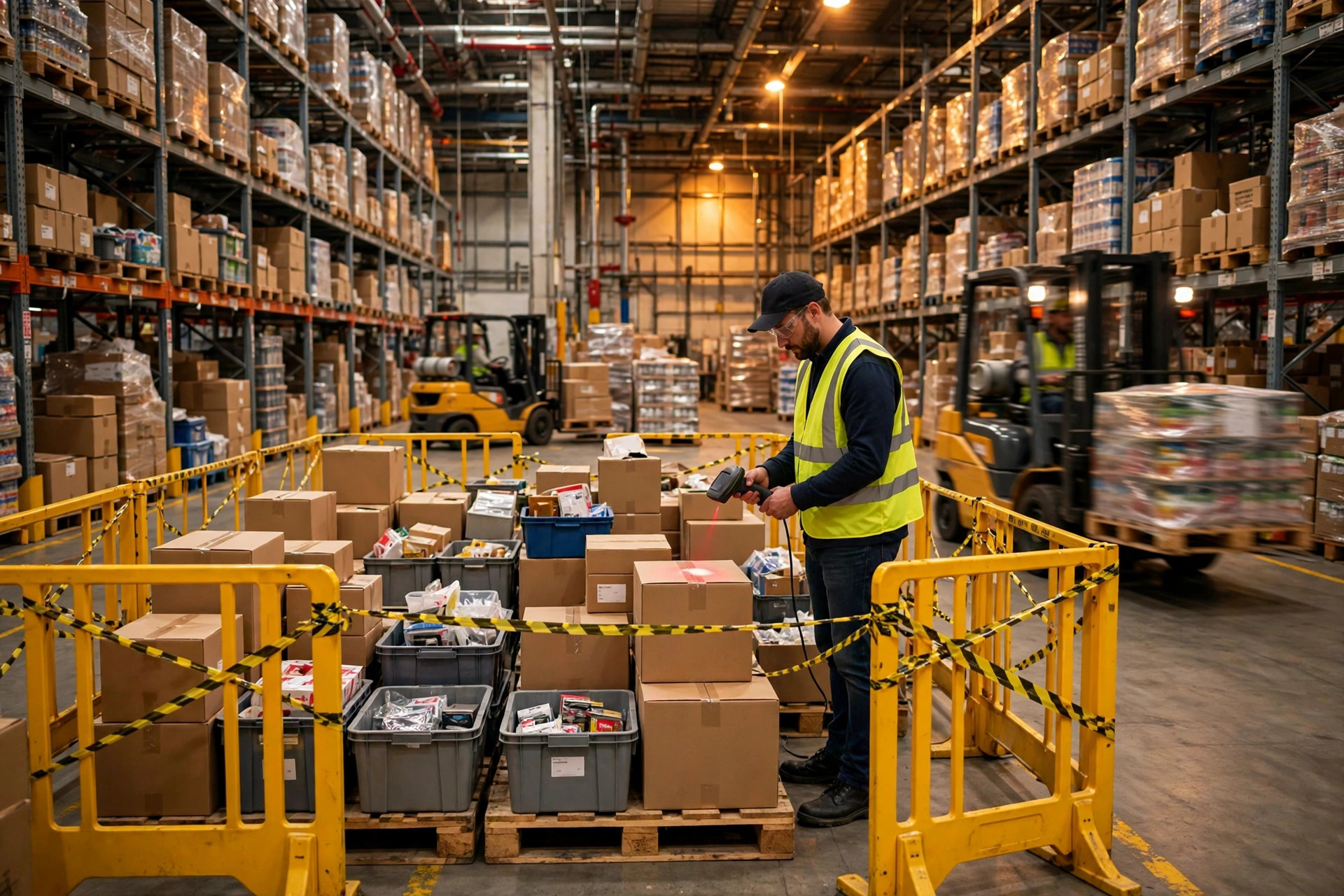
My war story: June 18, 2025, my speaker container hit LA — floor-loaded, 1,800 cartons. The warehouse was slammed and my unload slot landed June 23. Two guys took 2.5 hours just getting boxes out of the box, plus counting against the manifest and putaway — the whole afternoon, gone. The painful part was the bill: 4 days of demurrage free time, then charges from day five, starting around $180 a day and escalating. Three days over cost me nearly $700. I got off easy — the next rate tier starts around $300 a day.
Floor-loaded has a hidden tax too: damage. Humans throwing boxes against a clock means dented corners and split tape. Amazon FBA rejects them. Guess who eats that cost? You.
Palletized: Pay at Origin, Breeze at the Dock
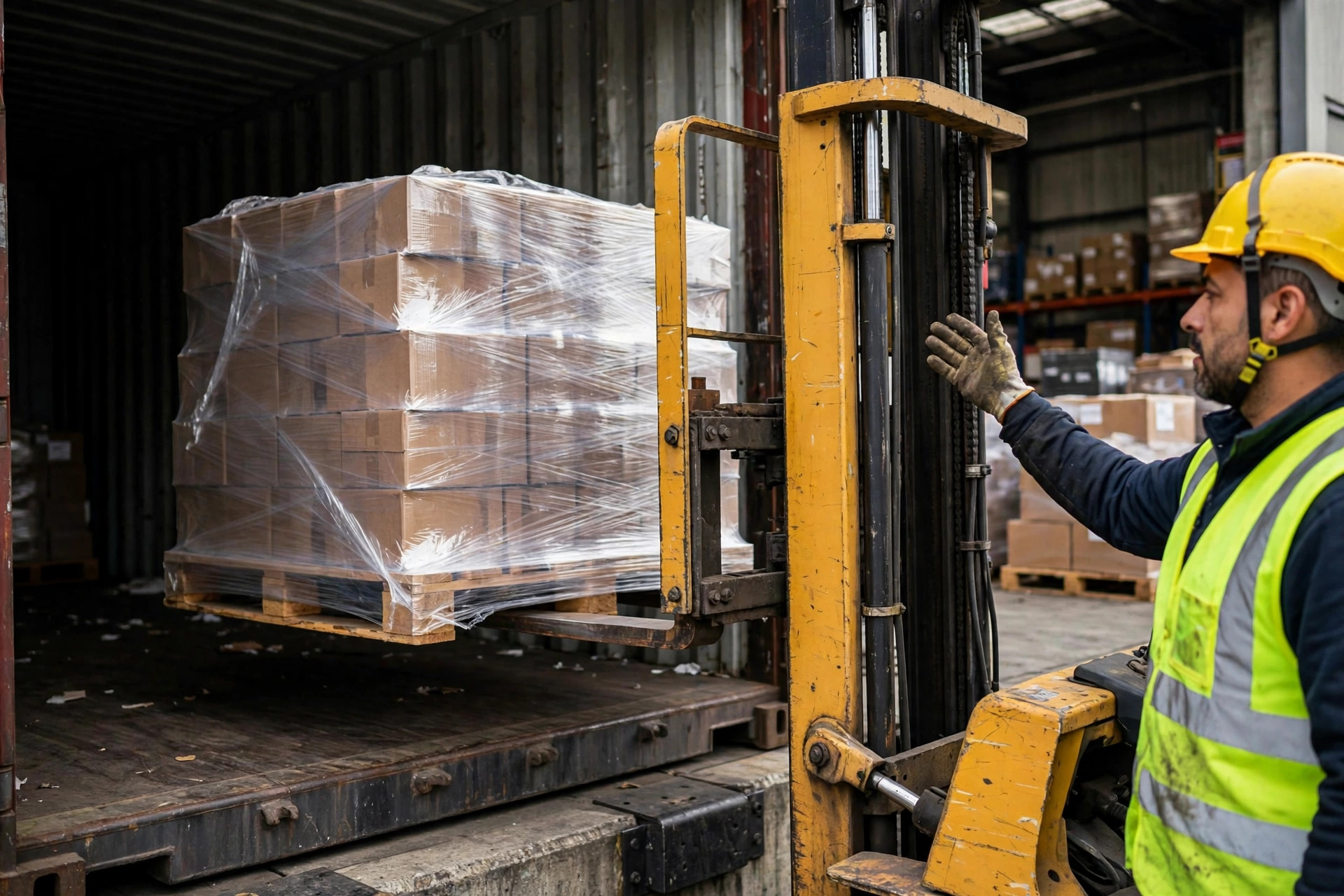
Palletized means goods are built onto pallets before they ever see the container. The forklift drives in and pulls pallets out one by one — 30 to 45 minutes, done. One driver, one spotter.
This March I tried fully palletized on a container of storage bins. Palletizing at origin cost me $400+ extra, pallets eat cube, and I fit about 300 fewer cartons in the box. On loading day my heart bled. But the container hit Long Beach, the warehouse unloaded same-day on a pre-booked appointment: 40 minutes of forklift, 20 minutes of counting, one hour total. Detention free time is 7 days; I returned the empty on day 2. Zero fees.
The two containers, side by side:
| Floor-loaded (Jun 2025) | Palletized (Mar 2026) | |
|---|---|---|
| Ocean freight | $4,800 / 1,800 cartons ≈ $2.67/carton | $4,800 / 1,500 cartons ≈ $3.20/carton |
| Unload fee | $280 (slow manual) | $150 (fast forklift) |
| Demurrage / detention | ~$700 (3 days over) | $0 |
| Damage write-offs | 2 cartons | 0 |
| True cost per carton | ~$0.50+/carton higher | lower |
Palletizing cost me $0.53 more per carton in ocean freight — and still came out cheaper overall. That's the counter-intuitive part nobody tells you: palletizing costs more in ocean freight and saves at the dock. You have to do the math on both ends. Anyone who only looks at the loading side is getting fooled by single-point costing.
Mixed: The Worst of Both Worlds
Mixed means pallets plus loose cartons in the same box, or several SKUs jumbled together. Sounds flexible. Unloads terribly: the forklift pulls the pallets, then workers climb in for the loose stuff, switching handling methods back and forth — and the switching itself burns time. The industry consensus: mixed runs longer than either pure method, with 2+ hours as the floor for manual mixed unloads.
I once tried "pallets on the bottom, loose cartons stacked to the roof" to have it both ways. The warehouse took 4+ hours, the lumper bill was $350, and the crew complained the entire time. Lesson learned: all-floor or all-pallet. Mixed is self-inflicted pain — unless you genuinely can't fill a box, don't do it.
Demurrage vs Detention: Don't Learn the Difference from a Bill
Two different fees, two different clocks:
- Demurrage: the container is still inside the terminal, past free time, charged daily. Paid to the terminal or carrier.
- Detention (aka per diem): you've pulled the container, the empty isn't returned in time, charged daily. Paid to the carrier.
The dodge checklist, one by one:
1. Free time: ask the carrier, not your forwarder.
US imports: demurrage free time is typically 4–7 days, detention 7–10 days (per 3PL Center's public guide). At LA/Long Beach, most carriers allow 4–5 days on demurrage. It varies by carrier and lane — confirm before the vessel sails, and get it in an email.
2. Calendar days or working days — a two-day, few-hundred-dollar misunderstanding.
The most expensive fine print in shipping. Maersk counts calendar days (weekends included); MSC counts working days (terminal-closed days excluded). Your "4 days" and the carrier's "4 days" can differ by two full days of charges. A 2026 US-lane D&D guide from Linkway publishes the carrier-by-carrier counting table — get it wrong on a 4-day free time and you've paid for two days you never had.
3. Rates are tiered — every extra day costs more than the last.
Don't multiply $150 by 10 days. For a 40ft, days 1–5 past free time run $150–300 a day, days 6–10 $300–500, day 11+ $500–800+ (FreightAmigo's published rate analysis). GoFreight's figures: demurrage commonly starts at $50–250 per container per day, detention at $75–100. The longer you sit, the higher the daily rate — that's what makes demurrage truly vicious.
4. Where to check rates: the carrier's public D&D tariff.
Every major carrier publishes one. CMA CGM, for example, posts its US import D&D tariff PDF with 20'/40'/45' columns split by demurrage and detention. Your contract governs, but the public tariff is your baseline for auditing bills and negotiating. When a bill arrives, reconcile it line by line. Don't be the sucker who just pays.
5. FMC 2024 rule: invoices within 30 days — and you can fight them.
The US Federal Maritime Commission's 2024 final rule requires carriers to issue D&D invoices within 30 days of the charge, and gives the billed party a 30-day dispute window (per GoFreight's analysis). Invoices must be itemized by day and name the correct payer. Missing fields? Dispute it. The rule is on your side.
6. My three moves that actually work.
Book the warehouse unload slot 3 days before arrival — never wait until the box lands. Have customs paperwork ready early; a documentation hold freezes the container, and demurrage doesn't care why. And chase the pickup the moment the vessel berths — that 7–10 day detention free time looks generous until unload queues and empty-return appointments eat most of it.
The Closer: Palletize and Pre-Book, Watch Demurrage Hit Zero
Five years in, my conclusion is two sentences: palletize when you can — the true cost is lower than it looks. And book your unload slot three days before arrival instead of letting your container pay rent at the terminal.
Since I went fixed-palletized plus pre-booked slots, my demurrage bills went from four figures to zero. The savings paid for a whole lot of pallets. This one I've tested myself — it works.
By Ah K, E-commerce Seller (5 yrs)