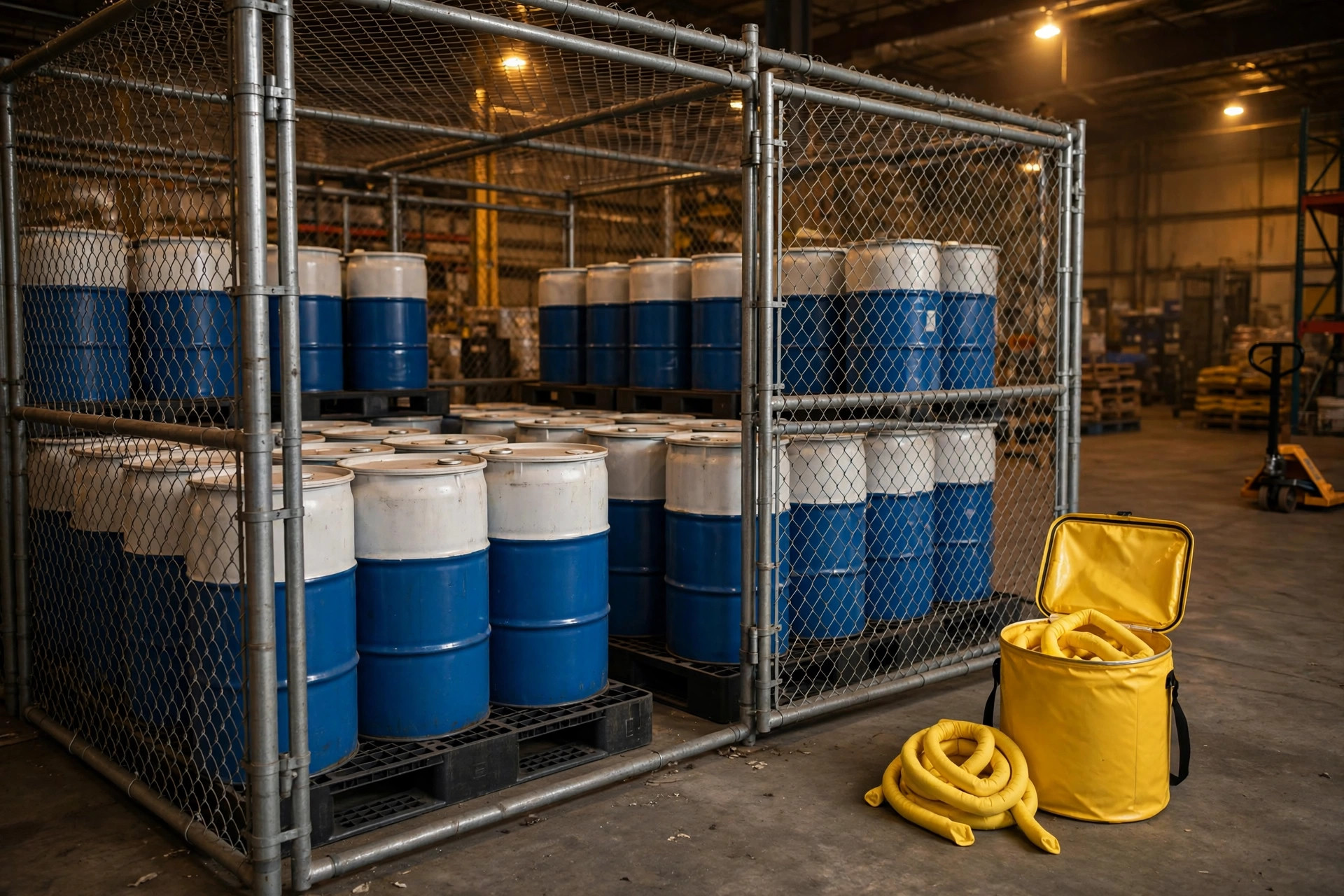
Let me tell you something. After fifteen years on the road, the thing that scares me most isn't traffic on the interstate — it's walking into a warehouse to pick up a load and seeing chemicals stored like nobody's business. That's what the industry calls hazmat segregation requirements, and in plain English it means one thing: chemicals that hate each other should never be neighbors.
August 2023. Ontario, California, a 3PL warehouse. It was 104 degrees outside. I was there to pick up two pallets of pool chlorine tablets. The forklift kid had just set them down, and one glance told me something was wrong: right next to my two pallets of chlorine, a whole row of antifreeze and motor oil, jug after jug, packed so tight there wasn't even an aisle between them.
I told their supervisor straight: "Brother, these two can't be neighbors." Chlorine tablets are oxidizers — in plain words, they're fire helpers. Antifreeze and motor oil are flammables. If one jug leaks or one pallet tips over and the two meet, on a 104-degree day, you've got a fire in minutes. The supervisor blinked and said, "We've stored them like this for years, never had a problem." Let me tell you — "never had a problem" is the most expensive sentence in warehousing.
Last fall I was stuck in traffic on I-285 near Atlanta when the news broke: a pool chemical warehouse in Conyers, Georgia was on fire. The smoke column was visible for miles. Officials issued shelter-in-place alerts — about 17,000 people evacuated, nearly 90,000 told to stay indoors, and Interstate 20 shut down for almost 18 hours. This July, the U.S. Chemical Safety Board released its final report: the warehouse held nearly 14 million pounds of pool chemicals, a corroded sprinkler component leaked water onto the chlorine tablets, and that triggered a decomposition reaction. Water touches them, they heat up, smoke, and burn. The whole building burned to the ground.
Even water can set them off. That's why I say segregation in a chemical warehouse isn't just "storing things apart" — it's keeping them alive.
What This Tells Us: "Incompatible" Means They Fight on Sight
The industry word is "incompatible." Plain English: two things that are perfectly fine on their own, but cause trouble the moment they touch. There are really only a handful of classic feuds. Memorize them:
First, oxidizers vs. flammables. Pool chlorine, hydrogen peroxide, ammonium nitrate — these are oxidizers. Put them next to gasoline, motor oil, paint, or alcohol, and you've got kindling next to a match. What I saw in Ontario was exactly this pair.
Second, bleach vs. acids and ammonia. Bleach (sodium hypochlorite) mixed with acid releases chlorine gas. Mixed with ammonia-based cleaners, it releases chloramine — both toxic. Plenty of warehouses keep their cleaning supplies shelved side by side like this and nobody thinks twice.
Third, acids vs. bases. Strong acids and strong bases react violently, throwing off heat and splatter. And then there's the water-reactive stuff — the Conyers fire was literally started by water. Those goods must stay far from water sources and sprinkler heads, in sealed, moisture-proof packaging.
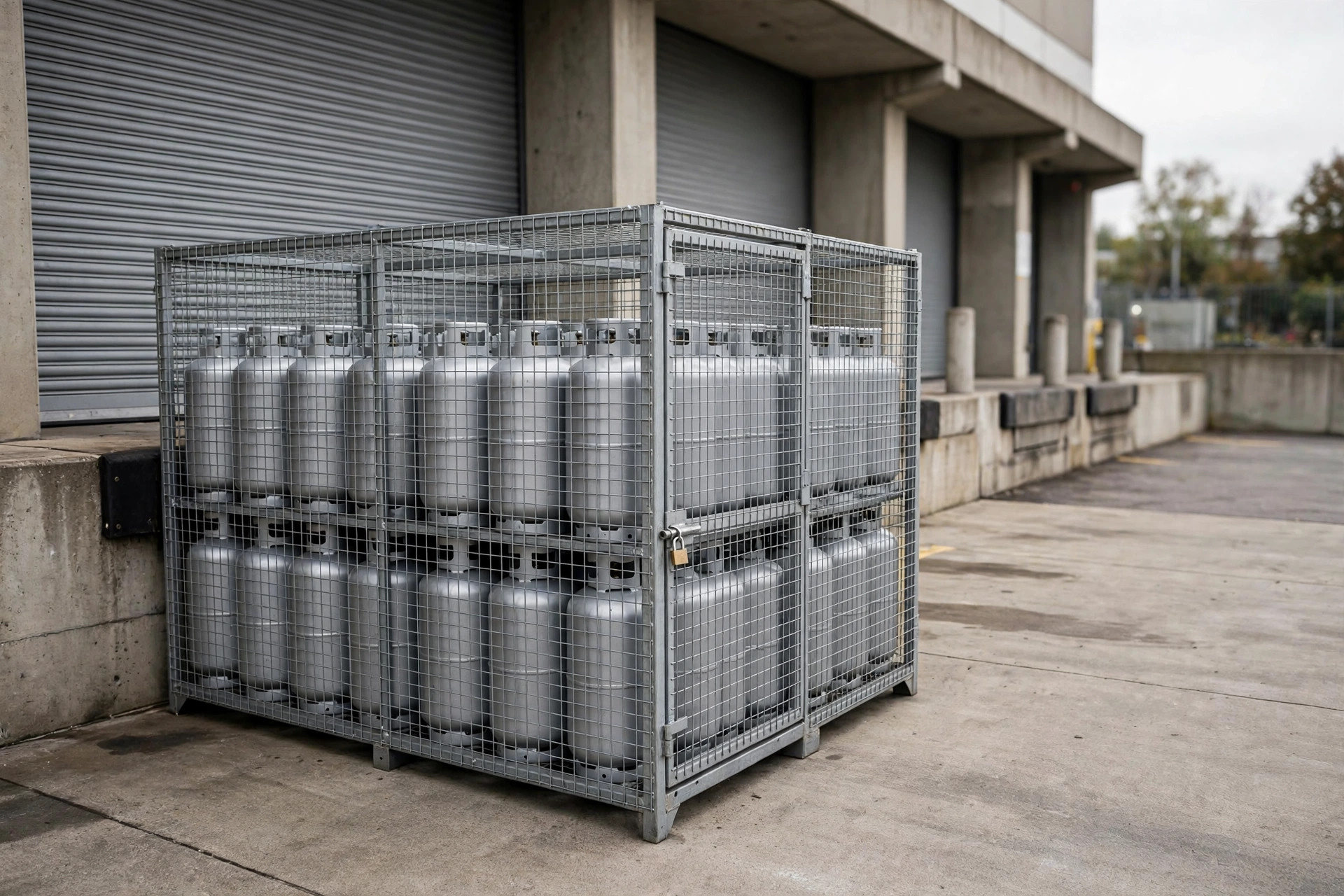
Fourth, gas cylinders. Oxygen bottles (oxidizers) and acetylene or propane (fuels) must never share the same cage. On the road we load them separately — the warehouse rule is no different.
The Hard Rules of Hazmat Segregation: SDS and 20 Feet
Where do the rules come from? Two sources, and every driver and warehouse hand with any years behind them knows both.
First, the SDS — the Safety Data Sheet. Every chemical shipment is supposed to arrive with one. You only need to read two parts: Section 7 tells you how to store it, Section 10 tells you what it can't sit next to (incompatible materials). Have your receiving clerk glance at those two sections when the freight arrives. Goods that don't comply get rejected on the spot or quarantined. That's where control starts.
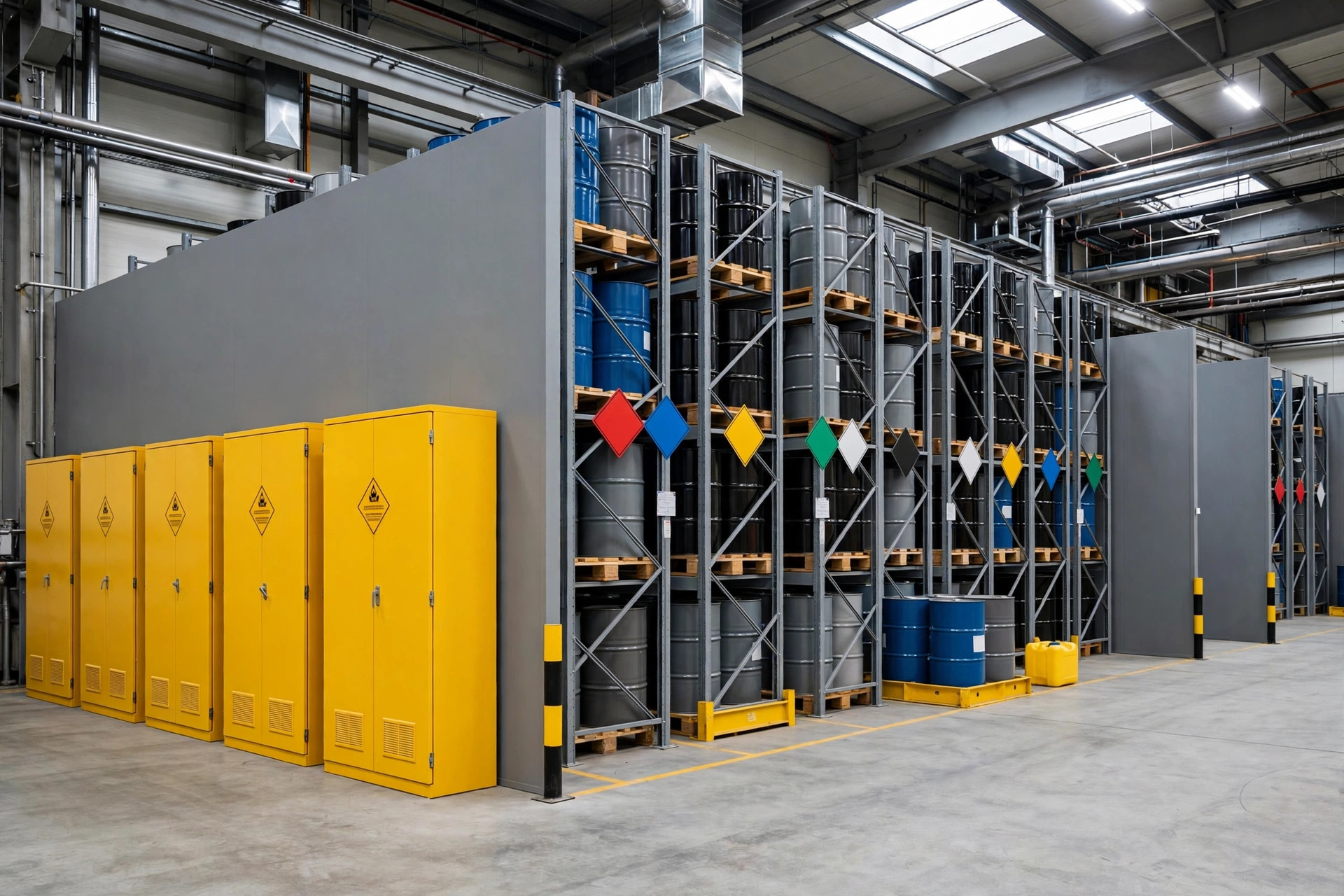
Second, the fire code. In the U.S., the International Fire Code spells out hazmat segregation requirements in Section 5003.9.8: when containers hold more than 5 pounds (about 2 kg) or half a gallon of hazardous material — or any amount of compressed gas — incompatibles must be separated, and you get four ways to do it: one, keep at least 20 feet (about 6 meters) between them; two, build a noncombustible partition that rises at least 18 inches (about 45 cm) above the stored material and wraps around the sides; three, store them in dedicated hazmat safety cabinets; four, put compressed gases in gas cabinets or exhausted enclosures. And one hard line: incompatible materials must never share the same cabinet.
When in doubt, remember this: check with your local fire marshal. Every state and city enforces the code a little differently, and asking ahead beats paying a fine after.
A One-Page Segregation Cheat Sheet for the Warehouse
| This stuff | Must never sit next to | How to separate them |
|---|---|---|
| Pool chlorine / oxidizers | Paint, motor oil, antifreeze, alcohol | 20 feet apart, or a partition wall |
| Bleach | Acid cleaners, ammonia cleaners | Separate cabinets; give cleaning supplies their own zone |
| Strong acids | Strong bases | Different racks, one row of ordinary goods between them |
| Water-reactive chemicals | Water sources, under sprinkler heads, damp areas | Sealed packaging, away from sprinklers, dedicated zone |
| Oxygen cylinders | Acetylene / propane and other fuel-gas bottles | Separate cages, or gas cabinets |
The Math: One Fire vs. Doing Segregation Right
Let me do the math the way that actually matters. One small hazmat fire — downtime, cleanup, fines, insurance hikes — and you're easily into six figures in U.S. dollars. Something on the Conyers scale? Millions, before the lawsuits and the reputation damage are even counted.
Now, what does segregation cost? A few extra rows of racking space, one partition wall, some hazmat safety cabinets, spill-containment pallets under the liquids — a few thousand to low tens of thousands of dollars, all in. You do the comparison.
And here's the counterintuitive part: the cheapest way to segregate isn't buying more racking — it's carrying less inventory and turning it faster. Less stock means fewer incompatible combinations to manage, which means less risk. Plenty of warehouses treat hazmat like ordinary goods and keep three months of safety stock. That's the real disease. Turn it faster, and the segregation problem shrinks on its own.
Five Things for Shippers and Warehouses
Boiled down, hazmat segregation requirements come to five things on the warehouse floor:
First, check the SDS at receiving — Sections 7 and 10. If a shipment can't be stored safely, say so on the spot. If you can't settle it, reject it.
Second, lock locations by the feud chart. Incompatible product classes should be hard-blocked in your system from ever being assigned neighboring slots. Don't rely on human memory. Humans forget.
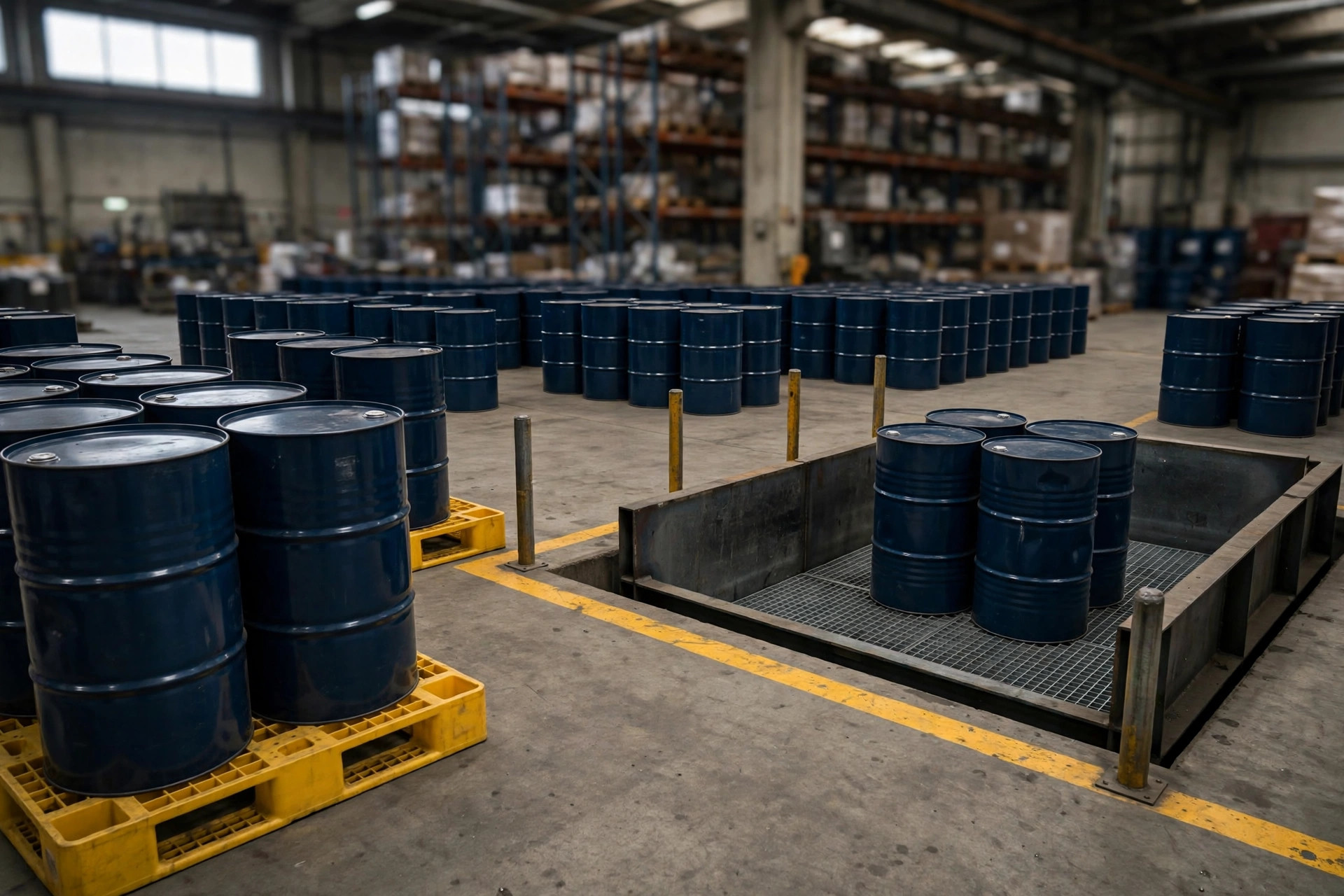
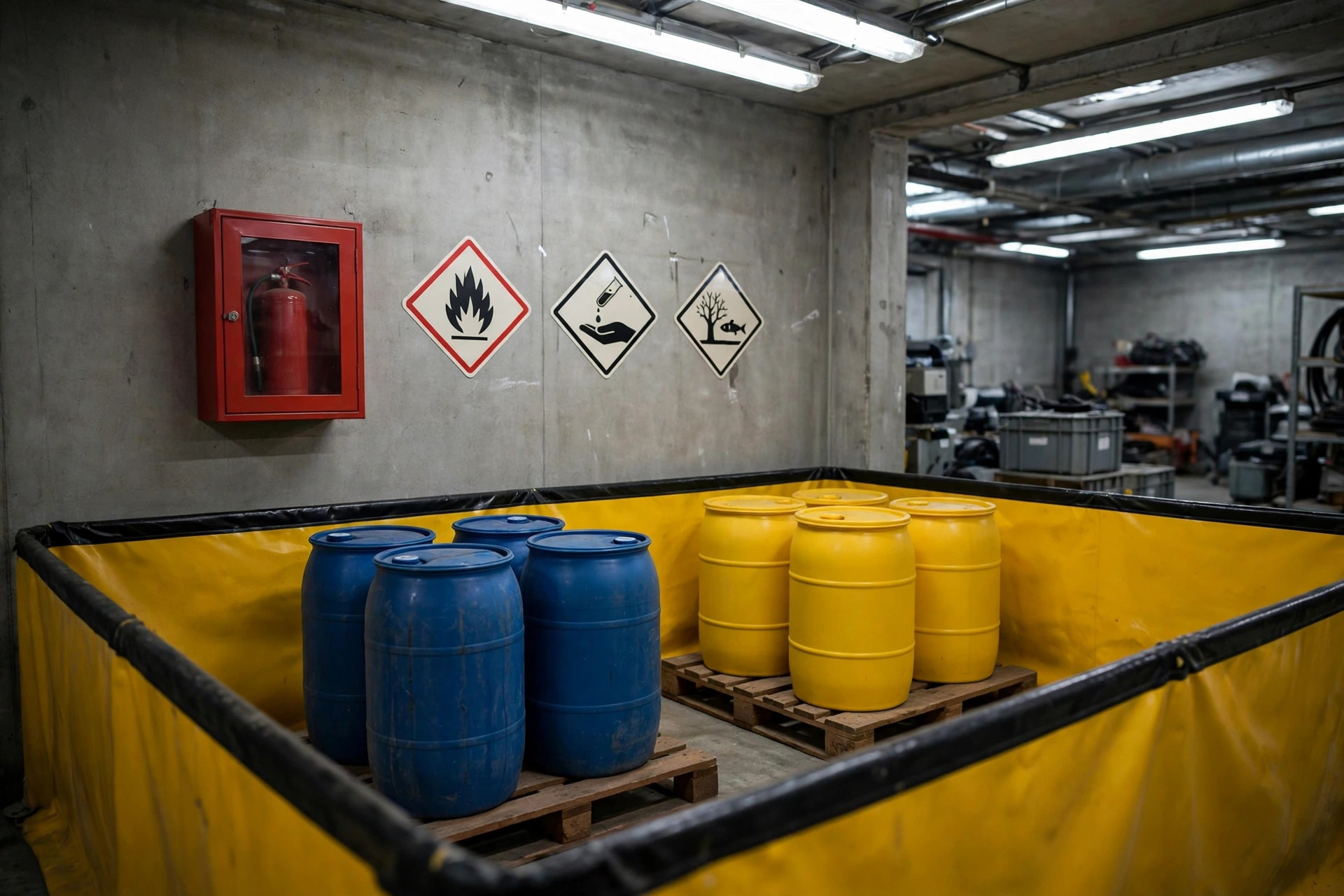
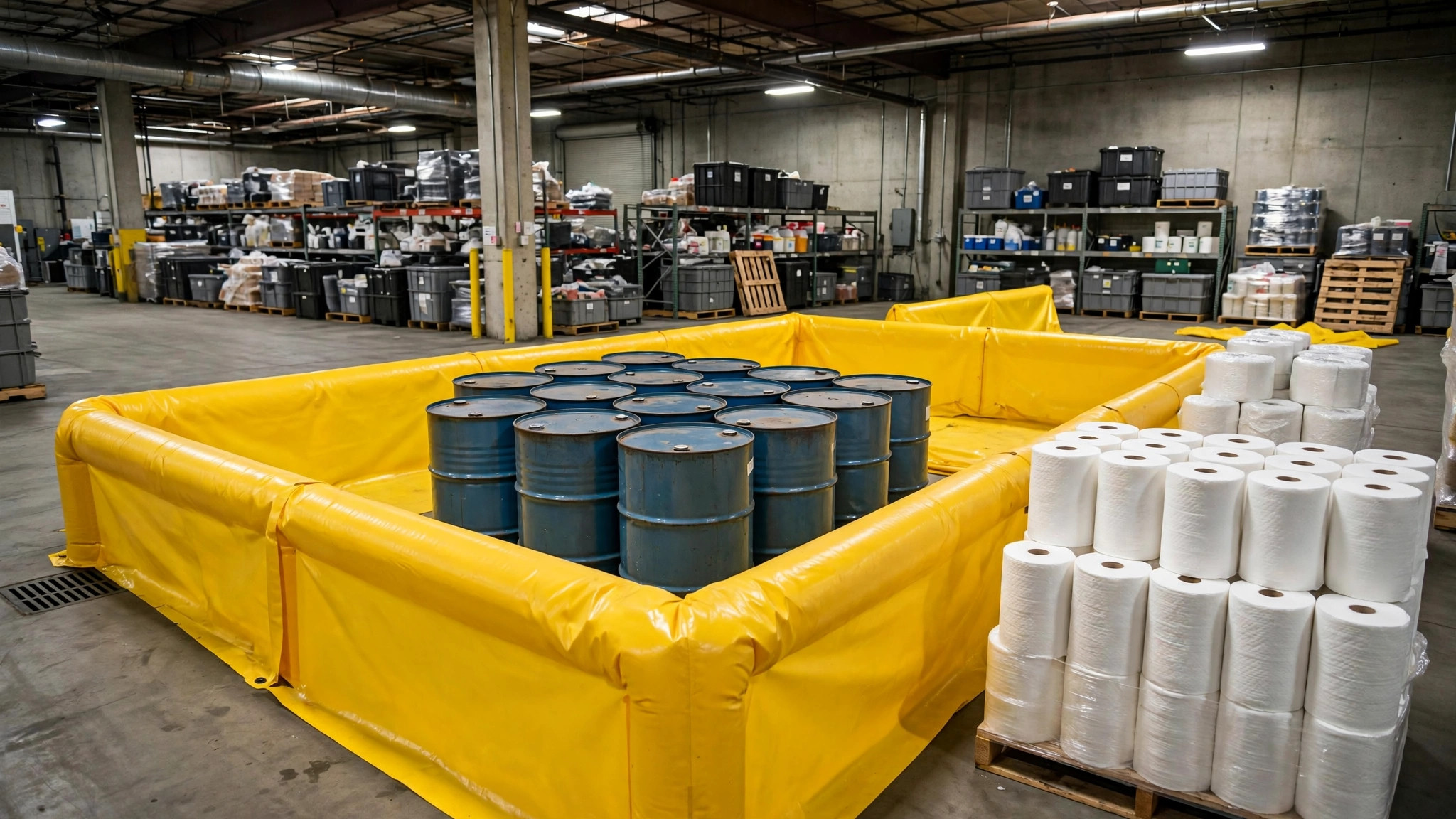
Third, every liquid hazmat gets a secondary-containment pallet. If it leaks, it leaks into the tray — not into the neighbor's pallet.
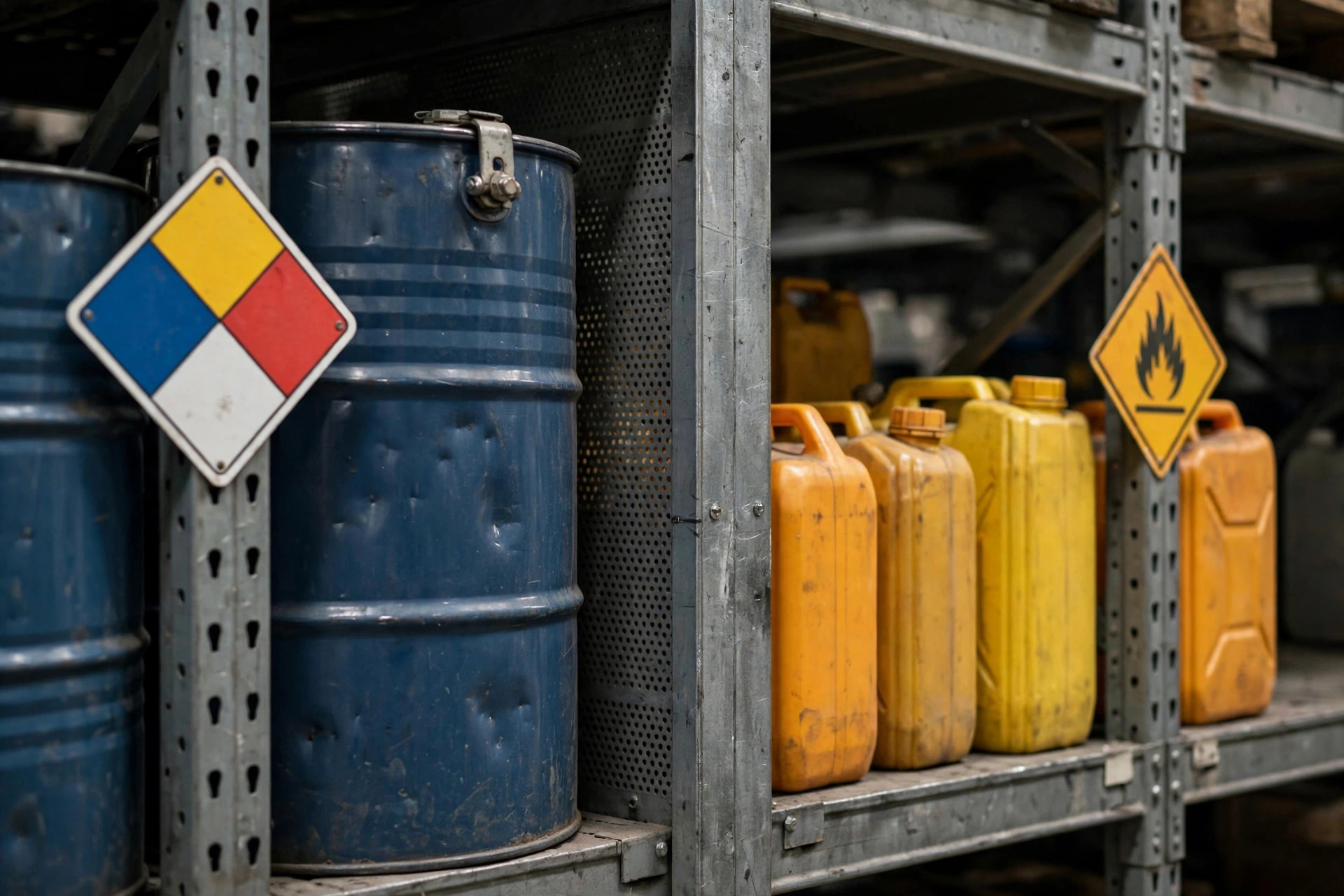
Fourth, make the signage big and clear. Every hazmat slot gets a placard listing what can't go next to it. A forklift driver should get it in one glance.
Fifth, invite the fire marshal for a walkthrough once a year. Small money for real peace of mind — and you'll learn exactly how the local office reads the rules.
There's an old saying back home: the careful ship sails ten thousand years. Insurance can pay for the building. It can't pay for a life. Segregation is a hassle today — or a disaster tomorrow.
By Shifu Zhao, Trucking Veteran (15 yrs)