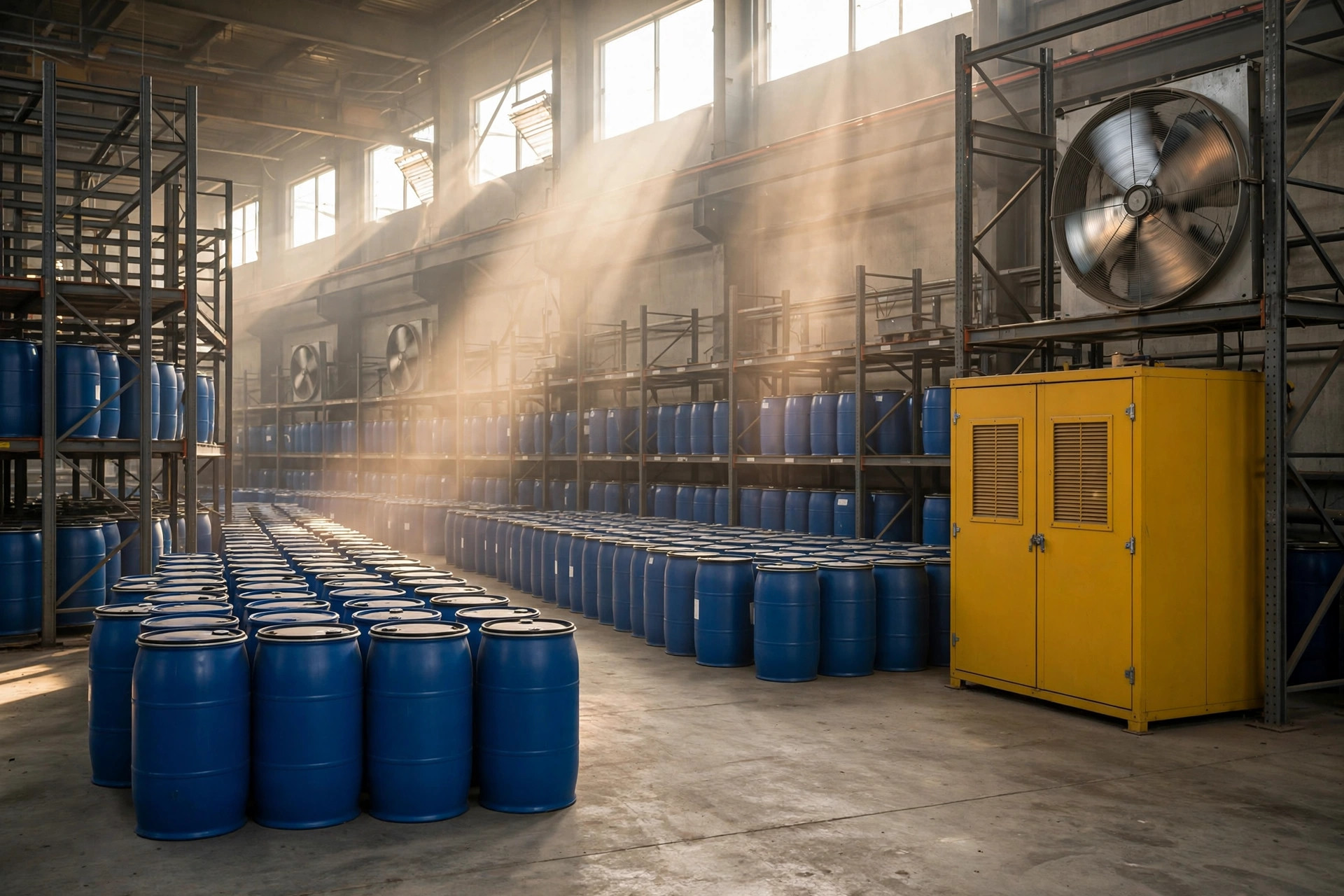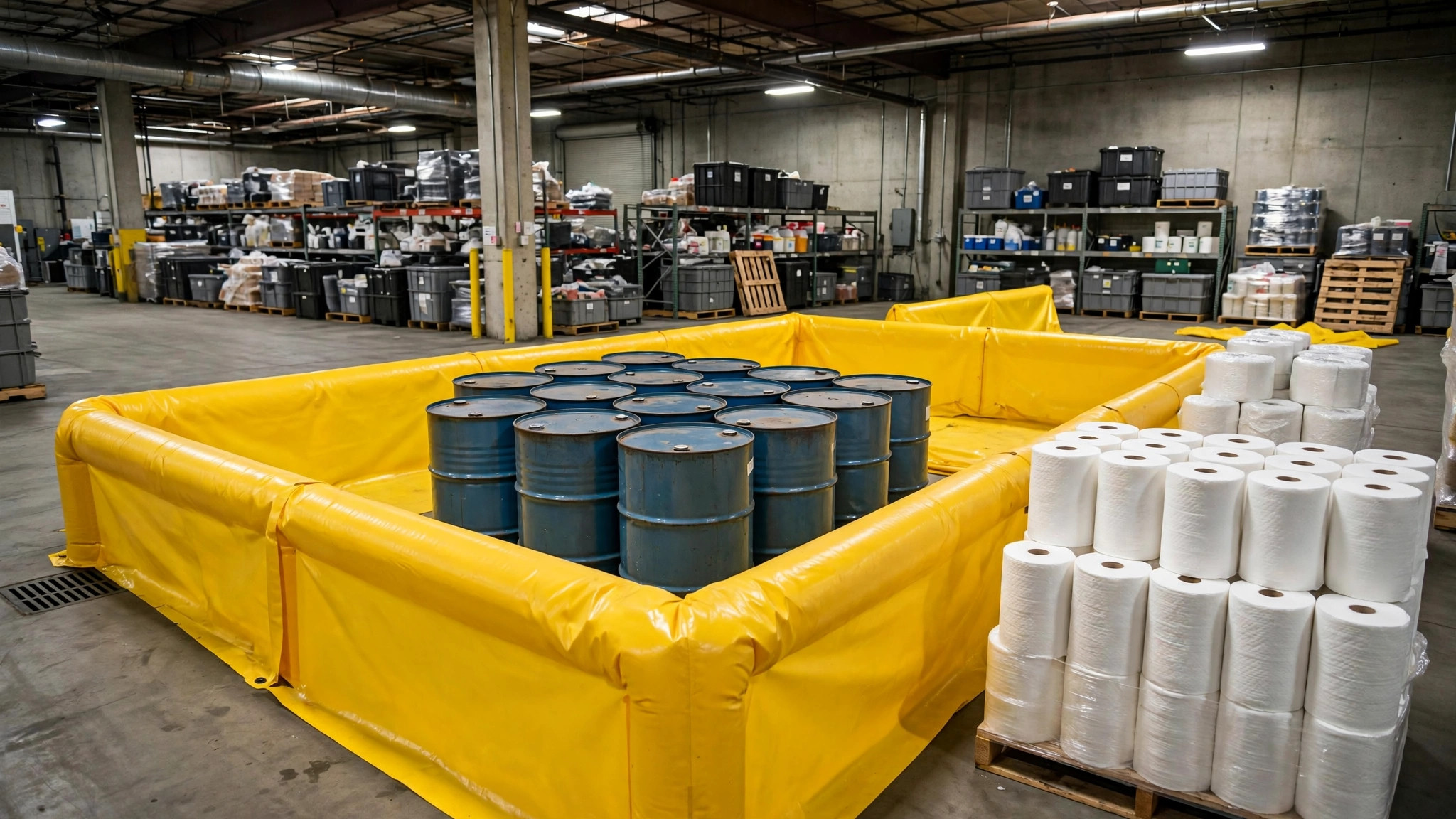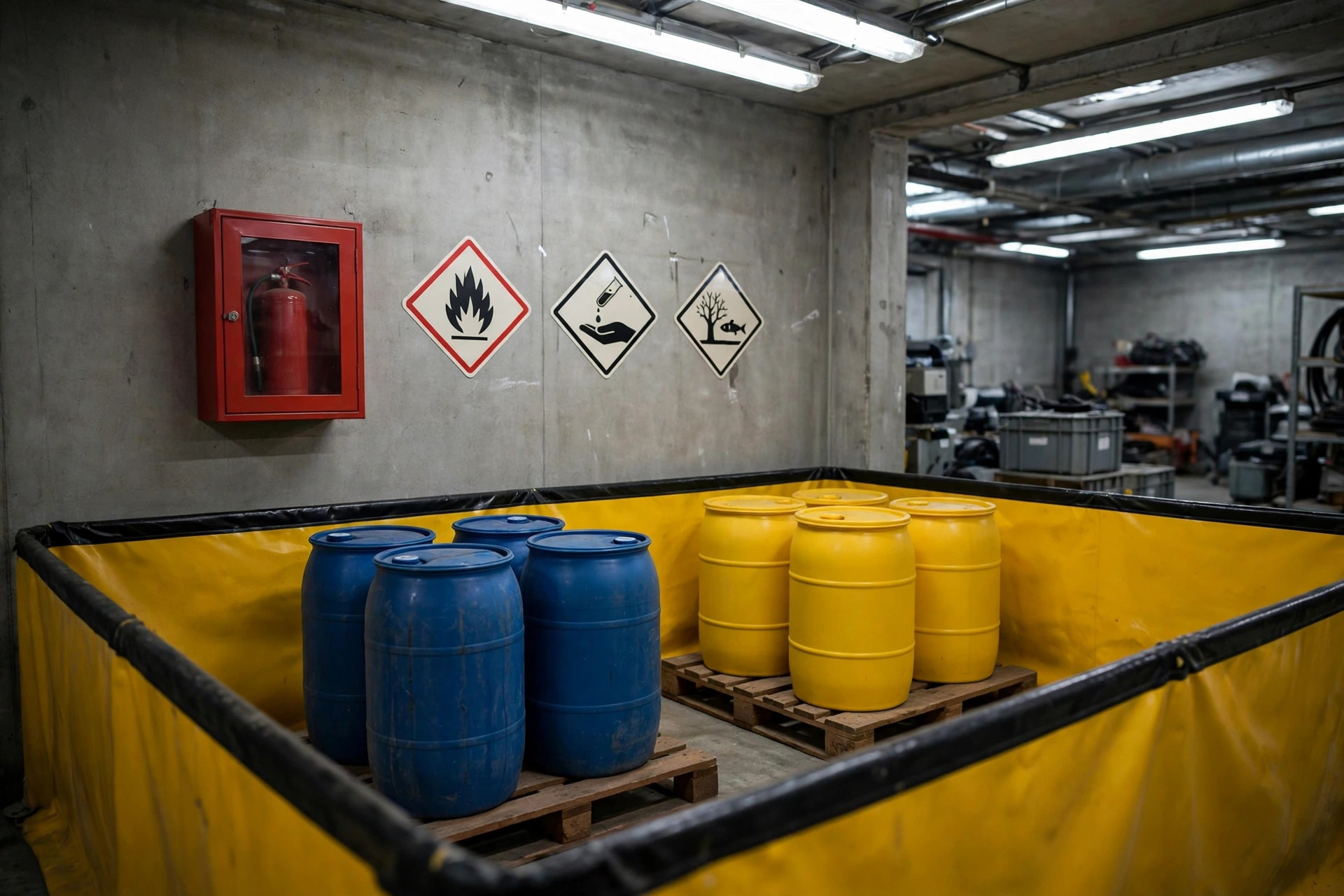
In the southeast corner of our warehouse there is a "forbidden zone"—I never even bothered to give it a location code. Two drums of expired industrial adhesive, plus half a carton of cleaning solvent nobody has wanted for two years, sitting there for a year and a half. Throw them out? Don't dare—tossing them in the regular dumpster is asking for trouble. Leave them? Every day I walk past, I get nervous, like they're quietly brewing something in there.
A while back I was drinking with Lao Wang from the warehouse next door, and he told me a company in their industrial park got hit with a fine of nearly 500,000 yuan for treating expired chemicals as ordinary trash, plus an order to suspend production for rectification. My back went cold: a small warehouse like ours cannot afford to burn that kind of money. I went home and figured this whole thing out properly. Today I'm sharing it with fellow small-warehouse owners: how do we defuse this ticking time bomb of expired hazmat?
Why You Can't Just Throw It Away
Bottom line up front: once expired, hazardous chemicals usually change legal identity from "chemical product" to "hazardous waste"—and when the identity changes, the whole game changes.
Under China's Law on the Prevention and Control of Environmental Pollution by Solid Waste, any unit that generates hazardous waste must dispose of it promptly and lawfully, must not dump or pile it up on its own, and bears the disposal cost. There is no government-set price list—disposal fees are negotiated market prices. In other words, this is money you legally cannot avoid spending.
Real cases are the most persuasive. In 2023, the Jiangsu provincial ecology and environment authorities publicly reported a case: a machining company in Wuxi had its waste cutting fluid handled by an unlicensed operator, and got slapped with a 480,000-yuan fine plus a production suspension order. Note the detail—this wasn't caught for illegal dumping. It was punished for hiring the wrong handler. Small-warehouse owners, remember this: when it comes to hazmat disposal, hiring the wrong company costs more than doing nothing.
Here's a piece of trivia most people don't know: expired chemicals left sitting around grow their own risk over time. Solvents volatilize and oxidize, drums corrode and leak, some substances become less stable after expiry. Those two drums of adhesive you're ignoring today could turn into four drums of trouble next year, plus a corroded pallet. "Deal with it later" is the most expensive option on the menu.
The Three-Step Disposal Playbook (Small-Warehouse Edition)
Big companies have EHS departments. We have three people. But the process can be the same—just executed with more street smarts:
Step one: inventory and file. Dig out every chemical in the warehouse and build a table: product name, quantity, production/expiry date, storage location, and whether you have the SDS (safety data sheet). Flag the expired ones in red, store them separately, away from ignition sources and ordinary goods. It takes one afternoon, but it's the foundation of everything after—if you don't know what you have, you can't even negotiate a price with a disposal company.
Pay special attention to the items most often missed: aerosol cans (pressurized, and more dangerous when expired), waste engine oil from forklifts, expired fire extinguishers (yes, the dry powder needs compliant disposal too), mercury lamps, and dead batteries. Each looks harmless alone; together they're a pile of ticking time bombs. During our own inventory, we pulled three cans of spray paint from 2019 out of a rack gap—six years old, rusted cans, scared the life out of me.
Step two: find a licensed handler. One rule rules them all: check the handler's hazardous waste operating license, and confirm the waste codes listed on the license actually cover what you need to dispose of. Don't trust verbal promises, don't trust "everyone does it this way"—photograph the license and keep it on file. Get quotes from two or three companies. Based on publicly available industry information, disposal quotes for waste organic solvents run in the thousands of yuan per ton (actual quotes vary widely by category and region). For small batches, ask whether your area runs a small-business hazardous waste collection pilot—shared pickups split the transport cost.
Small warehouses have one more street-smart trick: team up with other small factories in your industrial park and book a pickup together. A disposal truck has minimum load requirements—two drums from one company isn't worth the trip, but three or four companies filling one truck brings the per-company price way down. Last year four small factories in our park did exactly that, and each paid just over two thousand yuan. Shout in the park group chat; more people than you'd expect will respond. Everyone has a few "bombs" hiding in their southeast corner.
Step three: manifests and records. Hazardous waste transfers run on an electronic manifest system with a full paper trail. Keep the manifests, the contract, the invoices, and a copy of the handler's license together, for at least five years. Don't find it tedious—when environmental inspectors show up, this file is the first thing they ask for. With manifests, you're a compliant disposer; without them, you're "unable to prove lawful destination," which is a completely different story.
The Math: Disposal Fee vs. Fine
Small-warehouse owners care about money most, so let's do the math directly:
| Item | Order of Magnitude | Notes |
|---|---|---|
| Compliant disposal of one batch of expired chemicals | A few thousand yuan | Based on public industry quotes; small batches in the low-thousands range |
| Caught using an unlicensed handler | Hundreds of thousands in fines + production suspension | Reference: the 2023 Wuxi case, 480,000 yuan |
| Illegal dumping or stockpiling | Fines in the hundreds of thousands under the Solid Waste Law | Subject to the latest requirements of your local ecology and environment bureau |
The math speaks for itself: compliant disposal costs a fraction—one or two orders of magnitude less—than the fine. And there's a hidden cost: penalized companies go on the credit record, and then loans, project bids, and supply-chain qualifications all get harder. A small warehouse lives on reputation and relationships. We can't afford that hit.
One honest word to close. We small warehouses can't run the full EHS apparatus of the big players, but "inventory it, hire the right people, keep the paperwork"—one afternoon and a few thousand yuan gets it done. Don't wait until the inspectors are at your door to remember those two drums in the southeast corner. By then, the math looks very different.
Small warehouses have their own way of surviving: spend money where it counts, and compliance is the sharpest blade a small warehouse owns.
By Xiao Ma, Small Warehouse Owner