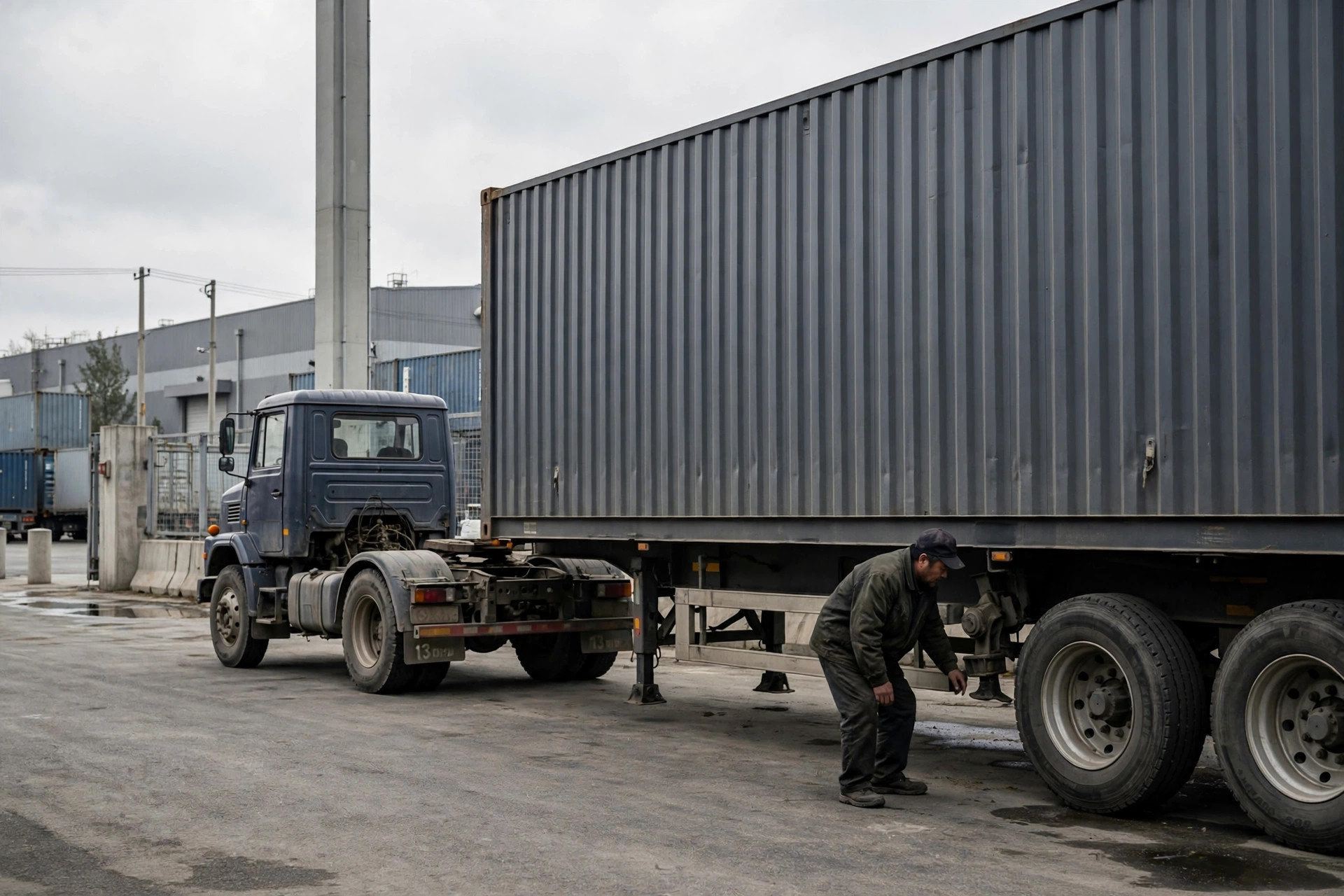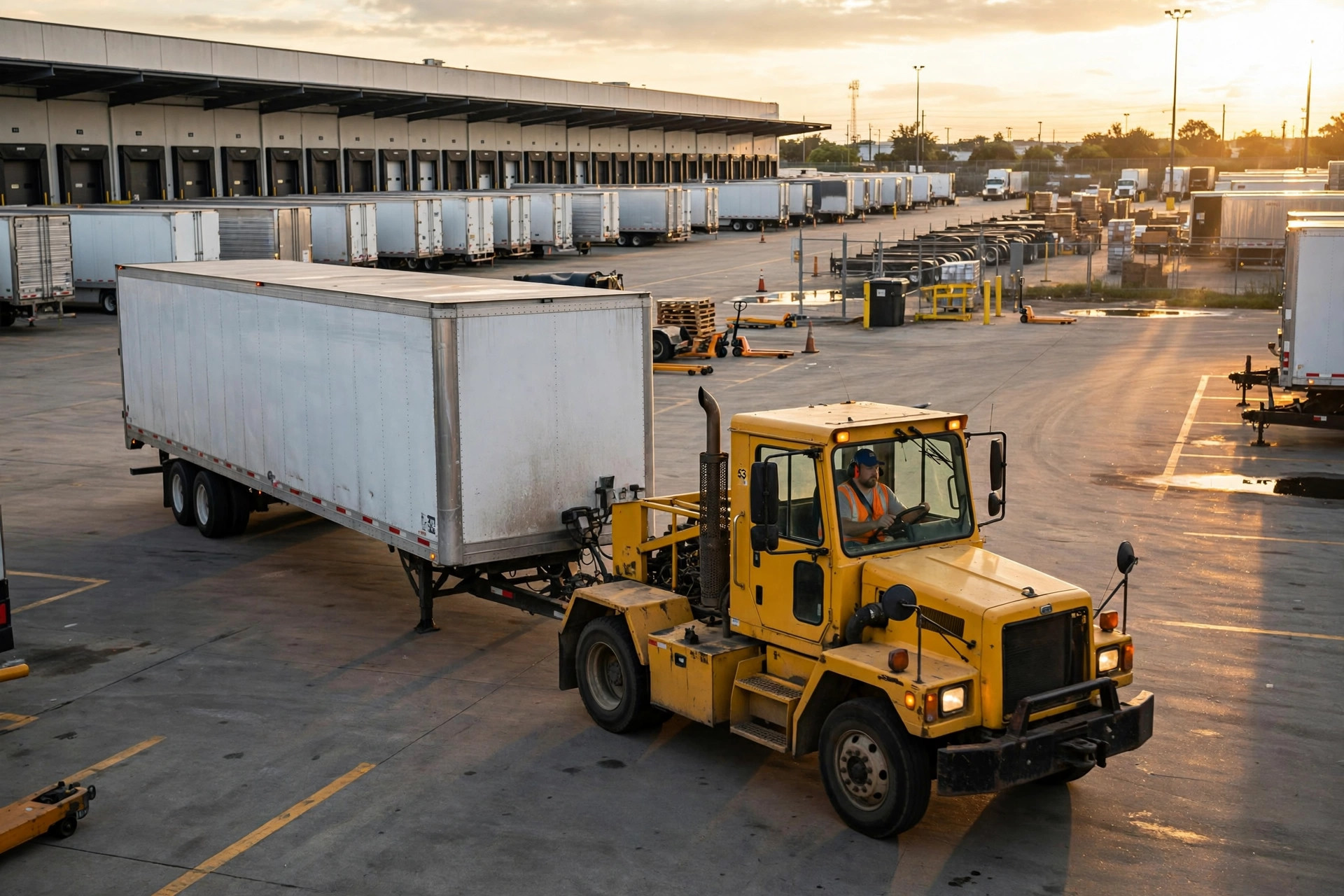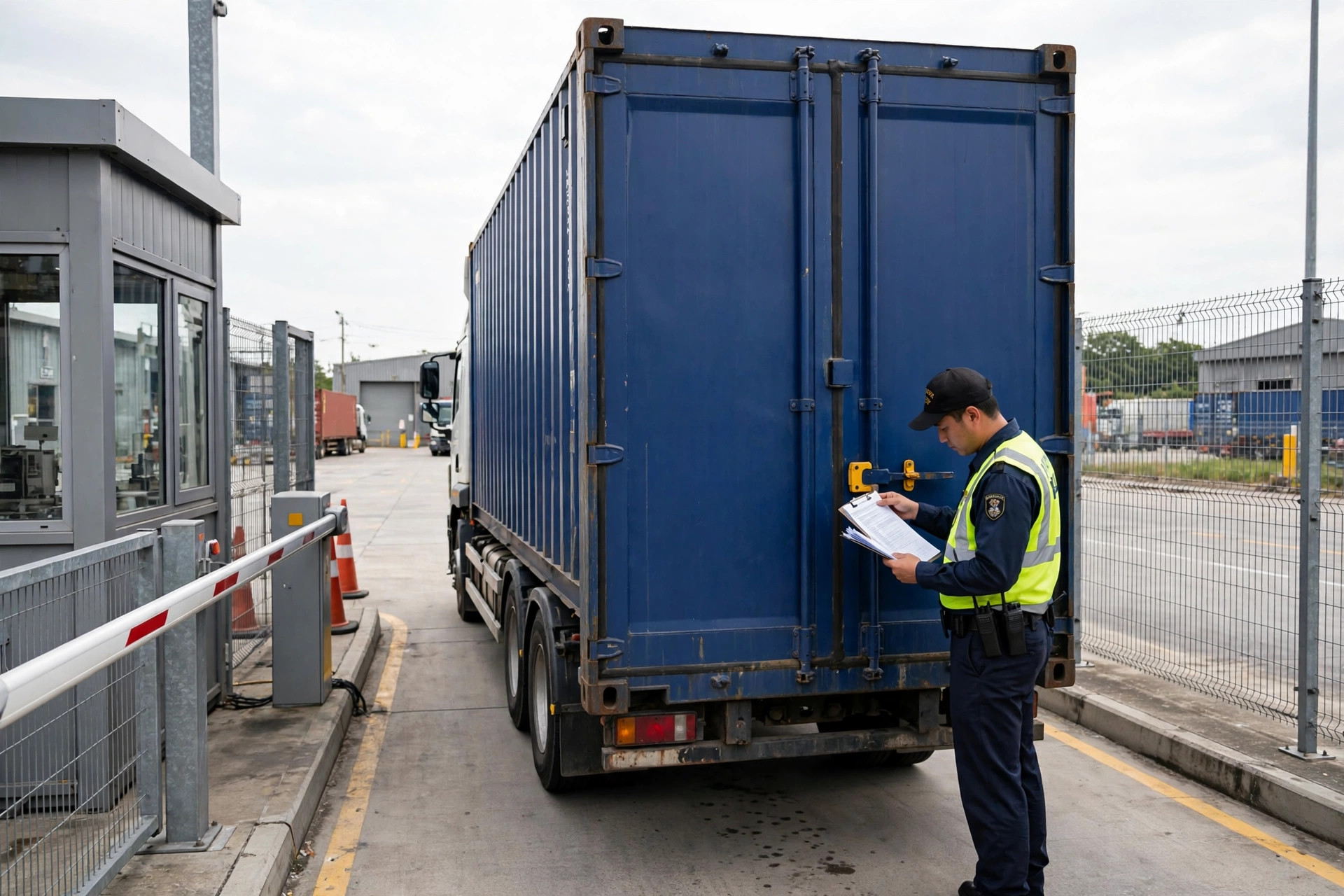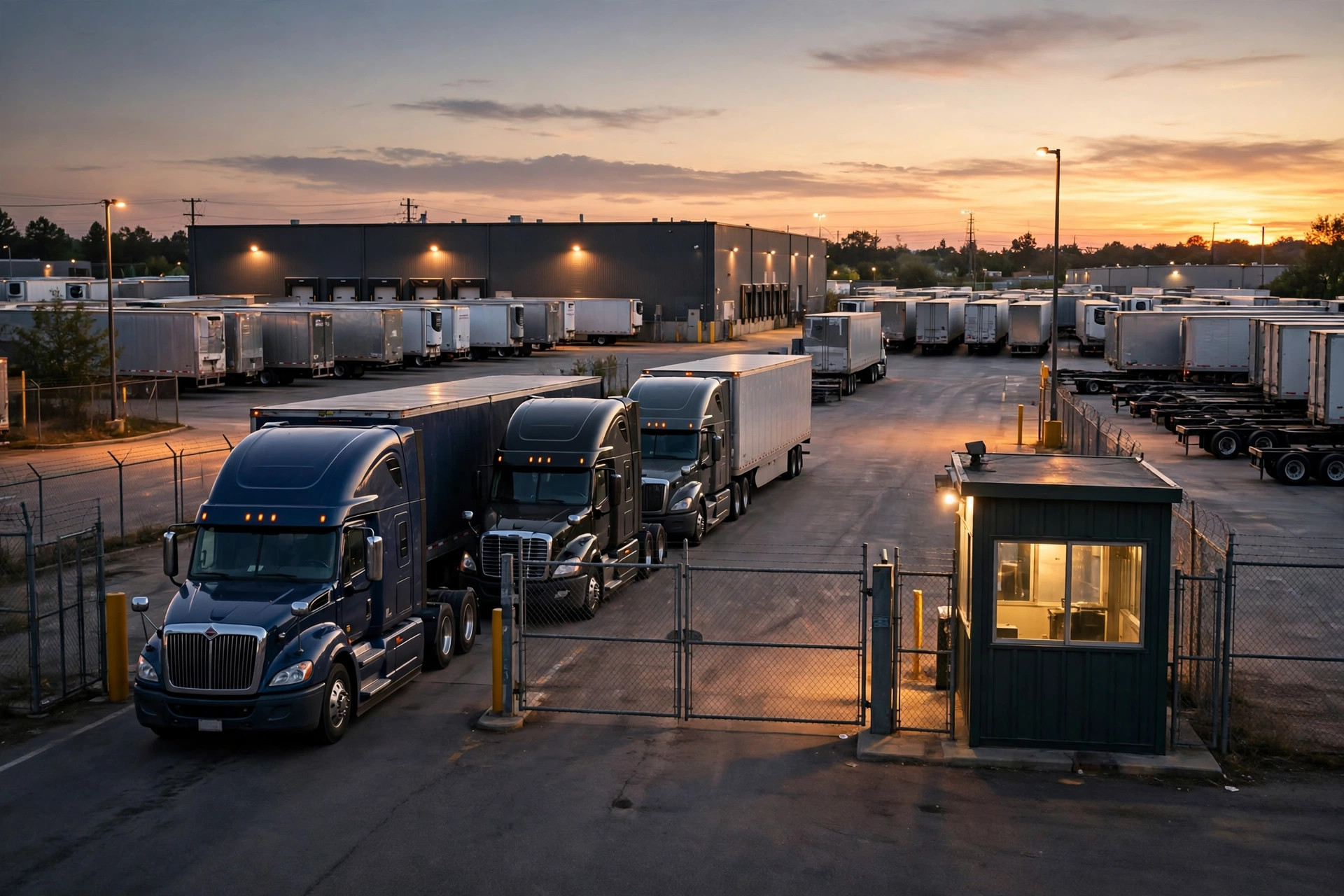
Let me tell you, after all these years on the road, I've been through maybe a hundred warehouse yards. I know the scene by heart: a paper logbook in the guard shack, a dispatcher shouting on the radio "door 3 is open, send the next one," drivers sitting in their cabs for two hours.
Two years ago, a customer in Fontana asked me: "Old Zhao, we get 80 trucks a day at our gate — should we get a YMS? What does it cost?" I couldn't answer on the spot. So I got quotes from three vendors, read every line, and today I'm breaking it down for you: how much does a yard management system cost? It's not one number.
Three Yard Sizes, Three Price Tags
Small yard: under 20 trucks a day, 1-3 doors.
At this scale, forget "systems" — you need two functions: appointments and check-in. SaaS dock scheduling tools start around USD 149 per facility per month (e.g., Conduit's Dock Scheduling at the 0-199 trucks/month tier), plus driver self-check-in for another USD 149. That's USD 300 a month, USD 3,600 a year, live in a week.
Honestly? Plenty of yards this size don't even need the USD 300. A shared calendar plus a driver group chat works fine. Where's the line? I'll get to that.
Mid-size yard: 50-150 trucks a day, 5-20 doors, 1-5 yard hostlers.
This is YMS's home turf. A typical quote looks like this: USD 1,500-3,000 per month in software subscription (the median vendors themselves cite), USD 10,000-30,000 in implementation (2-4 weeks to go live), and hardware (gate kiosks, license-plate cameras) from a few thousand to USD 10,000+. Year one around USD 50,000 is normal.
Worth it? Do the math: one hostler costs USD 60,000-70,000 a year in California, loaded. Vendors claim 20-30% savings on yard driver and truck costs (vendor data — I discount it 20%). A mid-size yard usually has 2-3 hostlers; saving half a head is USD 30,000 a year. Add shorter driver wait times and fewer detention penalties — payback in 12-18 months. The math works.
Large yard: 200+ trucks a day, dozens of doors, multiple sites.
At this scale there's no standard price list. Implementation starts at USD 50,000 as a matter of course (including weeks of vendor on-site support), more for multi-site and WMS/TMS/ERP integrations. I've seen a 120-door distribution center spend nearly USD 200,000 on implementation alone.
But the large-yard math is the easiest: 200 trucks a day, each waiting one extra hour at the gate, is 70,000+ wasted hours a year. At USD 75/hour detention (per your actual contracts), saving 10% is USD 500,000 a year. For large yards it's not "whether" — it's "which vendor."
Three Hidden Line Items in Every Quote
What sales quotes you and what you actually spend are always three items apart:
One: out-of-scope implementation. The quote says "standard 2-week implementation," but your gate process isn't standard. One change, one extra week, a few thousand more. My rule: budget 1.5x the quoted implementation fee. It's right eight times out of ten.
Two: integration fees. YMS only sings when connected to WMS/TMS — each interface runs a few thousand to USD 10,000+. Sales says "we have standard APIs," but your WMS is a ten-year-old version and the integration effort doubles.
Three: your own people's time. During go-live month, your dispatch supervisor spends half their time on the system. That costs money too. Don't pretend it doesn't.
Getting Quotes: Three Questions That Expose the Padding
So you're going to ask for quotes. Good. But most people ask the wrong question — "how much?" — and get a number designed to be small. Ask these three instead, and the padding falls out by itself.
Question one: "Break it down per door, per interface, per month of implementation." Any vendor worth their salt can decompose a quote: software subscription per door per month, implementation per interface, training per day. A vendor who only gives you a single "USD 45,000 all-in" number is either guessing or hiding. The decomposed quote also tells you where you can negotiate — you can't haggle a lump sum, but you can absolutely push back on "USD 8,000 for two days of on-site training."
Question two: "Give me two reference customers at my size — and let me call them." Then actually call. Don't ask "are you happy with the system" (nobody answers that honestly). Ask three things: how many weeks did implementation really take versus the quote; what's the one feature you paid for and never use; what broke in the first 90 days. Twenty minutes on the phone with a real user is worth more than ten vendor demos.
Question three: "What's the change-request rate?" Every yard has one process that isn't standard — yours will surface in week two. The quote covers the standard path. What's the hourly rate when you need something custom, and who approves it? I've seen a USD 30,000 quote grow a second head because the carrier self-check-in flow needed "minor customization" at USD 250 an hour. Get the rate in writing before you sign, not after you need it.
One more practical note: pricing models are shifting. The old model was per-door-per-month. More vendors now price per truck processed — USD 1-3 per gate transaction. For a 60-truck-a-day yard that's USD 2,000-5,000 a month, roughly in line with the subscription numbers above. Per-truck pricing favors small yards (pay for what you use) and punishes growth — run the numbers at your current volume AND at 2x volume before you pick a model. The vendor who looks cheap today may look expensive the year you grow.
When Excel and a Radio Win
Honestly, not every yard deserves a YMS. Three dividing lines:
- Under 30 trucks a day, under 5 doors. Your dispatcher can hold it in their head. Excel is enough. Spend the software money on a raise for the dispatcher instead.
- Fixed, obedient carriers. Same 5 fleets every day, drivers know the guards by name, no-show rate under 5%. The "process discipline" value of a YMS is marginal here.
- Extreme seasonality. The system bills monthly, including the dead months. Better to add temp staff at peak.
Flip it around — three signals that mean stop hesitating and start shopping: average driver wait over 2 hours; monthly detention penalties over USD 5,000; your dispatcher quit and the replacement still can't run the gate after a month — meaning the whole process lived in one person's head, never in a system.
An old saying to close: a system is a scale, not a knife. A YMS weighs exactly how much money your gate wastes every day — but swinging the knife to cut the waste is still your job. Get your own gate math straight first, then ask for quotes. You'll negotiate from solid ground.
By Shifu Zhao, Trucking Veteran (15 yrs)