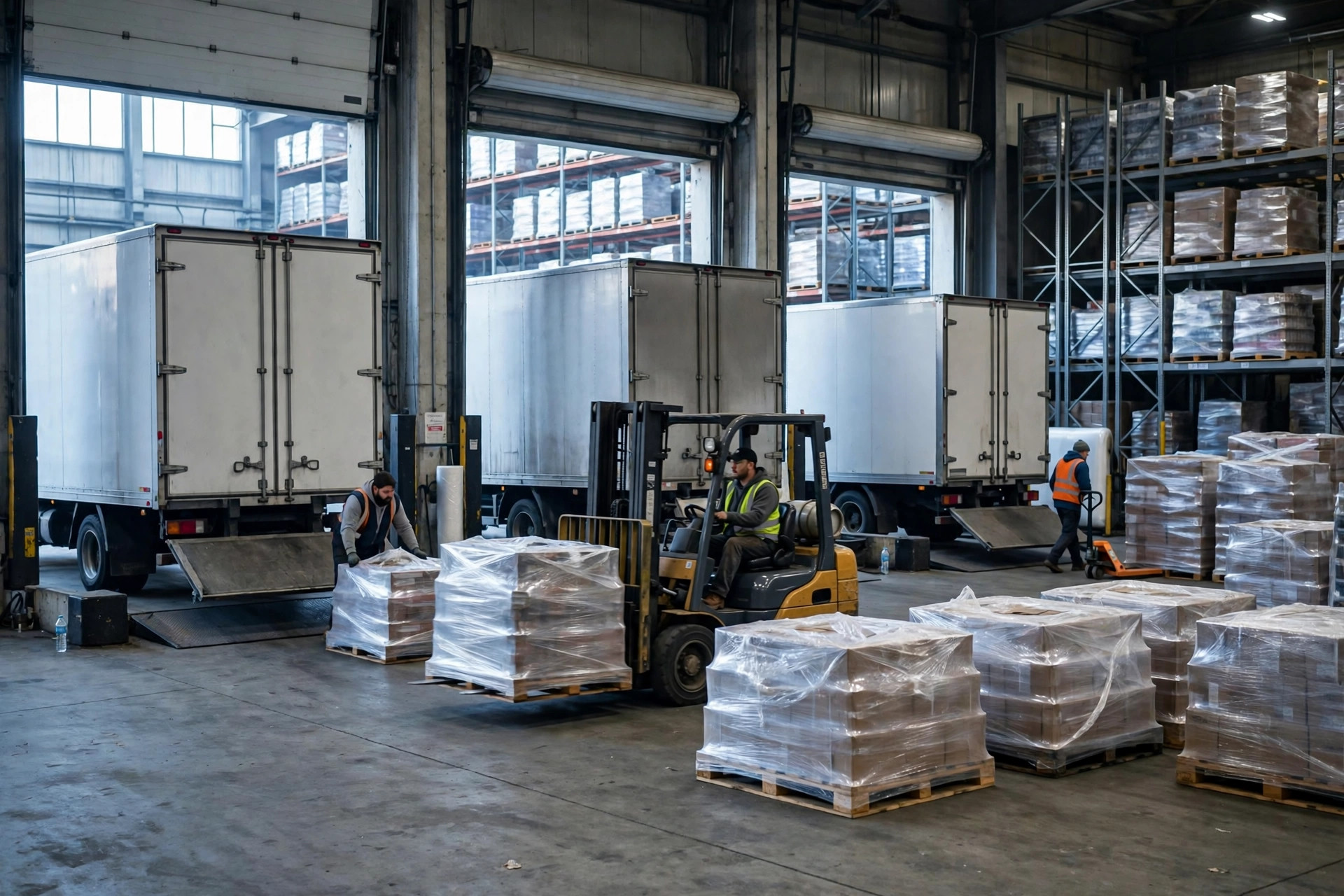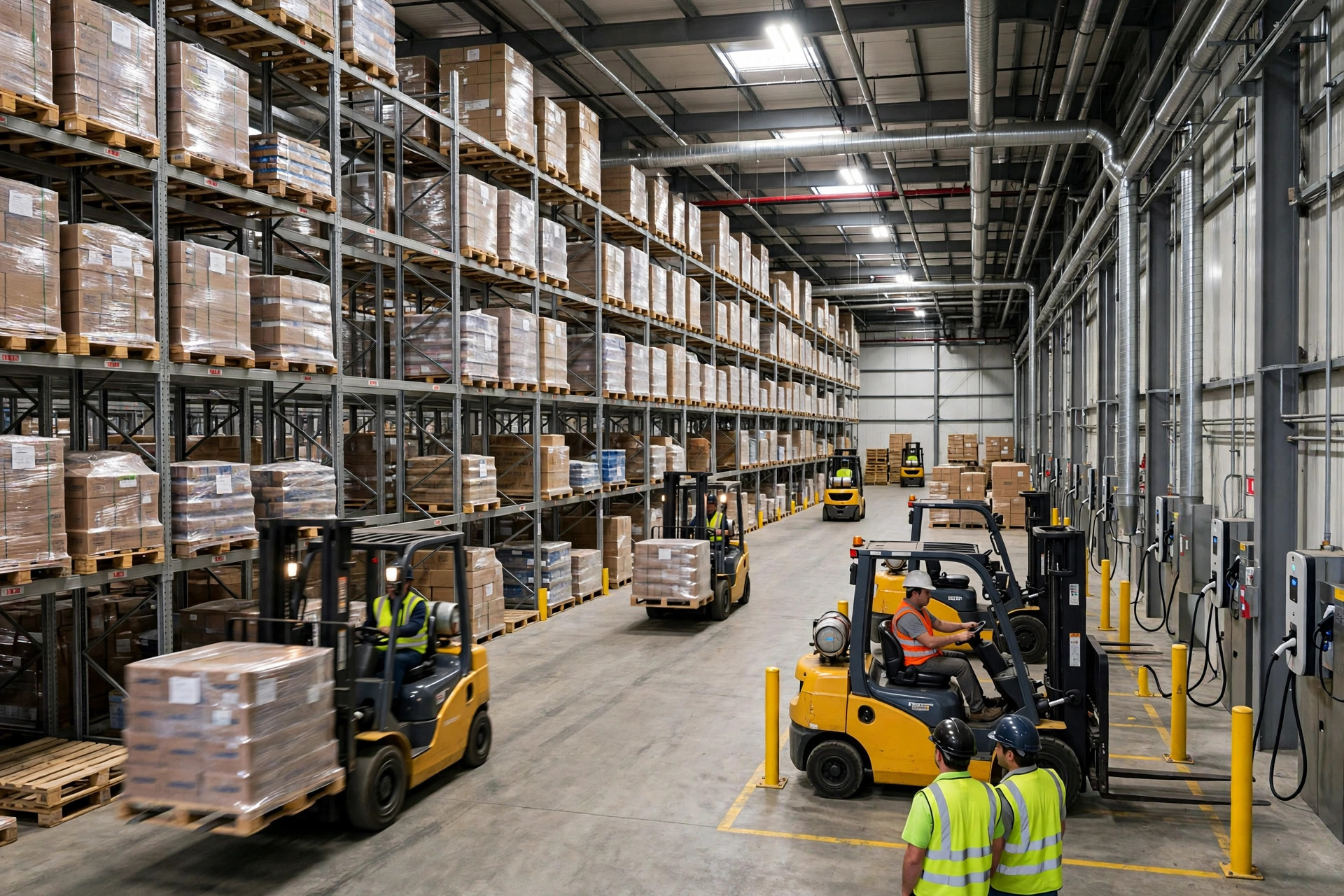
Let me tell you, I learned how a warehouse fleet really works at a warehouse gate one morning. I had just arrived to drop off paperwork when the place was in a mess: two forklifts waiting at the dock to load a truck, one dead truck parked in the aisle waiting for a charge, and another truck somewhere deep in the racks that nobody could find. The dispatcher was on the radio calling all over the floor, the shipper was getting anxious, and the drivers were just standing around waiting. Watching that scene, I had one thought: this warehouse did not lack trucks. It lacked a way to run the trucks it already had.
After all these years on the road, I have seen plenty of warehouses. The well-run ones do not always have the most trucks, but every truck has work, has charge, and has a driver. The messy ones may look well stocked, yet the moment the outbound rush hits, everything falls apart. So today I am not talking about buying or renting trucks. I am talking about the fleet you already own, and how to keep it from letting you down.
Warehouse Forklift Fleet Management Starts With the Work, Not the Truck Count
Let me tell you, most people ask the wrong question first: how many forklifts should our warehouse have? That question is backwards. The truck count is not something you guess. It comes out of the work. You have to break a day down first: how many picking, replenishment, and loading trips, and roughly how far, how high, and how heavy each runs. Once the work is broken down, the truck count shows itself.
I have seen a warehouse add several trucks before peak season, only to watch them sit collecting dust when volume dropped. I have also seen the opposite: a fleet that looked just right on paper, but every afternoon the picking crew and the dock crew fought over the same trucks. Pickers stood by the racks waiting for a truck while trucks at the dock waited for freight. Both sides lost time. The problem was not too few trucks. It was that picking peaks and loading peaks had never been separated on paper, so they crashed into each other at the same hour.
My advice to shippers and warehouses is simple: draw a work timetable first. When is picking busiest in the morning, when is loading busiest in the afternoon, and can replenishment be moved to a quieter slot? Stagger the peaks and you effectively gain the capacity of a few extra trucks, without buying anything.
Charging and Shifts Keep Warehouse Forklift Fleet Management on Schedule
If a fleet is run badly, nine times out of ten the trouble starts with charging and shifts. Let me tell you a true story. I arrived at a warehouse late one night to pick up freight, and the night driver told me the day truck had run all day and came back nearly empty. The night driver took over and first had to hunt for a charger, then wait for a charge, and the whole outbound load slipped behind. The driver was not lazy. Nobody had owned the battery level at handover.
There is a plain old method that works well: give every truck a return-to-charge line. When the battery hits that line, the truck goes back to the charging area no matter how busy things are, and a fully charged truck takes over. Where the chargers sit matters too. Put them somewhere handy along the normal work routes, not somewhere that forces a driver to cross half the warehouse just to charge. And count chargers together with trucks. Too few chargers means charged trucks cannot get out, which is the same as having fewer trucks.
Shifts work the same way. A driver is not a machine. After hours behind the wheel, a driver needs a break, but the truck does not have to stop with the driver. The good pattern is to rotate both: drivers rotate off for rest, trucks rotate off for charging, and the two rotations line up on one sheet. The dispatcher should hold a simple rotation sheet: who drives which truck, when they swap, and when each truck charges.
A Rotation Table That Pairs Trucks With Charging
Let me tell you about another warehouse whose approach I admired. They did not have a huge fleet, just a dozen or so trucks, but the dispatcher kept a handwritten rotation table on the wall that anyone could read. That warehouse used to be messy too: morning picking and loading fought over trucks, afternoon replenishment had no truck at all, and a queue formed at the chargers. They did not add a truck. They put the work and the charging on one table, staggered the peaks and the charges, and the chaos shrank fast.
Their table looked something like this, and any warehouse can draw its own version. The numbers need not be exact; what matters is that the slots match your own rhythm:
| Time slot | Picking trucks | Replenishment trucks | Loading trucks | Back to charge |
|---|---|---|---|---|
| Early shift start | More, picking runs first | Fewer, top up along the way | Keep one in reserve | Trucks low after the night shift go first |
| Morning peak | Stay fully staffed | Move big jobs to quiet slots | Release in truck arrival order | Rotate one truck to charge |
| Afternoon outbound peak | Cut back, keep hands on packing | Pause big replenishment | More, keep the dock moving | Charged trucks step in |
| Night wrap-up | Finish and count | Restock what tomorrow needs | Send off the last loads | All trucks above the charge line before handover |
That table's beauty is not tidiness. It ties two things together: where each truck works, and when each truck comes back to charge. Before, crews only thought about charging after work was done. Now, when a battery hits the line, the truck swaps out and work keeps moving. The dispatcher no longer has to shout across the floor. One look at the table shows which truck should come back and which should go out. That is warehouse forklift fleet management at its most practical: not a slogan or a software pitch, but tasks, charging, and shifts written on one sheet, followed every day, with any drift visible right away.
Crashes, Idle Time, and When to Add a Truck in Peak Season
Let me tell you, you can judge a fleet by two simple sets of numbers: bumps and scrapes, and idle time. When crashes go up, it is often not bad driving. It is crowded routes, blind corners, or a schedule so tight that drivers have to rush and cut each other off. When idle time goes up, it is often uneven work: one truck runs all day while another barely moves. You do not need a fancy system for either. The dispatcher can write one line a day: which truck bumped something and where, and which truck sat idle most of the day. After a few weeks, the pattern shows itself.
As for adding trucks for peak season, my advice is this: do not add on feeling. Add on a trigger you can state plainly. For example, if for several days in a row the whole fleet is out during the outbound peak and trucks still queue up, or if replenishment keeps slipping to the next day for several days running, then the fleet has truly hit its limit, and it is time to think about a temporary truck, a borrowed truck, or longer shifts. But if idle trucks are still sitting around, first ask whether peaks can be staggered or shifts stretched. Adding trucks is easy. Keeping them is hard. More trucks mean more charging, more maintenance, and more drivers to find.
Here is the counterintuitive part, and it is worth saying plainly: the biggest cost of a fleet is often not the trucks themselves. It is the time trucks sit idle, trucks sit uncharged, and drivers wait for a truck. Save that wasted time and you save more than a new truck would ever save you. Run the fleet well, freight leaves on time, drivers are not frustrated, and shippers stop chasing updates. That is what it looks like when the fleet account is truly balanced.
An old saying fits here: trucks are dead iron, people are alive, and the account is worked out on paper. Whether a fleet runs smoothly does not depend on how many trucks you own. It depends on whether tasks, charging, and shifts are lined up on one table, and whether everybody follows that table day after day.
By Shifu Zhao, Trucking Veteran (15 yrs)