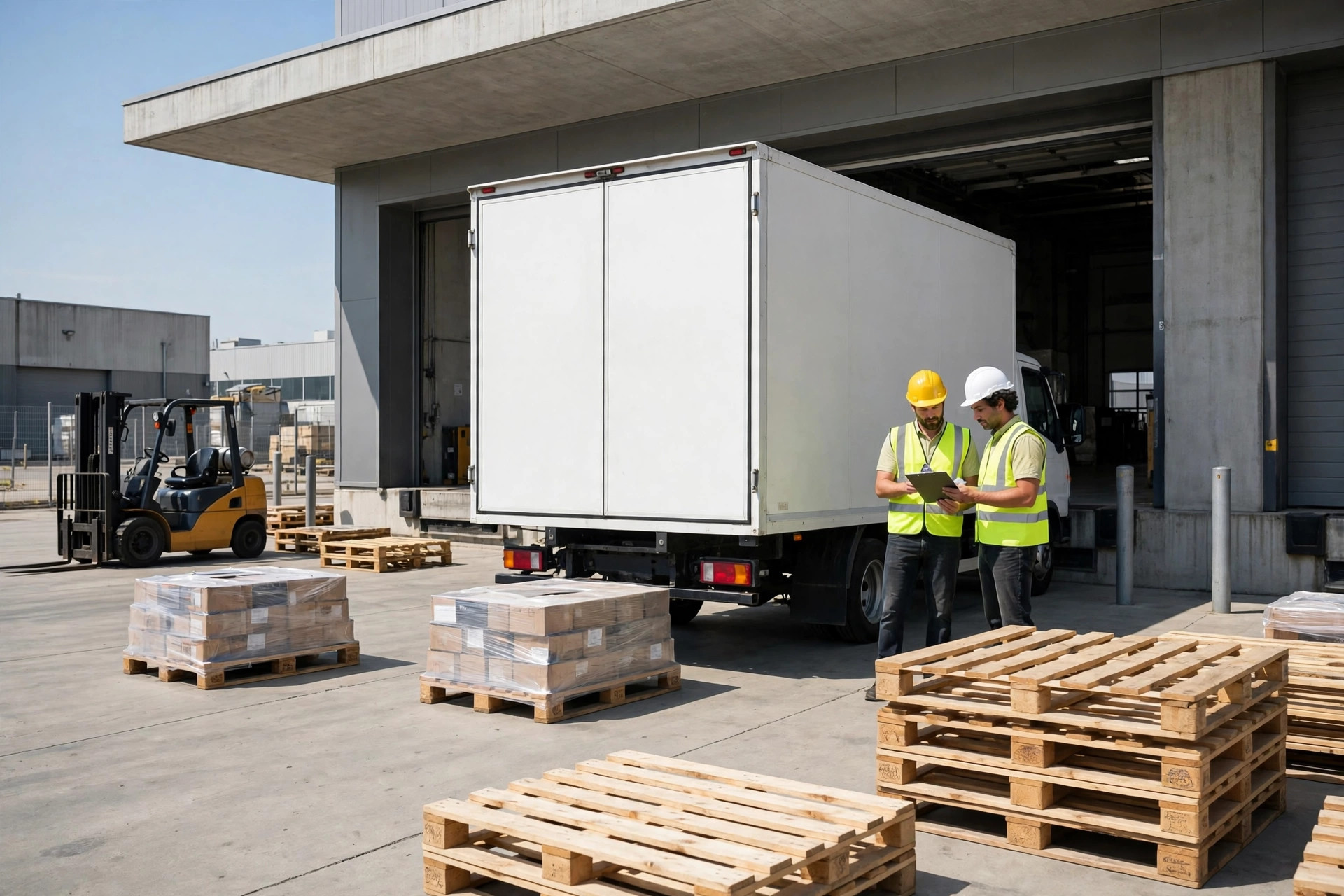
It was 7:40 in the morning and I had barely walked into the receiving area when my night-shift lead stopped me. A truckload of warehouse receiving goods without purchase order had just pulled up to the dock. The driver was on his third lap around the dock, holding a handwritten delivery note with a product name and a carton count and nothing else. No PO number. No appointment number. Folks, what do you do with that load? Turn it away and the driver parks on your dock all morning while three scheduled trucks stack up behind him. Take it in and your inventory is wrong before lunch, because the system has no order to receive against. Honestly, I see this two or three times a month. It is not a system error code. It is people, trucks, and a dock full of freight with no paperwork.
Where Goods Without a Purchase Order Actually Come From
I have sorted every no-PO delivery I have handled into four buckets, and the bucket decides the response. Treat them all the same way and you will get burned.
Bucket one: the PO was never created. Purchasing agreed on the phone, the supplier shipped, and the paperwork is still crawling through approvals. The freight beat the form. This is the most common case and the easiest to fix, because purchasing just has to create the order after the fact.
Bucket two: the advance shipping notice never arrived. The order exists, but the supplier's shipping notice went to the wrong inbox or never left their system, so receiving cannot find an appointment. The freight is fine. The information is missing.
Bucket three: the supplier shipped to the wrong warehouse. Our warehouse got another site's load. The delivery note address looks right, the driver followed the navigation, and the freight is still in the wrong building. This load must never hit a pick location. Once it is put away under the wrong site's stock, untangling it takes days.
Bucket four: a return with no return authorization. A customer or a store sent product back, and the return paperwork is still pending approval. Returns without paperwork are the worst of the four, because the condition of the goods is unknown before you even open a carton.
We learned this the hard way during a peak-season week last year. More than thirty pallets arrived, and the product name on the delivery note differed from one of our active products by a single word. A receiver in a hurry put it away under the similar name. Three days later purchasing came asking about it, and it turned out the load belonged to another warehouse across town. By then we had broken down pallets and mixed batches, and sorting it out cost us two full days. After that we made a rule that still stands: if the paperwork does not match, the freight gets isolated before anything else happens. No exceptions, no matter who is asking.
Warehouse Receiving Goods Without Purchase Order: Isolate First, Claim Later
Here is the six-step routine now posted on our receiving wall. Every new hire learns it before touching a pallet.
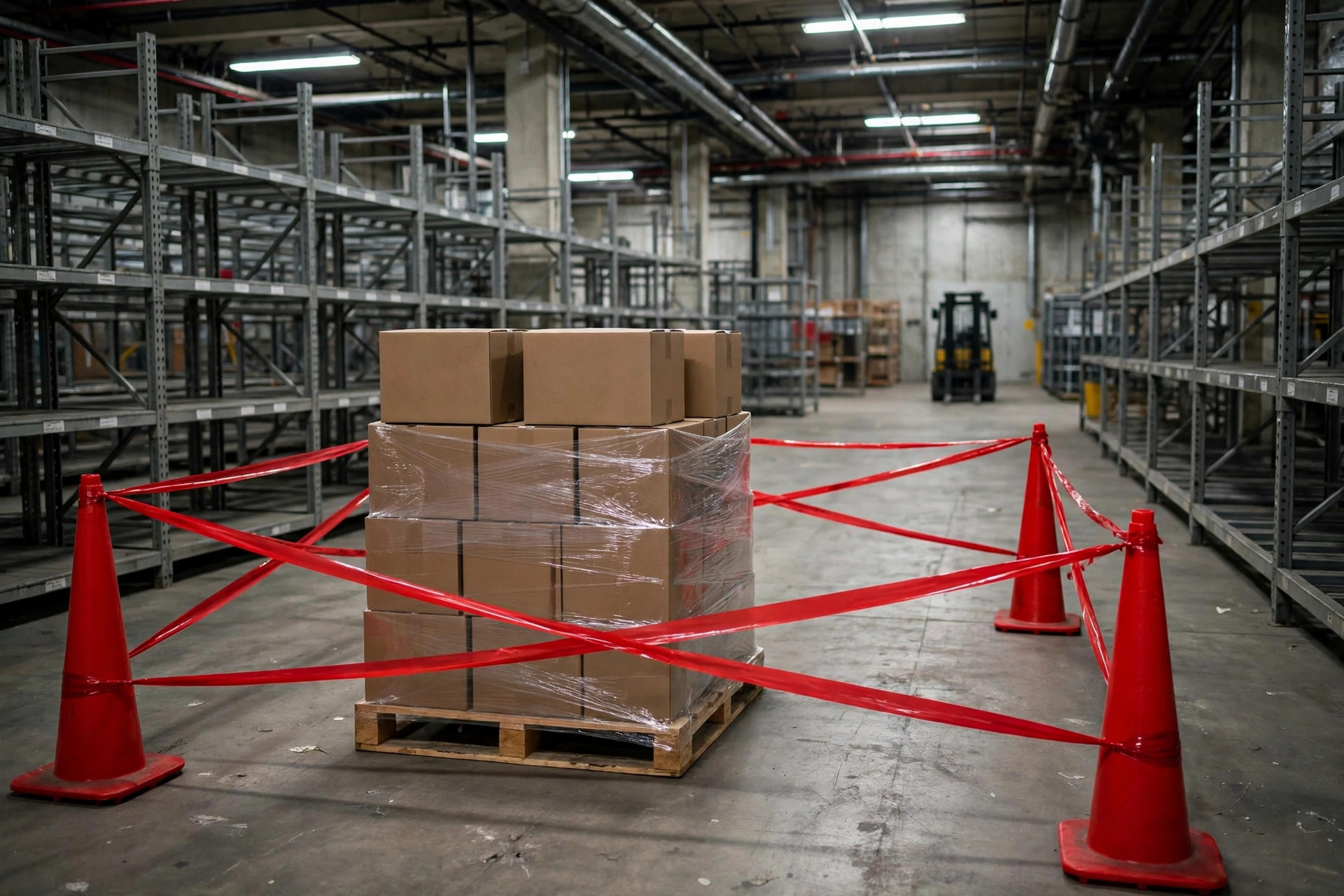
Step one: the freight goes to the quarantine zone, not to a storage location. We marked off a yellow-lined area beside the dock just for unidentified freight. Pallets come off the truck and go straight there. They do not go onto racking and they do not get mixed with other batches.
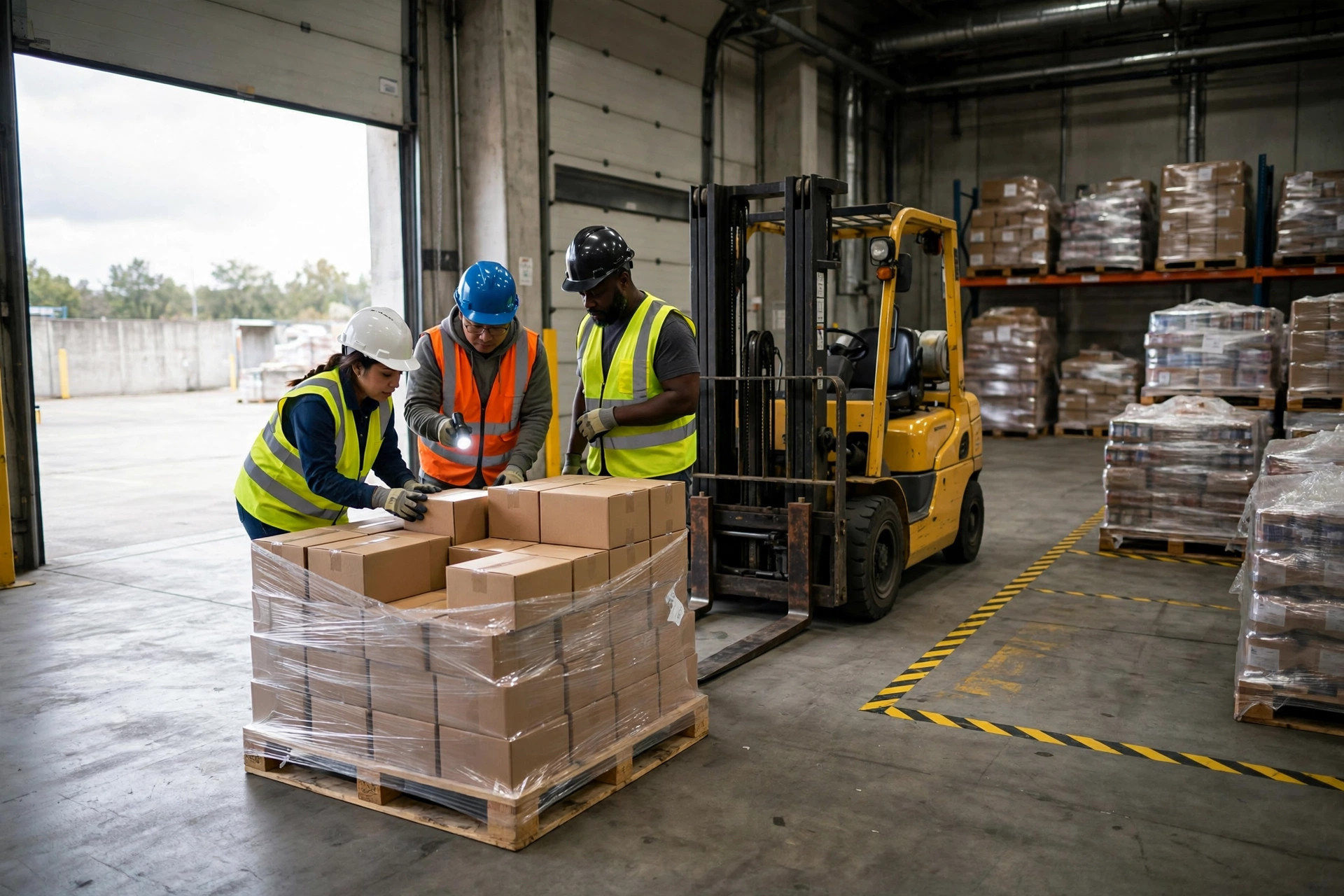
Step two: photograph everything. All six sides of the outer packaging, close-ups of any damage, stains, or water marks, plus the delivery note, the driver's identification, and the license plate in the same set of photos. Photos get filed by date and truck number. When a claim dispute starts, photos settle it faster than any argument.
Step three: open a no-PO receiving record in the WMS. With no purchase order to receive against, we create a temporary receipt with a hold status, the physically counted quantity, and any variance written in the notes. That temporary record becomes the load's identity in the system. Later order creation, returns, and reconciliation all hang off it.
Step four: send the claim notice. The temporary record automatically notifies purchasing and customer service, with a deadline attached: seventy-two hours for standard freight, forty-eight hours for returns. If nobody claims it by the deadline, it escalates to both the purchasing manager and the warehouse manager by name.
Step five: only three outcomes are allowed. The order gets created and the freight moves from quarantine to a real location, with the temporary record linked to the real PO number. The freight goes back, with the return shipment photographed the same way it came in. Or the freight stays in quarantine on a chargeable basis, with the rate set by the contract, never by a verbal promise from the dock.
Step six: close the record only when three things line up: the counted quantity, the photo file, and a confirmation from purchasing or finance. If one is missing, the record stays open. That rule looks rigid until month-end reconciliation, when it saves everyone a painful afternoon.
One more detail that matters: we count the quarantine zone every single week. A quarantine area is easy to forget, and forgotten freight is how a small problem becomes a write-off. We once found a load that had sat there for more than forty days. It turned out to be tail stock from a supplier that had gone out of business, with nowhere to return it. Since then the Monday morning quarantine count goes to my inbox and the purchasing manager's inbox without fail.
Getting Purchasing and Finance to Agree on the Numbers
The hardest fights over warehouse receiving goods without purchase order are not about the freight. They are about whose numbers count. Purchasing says they accept the load, finance says there is no order to pay against, and the warehouse sits in the middle taking heat from both sides.
We fixed that by agreeing on the rules before the next truck showed up. Counted quantity on the dock beats the quantity on the delivery note, and any variance bigger than one carton gets a written reason. Receipt time is the time the temporary record was created, not the supplier's ship date. Quarantine charges start on the second day in the zone, at the contract rate, and if there is no contract rate, the purchasing manager approves it in writing. Receiving never sets a price on its own. Destruction is stricter still: freight unclaimed for more than thirty days needs signatures from purchasing, finance, and the warehouse before anything is destroyed. If one party will not sign, the freight stays put, and the responsibility does not land on one person's shoulders.
Here is the counterintuitive part, and plenty of peers disagree with me on it: refusing the truck looks like the clean, zero-risk move, and it is usually the most expensive one. A refused load means a second delivery charge, a stockout at the store, and a customer complaint to handle. Add those up and they cost far more than a few days in quarantine. Taking the freight in, isolating it, photographing it, and putting a deadline on the claim turns a mess into a normal process with a record, a deadline, and a named owner. What a warehouse should fear is not extra freight. It is freight nobody can account for.
| Situation | Do this first | Who claims it | If the deadline passes |
|---|---|---|---|
| PO not yet created | Quarantine, open temporary receipt | Purchasing creates the PO | Escalate to purchasing manager after 72 hours |
| Shipping notice missing | Quarantine, check supplier shipping record | Purchasing or customer service adds the appointment | Escalate after 72 hours |
| Shipped to the wrong warehouse | Quarantine, never put away | Supplier arranges return | Arrange return transport within 48 hours |
| Return without authorization | Quarantine separately, mark condition | Customer service adds return authorization | Escalate after 48 hours, three-party approval after 30 days |
So here is my reminder to anyone running a dock: freight can come through the door, but it must never go onto a shelf unaccounted for. Isolate it, photograph it, give it a temporary record, and put a deadline on the claim. Do those four things and a delivery without paperwork is just another day's work, not a month-end surprise.
By Chen Feng, Warehouse Operations Manager