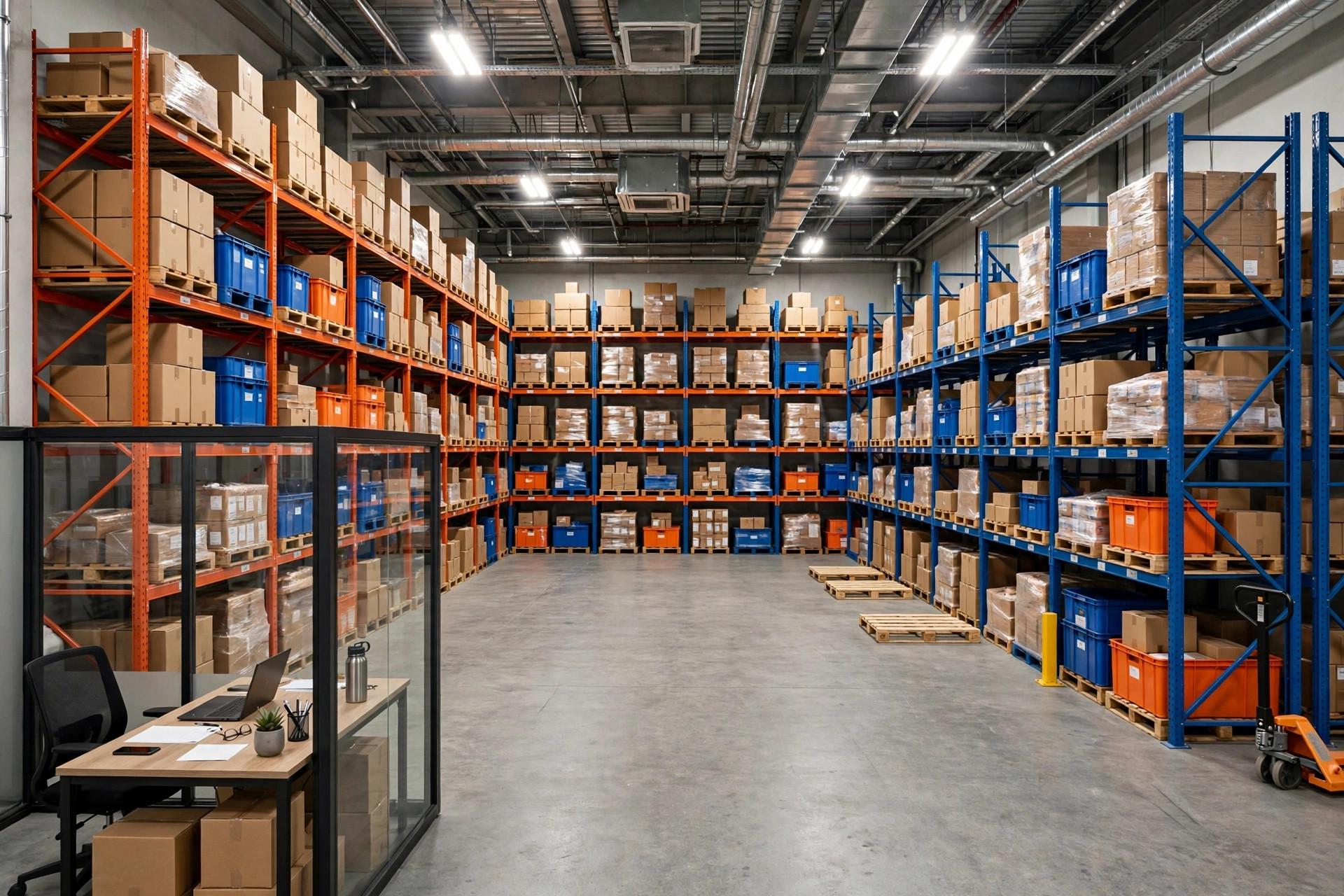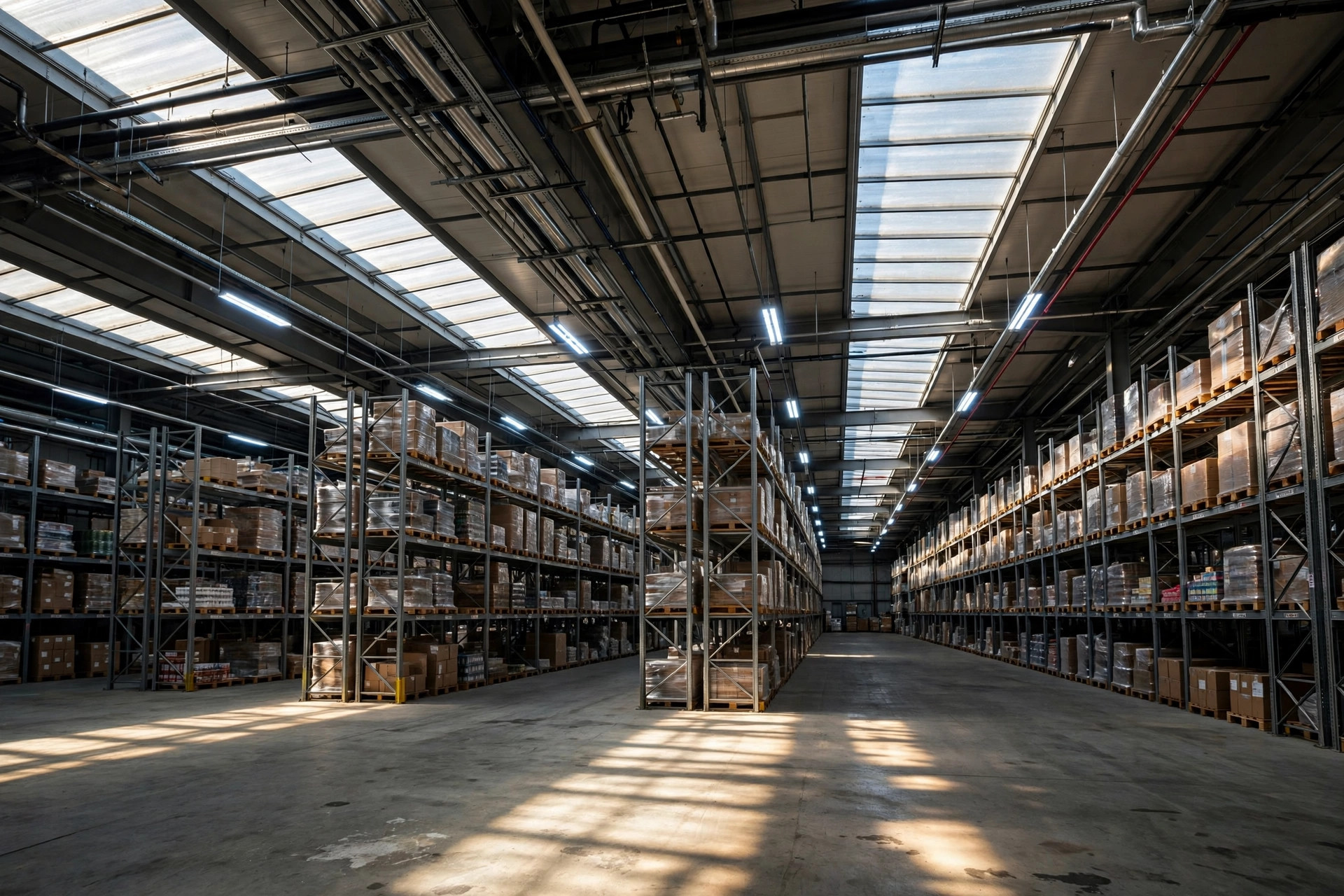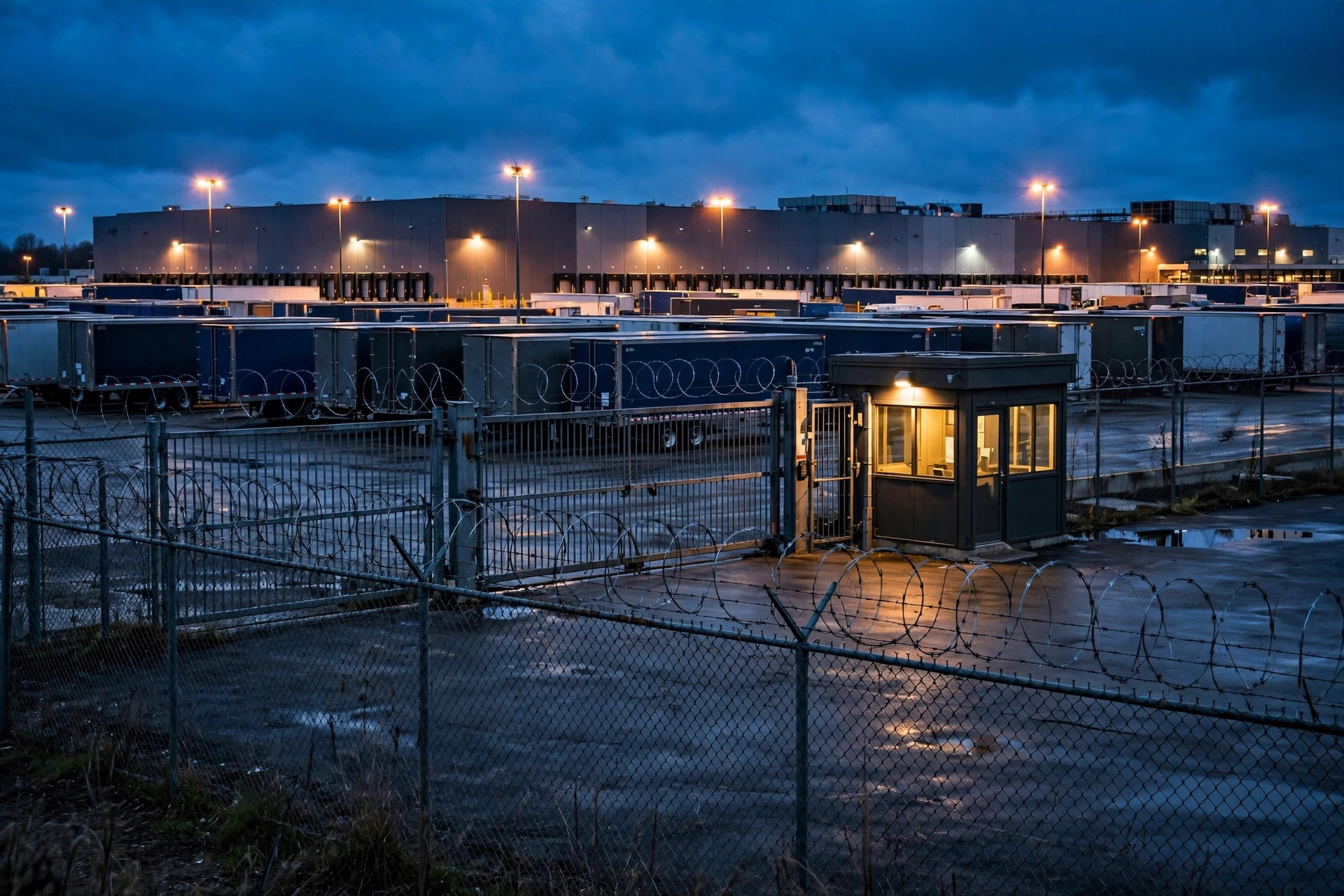
Here's my verdict up front, and it's the whole point of warehouse security zoning: security has three layers — the perimeter keeps outsiders out, access control manages your own people, and cameras preserve evidence. Most warehouses spend the money backwards. They buy cameras first, patch the fence later, and never get around to the access control at all. Zone the building before you buy a single device. A camera pointed at the wrong place is just an expensive decoration.
The numbers say this isn't optional anymore. CargoNet's annual report, published January 2025, logged 3,625 cargo theft incidents across the U.S. and Canada in 2024 — up 27% year over year, averaging $202,364 per incident, over $454 million in total. California was up 33%. Los Angeles County was up 50%, San Bernardino County up 47%. I work that corridor. Early 2024, a 3PL handling consumer electronics near San Bernardino lost two pallets of earbuds — six figures, gone overnight. The owner's first instinct was "we need more cameras, add twenty." I walked the site and told him to hold the purchase order.
They already had 40-plus cameras. Sounds like plenty. But the service alley behind the outbound dock? Not a single lens on it. The thieves cut through the fence on the employee-parking side — a plain six-foot chain-link with no barbed wire, a stretch nobody ever patrolled. When we drew up a zone map during the post-mortem, the pattern was embarrassing: every camera faced the front gate shooting license plates, while the back alley where the actual break-in happened was a blind spot. Classic case of spending in the wrong place. Plenty of hardware, no zoning logic whatsoever.
The second story stings more. A warehouse near Ontario kept losing high-value phone accessories from its locked cage area. Three months of investigation. It was an inside job — a picker who'd quit six months earlier still had an active badge. Night shift, badged in, walked out with product. They'd spent serious money raising and hardening the perimeter fence, and the front door was wide open. I've seen this pattern too many times: the vast majority of shrinkage cases I've touched trace back to insiders, not fence-jumpers. The perimeter stops strangers. Access control stops your own people. Plenty of operators get the priority backwards.
The security zoning budget: four layers, priced out
I break security spending into four layers. Each one stops a different threat, and each has a fatal weakness. Ballpark figures for the U.S. West Coast in recent years — get local quotes before you budget:
| Layer | One-time cost, roughly | Stops | Fatal weakness |
|---|---|---|---|
| Perimeter hardening (8-ft fence + barbed/anti-climb mesh) | $10–$40 per linear foot installed; 1,000 ft runs $10k–$40k; automated gates and rough terrain push $65–$100/ft | Fence-jumpers, opportunists | Won't stop insiders or a vehicle ramming the gate |
| Access control (badges + zone permissions + visitor log) | A few thousand dollars to start, scales with door count — cheapest of the four | Terminated employees, tailgaters, wandering visitors | One unrevoked badge or one held door = no system at all |
| Cameras (filling blind spots) | $400–$900 per camera installed; 6–8 key positions is a few thousand dollars | Evidence, deterrence, post-mortems | Nobody watching = no system; 30-day overwrite kills investigations |
| Patrols / guards | Local wages; a 24-hour guard post is the most expensive ongoing line item | Judgment calls, challenging strangers | People get tired, check phones, can't cover everything |
See the problem? Most warehouses allocate the budget backwards: cameras eat the lion's share, access control gets a keypad slapped on the door, and patrols are "the night supervisor glances around." Here's the thing, though. Cameras are hindsight. The fence is deterrence. Access control is daily people management. Patrols are the mobile reserve. You need all four, but the spending order should be: draw the zones first, access control second, harden the perimeter third, fill camera blind spots fourth, patrols as budget allows. That ordering is what warehouse security zoning actually means in practice.
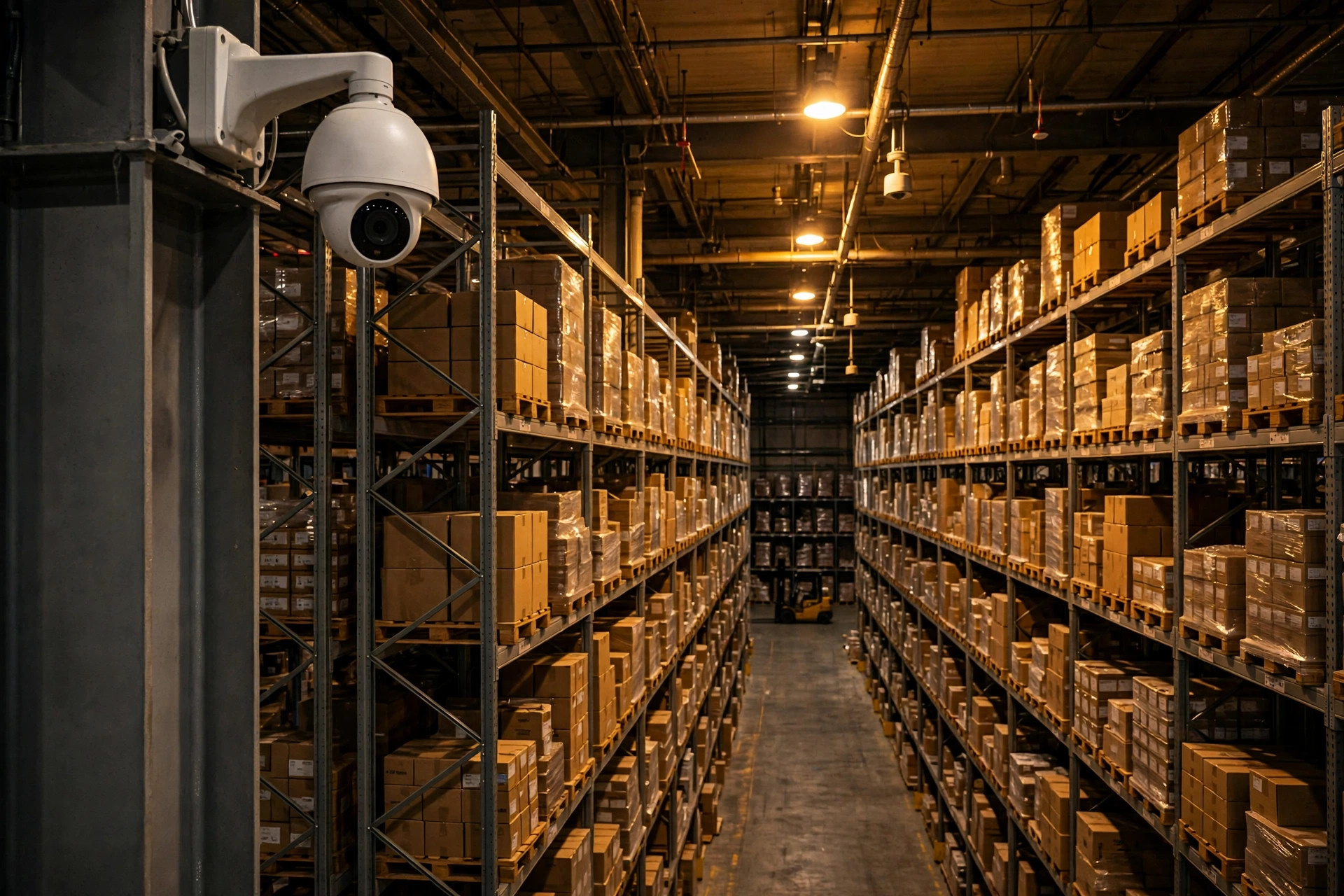
And here's the counterintuitive one: more cameras can mean less security. Forty feeds tiled across a video wall — the person on duty stops actually looking after ten minutes. It becomes a recording machine: always filming, never watched. Then something happens, you pull the footage, and the angle's wrong or it overwrote three weeks ago. C-TPAT's criteria call for keeping video of key import/export processes at least 60 days; plenty of warehouses I visit don't even clear that bar. My verdict: twelve cameras somebody actually watches, all sitting on zone boundaries and entry points, beat forty cameras nobody looks at.
The three-zone method for warehouse security zoning: red, yellow, green
Forget devices for a minute. Draw the zones. I use three:
Green (public): outside the gate — visitor parking, driver waiting area. Anyone can be here, but nobody gets into operations from here. Drivers drop paperwork and wait. They don't wander the aisles.
Yellow (operations): receiving, picking, packing, the docks. Badge required, and different shifts get different permissions. This isn't my invention — C-TPAT's minimum security criteria require interior fencing to segregate domestic, international, high-value, and hazardous cargo. Zoning is a compliance expectation, not a nice-to-have.
Red (high-value / sensitive): the high-value cage, returns staging, the document room, the server closet. Dual control or supervisor approval, every entry logged. This is where a loss hurts most — and where insiders aim first.
Once the three zones are drawn, place equipment in this order: seal the doors on the zone boundaries first, put cameras on those boundaries second, densify inside the zones last. Cameras belong at the seams — every zone entrance, the cage door, dock corners, the service alley. Inside the zones you can go sparse. If nobody unauthorized can get in, why film every rack?
Five things you can do this week
- Draw the zone map — red, yellow, green, every door marked — and pin it on the wall.
- Walk the fence line: height, barbed wire, damage, weeds blocking sightlines.
- Audit the badges: terminated employees revoked? Visitor badges ever collected?
- Walk the site at night with your phone as your eyes. Every dark corner, alley, and dock backside goes on your blind-spot list.
- Check your video retention. Under 60 days? Add storage — the cheapest security upgrade there is.
One question to leave you with: can your cameras see your most valuable rack? If the answer is no, walk the floor tonight. Get the zoning math right and modest equipment does the job. Get it wrong and no amount of spending saves you.
By Lao Mi, Supply Chain Veteran (20 yrs)