Whenever warehouse cardboard baler recycling cost comes up, I start by dismantling the most common misunderstanding in the room: a baler is not a machine that makes money by selling waste paper. I have run these numbers on site repeatedly, and the payback, in most warehouses, comes from avoided collections, recovered floor space, and labour that stops drowning in loose cardboard. Think of loose cardboard as an unpacked suitcase. It weighs almost nothing and takes up an absurd amount of room, and rent, haul-away fees, and handling time are all quietly charged by volume. So this calculation starts with cubic volume, not with the price per tonne on a scrap merchant's board.
First, be clear about where the waste stream actually comes from. Cardboard waste is generated at three points: decanting at receiving, re-boxing during picking, and returns processing. The more freight you push through the building, the more all three points produce. A warehouse without a baler usually copes in one of two ways. Either loose board goes into a large skip that a contractor swaps out whenever it overflows, with the surplus stacking up along the dock, or staff flatten boxes by hand into cage trolleys and wheel them out load after load, which at peak can consume a full person's shift and still fall behind the decanting rate. The board itself is light. Every problem it causes is about volume and frequency, and that is exactly the yardstick for the buy-or-not decision: measure how much loose cardboard you generate per month, how many cubic metres and square metres it occupies, and how many collections it forces. If you cannot produce that number, every equipment conversation that follows is guesswork.
Start warehouse cardboard baler recycling cost maths with volume, not scrap price
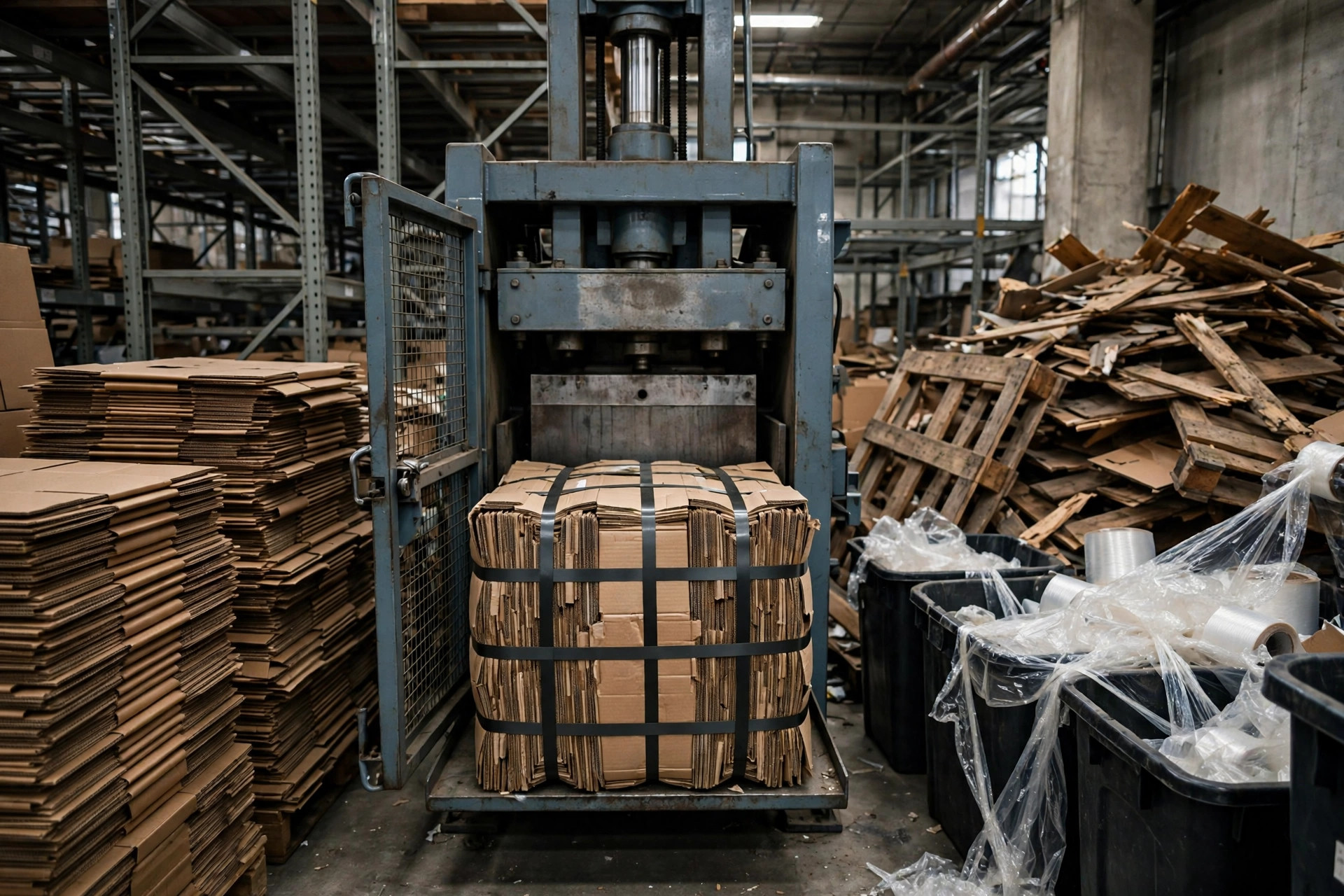
Here is a hypothetical worked example, for illustration only, representing no real quotation. Suppose a warehouse's loose cardboard occupies a strip of dock-side floor in the low teens of square metres and forces a skip exchange roughly twice a week, with extra emergency collections at peak. Now suppose a vertical baler compresses the same stream into neat bales that stack in a fraction of that footprint, and collections change from loose skip loads to full-load bale pickups. In the example, the three largest changes, in order, are collection frequency, floor area recovered, and handling labour. Bale revenue comes last. That ordering is the counterintuitive judgement I want on the record: a baler is first a machine for saving haul-away and space, and only second a machine for selling waste at a better price. If your collections are already cheap and your floor space is not constrained, the scrap price difference alone will very likely never pay the machine back.
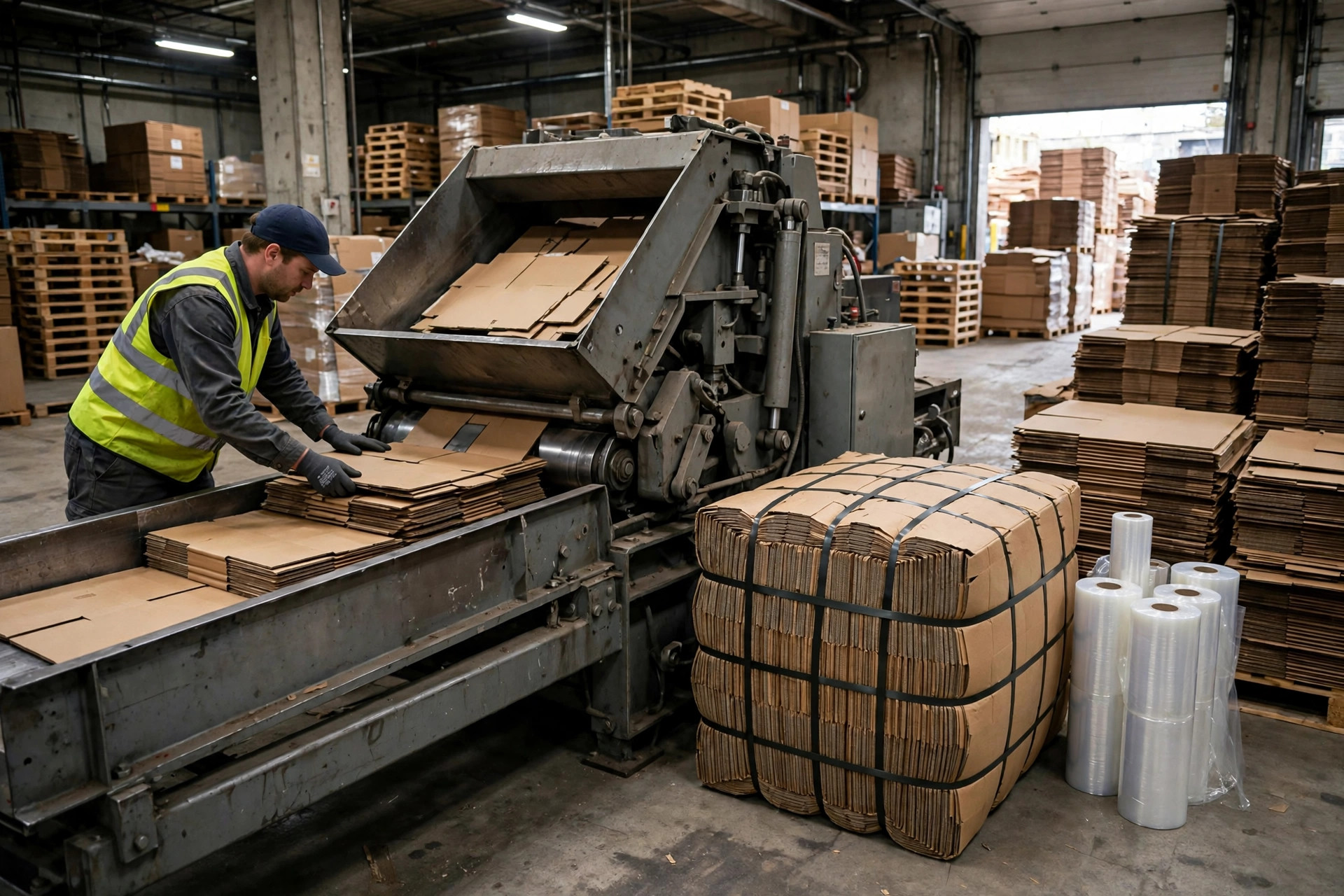
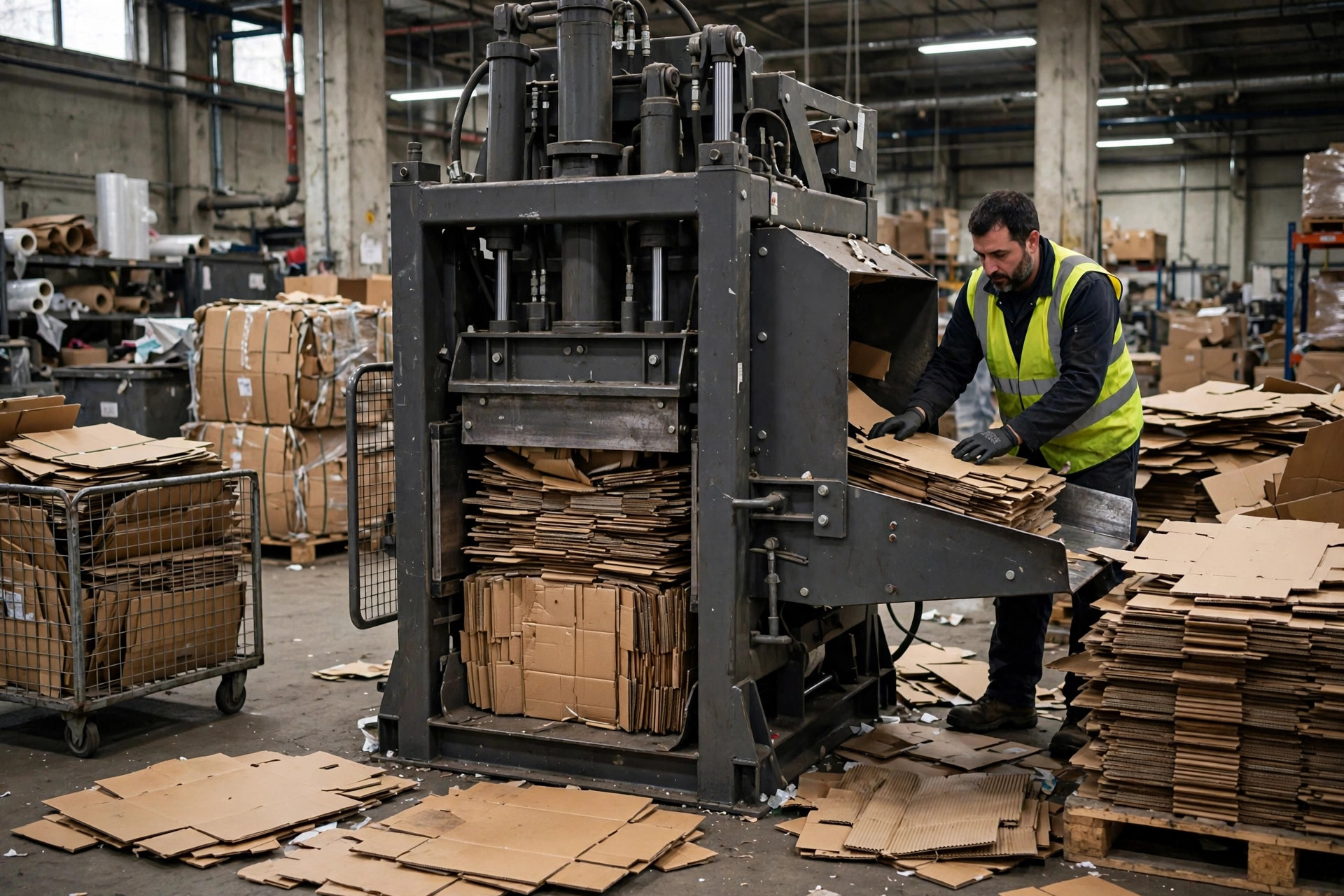
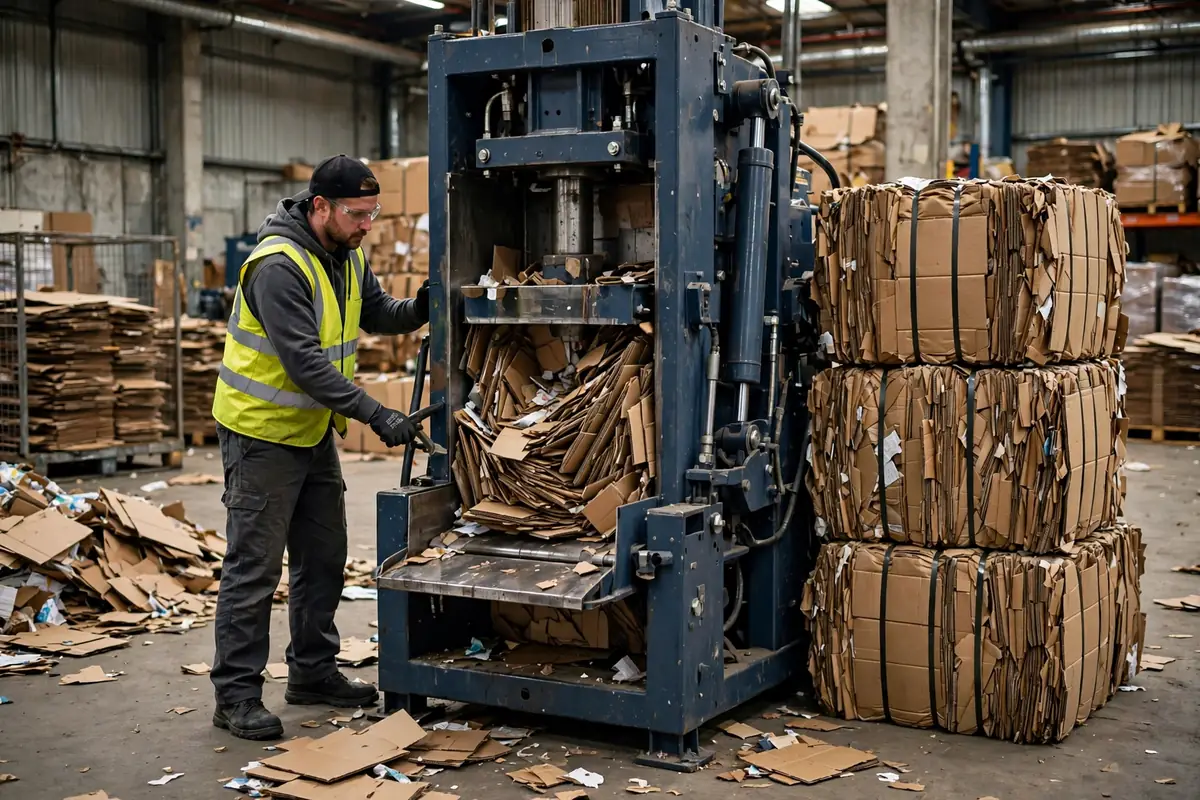
Once the volume clears the threshold, the vertical-versus-horizontal decision has a hard dividing line. A vertical baler is compact, loaded and tied by hand, and its pace follows the operator, like a manual gearbox: simple, easy to repair, and entirely adequate for moderate volumes on a tight footprint. A horizontal baler is a different species, fed by conveyor with automatic tying, producing bales continuously at a throughput a vertical unit cannot approach, like a heavy automatic truck. The cost of that throughput is floor area, capital, a feed system, and a dedicated bale staging zone. The most typical failure I see is a site with modest daily cardboard volume sold a horizontal machine because it sounded more advanced. The machine then runs for a short burst each day and spends the rest of its life asleep on prime floor space. The selection principle never changes: match the machine's cycle rate to the rate at which your waste is generated, never the other way round.
| Factor | Vertical baler | Horizontal baler |
|---|---|---|
| Feeding | Manual loading and tying | Conveyor feed, automatic tying |
| Footprint | Small, can sit against a wall | Large, needs feed and staging areas |
| Throughput | Follows the operator; suits small to mid volumes | Continuous; pays only at high volumes |
| Maintenance focus | Hydraulic oil, seals, ram guides | Conveyor, tying unit, sensor interlocks |
| Classic failure | Volume outgrows manual pacing | Volume too low; machine idles underused |
A second illustrative scenario shows how volume turns on you at peak. Imagine an e-commerce warehouse whose normal cardboard output sits right at the edge of what a vertical baler can digest, and management decides the current setup is fine, with no headroom. Peak season arrives, receiving and returns double together, decanting outruns baling, and loose board fills the baling area first, then the dock lanes, and finally starts appearing anywhere a cage can be parked. Nothing broke mechanically. What broke was the throughput match. Always test your volume figures against the peak month rather than the quiet-season average, because one peak blockage, with its emergency collections and overtime, hands back a large share of what the machine saved all year.
The three numbers warehouse cardboard baler recycling cost estimates usually get wrong
The first is bale revenue, and I will be blunt about it. Bale prices follow the recovered-paper market, they move, and they depend on region, grade, contamination, and moisture. I am deliberately quoting no market price here; for any budget, use a current quote from your local recycler, and use the conservative end of the range for payback maths rather than the top of a rising market. Three questions matter as much as the headline price: does the recycler collect full loads from your dock or must you deliver, what is the minimum load they will collect, and what bale size and tying specification do they require? A bale that fails the specification or arrives contaminated gets discounted on the spot. That is not sharp practice; that is how the trade works.
The second number is labour and floor space, the one most often left out entirely. Loose-cardboard handling labour is fragmented: flattening, wheeling cages, waiting on collections, clearing overflow. Each episode looks like a few minutes, and across a month it adds up to real paid hours. Baling consolidates the work into one station where the hours can finally be counted. Floor space works the same way. If your loose-cardboard staging sits on floor that could hold saleable inventory, that area carries an opportunity cost, and waving it away as spare space corrupts the whole comparison. Put both numbers in properly and many payback cases that looked hopeless flip positive; leave them out and rely on scrap price alone, and the case collapses the first time the market dips.
The third number is safety and maintenance, where I stop being polite. A baler is a hydraulic press, and the zone under the ram is a danger zone. Door interlocks, two-hand controls or light curtains, and a working emergency stop are not options to value-engineer away, and I have seen interlocks bridged to save money, which is not saving money at all; it is planting an accident. Maintenance failures follow a familiar script: hydraulic oil never changed, weeping seals ignored, compacted debris left in the ram guides until a minor issue becomes a major repair, followed by downtime waiting for parts while cardboard rebuilds its mountain. Add the tying consumables, the forklift time to move bales, and the electricity into the payback model as well. Each item is small; omit one and your payback period is fiction. One more fake requirement deserves a shot while I am here: smart weighing, automatic bale counting, and cloud dashboards save you nothing at modest volumes. Get throughput, footprint, and safety right first, then talk about decoration.
In the end, whether warehouse cardboard baler recycling cost maths works at your site does not depend on next month's paper price. It depends on whether your waste volume has crossed the line where collections, floor space, and labour all start saving money at the same time. Cross it, and vertical versus horizontal is a simple pacing question. Stay below it, and the most advanced baler on the market is an expensive iron ornament taking up floor you could be renting to inventory.
Whether the money is well spent comes down to one number: how many collections a month your loose cardboard forces on you. Pull the last three months of collection invoices, count them, add the staging area and the handling hours, and if that number already hurts, the baler case almost certainly adds up. If a truck visits once or twice a month, do not buy a machine yet; measure your volume and your floor properly first.
By Da Liu, Automation Engineer