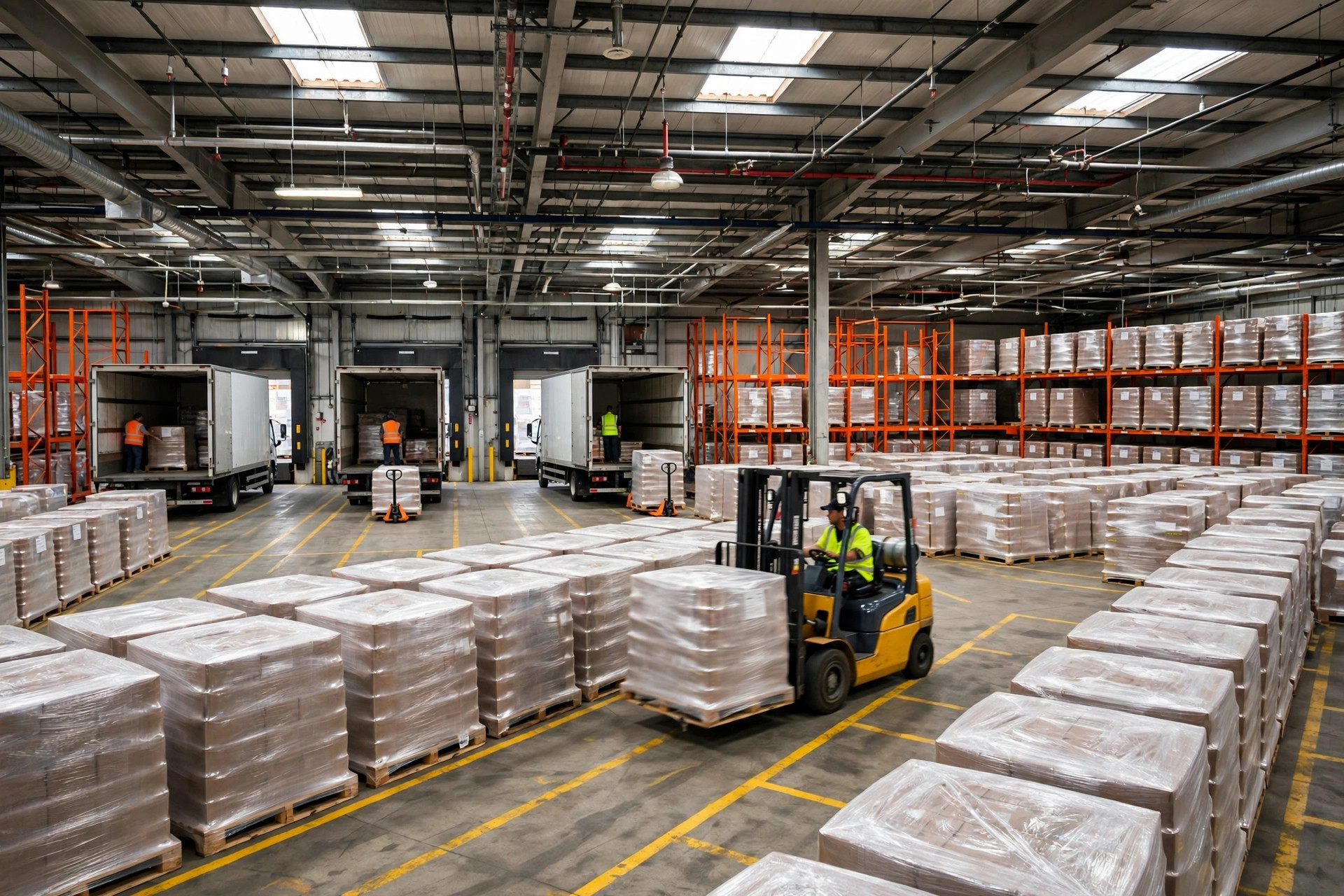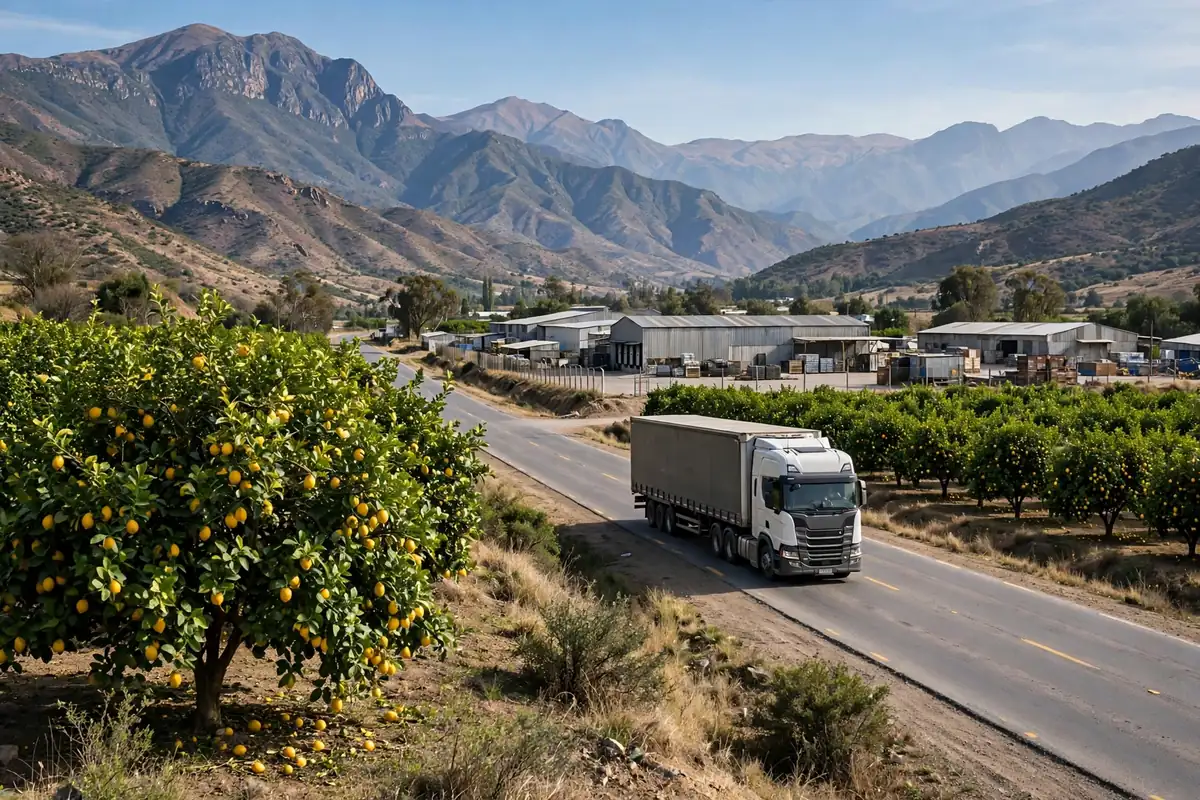
Let me tell you straight: tucuman argentina warehouse logistics is not a rent problem first. It is a road problem first. Tucuman is a province in northwest Argentina, and its capital, San Miguel de Tucuman, is the natural hub for that corner of the country. Freight for several neighboring provinces passes through, gets sorted there, or gets held there. The province is widely known for lemons, along with sugarcane and other farm production, so a large share of trucks on its roads are tied to agriculture and food processing. Owners sitting far away look at a map, see an inland city, and assume a warehouse there works like a warehouse anywhere else. After fifteen years behind the wheel, I can tell you an inland depot and a port depot are different trades. Whether this one pays depends less on the building and more on whether you honestly counted three things: the mountains, the long haul, and the season.
Start with why the place earns a look at all. Northwest Argentina sits far from Buenos Aires and the main ports. If every shipment runs that full distance to the final customer in one stretch, freight costs climb and arrival times wobble. A regional distribution point in Tucuman shortens the last stretch across the northwest, and returns and transfers gain a nearby place to land. That is the real case for it — but a case is not a guarantee. If your volume cannot feed a depot, or your customers are not actually in the northwest, the site becomes decoration that burns rent and wages daily. Know who you sell to before you sign anything.
Tucuman argentina warehouse logistics starts with the long haul, not the building
The road distance from Tucuman to Buenos Aires is well over a thousand kilometers, and every driver who runs that lane knows what that means. A linehaul trip at that distance is real money: fuel, tolls, driver rotation, and wear on the truck, all adding up before a single carton is delivered. Worse, linehaul departures inland do not behave like city delivery. When volume is thin, carriers wait to build a load. When volume surges, trucks get scarce. Before you commit to a building, learn the rhythm of that lane cold. How many departures a week can you actually get? How much time should a one-way trip honestly carry in the plan? Which stretches slow down hard when the weather turns? Do not ask an office for those numbers. Ask the drivers and dispatchers who run the lane. Their numbers are the only ones you can build a schedule on.
Here is an illustrative scenario, with invented details rather than a real shipment: a shipper of household goods sent freight northwest for the first time and promised a delivery date taken almost straight from a navigation estimate, with nearly no buffer. Rain slowed part of the route, the approach into the city crawled, and the truck arrived more than half a day late. The customer's shelves were waiting and the phone would not stop ringing — but with a wheel in your hands, hurrying is the one thing you cannot do. After that trip, the company adopted a rule I wish more shippers would copy: on long inland lanes, always quote with a real buffer. Let a truck arrive early and rest outside the city rather than promise a time the road never agreed to. On long roads, crude rules keep people and freight safe.
The terrain bill matters too. West of Tucuman the land rises toward the foothills of the Andes, and deliveries heading west or into hill country face more bends, more grades, and weather that changes what a road allows. A warehouse there needs two clocks, not one — one timing standard for the plains and another for the hill routes. Apply plains speeds to hill work and the driver fails, the customer complains, and the warehouse takes the blame for a plan that was fiction from the start. When you scout a site, ride the surrounding roads yourself. Learn which route suffers in the rainy season. One honest drive teaches more than ten pages of reports.
The season runs the warehouse in farm country
Tucuman is farm country, and lemons and other agricultural production move on a harvest and processing calendar, as a matter of plain fact. Around the busy season, packaging, supplies, and finished goods all move at once, and receiving, storage, and shipping pressure rise together. When the season passes, volume falls away and a warehouse sized for the peak sits half empty. Size everything for the peak and you feed idle people and empty space all off-season. Size everything for the quiet months and the peak buries you, with freight stacked in the yard waiting for room that does not exist.
The old way still works best. This is the table I draw when owners ask how to size such a depot.
| Decision | Busy season move | Quiet season move |
|---|---|---|
| Space | Lock temporary overflow space early | Release the temporary space, keep the core |
| Labor | Experienced hands lead trained temporary help | Keep the core crew, schedule maintenance and counts |
| Linehaul | Reserve departures with carriers in advance | Ship by real volume, do not force full loads |
| Stock | Push fast movers forward into the depot early | Keep totals lean, avoid holding seasonal stock too long |
An illustrative calculation, with assumed numbers rather than real operating data: suppose a depot handles roughly one hundred pallets a day in quiet months, and volume climbs close to double in the busiest agricultural weeks. Do not double the permanent crew. Add a few experienced leads, cover receiving and sorting with temporary workers trained before the rush, and release them when the season ends. Carry peak staffing all year and labor alone can eat every cent the depot saved you on freight. That is the trade-off owners miss: freight savings and warehouse carrying costs are one ledger, not two victories.
Here is the judgment that surprises people. An inland depot in the northwest does not earn its keep by being close to a port. It earns it by being close to customers and close to production. Run it like a port warehouse, staring at vessel schedules, and you are watching the wrong clock. Its clocks are regional delivery times, the production rhythm of the area, and the reliability of the long linehaul. Get the purpose wrong and every later investment twists sideways.
Tucuman argentina warehouse logistics siting: plain advice for owners and warehouse teams
On siting, I give three pieces of advice, all learned on roads rather than in meeting rooms.
First, put the building where linehaul trucks can get in and out easily, close to the main highway approaches, without stranding it far from its customers. The classic inland mistake is a depot whose final stretch into the city jams up daily, handing back in traffic every hour the highway saved. Before signing, have a driver run the approach at morning and evening peak. One real run beats any map.
Second, start light and stay expandable. Until volume has proven itself through a real season, favor space and equipment you can scale, and do the light work well: distribution, short holding, labeling, and transfers. Do not pour money into heavy fixed assets on a forecast. Tax and employment specifics should always be checked against current local requirements and proper local advice, never copied from another country's playbook.
Third, settle your carriers before you settle your building. Renting a warehouse with no trucks lined up is the most backwards sequence I see, and I see it often. Agree the lanes first — toward Buenos Aires and the neighboring provinces — with departures, honest transit expectations, and peak-season extra capacity written down. Then sign for the building. Trucks and warehouse are two ends of the same carrying pole. If one end is empty, the other carries nothing.
So I will close the way I close most road stories. Winning at tucuman argentina warehouse logistics does not go to whoever builds the fanciest warehouse. It goes to whoever counts the long haul, the hills, and the season in one honest ledger. Read the roads and the season right, and the warehouse becomes the obvious next step. Read them wrong, and a fine building only gives your freight a new place to sit while you worry. Drivers trust an old saying: slow is fast, steady is cheap. For an inland depot, that holds.
By Shifu Zhao, Trucking Veteran (15 yrs)