You learn the most about freight at 4 a.m., standing in a gravel lot waiting for a dock door.
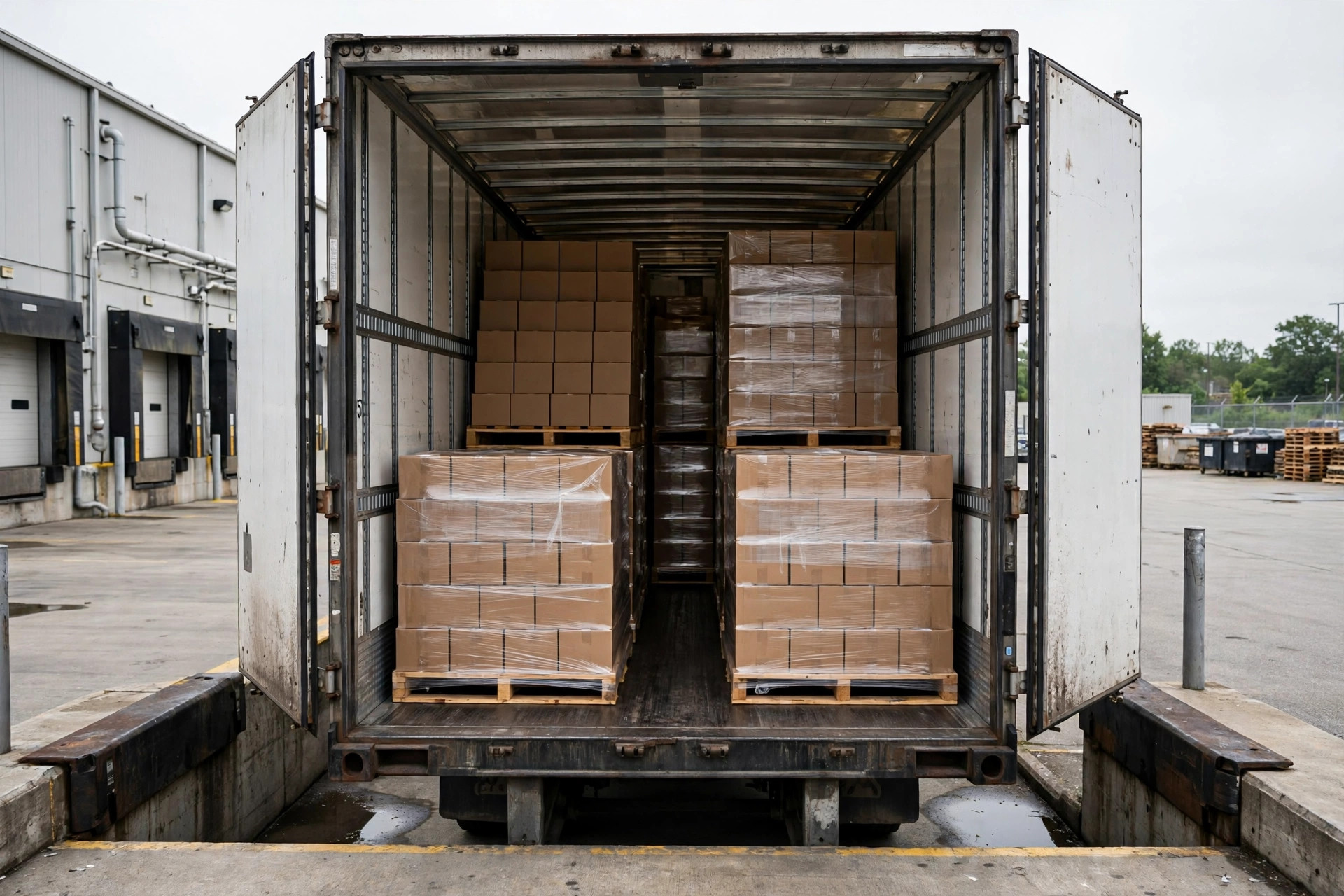
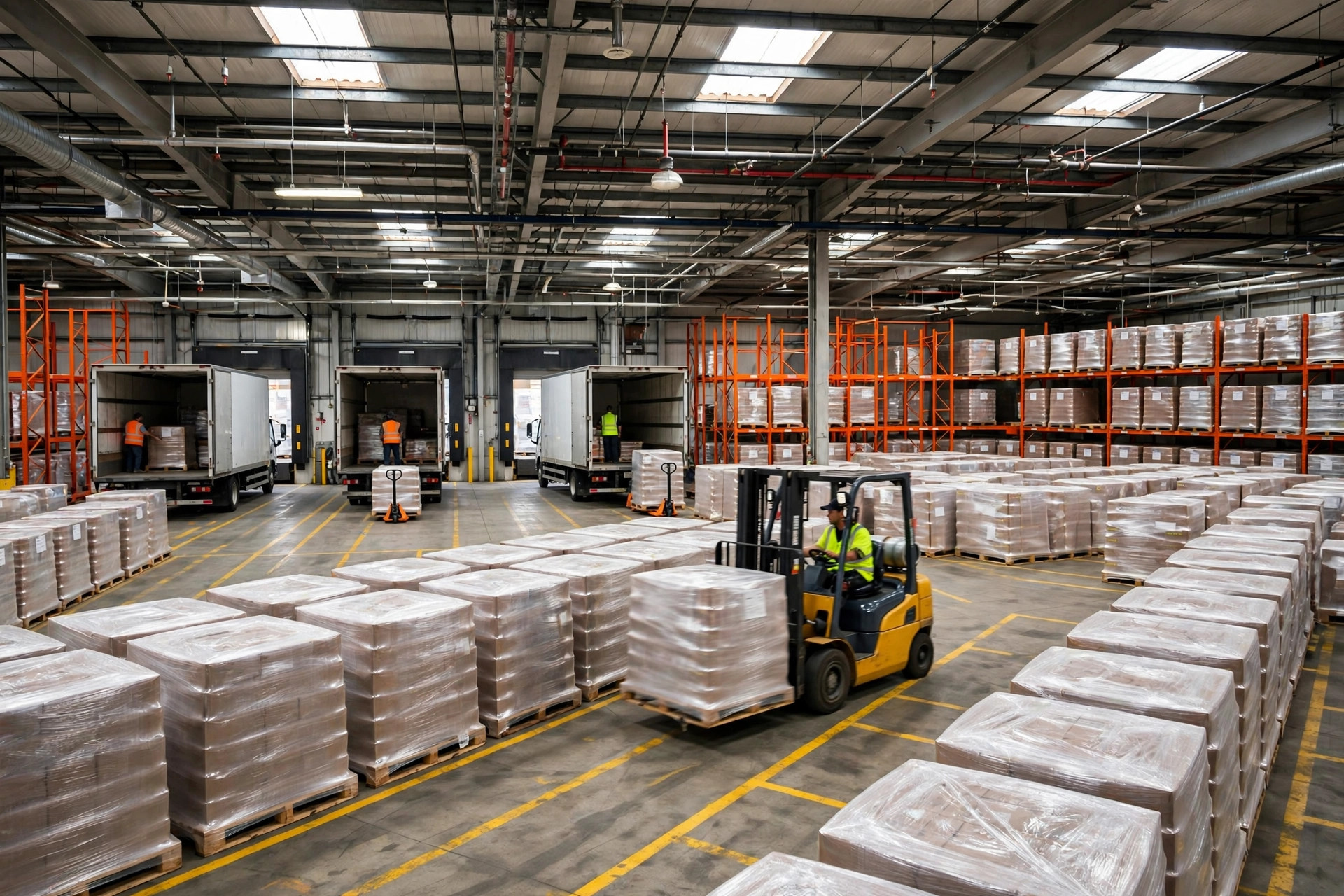
My dispatcher called me at 3:40 that morning — Columbus, Ohio, a live unload at a pool cross-dock, "be there by five, they're running tight." I got there at 4:50 and watched the whole show: a 53-footer backed in, forklifts stripped it in forty minutes, pallets lined up by store like dominoes. By sunrise, six box trucks had rolled out to stores scattered across the metro. One truckload in. A dozen deliveries out. Nobody touched an LTL terminal.
That, right there, is pool distribution warehouse logistics. And if you run stores, it might be the cheapest freight you'll ever buy — or the most expensive mistake you'll ever make. Depends on one thing: density.
How It Actually Works: Three Moving Parts
Forget the buzzwords. Pool distribution has exactly three steps, and I've driven every one of them:
First, the long haul goes full truckload. Everything for every store in the region rides one trailer, straight from the factory or the main DC to a regional cross-dock. No LTL terminals in between.
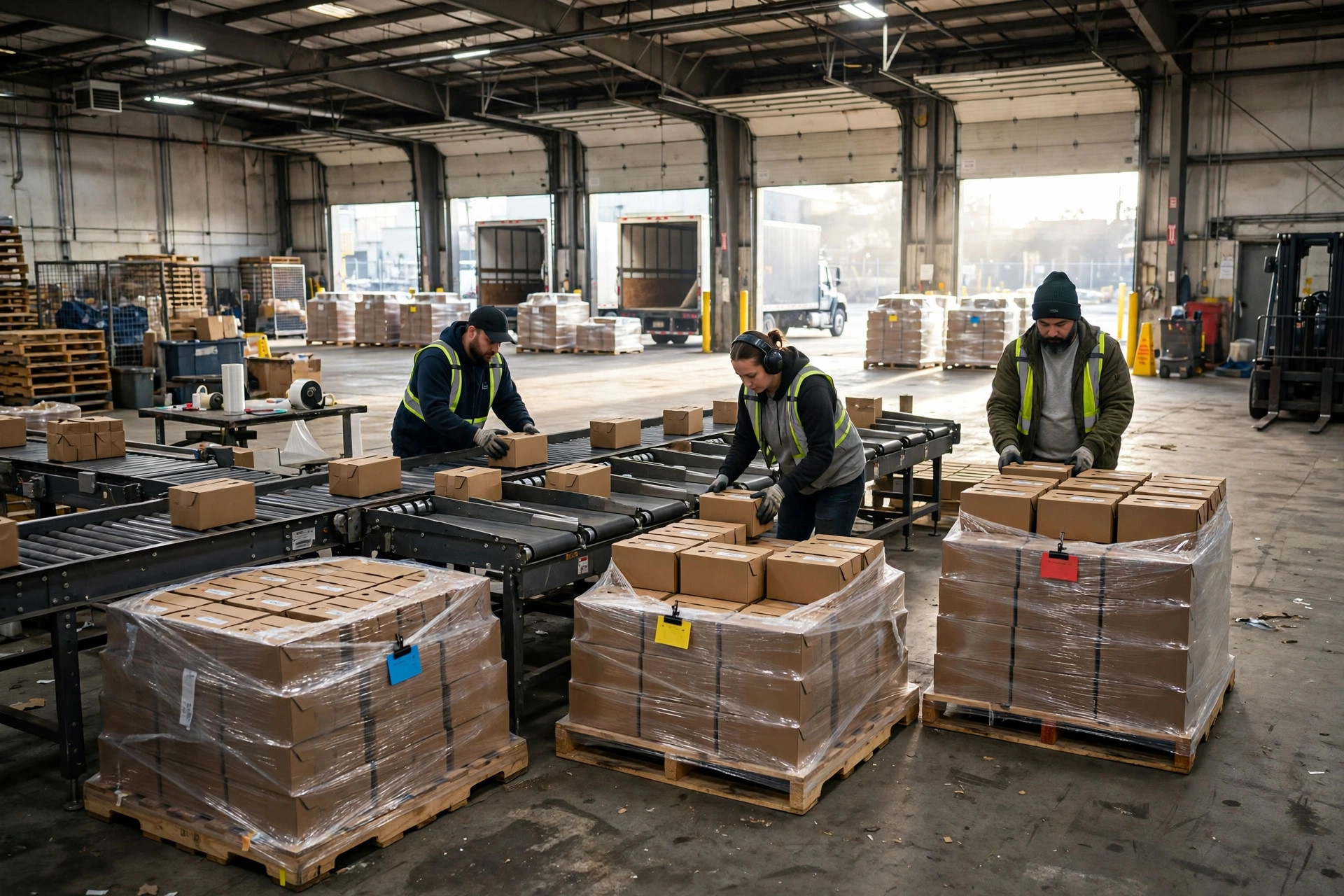
Second, the cross-dock sorts by store. Freight dwells 4–8 hours — that's it. Pallets get broken down and rebuilt per store, then staged by route. Nothing sits. Nothing gets stored.
Third, the last leg runs small. Box trucks and vans run multi-stop routes, store to store. The equipment finally matches the delivery instead of sending a 53-footer to a strip mall with no dock.
The magic isn't consolidation. It's touch reduction. An LTL shipment crosses 4–6 terminals and gets handled 4–6 times. A pool shipment gets handled 2–3 times. Every touch is a chance to damage freight, miss a window, or add a fee. Cut the touches, cut the cost.
The Math, With Real Numbers
I'm a driver, not an accountant, but I know when a shipper's eyes light up at the fuel desk. Here's published data from a carrier running pool networks, built on 850,000+ real shipments — the per-store, per-week cost for a 500-store retailer:
| Cost item | Pool distribution | LTL to each store | Dedicated regional fleet |
|---|---|---|---|
| Transport per store/week | $265–$385 | $465–$620 | $540–$865 |
| Handling | baked into the rate | terminal + accessorial fees pile on | your own labor and real estate |
| Damage/claims (avg) | $15–$25 | $25–$40 | $10–$15 |
| On-time delivery | 98–99% | 92–94% | depends on your operation |
| Damage rate | 0.5–1.0% | 1.5–2.5% | 0.8–1.0% |
Pool runs 30–40% cheaper per delivery than LTL for shippers with 15+ delivery points in a metro. Per pound, it's roughly $0.15–$0.25 against LTL's $0.55–$0.75. Another logistics outfit reports its pool customers saving 15–30% on total LTL spend. The savings come from three places: the long haul priced as a truckload instead of by the pound, zero terminal and accessorial fees, and half the damage because freight gets handled half as many times. Most shippers forget to count the damage savings. Don't.
A Reefer Story: Pool Isn't Just Dry Freight
People assume pool distribution is a dry-freight game. Tell that to the food-service chain I used to haul for out of Chicago.
Every week, a reefer trailer rolled into their cross-dock with product for 30-some restaurants across the metro. Temperature-controlled staging, pallets rebuilt per location, then refrigerated box trucks ran the routes — some stores twice a week. Same math, colder freight. The cross-dock just needs a temp-controlled staging area, which any serious pool operator has.
Restaurants and fast-food chains are practically built for this: fixed weekly replenishment, dense store clusters, freight that can't sit in a terminal for three days. If your stores order like clockwork, pool will treat you well.
When Pooling Loses Money
Here's the part the sales decks skip. Pool distribution has a density threshold, and below it, it loses to LTL — badly.
The rule of thumb from the operators: you need 15 or more delivery points in the same metro, with recurring weekly volume. Fewer than 10 stops in a region? LTL wins. A half-empty trailer running a pool route costs more per pallet than LTL and moves slower, because the truck doesn't leave until it's full enough. Your transit time becomes a function of how fast freight accumulates. That's fine for Tuesday's standing replenishment order. It's terrible for Friday's emergency add-on.
The smart retailers don't pick one — they split it. Roughly 70–80% of volume rides pool (the predictable, recurring freight), and 20–30% goes LTL or spot (surge, exceptions, the stuff that can't wait). One tool doesn't fix every load.
Who Owns the Empty Shelf?
The ugliest fights I've watched weren't about rates. They were about blame. The store says the freight never came. The pool operator shows a signed POD. Headquarters swears the replenishment plan was fine. Three parties, zero accountability.
Two clauses fix most of it. First, delivery windows in writing: every store gets a fixed receiving window — say, Tuesday 8–10 a.m. — with penalties for misses. Second, a clean handoff line: the pool operator owns "on time to the back door, signed for." What happens inside the store — stocking, selling, shrinkage — that's headquarters' problem. Without that line, everybody argues forever.
And a driver's tip for shippers: book your inbound appointment at the cross-dock, and label every carton with the store code, clearly. I've watched trucks sit three hours at the gate with no appointment, and sort crews lose half a day to smeared labels. That waste comes out of your pocket, not theirs.
Sources: published pool distribution research based on 850,000+ shipments, three-way cost comparison, and ITS Logistics customer data.
The Short Version
After fifteen years behind the wheel, here's my read: pool distribution is density arbitrage. Enough stores, enough rhythm, and it's the cheapest freight in retail logistics. Thin volume and scattered stores? Walk away. There's an old saying among drivers — there's no such thing as cheap freight, only the right play for the lane.
By Shifu Zhao, Trucking Veteran (15 yrs)