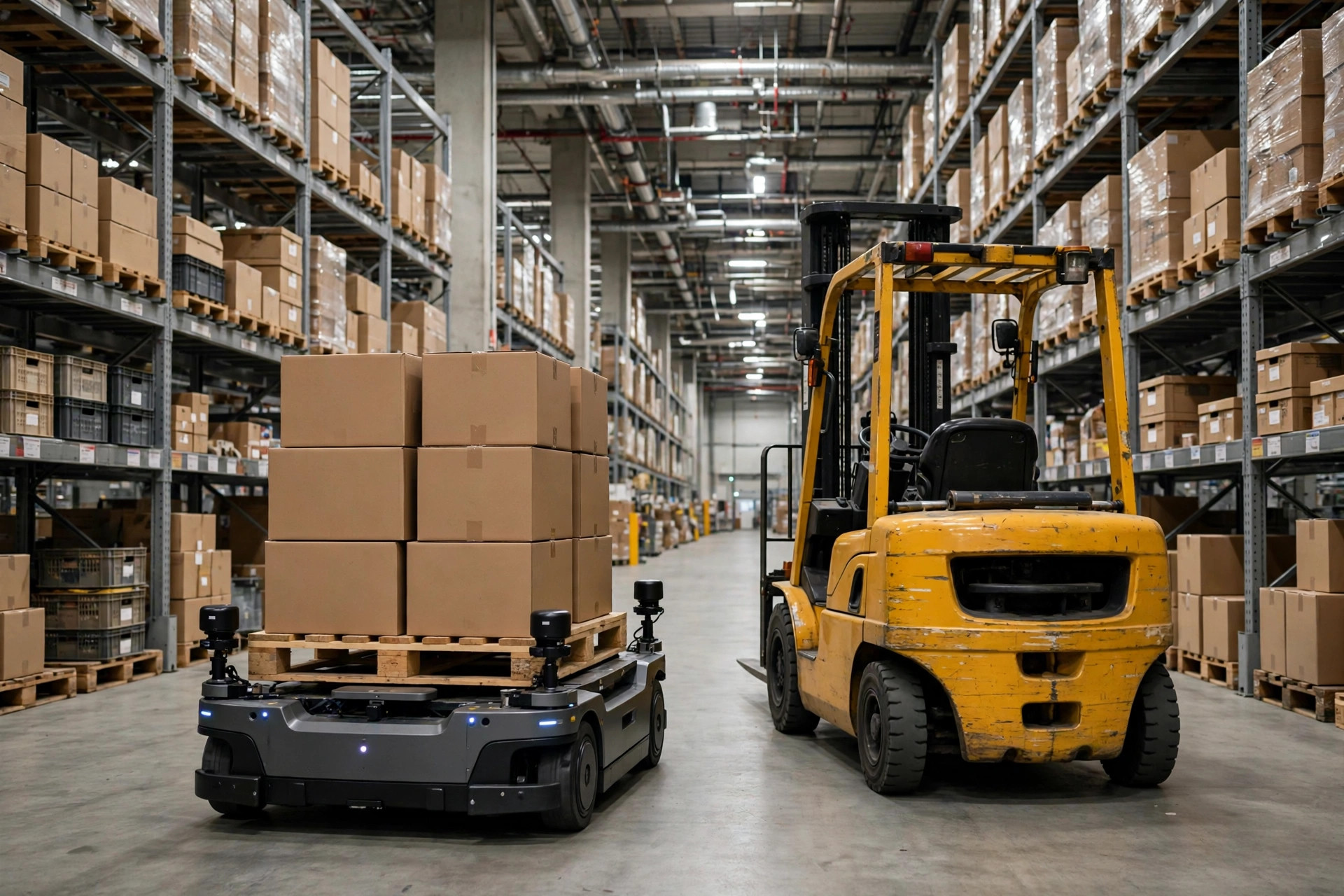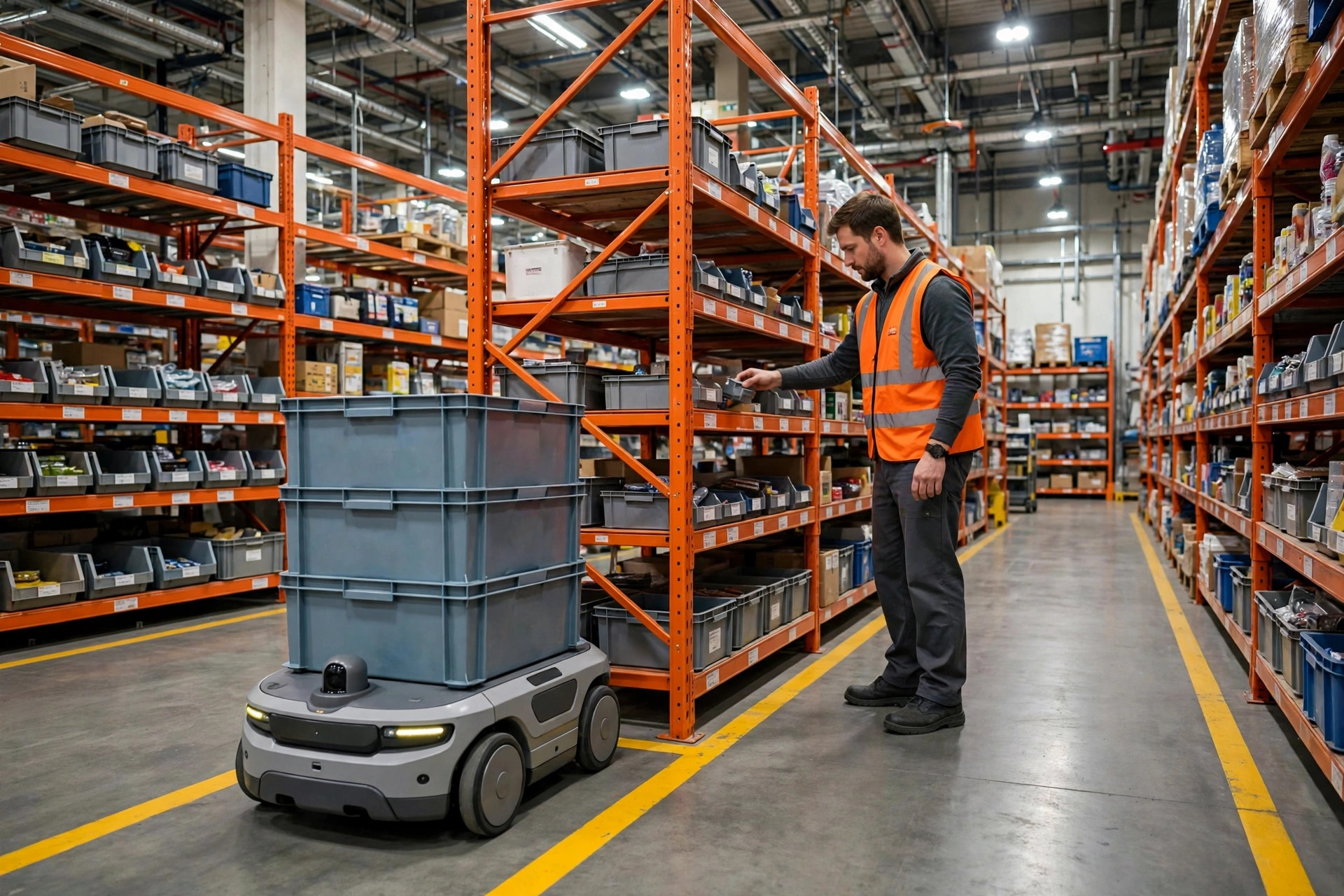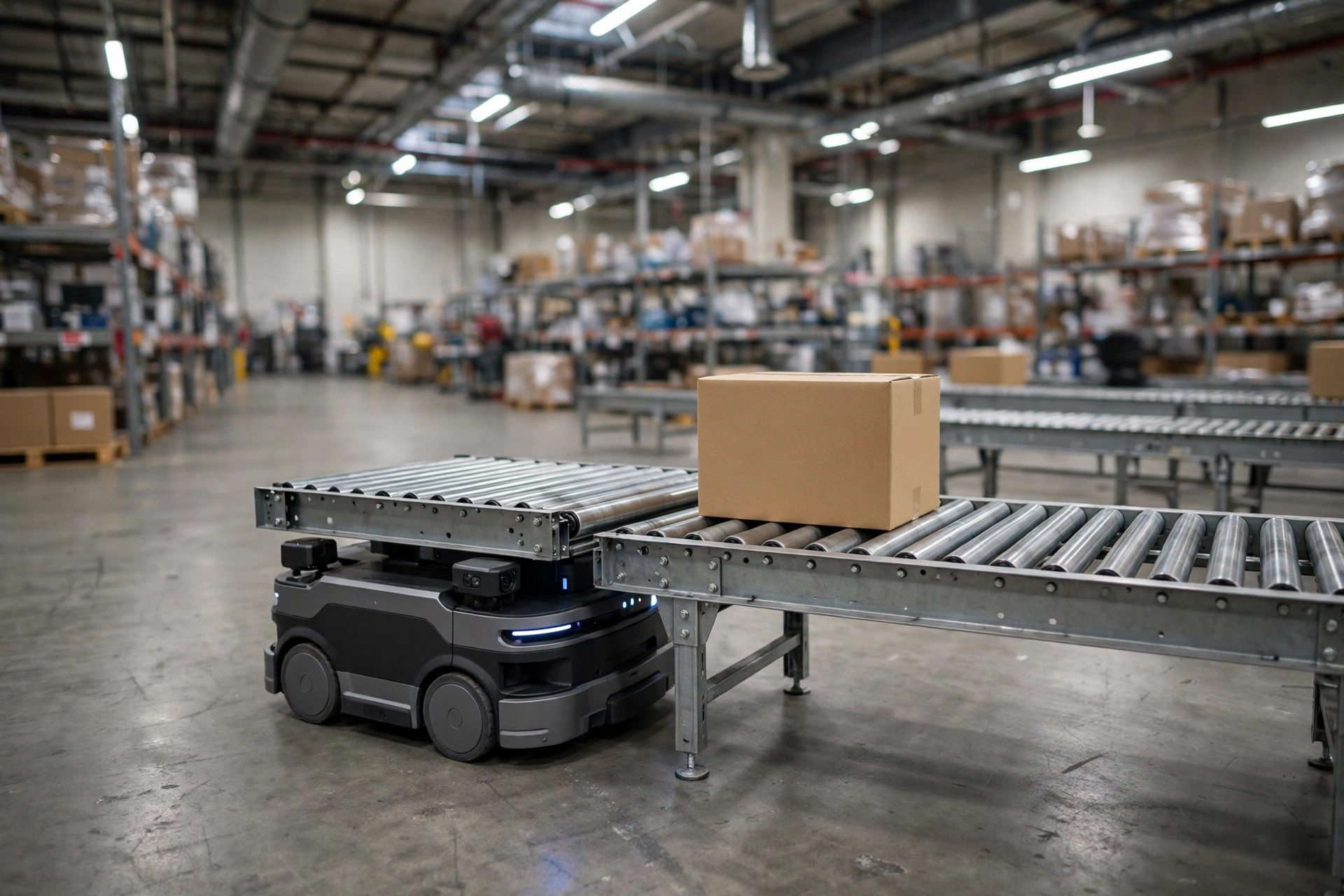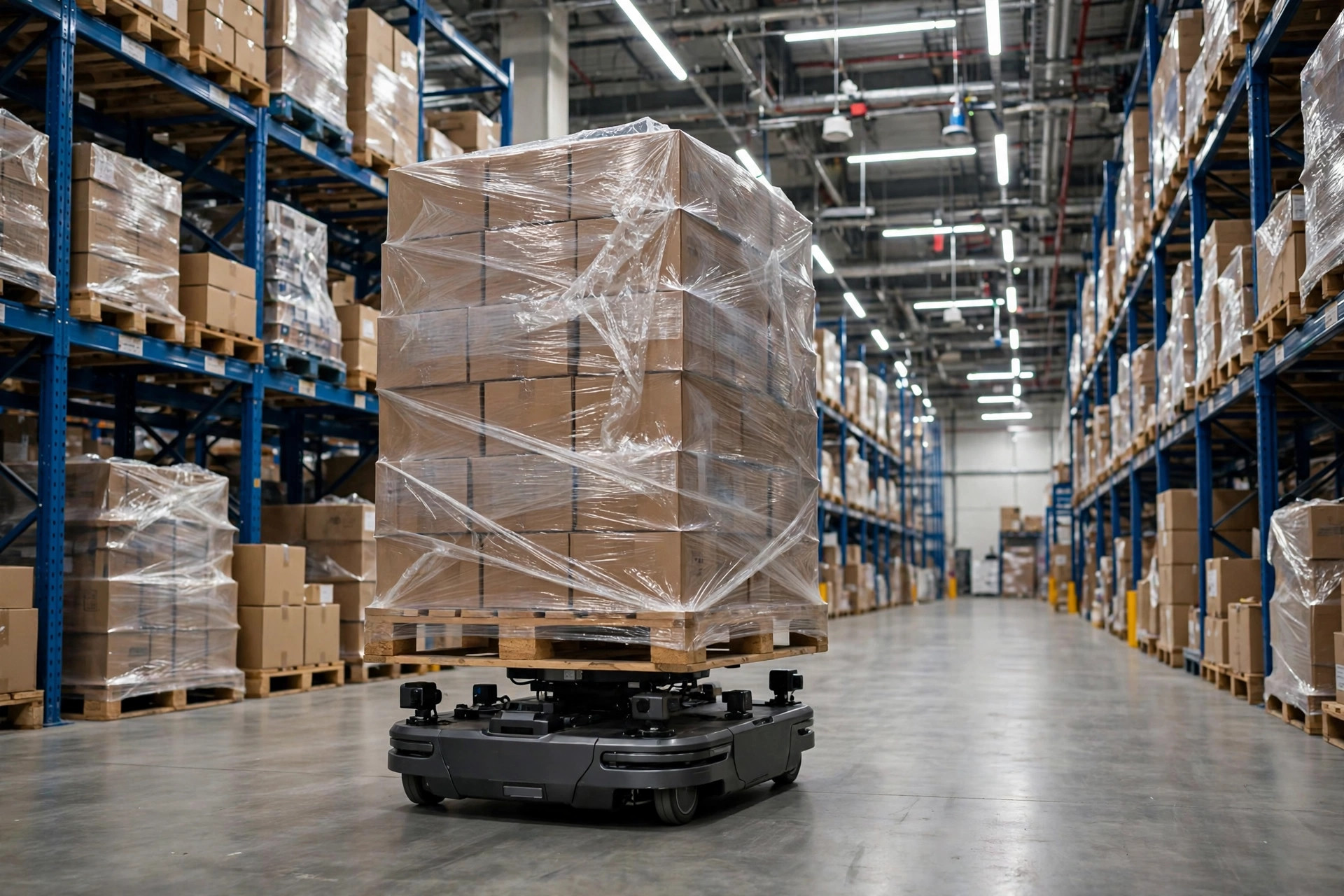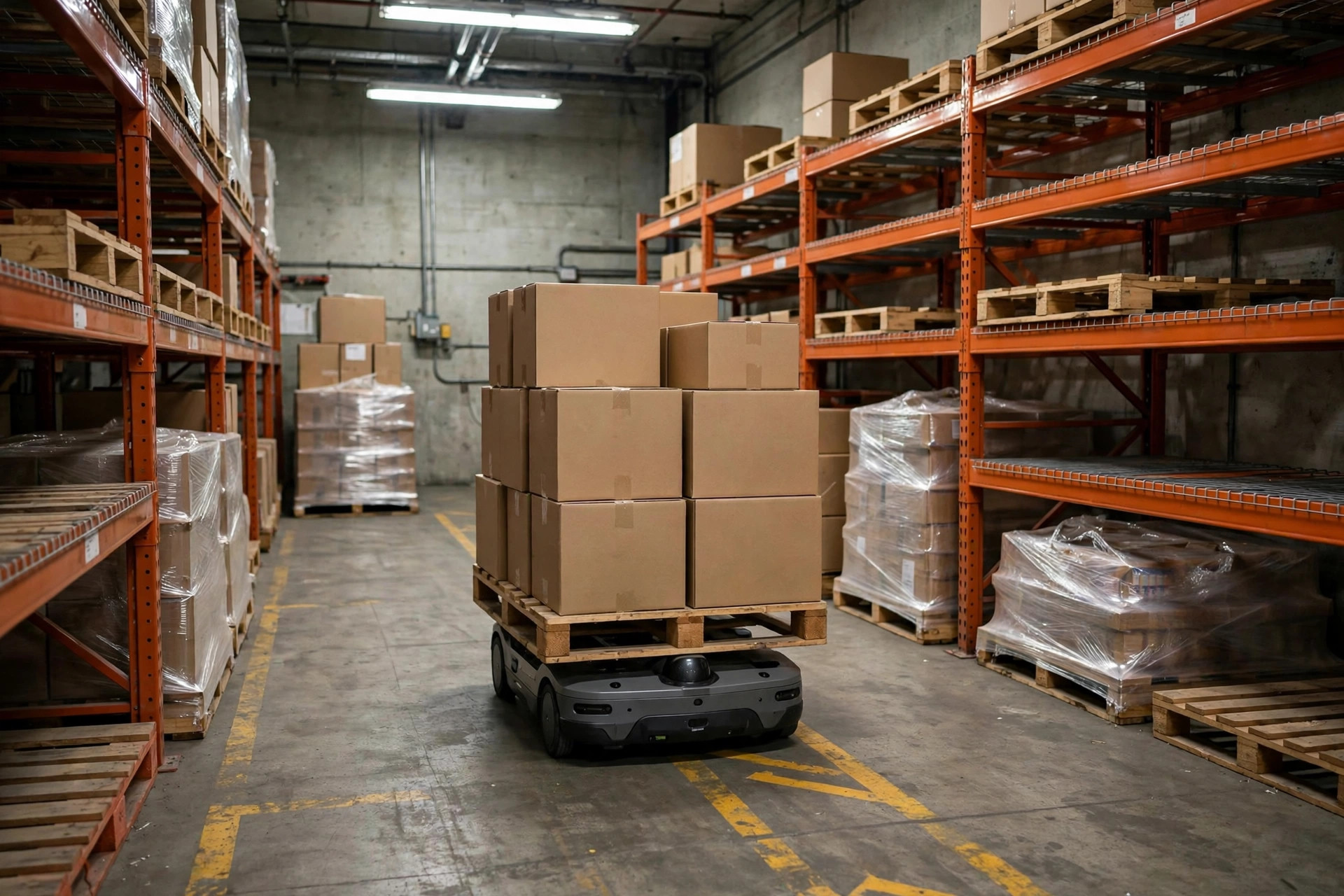
Last fall, a friend who runs a small warehouse in Richmond — auto parts, cross-border — called me, excited: "Da, I found these AMRs — twenty-something grand each, fully automatic pallet moves. I can cut two of my five warehouse guys." I asked him three questions: What does the manual pallet-moving step actually cost you per month? Who eats the depreciation when those robots sit idle in the slow season? Can your system even assign tasks to a robot? Ten seconds of silence. Then: "Let me run the numbers." Six months later, no robots — but he'd re-laid his pick paths, and peak-season overtime dropped by a third.
I tell this story several times a year. Don't get me wrong — I'm not against small-warehouse automation. I'm an integrator; equipment pays my bills. But living with this equipment every day, I know the pattern: when small-warehouse automation fails, nine times out of ten it's not the equipment — it's the timing. This piece isn't about which brand to buy. It's a decision framework: five signals. All green, then we talk equipment. One red light, keep the money in the bank.
What you're actually buying: certainty, not robots
Start with the principle — think of it like buying a car: you're not buying four wheels, you're buying the certainty of leaving at 8 AM every morning. AMRs, put walls, pick-to-light never sold "speed." They sell one thing: converting high-variance manual work into stable, machine-paced output.
Manual speed follows a wide distribution — rookies and veterans differ by 2x, morning and afternoon by 30%, peak-season temps cut it in half. A machine's takt time is a narrow distribution: same rate at 9 AM or 9 PM, whoever's on shift. The real value of automation is deleting "labor variance" from your cost equation.
So the first principle is simple: is your pain "variance" or "slowness"? Can't hire in peak, temp error rates through the roof, everything collapses when a senior calls in sick — that's what automation cures. If it's just "feels understaffed," you haven't done the math. That's signal one.
The 5 signals for a small warehouse: pass them all before shopping
These five signals come from small-warehouse projects I've watched up close. DenMaq, a warehouse automation consultancy, lists four "not yet worth automating" conditions: low order volume, never quantified manual costs, unsettled facility, no systems integration plan. Near one-to-one with my framework — borrowing it with credit. One red light, don't force it.
| Signal | Self-test question | Red flag | Next step when green |
|---|---|---|---|
| 1. Manual cost | Can you quantify what the manual step truly costs? | "Roughly," "about" — no real number | Compute the monthly cost with the method below |
| 2. Volume density | Is there enough work to keep the machine fed? | A few hundred orders/day, 5x peak-to-trough swing | Check utilization can support the payback window |
| 3. Facility certainty | How many years will you stay in this building? | One-year lease, could move anytime | Lock in 3+ years before talking equipment |
| 4. Software first | Can your system task the equipment and get feedback? | Still running inventory on Excel | Deploy order management/WMS software first |
| 5. Process maturity | Is the workflow stable and repeatable? | SKU mix changes quarterly, routes by tribal knowledge | Freeze the process before a machine copies it |
Signal 1: Do you know what manual work actually costs?
DenMaq names it explicitly: no quantified manual costs, no automation talk. The method fits on a napkin:
Monthly manual cost = direct labor + error losses + volatility premium
Direct labor: headcount × hourly rate × monthly hours, using loaded cost (wages + insurance + taxes), not the nominal wage. Error losses: return shipping on mispicks, service time, marketplace penalties — estimate monthly. The volatility premium is the one everyone misses: temp wage surcharges in peak, training drag when veterans quit. In a small warehouse this premium routinely runs 20–30% of direct labor.
Can't compute it? Spend two weeks: have the shift lead tally real hours and errors per day with a clicker. If you can't quantify the cost, any ROI a vendor shows you is fiction — they can only model "ideal takt time" while your baseline is a blurry guess. This is fake-demand central: plenty of owners want automation because "managing people is exhausting," not because the math works. Bluntly: a robot doesn't track attendance, but it will go on strike the day your Wi-Fi drops.
Signal 2: Enough volume to feed the machine?
Sccodeworks puts it plainly: "If volumes are low, the payback period may be too long." Automation is heavy fixed cost — depreciation, maintenance, subscriptions burn daily, orders or not. Low volume means the machine naps at the charging dock half the day: an expensive steel security guard.
Don't ask me "how many orders a day is enough" — SKU mix, average ticket, and labor rates all move the breakeven point. Compute your own:
Payback (months) = total equipment investment ÷ (monthly manual cost − monthly automation operating cost)
Total investment = purchase price + integration + first-year maintenance. Monthly operating cost = depreciation + maintenance share + power + subscription + the labor to babysit the machine. Every input is your own number. My line in the sand: over 36 months, park it. Small warehouses change fast — nobody can promise the SKU mix in three years.
Signal 3: How long are you staying in this building?
AMRs need mapping, keep-out zones, charging docks, Wi-Fi tuning; put walls get customized to your SKU profile. At least half of that is site-bound — move once, pay implementation nearly all over again. A one-year-lease warehouse buying heavy automation is building on someone else's foundation. Get three-plus years of lease certainty first.
Signal 4: Is the software ready? This is the counterintuitive one.
Most small-warehouse owners shop backwards: robots first, systems later. My verdict is the opposite — software first, hardware second. DenMaq ran the comparison: a $200/month order-management software, through better waves and fewer errors, routinely beats a small robotics pilot. I've seen it: once waves, slotting, and task assignment are straight, a step that "needed two people" runs fine with one person and a handheld. The robot becomes unnecessary.
Robots are actuators; the system is the brain. Without software to task the AMR and collect completion feedback, you've bought an expensive remote-control car — plus someone to "dispatch" it. Software is light: $200 a month, cancel next month if it fails. Robots are heavy: if they fail, they rust in the corner. Spend small money to validate the process, big money to replicate it. Never reverse the order.
Signal 5: Is the process mature?
Automation replicates processes, not chaos. If your SKU mix reinvents itself quarterly, pick paths live in veterans' heads, and exceptions are handled by shouting, robots just run the chaos faster and more precisely. Freeze the process first: ABC classification done? Location codes unique? Wave rules written down? Miss any of the three and every vendor quote is fiction — they price a "standard process," and change orders bleed you dry when yours turns out to be Schrödinger's.
The real traps a small warehouse hits after buying
Five signals green, decision made? As a former integration lead, what vendors won't volunteer:
First, floor and network are hidden costs. AMRs demand flat floors — mind expansion joints and ramps; reflooring an old building is a second invoice. A 2-second Wi-Fi roaming lag can emergency-stop a robot. The proposal buries it in one line — "customer to provide suitable facility and network" — translation: you pay, you own the risk.
Second, pallet and tote standardization decides success. Robot placement is millimeter-accurate; chipped, warped, or mixed-size pallets drag success from 99% to 90%, and humans mop up the remaining 10%. Standardize pallets first — an order of magnitude cheaper than the robot, immediate payoff.
Third, the maintenance contract and spares lead time. Ask three numbers: MTBF, critical-spare lead time in days, and whether response is 4 hours or next business day. One or two units means zero redundancy — one down, the whole line stops. 99% uptime sounds great until you convert it: over three days a year down. Hit those in peak season and you'll feel it.
Whether the money is worth it comes down to one number
It all converges on one number: the payback months from your own data. Under 36 months with five green signals — go talk equipment. One red light — fix it first. The kicker: fixing red lights (quantifying costs, freezing processes, software first) strengthens the warehouse on its own, often enough that the robot becomes unnecessary.
One thing for tomorrow: print a sheet, pin it on the office wall, log real hours, orders, and errors for the target step daily for a month. Either you compute a clean payback case, or you discover the problem was never the equipment. Either way, that month beats an impulse robot order.
By Da Liu, Automation Engineer