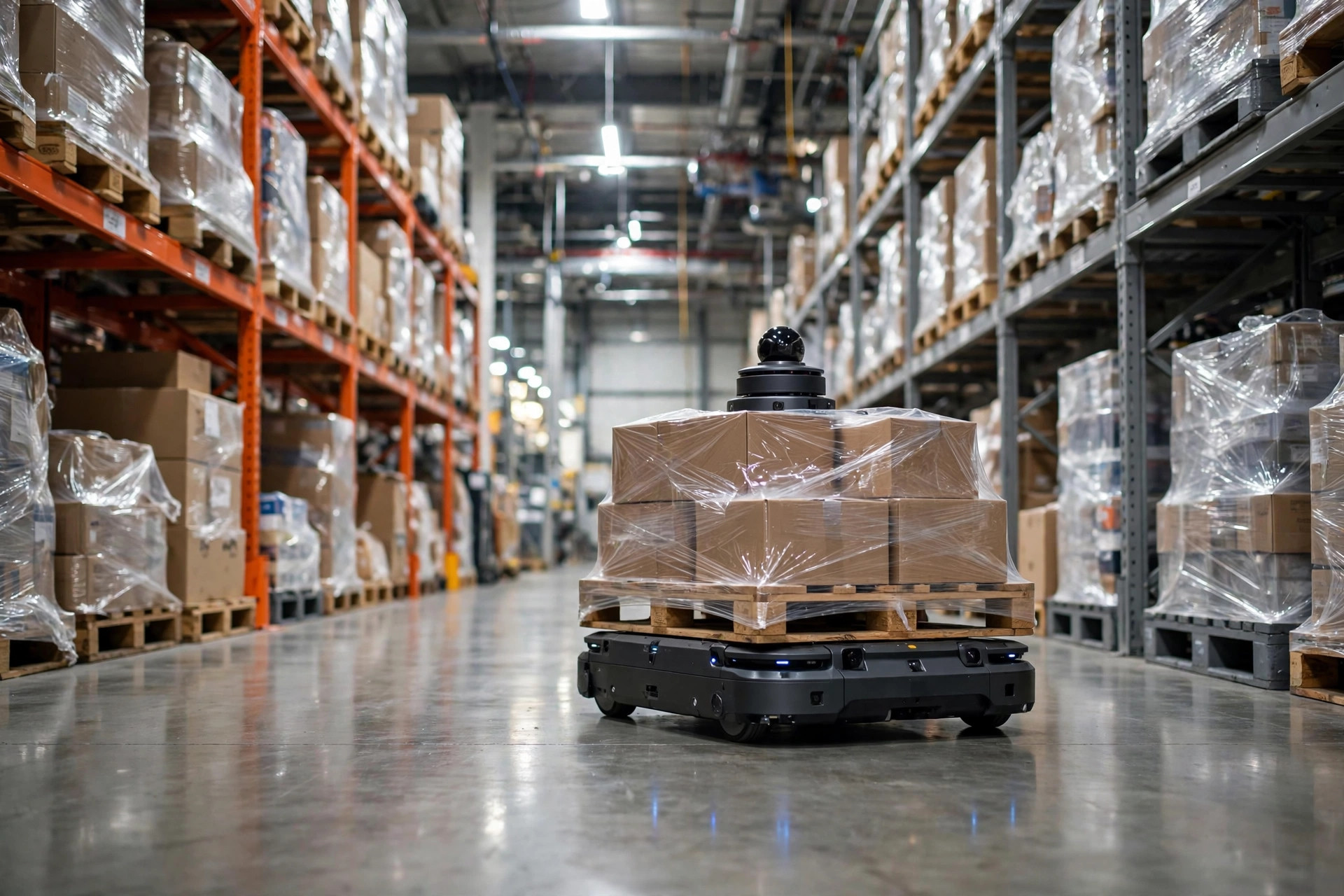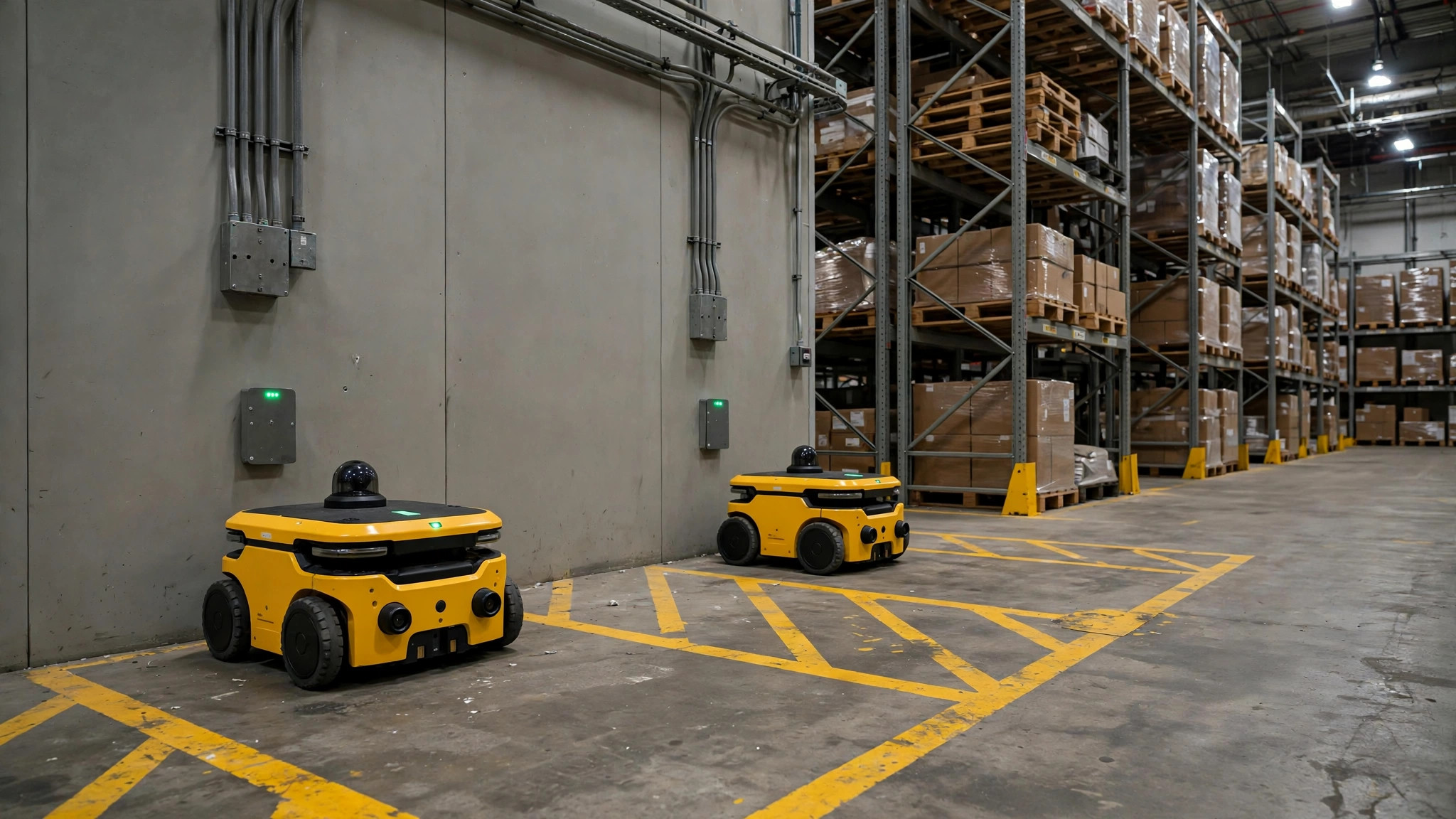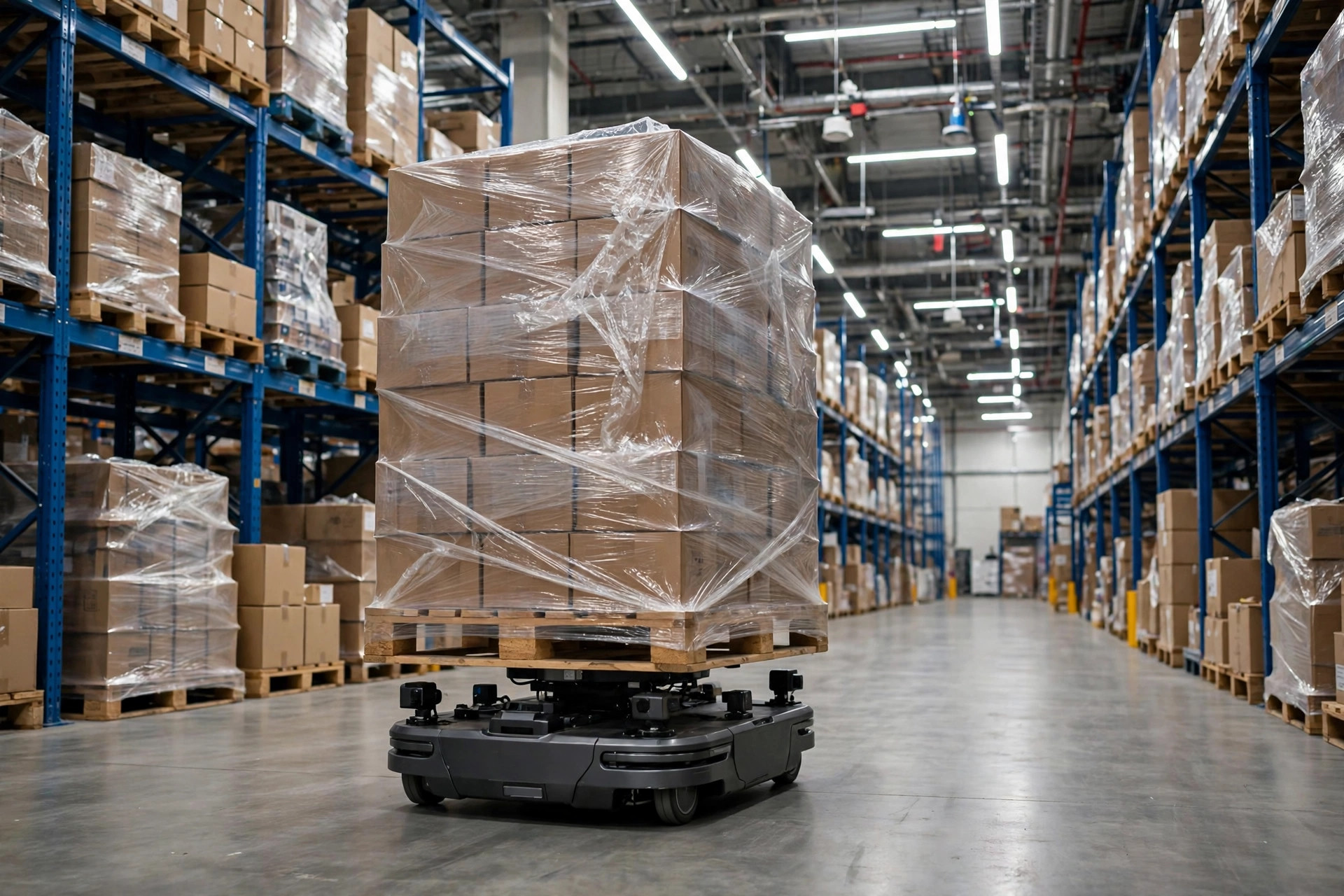
Let me start with the verdict on AMR payload selection: if you buy a robot rated for 1 ton and actually run it at 1 ton, you are slowly killing the machine. Think of it like the top speed on a car's speedometer. It says 240 km/h. That does not mean you can cruise at 240 every day and expect the engine to die of old age. A load nameplate is a laboratory number, not a production number.
I have watched this exact failure play out many times. The tender says "payload ≥ 1,000 kg." The winning bid's nameplate says 1,000 kg. Six months later the customer calls, and the tone has changed: constant overload alarms, drive wheels worn flat in three months, the battery draining like a leaky bucket. The nameplate told the truth. The buyer just read it wrong.
The Rated Payload Is Measured in a Laboratory
Think of the rated load as a number produced under the friendliest possible conditions: a flat, dry floor, a perfectly centered load, straight-line travel at steady speed. Now look at your actual floor. Expansion joints. Patched cracks. Pallets stacked by whoever was in a hurry that day. A route full of 90-degree turns with forklifts cutting across. Every one of those realities eats into your load margin.
Load and speed are enemies sharing one power budget. Power equals force times velocity — double the load requirement and something has to give on speed. The public spec sheets say it plainly: the MiR600 is rated 600 kg with a top speed of 2.0 m/s, while the MiR1350 is rated 1,350 kg but tops out at 1.2 m/s. The MiR250 carries 250 kg at 2.0 m/s. As the load class goes up, the speed class comes down. That is physics.
Here is a detail most buyers never notice: the same MiR250 rated for 250 kg of carried load can tow 500 kg with a hook attachment — because a towed load does not sit on the chassis. Same robot, different working condition. A load number without its working condition is meaningless.
So first, separate three concepts: maximum load (the lab limit), rated load (the nameplate number), and usable load (what your floor, your takt time, and your shifts can sustain long-term). Usable load is always below the nameplate. The gap is never negligible — industry analyses have shown that a robot rated at 1,500 kg, running 1.5 m/s with frequent turns, 10-hour shifts, and strict safety distances, realistically plans at 1,000 to 1,200 kg. The machine is fine. The mistake was treating the nameplate as gospel.
The Payload Selection Line: Draw It at 70 Percent
Principles covered. Now the line. My method is blunt: take your heaviest routine load — including the pallet, the rack, the fixture, the 80 to 150 kg of tare weight everyone forgets to count — divide by 0.7, and buy that nameplate class. In other words, keep everyday utilization at or below 70 percent. Why 70? Because that is where I have seen the failure curve bend. Below 70 percent, wear is normal. Above 90 percent sustained, tires, bearings, and gearboxes depreciate on an accelerated schedule.
A quick reference table:
| Everyday utilization | Verdict | My advice |
|---|---|---|
| Under 60% | Comfort zone, full speed fine | Buy with confidence, expansion headroom included |
| 60–80% | Normal operating range | Healthy — just remember to count tare weight |
| 80–100% | Red zone | Slow down, shorten shifts, or add robots to share the load |
| Over 100% | Overload | Don't. Nothing saves you here |
Fall 2023, an auto sheet-metal plant in Dongguan, Guangdong. Six latent-lift AMRs rated 1 ton, hauling 970 kg steel-coil racks (tare included). On paper: 97 percent, "within spec." Three months in, two robots developed gearbox noise. Teardown showed pitting on the planetary gears — sustained near-maximum load plus 16-hour double shifts had brought metal fatigue forward by years. They replaced the fleet with the 1.5-ton class. Same cargo, utilization dropped to 65 percent, and the fleet ran eighteen months with zero failures. The price premium versus one line-down waiting on material is not even the same order of magnitude.
And here is the counterintuitive part: overload does not kill the motor first. Motors have thermal protection and current limits — a genuine overload trips an alarm and stops. What dies first are the parts with no protection: tires wearing at an accelerated rate, gearbox bearings fatiguing. Bearing life follows the ISO 281 standard formula, L10 = (C/P)³. Double the load and life drops to one-eighth. A 20 percent load increase cuts life nearly in half. Bearing life is eaten by overload at a cubic rate — linear thinking will kill you here.
A Fork-Type AMR's "1 Ton" Is Not a Latent-Lift AMR's "1 Ton"
This is the second big selection trap: the same "1 ton" means wildly different things across robot types.
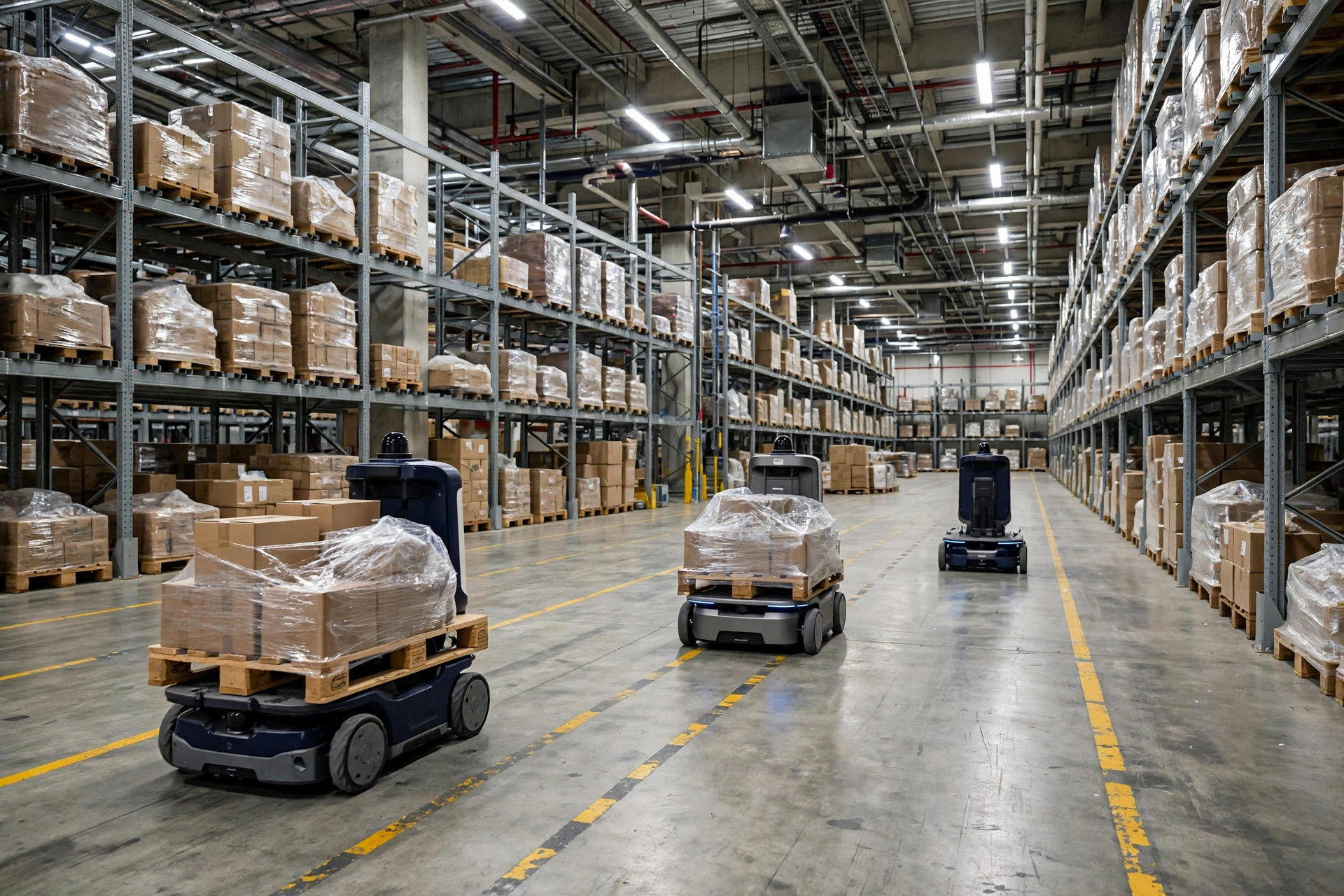
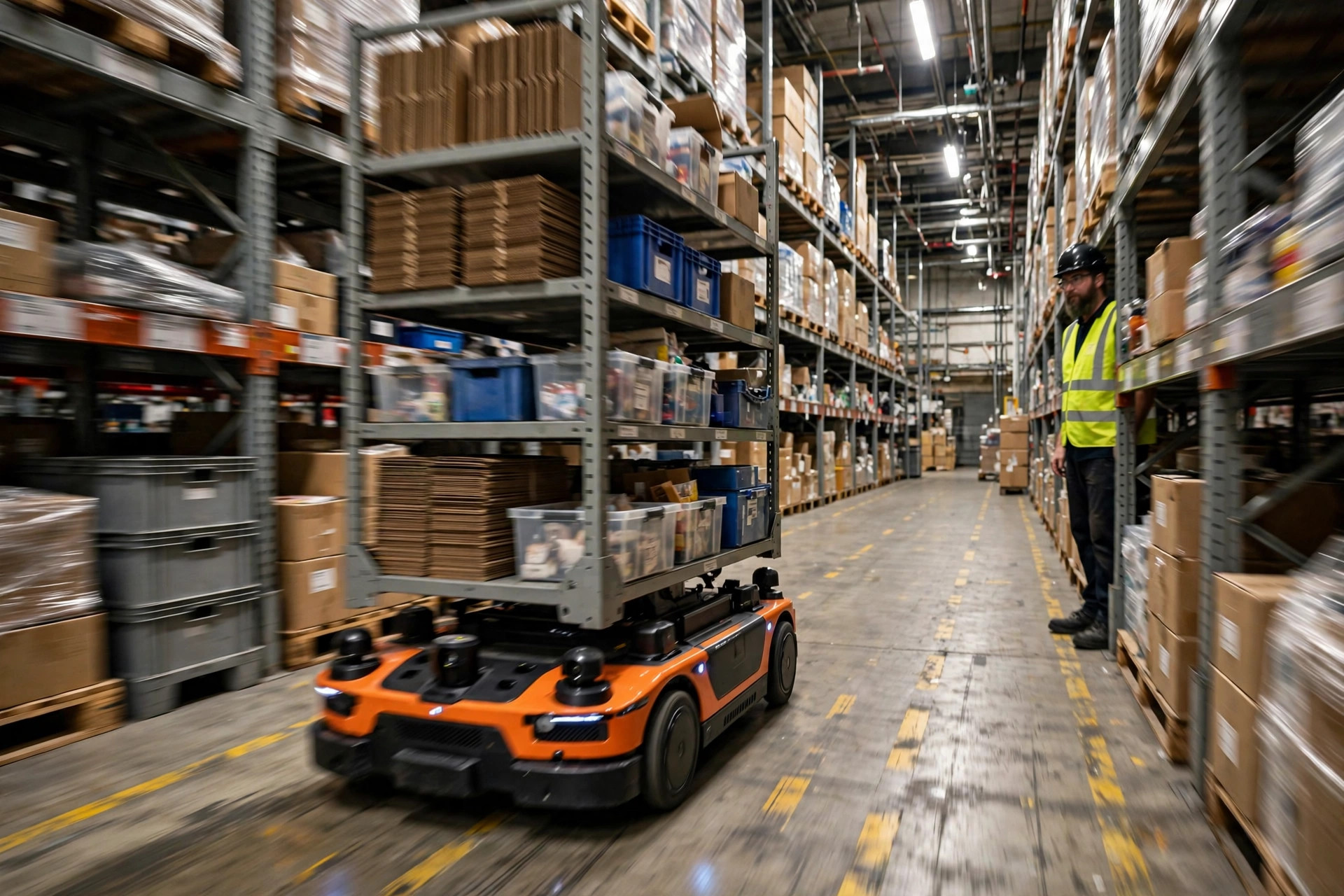
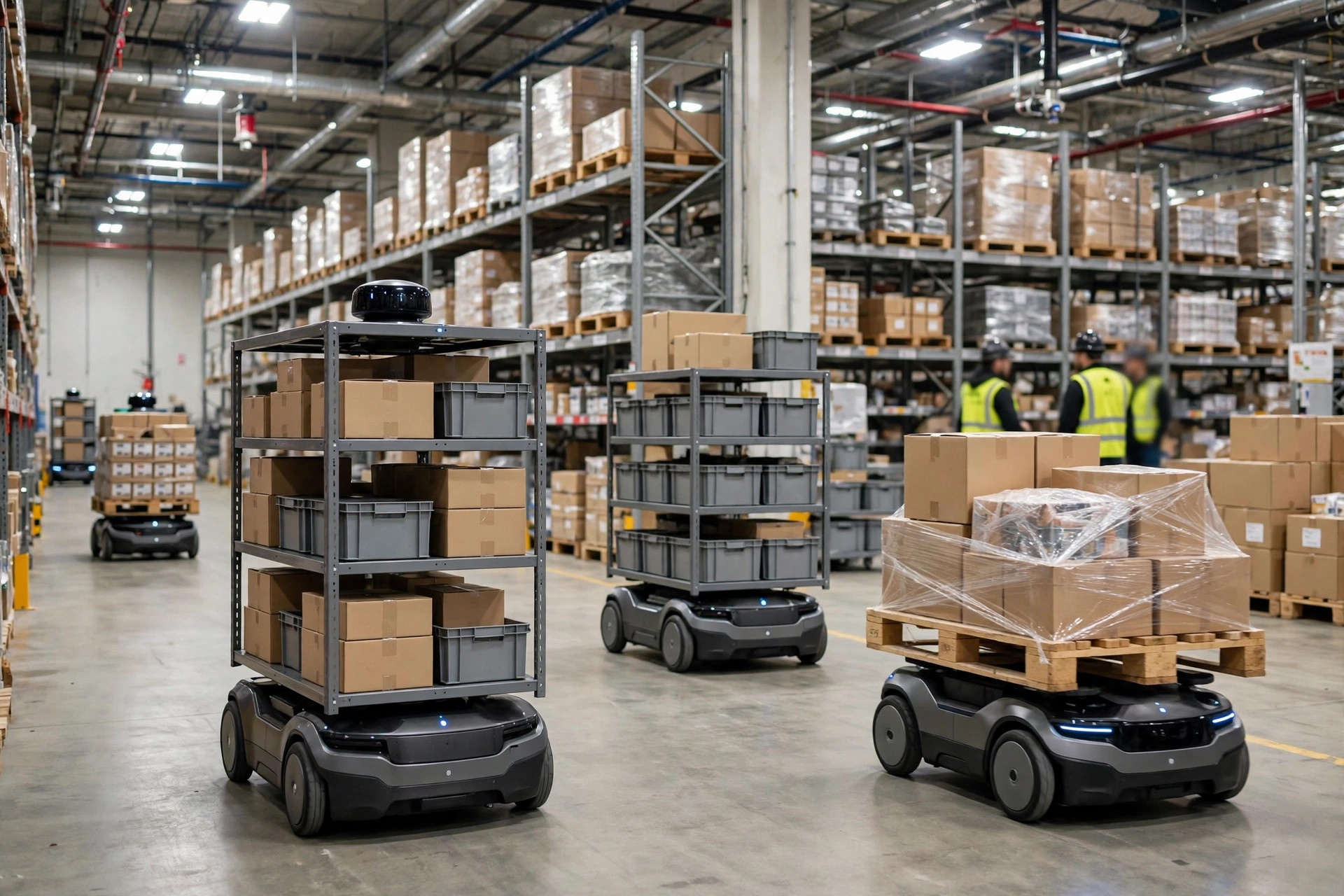
A latent-lift (underride) AMR carries the load on its back, low to the ground, like an oversized skateboard. A Geek+ P800 lifts 1,000 kg and still runs 1.5 m/s loaded — that confidence comes from a low center of gravity. For these machines the nameplate is relatively honest. Hold the 70 percent line and you will rarely get burned.
A fork-type AMR — the driverless forklift — is a different animal. Its 1 ton is rated at a standard load center and a low lift height. Extend the forks, raise the mast, and the allowable load derates. That is an old forklift-industry rule, printed right on the load curve plate, and AMR buyers routinely ignore it. A typical 1,500 kg fork-type AMR runs 1.5 m/s in a straight line, manages about 3 degrees of grade fully loaded, and holds ±10 mm positioning — and those parameters are bundled. You cannot have full load, full speed, high lift, and steep ramps simultaneously. Physics declines.
Early 2024, a 3PL warehouse in Kunshan, Jiangsu. Fork-type AMRs rated 1.2 tons, 1.5-meter mast. The site, trying to save a trip, forked 1.1 tons — on paper, within spec. But the load was stacked 1.6 meters high with the center of gravity sitting rearward. Crossing a floor expansion joint, the robot e-stopped and pitched visibly forward. The safety laser scanner tripped, and the load nearly came off. The postmortem was clear: never the weight — the height of the center of gravity and the offset load. With fork-type AMRs, the load rating is only half the selection — the other half is how high your people actually stack the goods, and how far off-center they sit.
The Maintenance Trap: Overload Compounds Like Interest
The question I get asked most: how much damage does overload really do? Look at three components.
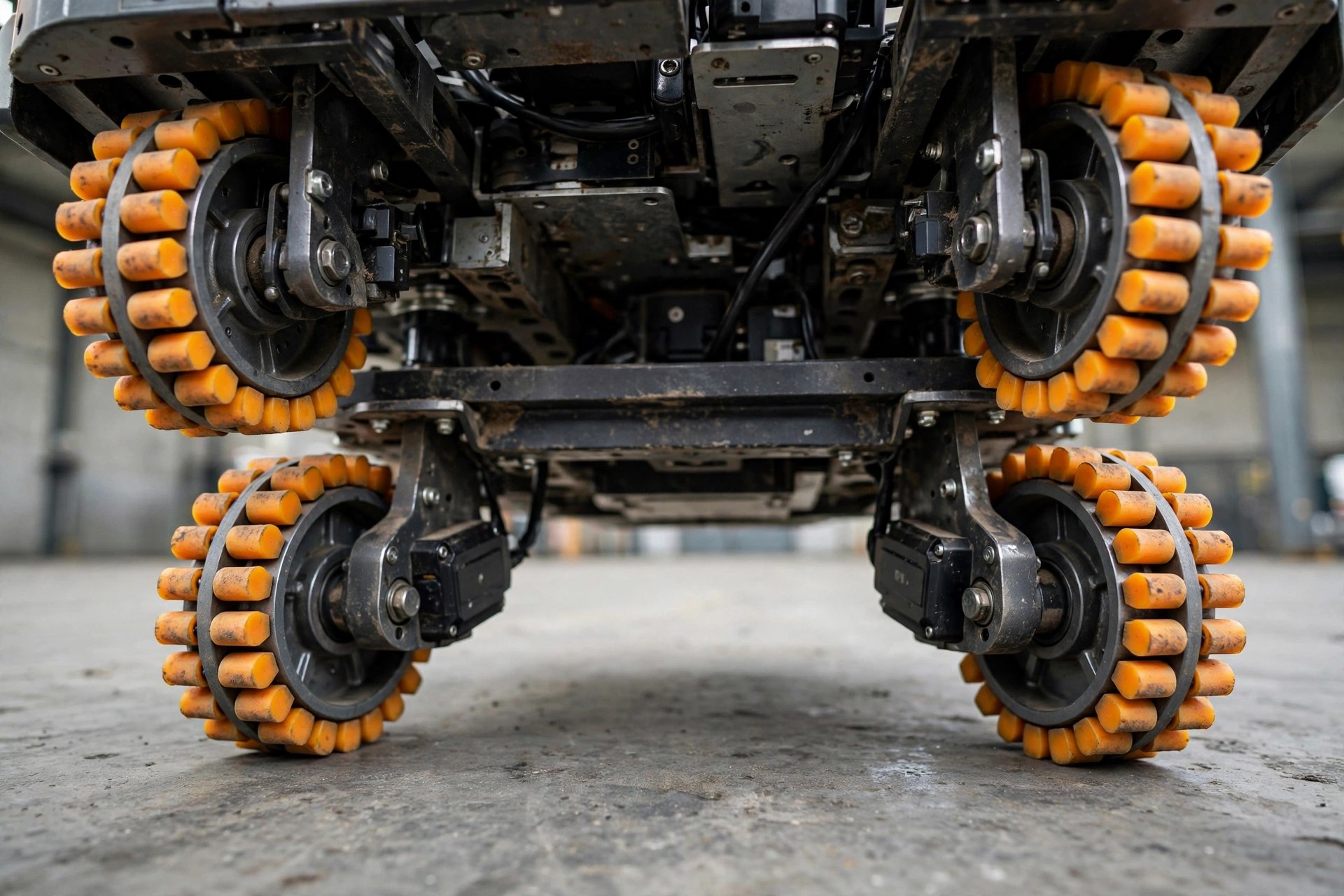
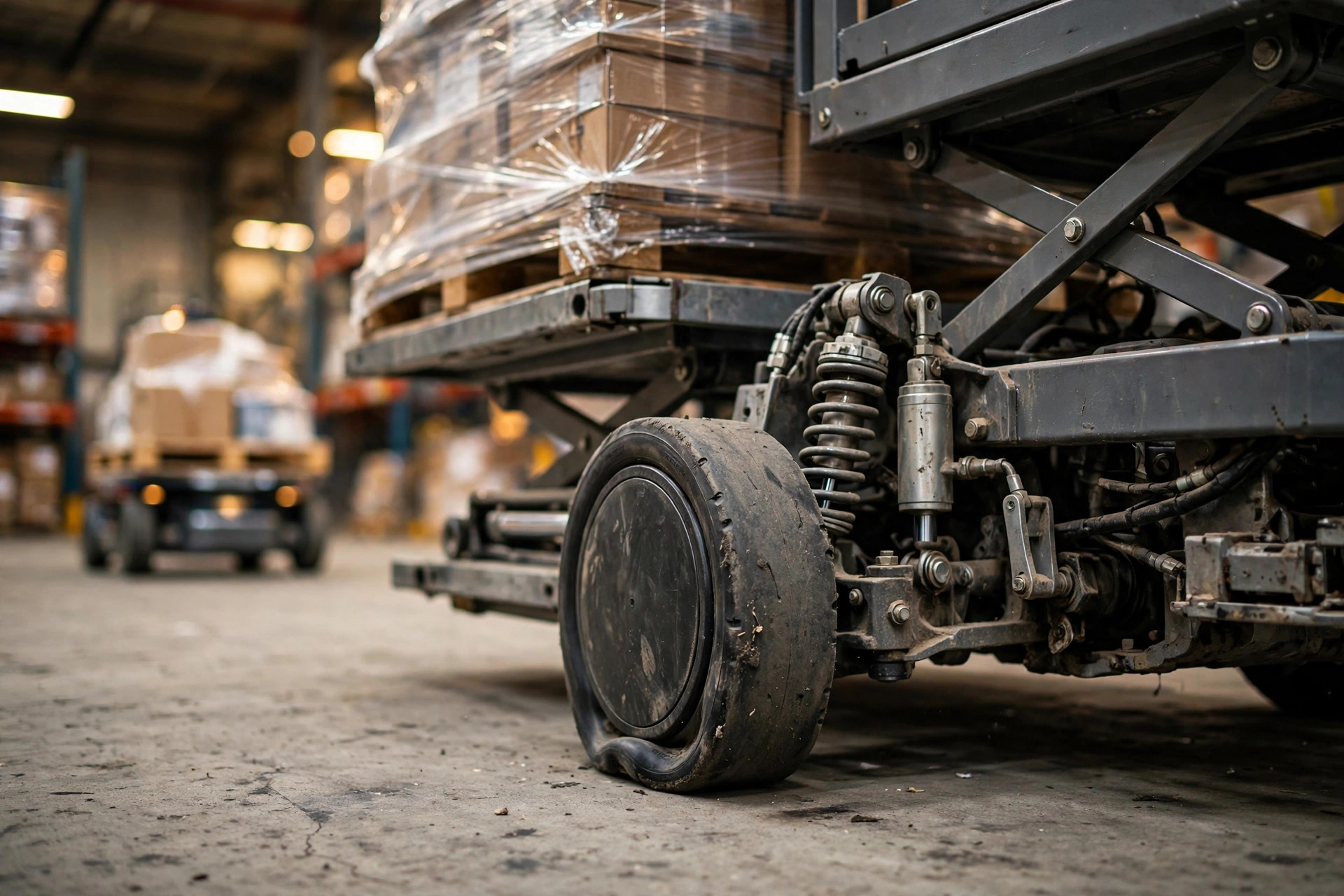
First, tires and drive wheels. AMR polyurethane drive wheels are consumables, and under normal conditions they wear linearly. Sustained overload accelerates the wear and chews flat spots into them. One flat spot makes the robot shudder, and the shuddering accelerates bearing wear. A chain reaction.
Second, the battery. A manufacturer's cycle life — 3,000-plus cycles, say — is measured under standard charge and discharge conditions. Sustained heavy loads mean high motor current and deep discharge, and the battery degrades faster. The sneakier effect: a heavily loaded robot's single-shift range shrinks. What was a 10-hour charge interval becomes 7 hours, and your whole fleet schedule falls apart. Six robots of throughput on paper; four and a half in practice.
Third, gearboxes and bearings — the cubic law covered above. And one more thing people miss: the safety system. Standards like ANSI/RIA R15.08 for industrial mobile robots specify braking distances and protective field sizes. Overload stretches braking distance directly, which means the safety laser scanner's protective fields — calibrated for rated load — effectively go nearsighted. At that point it is not a lifespan question but a safety question.
Two Fake Requirements, Called Out
Time to be blunt. Fake requirement number one: the tender demanding "2,000 kg of load, speed ≥ 2 m/s, gradeability ≥ 5°" all at once, at the lowest price. Power equals force times velocity. Pick two, pay for the third. If a machine truly did all three, it would cost all three.
Fake requirement number two is more common: "reserve 50 percent headroom for expansion three years out," so a 1-ton job buys a 2-ton robot. It sounds visionary. In practice it is a big horse pulling a small cart: double the chassis weight, double the energy draw, a wider turning radius, wider aisles required. The extra money is real and immediate; the expansion in three years is hypothetical. Reserving margin is correct — but the 70 percent line already is margin. Stacking more margin on top of it is just waste.
So, is the money worth it? It comes down to one number: add up the robot price, five years of maintenance, energy, tire and battery replacements, and divide by cost per ton-kilometer moved. The robot selected at 70 percent utilization almost always lands the lowest number. Buy too small and you pay in repairs. Buy too big and you pay in idle capacity. Either way, you are paying tax on that number. Load selection is not really about picking a robot. It is about picking your cost curve for the next five years.
By Da Liu, Automation Engineer