We learned fast that seed looks tough but is fussy. In seed warehouse storage germination moisture is the quiet ledger that decides whether a farmer gets a stand or a patchy field. Nobody calls you in spring to praise your tidy warehouse. They call because the seed did not come up, and at that point your explanations are worthless. The only question that matters is whether the lot germinated.
We cannot burn money the way the big companies do. That line is not a slogan; it is our budget. The big players have climate-controlled rooms, a lab down the hall, and someone whose whole job is checking numbers every day. We have three people, an old warehouse, and secondhand fans. Early on I copied the big-company playbook anyway: gear, beautiful spreadsheets, and a very professional feeling. The prettier the spreadsheet got, the better our real problems hid. Their playbook was never written for us.
Seed Warehouse Storage Germination: Get the Lot Ledger Right First
Here is the mistake that still stings. In the fall of 2024, a co-op in Hebei delivered a load of corn seed. The bags looked neat and the paperwork looked complete. (The specific numbers in the cases below are illustrative examples, not our real ledger.) To save time, I only checked the two bags on top. They felt dry, so I signed. When planting season came, the co-op called about uneven emergence, thin here and thick there. We dug into the lot records and found the truth: the delivery was not one lot at all. New seed sat on top, carryover seed from the year before sat underneath, and a few damp bags were mixed in between. The bags looked identical, but the ledger listed a single lot name. I paid freight, I paid goodwill, and I lost face. The lesson was blunt: if the lot is not clear at receiving, you are not managing anything.
The second story is more embarrassing. In the spring of 2025, we held a carryover soybean lot of our own. The ledger said we still had plenty (again, an illustrative figure). I figured carryover seed is still seed, and someone would want it at planting time. When we tested it, germination was far below what I had guessed. The seed had not gone bad on its own. Over winter I had skimped on heating, the warehouse swung hot and cold, and one corner had even collected condensation. Seed hates that kind of swing. A steady, slightly imperfect environment beats a roller coaster every time, and carryover lots need more attention the longer they sit, not less.
Those two failures gave me our house rule: seed warehouse storage germination moisture management is not about buying expensive kit. It is about knowing exactly where every lot came from, and turning moisture re-checks into a habit as ordinary as lunch. University extension guidance on seed storage offers a rule of thumb that costs nothing and fits on a wall poster: the Fahrenheit temperature plus the relative humidity percentage should add up to no more than 100. For short-term storage, the guidance points to roughly 35 to 50 degrees Fahrenheit with 30 to 40 percent relative humidity, and short-term seed around 12 percent moisture at 32 to 41 degrees Fahrenheit. That is a rule a small crew can actually use.
Seed Warehouse Moisture Checks and Lot Segregation on a Shoestring
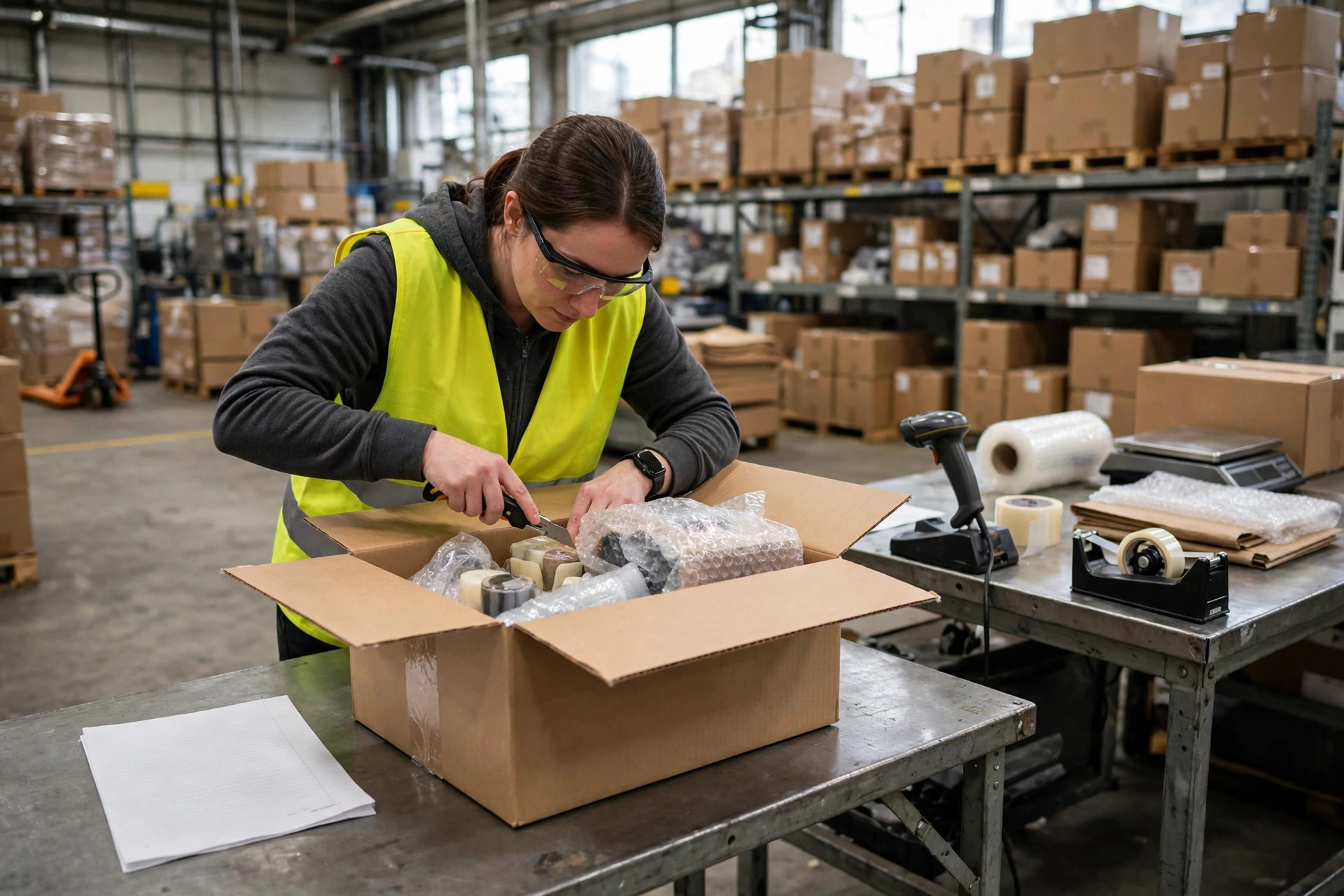
Our method is embarrassingly low-tech, and it works. Receiving has three gates, and no lot skips one. Gate one is packaging and labels: torn bags, damp bags, or unreadable labels go to a separate spot immediately, not into the main stack. Gate two is sampling: never sample only the easy bags on top. Take from the top, middle, and bottom, from the edges and the center, and bag each sample with its own number, date, and sampler name. Gate three is the ledger: one lot gets one page, with source, variety, receiving date, sample results, and storage location. Every change leaves a trace. No erasing, no quiet edits.
Moisture re-checks are our lifeline. Testing once at receiving is not management. That is the heart of seed warehouse storage germination moisture control: test, record, compare. We re-check through storage, especially when seasons change, after long rainy spells, and after the warehouse has been ventilated. Buy what you can afford, combine your own checks with outside testing, and above all, record and compare each result. If moisture went up, find out why: a leak, ground damp, or a newly arrived wet lot next door. A test you do not record is a test you never did.
Segregation is where small warehouses cheat, and cheating always costs more later. Our rule is simple: new seed, carryover seed, seed awaiting inspection, and problem seed never share a stack, even when space is tight. Boards and clear signs do the job. The carryover area gets its own sign with the year it came in and the date of the last re-check, so that at planting time we know which lots to move first. Boards and signs cost almost nothing. They save you from the nightmare of a problem lot mixed into good seed, where you cannot even say which bags are at fault.
| Storage type | Our cheap method | What we watch | First place to check when trouble appears |
|---|---|---|---|
| Short-term storage | Dry, ventilated spot, regular moisture checks, its own ledger page | Moisture shifts, torn packaging | Bags near corners, floors, and vents |
| Long-term storage | Cool, stable spot, low temperature and humidity per guidance, no fiddling | Temperature and humidity swings, carryover germination | Re-check records around season changes |
| Carryover lots | Separate area, year clearly marked, more frequent re-checks, first-out order planned | Falling germination, signs of pests | The oldest stacks, stored longest |
On long-term storage, university extension guidance points toward freezer storage around 0 to minus 5 degrees Fahrenheit at 3 to 8 percent moisture. But there is a hard condition attached: do not freeze high-moisture seed. Freezing wet seed can ruin it faster than ordinary storage would. Most small warehouses cannot justify a freezer setup anyway. If a customer asks for long-term storage, get the moisture down first, spell out the terms honestly, and only then talk price. Never trade the warehouse's reputation for one order.
Carryover, Fumigation, and Pests: Where Not to Save Money
Here is the counter-intuitive judgment I had to learn the hard way: most small-warehouse seed failures are not caused by cheap equipment. They are caused by skipping the cheap inspection to save time, then paying ten times as much after something goes wrong. I used to think sampling wasted time and re-checks created work. Then I did the math (illustrative example): one careful sampling and re-check round costs half a day of labor plus a small testing fee, while one failed lot costs freight, refunds, lost trust, and orders that never come back. That comparison does not need a spreadsheet.
On fumigation and pest control, I am deliberately conservative. If you do not understand a product, do not improvise with it. Rates, intervals, and safety requirements are governed by official labels and current rules, so treat the official source as authoritative and check the latest policy on the official website before acting; never copy someone else's old recipe. What a small warehouse can do well is prevention: keep the place clean, deal with broken bags at once, isolate anything showing pest signs, and bring in qualified help. The cheapest pest control is cleanliness and attention. Spilled seed in corners is a free canteen for pests.
There is one trade-off I wrestled with for a long time: whether to let the warehouse temperature drift in winter and bake in summer to save on power. My answer now is that saving power must never mean letting temperature and humidity ride a roller coaster. Stability matters more than hitting a perfect number. A plain, steady range, fans on when they should be on, doors shut when they should be shut, beats a heroic swing. Spending a little to stay stable is far cheaper than paying for a ruined lot. That is small-operator arithmetic.
So here is my advice to anyone running a small seed store: never let the lot ledger lapse for a day. Re-check moisture once more rather than once less. Keep carryover seed apart so it cannot quietly blend into new seed. On fumigation and pests, ask a qualified person instead of playing doctor yourself. In this business, customers do not remember how impressive your warehouse looked. They remember whether your seed came up in those few critical weeks of spring.
Small warehouses have their own way of surviving: a clear ledger, moisture watched closely, and lots kept apart, so germination does not quietly slip away in storage.
By Xiao Ma, Small Warehouse Owner