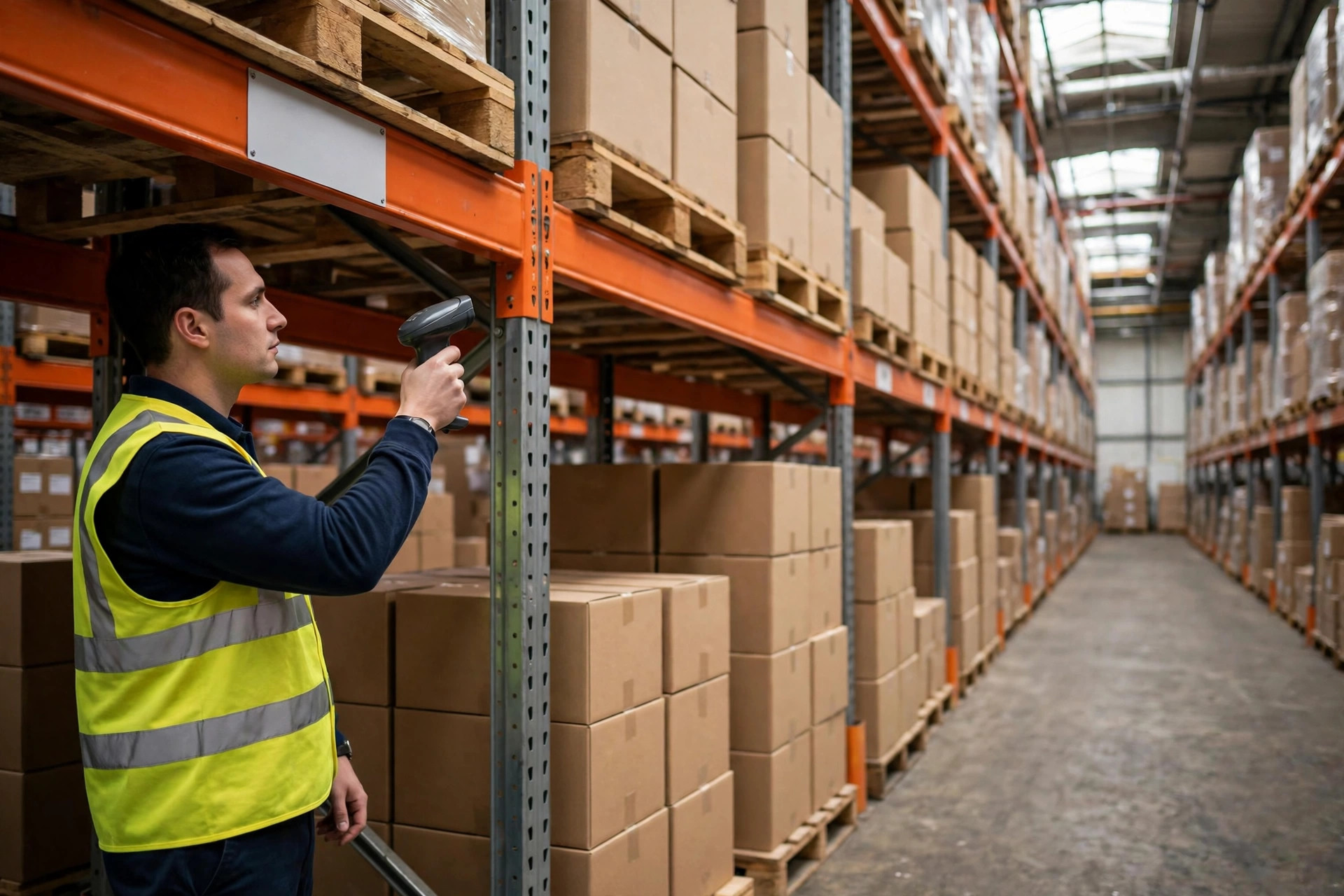
Here is the uncomfortable truth about a polybag sortation warehouse conveyor: a line that runs cartons beautifully can fall apart the moment you feed it apparel in plastic bags. I walked into an apparel e-commerce warehouse in eastern China last autumn, peak season, tens of thousands of polybagged garments a day pouring out of picking, and the conveyor stopped every few minutes. An operator stood at the divert point with a long pole, poking bags free one by one. The line was fine. The bags were fine. The mistake was running soft bags with a carton mindset.
Think of it like this: moving a carton on a conveyor is like moving a brick, while moving a polybag is like moving a pillow that keeps changing shape. A carton has flat sides, a stable base, and a label that stays put. A polybag has none of that. The garment inside slumps, the plastic surface is slippery, and the bag lands in whatever pose gravity gives it. You can think of a carton as a passenger that stands up on its own, and a polybag as a patient on a stretcher that keeps sliding off. The line has to steady the bag before it can sort it, and most lines were never designed to do that job.
The first failure is jamming. Bags do not jam on straight runs. They jam at curves, diverts, and chute entries, where a thin bag corner gets pinched between two bags or caught in a gap, and then the whole queue behind it piles up. A children's apparel warehouse I visited had the classic version of this: mixed bag sizes running together, small bags diving underneath big ones, and the divert arm stalling against a wedged bag while dozens of bags backed up behind it. The fix is less glamorous than a new divert mechanism. Straighten the bag before it reaches the sorter, either with a short manual dressing step or an automatic flattening section, so bags arrive in a reasonably uniform pose. Once the pose is consistent, jamming drops sharply. Buying a fancier divert arm before fixing pose is spending money on the wrong end of the problem.
The second failure is slipping. Plastic film grips a belt far less reliably than cardboard, and the trouble shows up on inclines and acceleration zones, where the bag lags behind the belt, spacing collapses, and divert timing goes wrong. There are two honest remedies, and both are boring in a good way. Use a belt surface with better grip for film, and flatten the incline and stretch out the acceleration so the bag is never yanked from a standstill. Exact belt and drive specifications should be taken from the manufacturer's specifications, not guessed on site. There is also a shop-floor trick that costs nothing: load every bag the same way, opening to the same side, long edge along the direction of travel. Random orientation defeats even good equipment.
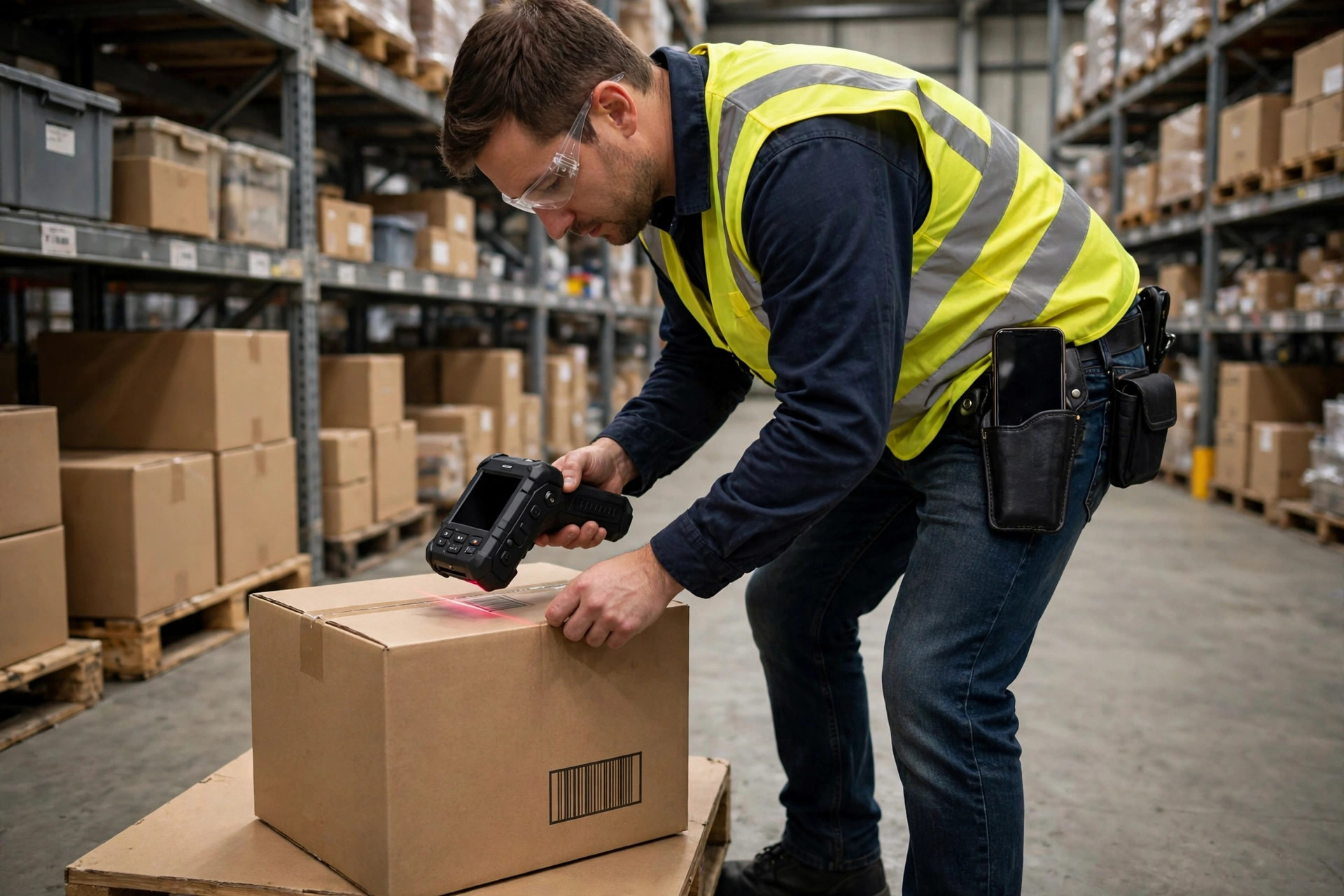
The third failure is missed reads. Labels on polybags end up on a crease, or the bag flips and the label faces down, and the scanner reads air. Clear film makes it worse, because overhead light can glare straight back into the reader. I have watched a warehouse quietly staff a manual re-scan position downstream of its scanner, which means the automated line had quietly grown a manual line behind it. Fix the bag before you add cameras: flatten the label area, put the label in the same place every time, and dress the bag before the scan tunnel. If the read rate is still short after that, then talk about multi-angle scanning, again with specifications from the manufacturer. Reverse that order and you pay twice for the same problem.
Why a polybag sortation line jams, slips, and misses reads
Strip away the details and the principle is one sentence: a polybag has no fixed shape, but the conveyor was designed for fixed shapes. That is why every failure traces back to pose control rather than speed. Carton sortation is a game of speed and chute count. Polybag sortation is a game of pose consistency. Get the pose right and a slower line still runs steadily. Get the pose wrong and every increase in speed just produces jams faster. This is the counter-intuitive point most warehouses miss: before chasing throughput, slow the problem down and fix the pose, then earn the speed back. A polybag sortation warehouse conveyor that runs fast on inconsistent bags is not a fast line, it is a fast way to create rework.
| Factor | Cartons | Polybags |
|---|---|---|
| Base and pose | Flat, stable, predictable | Soft, variable, prone to slipping and flipping |
| Sorting challenge | Chute count and peak speed | Pose consistency and read rate |
| Where it usually breaks | Not enough peak capacity | Jamming, slipping, and missed reads together |
| First fix | Add chutes, raise speed | Dress bags, unify loading direction |
Specifying a polybag sortation conveyor: the dividing line
Here is my dividing line, and I do not blur it. If polybags are under half your volume and sizes are fairly uniform, keep the existing line, add a dressing section, change the belt surface, and retune the divert settings. If polybags dominate, sizes range from socks to down jackets, and peak season mixes everything together, then design the divert and scan sections for bags from the start instead of patching a carton line. And I will be blunt about a pseudo-demand I keep seeing: a warehouse moving only a few thousand bags a day asking for a fully automated sortation line, justified as preparation for the future. That is burning money. Manual sortation plus a few gravity chutes will do the job until the volume genuinely earns automation. Automation earns its keep only when the volume and the pose problem justify it.
For the money question, I use one illustrative calculation. Suppose a polybag sortation warehouse conveyor handles twenty thousand pieces a day, and a small share of each hundred pieces needs manual intervention because of jams or missed reads. Take the labor hours spent on that intervention, spread them across every piece the line handled, and you get the true cost per sorted piece. The number on the equipment quotation does not matter nearly as much as that spread cost. Work it out before the retrofit, work it out again after, and if the spread cost fell, the money was well spent. If it did not fall, the retrofit was decoration. Any warehouse can run this arithmetic without a single vendor parameter.
The maintenance traps nobody puts on the checklist
Maintenance is where polybag lines quietly degrade. First, the belt surface: film debris and dust pulled in by static electricity slowly change grip, so over a few months the line slips more and more while everyone blames a new bag supplier. Second, the gaps at divert arms and chute entries collect torn bag corners that are invisible during a walk-around and only cause trouble when peak volume arrives. Third, the scan tunnel's lights and lenses collect dust, so the read rate slides downward silently until a backlog makes it obvious. None of these fixes is expensive. The hard part is discipline: put all three on a weekly inspection sheet and clean them on schedule, which is far cheaper than an emergency stop during peak. One more uncomfortable point: many maintenance manuals were written for carton lines, and the polybag inspection items were never added. Until the manual changes, the traps stay in place.
So the order matters, and it is not negotiable: fix pose first, then fix reading, and only then talk about speed. Fix pose and most of the jamming, slipping, and missed reads shrink together. Skip pose and every piece of added equipment just accelerates the same failures. Whether the money was worth it comes down to one number: the cost per piece after spreading manual intervention across everything the line handled, before versus after the change. If that number fell, it was worth it.
By Da Liu, Automation Engineer