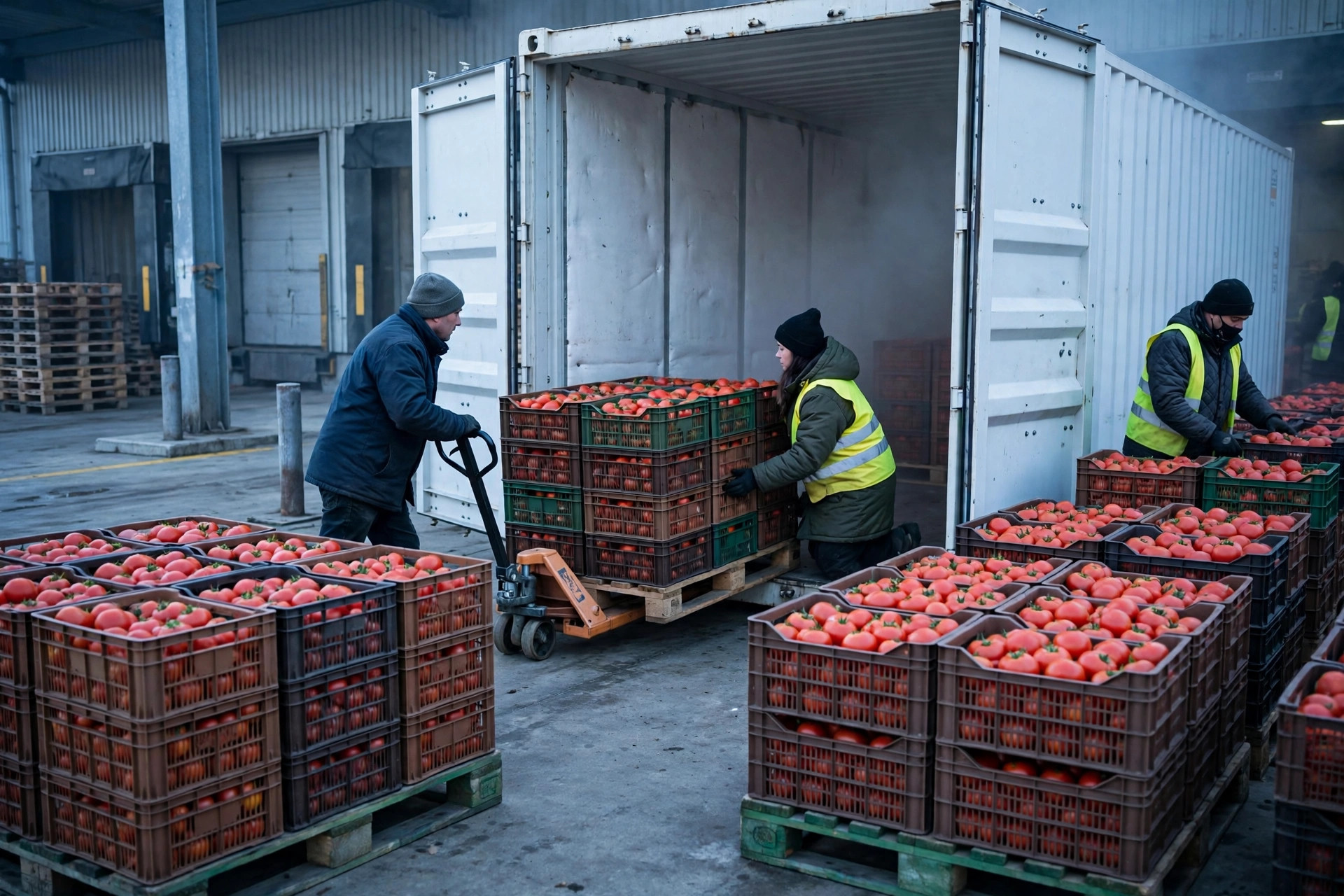
Three in the morning, outside a packhouse in Agadir, where the Morocco tomato export cold chain starts its longest night.
The reefer's compressor hums. White vapor curls out of the container door seals. Forklifts shuttle pallets of tomatoes into the box, one after another. A QC inspector probes three pallets per container, driving the thermometer into the fruit to check pulp temperature. Folks, let me be straight with you — I've run a 200-person warehouse for years, and the first time I watched a tomato export load in person, all I could think was: this is more nerve-wracking than peak season back home.
Tomatoes are fragile. One bruise spreads rot. One temperature excursion and the whole container gets discounted in Europe. In a domestic warehouse, your job is "don't ship the wrong item." Here, your job is "this box floats for two weeks and still arrives as good tomatoes."
The scale: how big is Morocco's tomato trade
Morocco is now the world's third-largest tomato exporter, behind only Mexico and the Netherlands. Per IndexBox, Morocco ships 600,000–750,000 tonnes of tomatoes a year, worth USD 900 million to 1.2 billion, with 70–80% of the volume going to the European Union. France, Spain, the UK, Germany, and the Netherlands are the main destinations.
The Souss-Massa region is the heartland, and Agadir sits right in it. Packhouses, pre-cooling rooms, reefer depots — everything clusters around this region. A huge share of the tomatoes Europe eats in winter comes off this chain.
The chain looks like this: harvest → packhouse grading and packing → pre-cooling → reefer stuffing → drayage to port → ocean leg → European distribution → retail shelf. Every link races the clock and fights temperature. Break one link and the container's value takes a haircut.
How the problem shows up: skip pre-cooling, waste the whole box
Last season I spent a few days at a packhouse with a friend who exports tomatoes. Watched a load go wrong with my own eyes.
It was a UK-bound container. The packhouse was rushing to meet the vessel cutoff, so pre-cooling got compressed. The probe readings showed pulp temperature wasn't down yet. The crew huddled: "reefer's running, it'll cool down en route." They stuffed it anyway.
Here's what happened. A reefer's job is to hold temperature, not to bring it down. Dozens of tonnes of tomatoes carrying field heat — the box's refrigeration capacity can't catch up. In the UK, the temperature logger's curve rode above the spec line the whole voyage. The buyer discounted the load. Half the container's margin, gone.
Straight talk: anyone in cold chain knows this — pre-cooling is one job, transport is another, and you don't mix them. Tomatoes typically move at 10–13°C box temperature for mature-green fruit; that's standard industry practice, and the exact spec always follows the buyer's spec sheet and the carrier's requirements, container by container. Whatever the spec says, one rule never changes: pulp temperature not met, container door stays open.
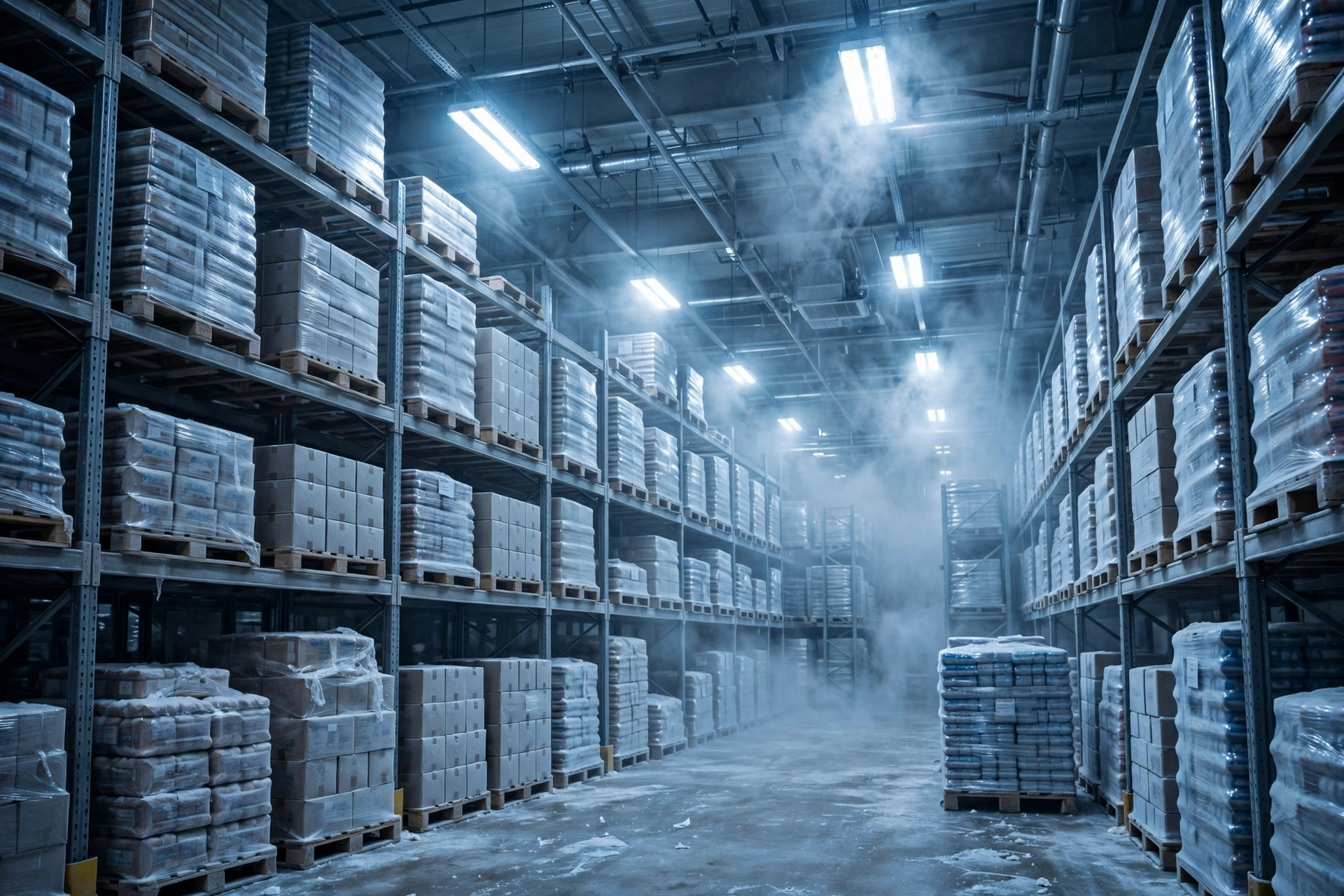
The practice we settled on is low-tech but it works: a dedicated pre-cool zone, every lot logged with entry time, released for stuffing only when pulp temperature hits target. Re-probe before loading; if it fails, it waits on the dock — no exceptions, however tight the vessel schedule. Zero cost. It protects the value of the entire box.
The road leg: 3,000+ km of highway, breakpoints everywhere
Pre-cooling done, cargo rolling — and that's when the real trouble starts.
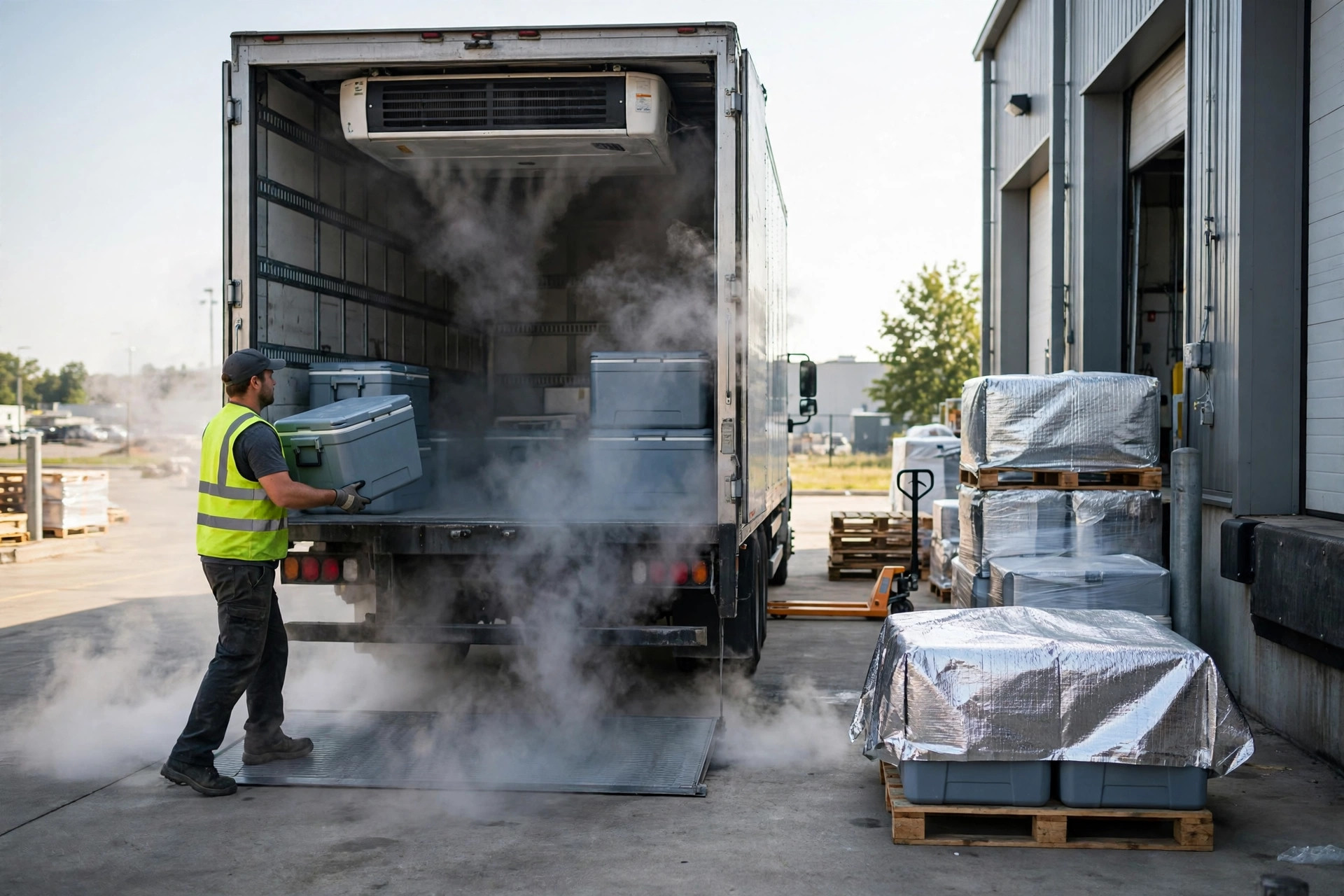
The traditional play is road: reefer trucks out of Agadir, north to Tangier, roll-on/roll-off across the Strait of Gibraltar, then up through Spain and France to the UK or Northern Europe — 3,000+ km. What's on the road? Ferry queues, border inspections, traffic jams, and drivers switching the reefer unit off overnight to save diesel. You can't watch all of it; you read the temperature logger afterward and argue with the carrier.
Reefer ocean freight existed, but sailings were irregular and boxes were scarce. In peak season, booking a reefer was harder than booking a flight. What exporters feared most wasn't the freight rate — it was "my tomatoes are ripe and there's no box in sight."
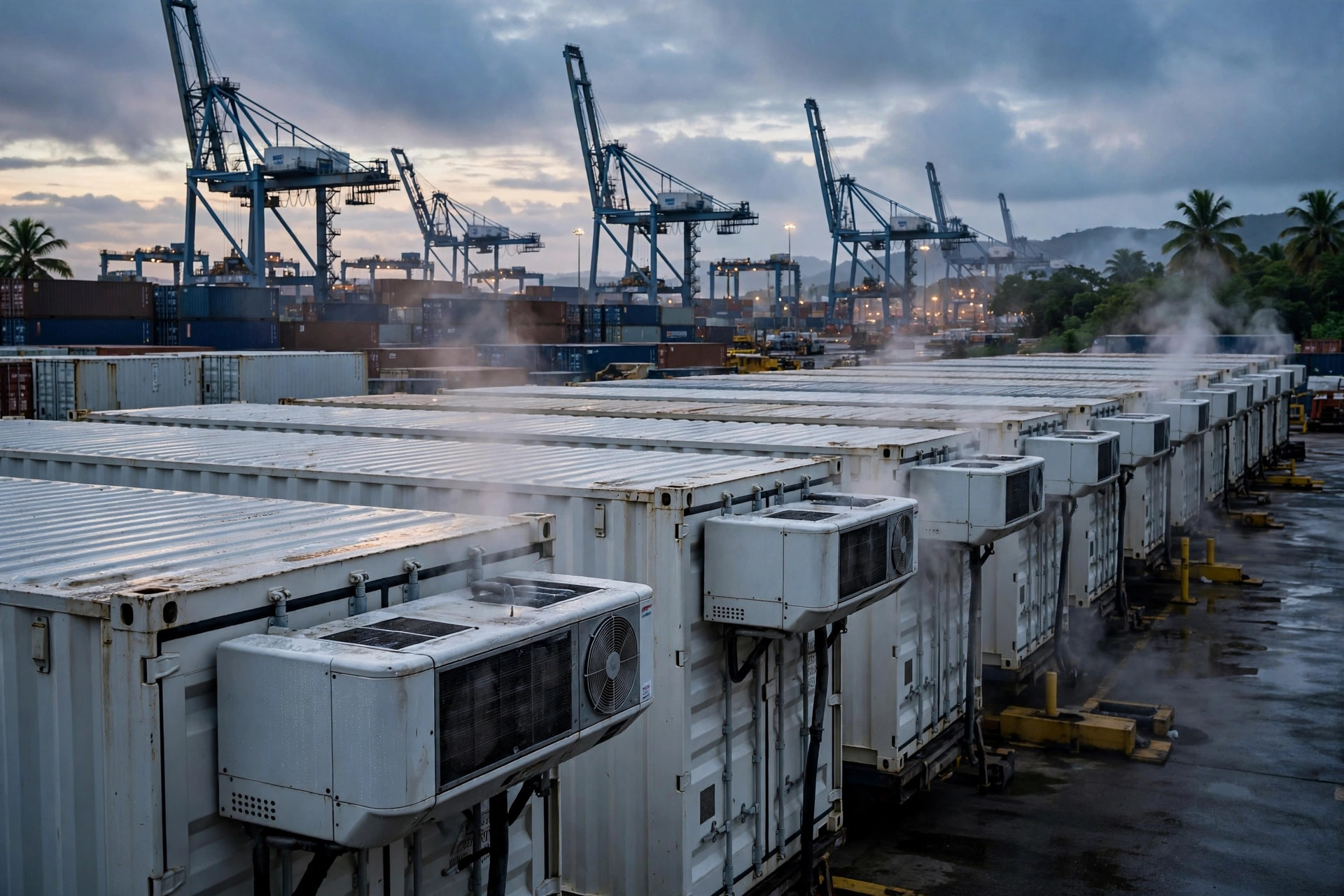
So when DP World's Atlas service launched in November 2025, I dug into it immediately. It's a dedicated service for Moroccan fresh produce: two vessels, the M/V BF Carp and M/V BF Perch, weekly sailings, loading at Agadir and Casablanca, calling directly at London Gateway and Antwerp Gateway. DP World also dropped 1,250 brand-new 40-foot high-cube reefers onto the route.
The official numbers: up to two days faster than traditional trucking; up to 150,000 tonnes of fresh produce shifted from road to sea per year; 70% lower carbon emissions than road transport. All DP World official figures — I cross-checked them against several trade publications and the numbers line up.
What the Atlas Service Changes for the Morocco Tomato Cold Chain
Let me break it down: what Atlas changes isn't the freight rate. It's certainty.
First, schedule certainty. 3,000+ km of highway means every variable lives on the road. A fixed weekly sailing lets the packhouse plan harvest and pre-cooling backward from a known departure. Tomato harvest timing is calculable — what kills you is not being able to ship.
Second, fewer breakpoints. Road means the strait, the borders, driver changes — a cold-chain breakpoint at every handoff. Ocean is two legs: packhouse to quay (short dray), quay to destination port (one sailing). Fewer handoffs, cleaner temperature curves, fewer arguments.
Third, boxes available. What do 1,250 new reefers mean? No box shortage in peak season, so exporters can take orders with confidence. Plenty of small exporters used to turn down big orders just because they couldn't secure equipment. Equipment certainty directly sets how bold your order book can be.
Side by side:
| Reefer truck | Atlas ocean service | |
|---|---|---|
| Route | 3,000+ km overland | Agadir/Casablanca direct to London/Antwerp |
| Transit | At the mercy of traffic, borders, ferries | Fixed weekly sailing, up to 2 days faster than road |
| Cold-chain breakpoints | Strait, borders, driver swaps — many | Short dray + one ocean leg — few |
| Peak-season equipment | Luck of the draw | 1,250 new reefers dedicated to the lane |
| Emissions | Baseline | 70% below road (per DP World) |
Here's the counterintuitive bit: people assume ocean is slow and road is fast. If you only count wheel speed, road wins. But tomato export isn't scored on wheel speed — it's scored on harvest-to-shelf certainty across the whole chain. Road saves two days, breaks the cold chain once, the load gets discounted — those two days bought nothing. Ocean is steady, the temperature curve is clean, buyers pay full price and sign longer contracts. Every exporter keeps that math in their head.
One more counterintuitive point: colder isn't better in a reefer. Tomatoes suffer chilling injury — run the box too cold and the skins pit, and the buyer docks you anyway. Box temperature follows the buyer's spec sheet, degree by degree. Running cold chain is about precision, not aggression.
The playbook we've standardized
After enough conversations with tomato exporters, plus my own warehouse experience, here's the routine that's now standard. Sharing it with fellow operators:
Pre-cooling: pulp temperature met before release — iron rule, no exceptions for vessel schedules. Pre-cool the reefer before stuffing; run a full pre-trip inspection — unit, box integrity, data logger, one by one. Leave the airflow channels clear when stuffing — don't block the vents to squeeze in two more pallets. The freight you save isn't worth one temperature excursion.
Port connection: lock the booking with the line early, at least two weeks out in peak season. Get documentation right the first time — phytosanitary certificates, origin docs. One missing paper means the box sits at the quay another day, and every extra day is extra risk.
Post-arrival in Europe: move fast on distribution. Keep cold-storage transit under 48 hours before the last mile; go direct to the distribution center wherever possible.
And a reminder for peers: the Atlas service is a good tool, but no tool runs your yard for you. Pre-cooling, stuffing, documentation — those are still the exporter's job. The service fixes certainty on the road; it can't fix sloppiness in the plant. Sloppy at the plant, and it doesn't matter which ship you sail on.
By Chen Feng, Warehouse Operations Manager