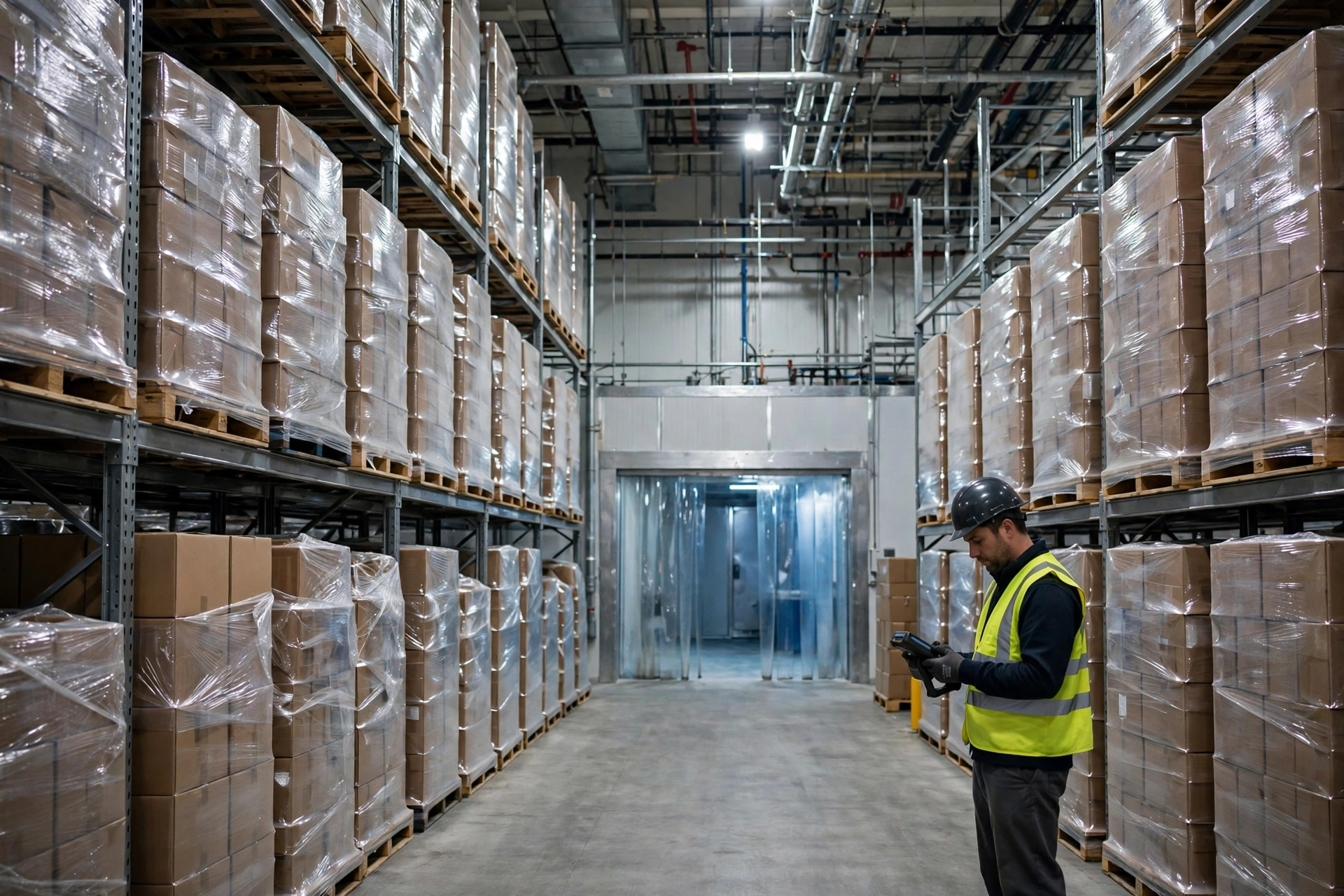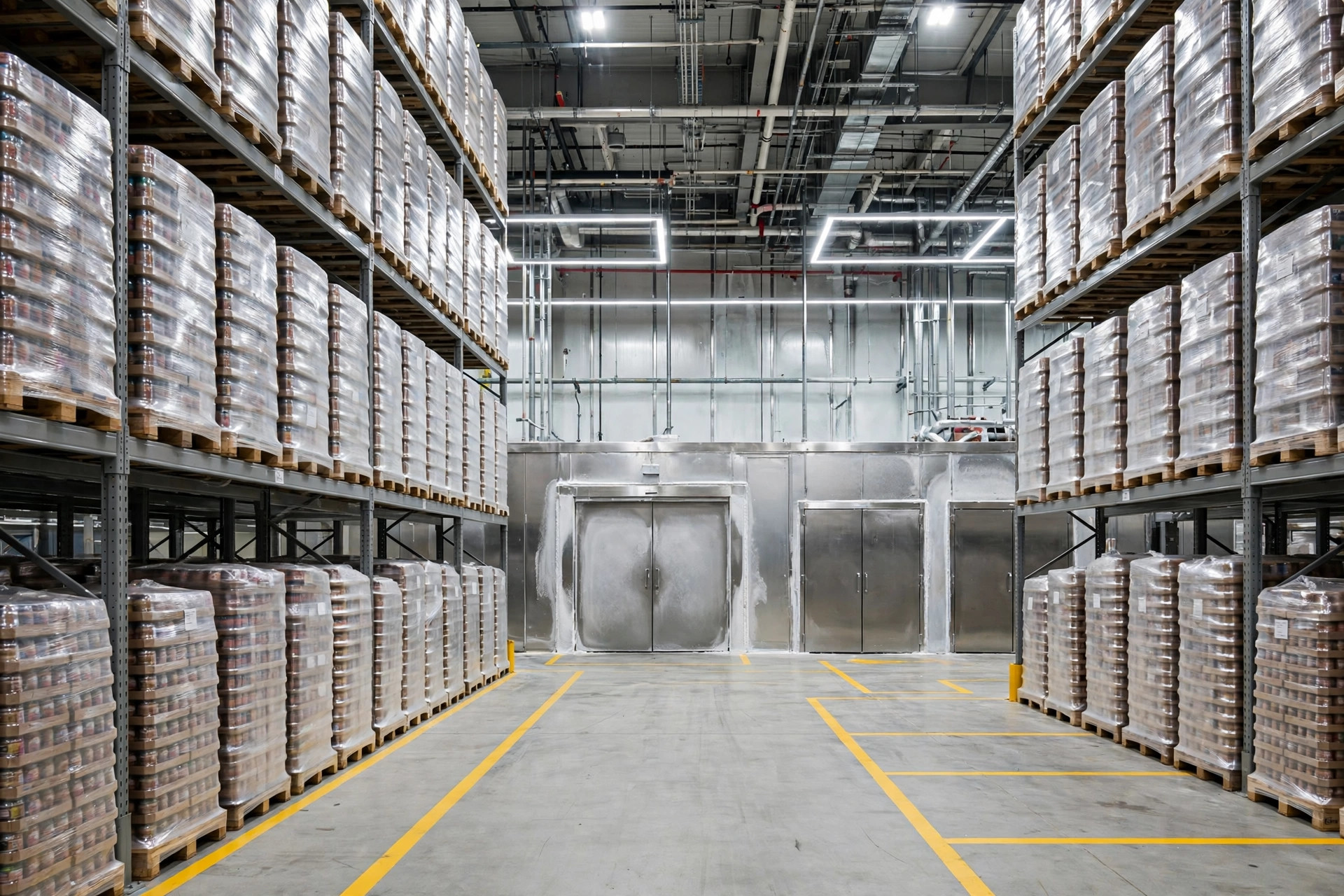
Let me tell you what happened last fall. I was delivering to a food distribution warehouse outside Fresno — unloaded, backed into the dock, and ended up smoking a cigarette on the dock plate with the warehouse manager, a guy I'll call Lao Wang. He was steaming. A consulting firm had come by the week before and told him the FDA has a rule, full enforcement started September 2024, and "every food warehouse needs an FDA food defense plan or you're looking at fines." Then they slid a quote across the table: $58,000 for the whole package — vulnerability assessment, employee training, documentation binder, the works.
Lao Wang asked me: "Shifu, you've been on the road fifteen years, you know people — should I pay this or not?"
I told him I drive trucks, I don't read federal regulations. But I do know how to look at what a warehouse actually does. So I asked: what happens to freight in your building? He said: full cases and full pallets of beverages and canned goods come in, forklifts put them away; orders come out, pallets get broken down, cases picked, labels slapped on, trucks loaded. Inner packaging? Never touched.
I told him: you probably don't need to spend that $58,000. Not because I disrespect consultants — because the FDA's own rule already carved out warehouses like yours.
The FDA said it plainly: most food warehouses don't need a food defense plan
First, what this rule even is. Under FSMA there's an "Intentional Adulteration" (IA) rule, finalized in May 2016. It doesn't care about rats, roaches, or expired product. It guards against someone deliberately contaminating food to cause wide-scale public harm — terrorism, in plain English. Not daily sanitation.
Facilities in scope must write a food defense plan: identify the steps most vulnerable to attack (the FDA calls them "key activities"), put focused mitigation strategies on those steps, train people, keep records.
The scope sounds scary. When FDA announced the rule it said roughly 3,400 companies operating 9,800 facilities were covered. But buried in the FDA's own regulatory impact analysis is one brutally honest sentence:
"Most warehouses, packers, and labelers are not likely to pay any costs as a result of this rule."
Read that again. Most warehouses. Not likely to pay any costs. The FDA wrote that itself.
Why? Because the rule doesn't target "warehouses" as an identity — it targets four key activity types: bulk liquid receiving and loading, liquid storage and handling, secondary ingredient handling, and mixing. The FDA's logic is cold and practical: to cause wide-scale harm, you need a place where one act of contamination reaches a huge batch — a giant tank of liquid, a mixer blending tons of product. A warehouse that stores sealed cases and breaks pallets? From an attacker's perspective, the return on effort is lousy. The FDA isn't interested.
So the first question any consultant should ask when they walk in your door is "what do you actually do here" — not "here's the quote." A firm that quotes $58,000 before asking what you handle is making easier money than I ever made driving.
A four-question test: does your warehouse need an FDA food defense plan?
Don't take my word for it. Run these four questions yourself — each one maps to an exemption written into the rule itself (21 CFR Part 121):
Question 1: Do your annual food sales top $10 million?
Under $10 million (averaged over the prior three years, subsidiaries and affiliates combined) — you're exempt, full stop. You still need documentation ready in case an inspector asks, but you owe no plan. Note this $10 million yardstick belongs to the IA rule specifically; other FSMA rules define "small" differently, so don't mix them up.
Question 2: Do you perform any of the four key activities?
Bulk liquid receiving/loading, liquid storage, secondary ingredient handling, mixing. Touch even one and you're deep in scope. Ninety percent of pure warehouses die on this question — nothing? Then you're basically done here.
Question 3: Is it pure holding?
The rule explicitly exempts "holding of food." Storing product is storing product — with one exception written in black and white: liquid storage tanks don't count as mere holding. If your tanks hold bulk liquid, that's a key activity, not storage.
Question 4: How deep does your repacking go?
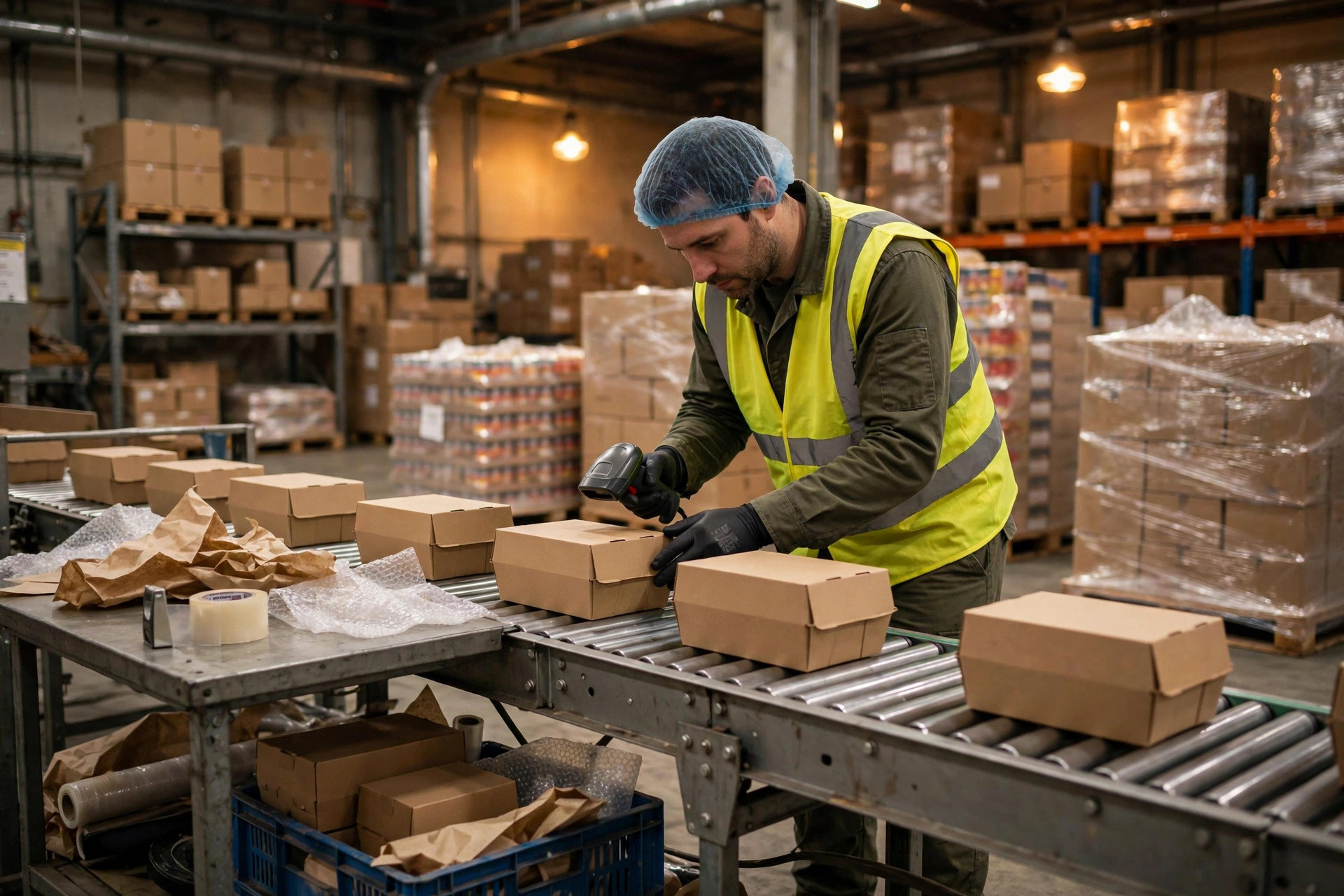
Break outer cases, swap cartons, apply labels, while the container that directly touches the food stays intact — exempt, and the rule says exactly that ("the container that directly contacts the food remains intact"). But if you break the inner packaging and touch the food-contact layer, that exemption is gone.
If the answer to any one question is "no" or "not us," you probably don't need a plan. Lao Wang's operation: sales well over $10 million (question one, yes), but the four key activities? Not a single one. Pure holding? Yes. Inner packaging? Untouched. Three-to-one, no plan needed. I told him to sit on the quote and print out the rule instead.
The ones who can't dodge it
That said, not every food warehouse walks away. Back in 2023 I delivered to a cooking-oil customer in Texas — warehouse attached to a filling line. Tanker trucks unloaded bulk oil into big storage tanks, then it got filled into retail bottles. That's "liquid storage" plus "secondary handling" straight out of the rule's hit list. Their compliance deadline was July 2019, and when the FDA's comprehensive inspections started in September 2024, facilities like that were exactly who the inspectors came for.
What did that place look like? Visitor logs, locked tank farm, dedicated eyes on the loading rack — run like a bank vault. Their money was well spent, because they were genuinely in the crosshairs.
Same for co-packers that break bulk into retail packs or blend ingredients for big brands — "secondary ingredient handling" and "mixing," both barrels. No dodging that.
So it cuts both ways: pure warehouses shouldn't burn money on nothing; facilities truly in scope shouldn't gamble. Before September 2024, the FDA only ran educational "quick checks." After September 2024, it's comprehensive inspections, and the inspection team walks in asking for the plan first. The timeline is long past the grace period: large businesses were due July 26, 2019, small businesses July 27, 2020.
If you're in scope, spend the money right
If the four-question test puts you in scope, still don't sign a $58,000 package on day one. The FDA estimated this rule costs industry about $370 million a year — spend your share where it counts.
Start with what costs nothing: the FDA's website has a free Food Defense Plan Builder that walks you through building the plan step by step, plus free guidance documents that are more honest than most consultant slide decks. If you do hire help, pay for the vulnerability assessment as a standalone piece — never the "full package." The ongoing work (monitoring, corrective actions, verification records) has to be done by your own people anyway. No outsider can do it for you.
Don't let them bundle two different things
Here's the oldest trick in the book. Consultants love to mash food defense together with food safety: "You've got SQF audits, pest control, allergen segregation — let's just do the food defense plan while we're at it."
Those are two different animals. SQF, pest control, allergen programs guard against accidents. Food defense guards against intent. A perfect SQF score doesn't make you IA-compliant; and being exempt from the IA rule doesn't excuse you from a single SQF requirement. Selling you both as one package — or padding the quote with work you were doing anyway — is a sales tactic, not compliance advice.
Next time a consultant walks in, ask three questions before the coffee gets cold: one, which specific activity of ours falls in scope? Two, which exemption doesn't apply to us, and why? Three, show me the exact sentence in the FDA rule. If they can't answer, don't offer them a second cup.
Fifteen years on the road taught me one rule: don't use a slaughterhouse knife to kill a chicken. Spend every dollar you owe — and not a dime you don't. In this business, profit is whatever you save from money you never had to spend.
By Shifu Zhao, Trucking Veteran (15 yrs)