Let me put it bluntly: when an FDA food warehouse inspection brings investigators into your facility, they are not there to admire your racking. They are there to answer one question — does everything you say match what is in your records? If it matches, you pass. If it does not, you get a 483.
There are two sides to this: inspectors are not out to get you, but they will not make excuses for you either.
I have seen too many warehouse owners treat an inspection like spring cleaning — the week the inspector arrives, the whole crew works overnight, logs get backfilled, training sign-in sheets get signed three months at a time. That is exactly what makes an inspector suspicious. Conclusion up front: inspection readiness is not a project, it is a routine. The best thing you can do before an FDA food warehouse inspection is to pull out the last several months of records exactly as they are.
What an FDA Food Warehouse Inspection Actually Checks: Three Things
Once the investigator is inside, it always comes down to three things.
First, whether the records close the loop. You say you monitor temperature — show the logs. You say you do pest control — show the service reports. You say your product is traceable — pick a lot number on the spot and trace it from receiving to shipping. A break anywhere is a finding.
Second, whether the people actually know. A forklift driver gets asked: "What do you do when you find a leaking pallet?" If he cannot answer, or his answer does not match the SOP, that is a training gap.
Third, whether the floor contradicts the paper. The SOP says keep the cooler door closed; the investigator stands there for ten minutes watching it propped open. That hurts more than any missing record.
In every inspection I have been part of, one pattern holds: most findings trace back to records. The cleanest floor in the world will not save you if the paperwork does not line up.
In my experience, the first morning usually follows the same script. The investigator sits down in the conference room and asks for the basics: the food safety plan or written procedures, the organizational chart, the last year of pest control reports, and the temperature logs. What they are really doing is calibrating — if the paperwork for the simple stuff is messy, they will dig deeper everywhere else. If it is clean and complete, the rest of the visit goes noticeably smoother. That first hour sets the tone for the next two days.
Two Stories: One Lost on Temperature Logs, One Won With a Mock Inspection
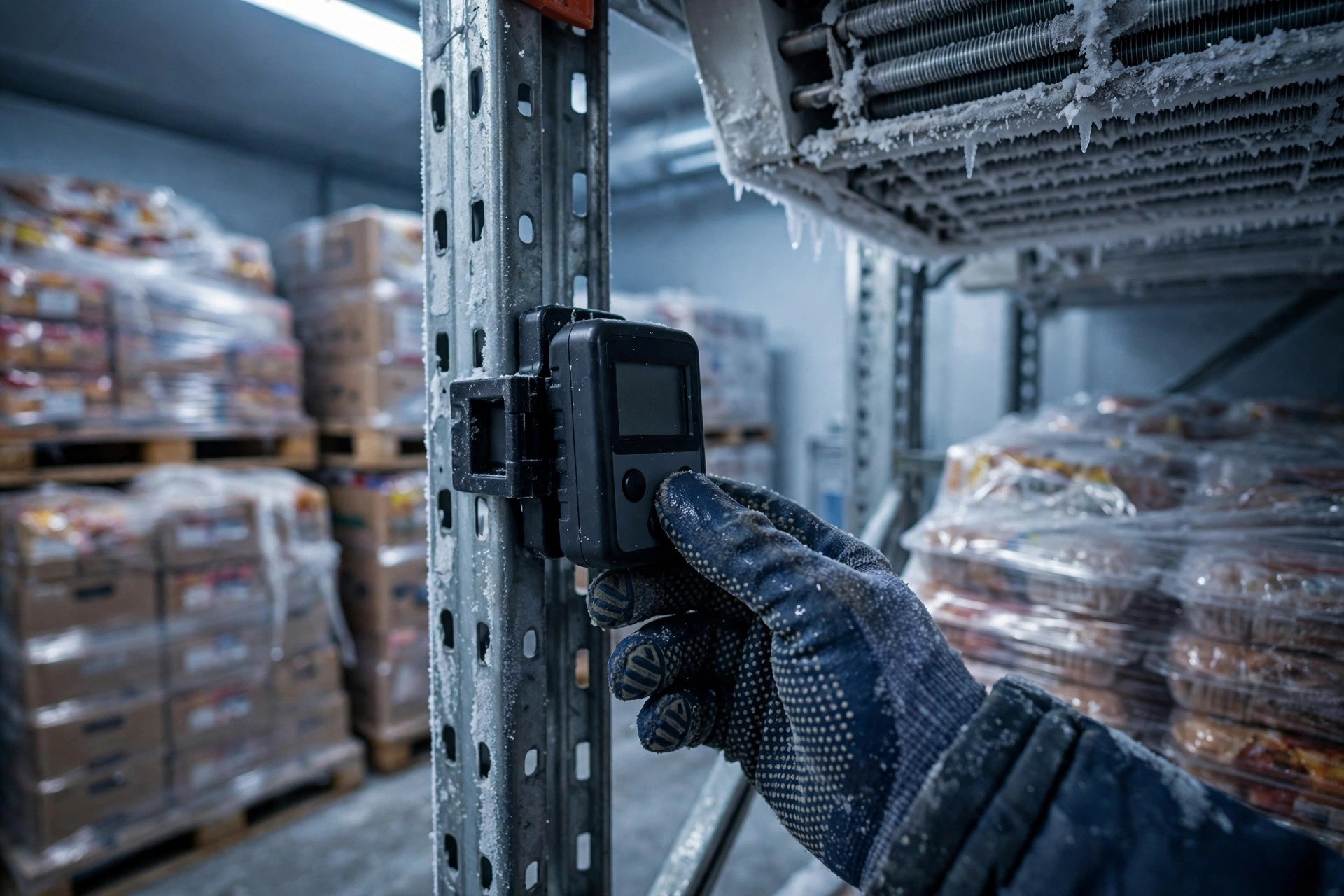
Story one, 2019: a frozen-food distribution warehouse in LA County, about 12,000 square feet of cooler space. On day two of the inspection, the investigator asked for roughly six months of temperature monitoring records. They produced them — except for a three-day gap. One temperature sensor's battery had died and nobody noticed. The 483 cited a failure to follow the temperature monitoring program. It took the company nearly two months to write an acceptable response. Worse, a supermarket chain's vendor audit landed right in the middle of it; they saw the 483 and dropped the warehouse from their approved vendor list. One dead sensor battery cost them a major customer. The real price was never the corrective action — it was the lost business.
Story two, 2021: a dry-goods food warehouse in the Inland Empire. When the inspection notice arrived, the owner did not wait — he hired a consulting firm for a two-day mock inspection. They found 11 issues; his team spent three weeks closing every one. When the real inspection came, the investigator left with just two minor observations. He told me the mock inspection plus remediation cost under $40,000. "If we had taken a real 483, the customer questions, the record cleanup, the lawyers — that would have run several times that."
Two sides to this: a mock inspection looks like extra spending on a quiet day, but measured against the cost of a real finding, it is the cheapest insurance you will ever buy. I have seen too many owners save on this line item and pay far more later.
And here is the counterintuitive part that most owners do not believe at first: the more your inspection prep looks like a performance, the more suspicious the investigator gets. These investigators have done this for years. They can tell whether log entries were all written on the same day, whether a training sign-in sheet is in one person's handwriting, whether that spotless corner was cleaned yesterday. The warehouses that pass are the ones where the inspector's visit changes nothing — business as usual, records already there.
So the checklist below is not really a "30 days before" sprint list. It is a routine self-audit. This is the version I give my clients:
| When | Focus | What to do |
|---|---|---|
| 30 days out | Record self-check | Run 3 lot-traceability drills (receiving → storage → shipping), time them, see if they close within a few hours; sample recent months of temperature logs, pest reports, and training records for gaps |
| 30 days out | System gaps | Are the SOPs the current version? Do training records cover every relevant role? Are calibrations (thermometers, scales) current? |
| 7 days out | Floor readiness | Chemicals segregated, allergen labeling in place, damaged-product quarantine area marked, pest devices (traps, glue boards) placed to match the records |
| 7 days out | People readiness | Name the escort team (one lead plus each area owner); one rule — answer only what is asked, do not volunteer, do not guess |
| Day of | Escort rules | Give the investigator what they ask for — nothing more; keep copies of everything provided; log every observation on the spot; debrief the same day |
One important note: check FDA.gov for the latest official requirements. Implementation details under FSMA have been evolving, and everything above is general practice. Match it against your product categories before acting. This is not legal advice — talk to a compliance attorney for the hard cases.
The Math of FDA Inspection Readiness: Cost First, Payoff Later
Owners always ask me whether readiness is worth the spend. Here is the math — cost first, then payoff:
| Item | Proactive spend (routine) | Cost of getting it wrong |
|---|---|---|
| Temperature device calibration | A couple thousand dollars a year | A 483 line plus lost audit points, lost-customer risk |
| Monthly pest control service | Fixed monthly fee, complete records | Incomplete records cited, two to four months of remediation with customers calling weekly |
| Mock inspection | Tens of thousands, once | Real 483 response plus legal fees plus lost customers — easily several times more |
| Employee training | Half a day a quarter, signed records | Investigator asks, nobody answers — "system failure" on the record |
Bluntly: every dollar of readiness is spent on "nothing going wrong"; every dollar after a finding is spent on "cleaning up the mess." The first is a controllable budget line; the second is an open-ended hole. That is the trade-off of inspection readiness — a small fixed annual cost, and in return, you sleep fine the night the inspector leaves.
After a 483: Do Not Panic, Do This
And if the worst happens and the FDA food warehouse inspection leaves you with a 483 (the inspection observations form), remember three things:
- Do not argue on the spot. Whatever the investigator writes, note it down. "We will verify and respond" is the best answer you will ever give. Arguing only makes the next observation harsher.
- Respond in writing within the official deadline. Every observation needs: root cause, corrective action, preventive action, completion date. Be specific — "training has been strengthened" is a non-answer. Check the current FDA deadline on FDA.gov before you file.
- Treat the 483 as free consulting. What the inspector flags is usually what your big customers' auditors will ask about next. Fix it properly and your system genuinely levels up.
One last word: after the inspector leaves, ask yourself — if another inspector walked in tomorrow, would you dare hand over your records exactly as they are? If yes, you passed. If not, the system is still made of paper.
By Lao Mi, Supply Chain Veteran (20 yrs)