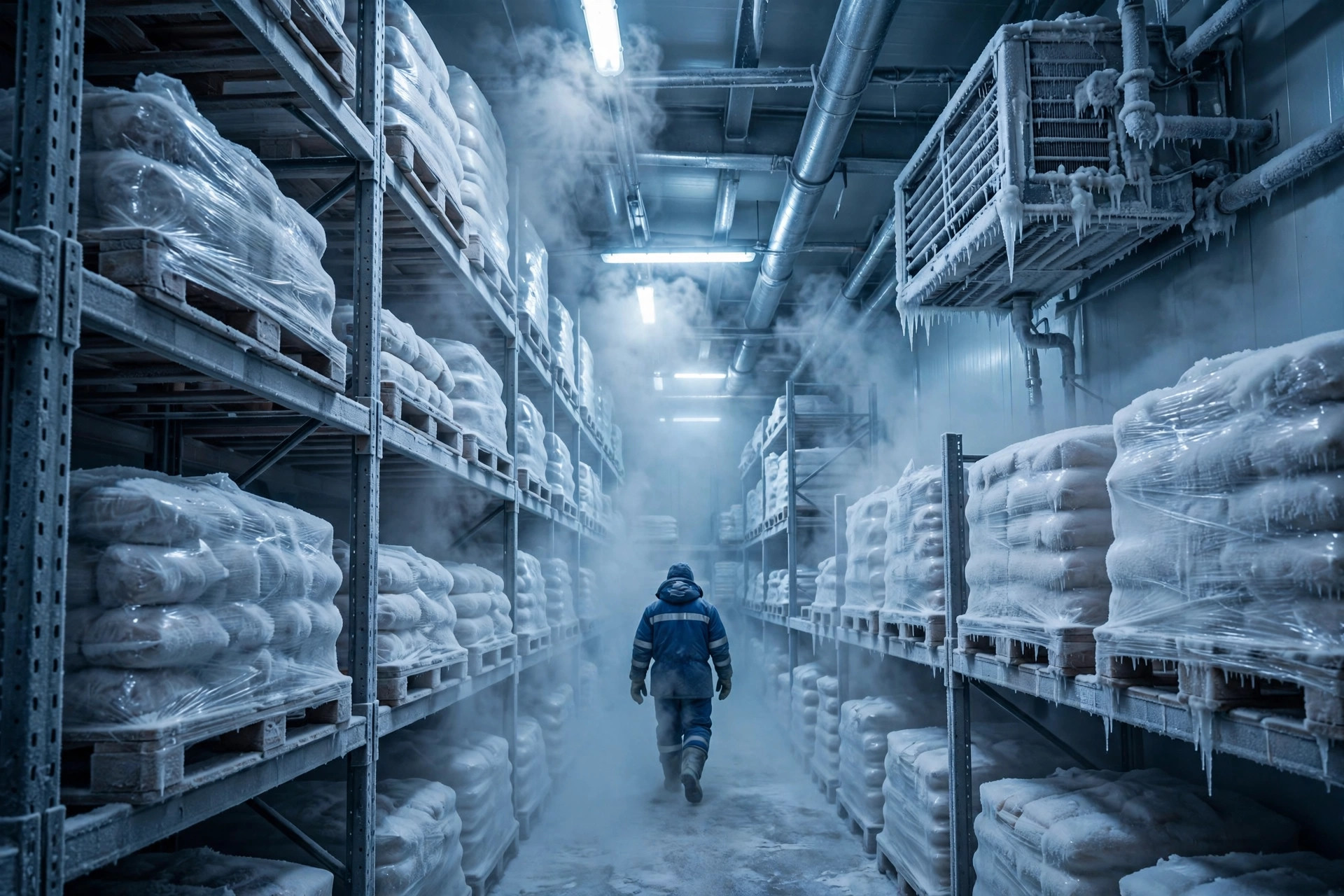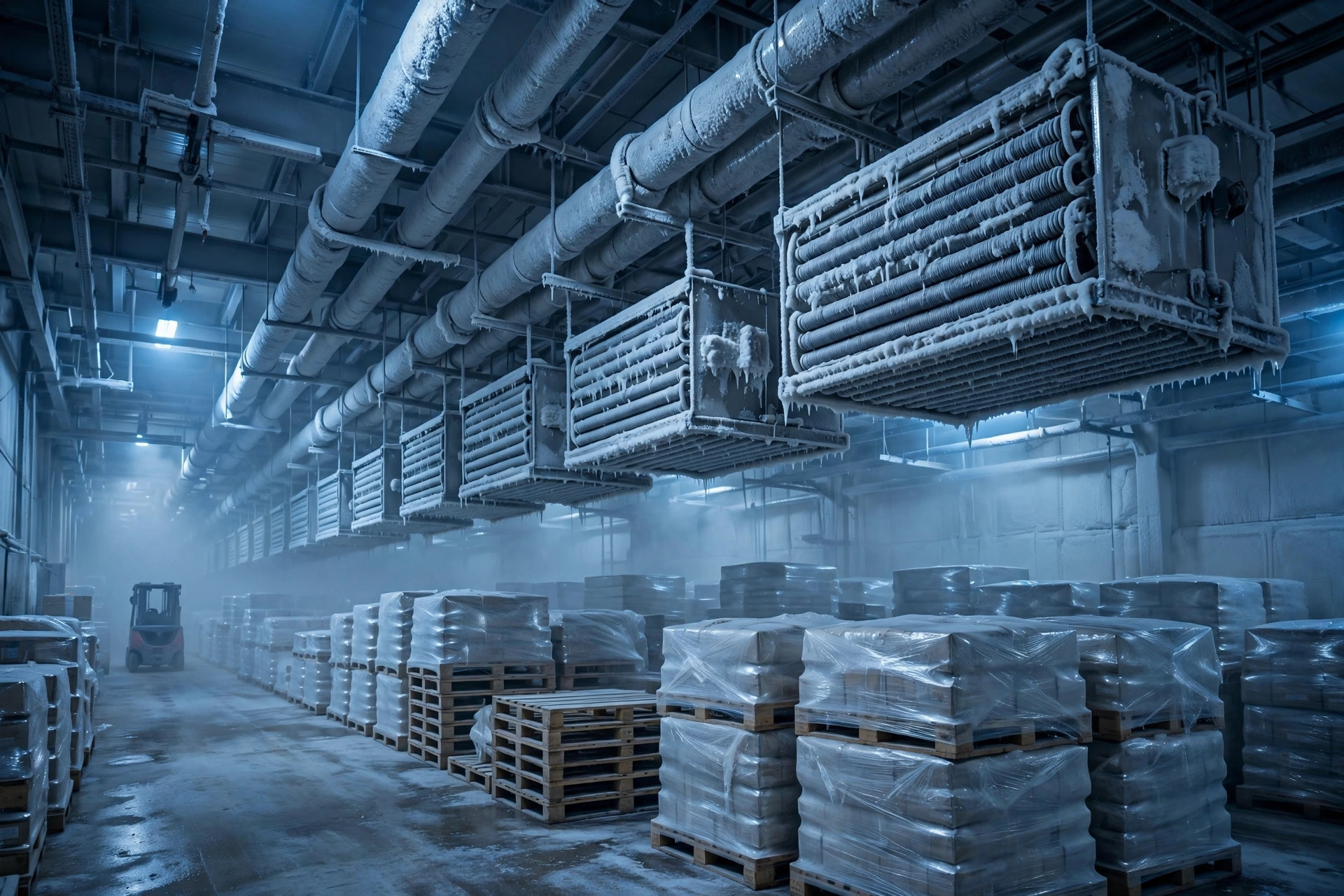
When an automation engineer reads a regulation, he looks at the physical quantities first. The EU F-gas Regulation comes down to exactly two: GWP (global warming potential) and time. Think of it this way: the EU has issued every fluorinated refrigerant an "emissions budget", and that budget gets cut every few years — roughly 95% gone by 2030, zero by 2050. When your budget runs out, your cold storage refrigeration system either gets a new refrigerant or becomes illegal. There is no third option.
The regulation in question is (EU) 2024/573, which entered into force in March 2024 and replaced the 2014 regulation 517/2014. The new version is far tougher than the old one: the old phase-down only required a 79% cut by 2030; the new one goes to roughly 95%. For cold storage operators, this is not a distant policy — the first deadlines already passed on 1 January 2025.
First, the Rules of the Game: The Two Deadlines of EU F-gas Regulation
The regulation controls two things: bans on new equipment (Annex IV) and service restrictions on existing equipment (Article 13). Here is the timeline that matters for cold storage:
| Date | New equipment bans | Existing equipment servicing |
|---|---|---|
| 1 Jan 2025 | Self-contained commercial refrigeration with GWP ≥ 150 banned; stationary refrigeration (except chillers) with GWP ≥ 2500 banned (below –50°C applications exempt) | No topping up refrigeration equipment with virgin GWP ≥ 2500 refrigerants (R-404A, R-507 service top-ups banned; reclaimed/recycled exempt until 2030) |
| 1 Jan 2027 | Chillers: ≤12 kW must use GWP < 150, >12 kW must use GWP < 750 | — |
| 1 Jan 2030 | Stationary refrigeration (except chillers) with GWP ≥ 150 banned (safety exemptions apply) | Reclaimed/recycled GWP ≥ 2500 service exemption expires |
| 1 Jan 2032 | — | No servicing refrigeration equipment (except chillers) with virgin GWP ≥ 750 refrigerants |
Translated into equipment language: R-404A (GWP around 3,920) and R-507 (GWP around 3,990) — the refrigerants every cold storage veteran knows best — can no longer be bought in new machines as of 2025, and virgin top-ups are banned. R-449A (GWP around 1,400) and R-452A (GWP around 2,140), the so-called "transitional" refrigerants, buy you time but hit the 2032 servicing wall all the same. After 2030, new stationary refrigeration is essentially a natural-refrigerant world.
One table most people miss: leak check frequency. It scales with the system's HFC charge in CO₂ equivalent: under 50 tonnes, check yearly; 50–500 tonnes, every six months; over 500 tonnes, quarterly. Install a fixed leak detection system and the frequency halves. It works like vehicle inspections — the bigger the engine, the more often you get checked.
Cold Storage Refrigerant Retrofits: Where the Three Technical Routes Divide
Principles first, then selection. Refrigerant substitution in cold storage is fundamentally a trade-off between GWP, safety, and efficiency. There is no silver bullet.
Early in 2025, a third-party cold storage facility in Poland with 8,000 pallet positions taught me this lesson the hard way. Their central refrigeration plant held 800 kg of R-404A. I ran the numbers for them: 800 × 3,920 ÷ 1,000 ≈ 3,136 tonnes of CO₂e — over the 500-tonne line, which moved their leak checks from yearly to quarterly. Worse, after 1 January 2025 a leak could only be topped up with reclaimed refrigerant — virgin top-ups were simply illegal. They ended up biting the bullet on a full CO₂ transcritical replacement, because the compliant servicing costs over the coming years alone were frightening enough.
The three mainstream routes divide cleanly:
| Route | Refrigerant | GWP | Fits | Biggest trap |
|---|---|---|---|---|
| Stopgap retrofit | R-449A, R-407F | 1,000–2,000 | Keeping an old plant alive 5–8 years | The 2032 servicing deadline — you pay twice |
| CO₂ transcritical | R-744 | 1 | New builds or major refits, future-proof | High operating pressures, big capex, efficiency penalty in hot climates |
| Ammonia | R-717 | near 0 | Large centralized plant rooms | Toxic; strict machinery-room safety codes, certified operators required |
There is also R-290 (propane) with a GWP near zero, but it is flammable and charge sizes are legally limited — fine for small distributed units, a non-starter for a serious cold store.
The dividing line for selection, in one sentence: anything built after 2025 should be specified straight to the 2030 standard, skipping every transitional refrigerant. A 20,000-pallet greenfield cold chain hub commissioned in 2025 did exactly that — CO₂ transcritical from day one. The logic is simple: with the 2030 ban on GWP ≥ 150 new machines sitting there, building with HFCs now is burying a landmine for your future self. For existing plants, look at remaining life: more than 8 years left, go straight to natural refrigerants; 3–5 years left, a stopgap retrofit buys time — but write the second conversion cost into the budget now.
Time for me to take aim at a fake demand: "stockpiling refrigerant". Some operators want to hoard R-404A now and top up slowly later. Wake up: virgin top-ups have been illegal since 2025, so that stockpile turns into scrap metal by 2032; reclaimed refrigerant is legal until 2030 but expensive and hard to verify. Spend that money on a fixed leak detection system instead — it halves your check frequency, which halves the labor bill. That is a return you can actually see.
The Three Maintenance Traps: Leak Checks, Records, Recovery
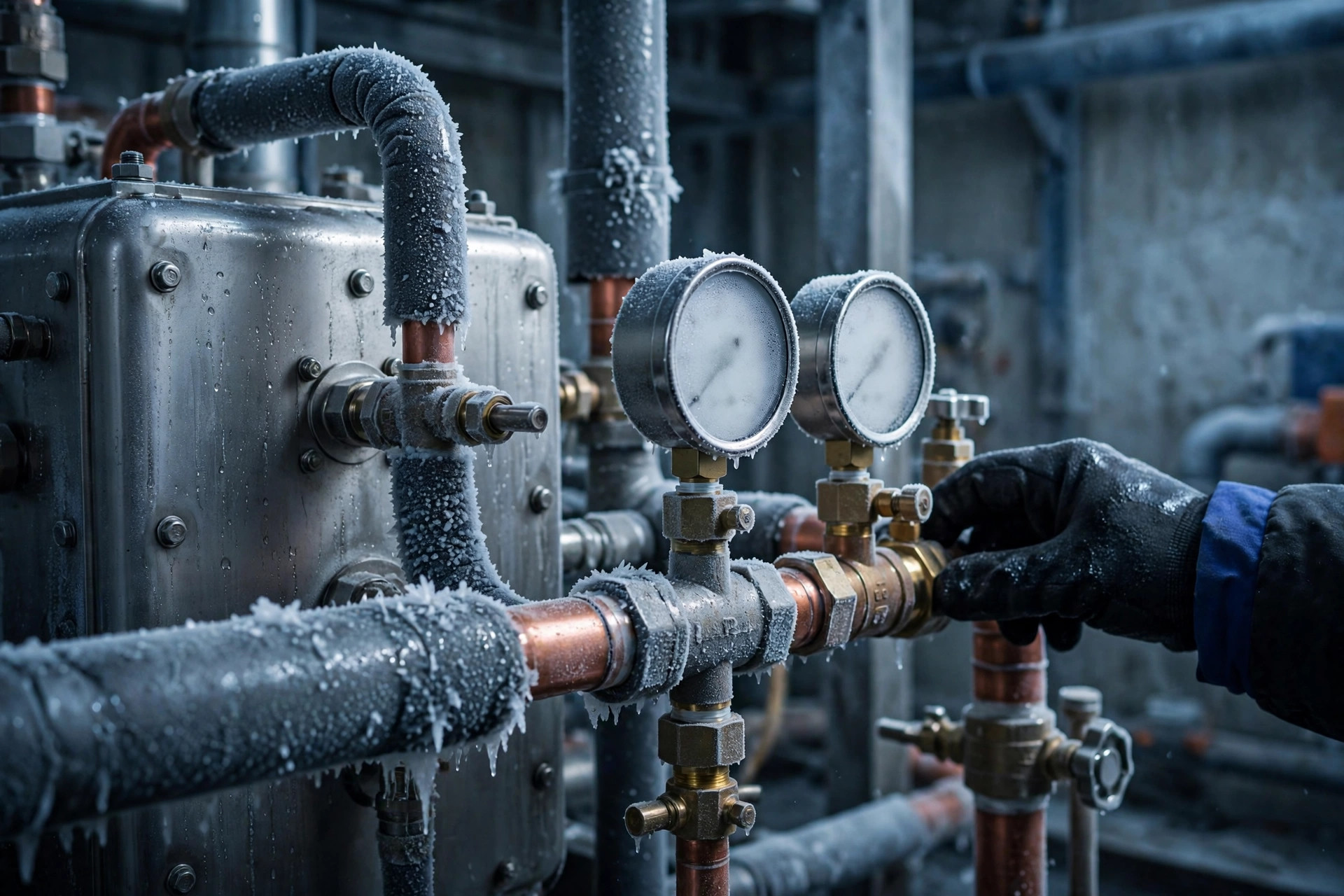
Once the regulation bites, maintenance has three traps, and each one can cost you a fine:
Trap one: you did the leak check but kept no record. The regulation wants a logbook — which unit, when, who checked, what the result was. A check with no record is a check that never happened.
Trap two: you installed fixed leak detection but never calibrated it. The halved frequency only applies if the system actually works; a decorative box invites more trouble, not less.
Trap three: you vent the refrigerant when decommissioning equipment. Recovery is mandatory — use a certified reclaimer and keep the transfer records. Venting one kilogram of R-404A equals roughly 3.9 tonnes of CO₂e, and the environmental authorities can do that math.
So here are the three things a warehouse must do now. First, inventory: list every refrigeration unit's refrigerant type and charge, compute the CO₂e equivalent and the resulting leak check frequency. Second, schedule: rank every unit's retrofit priority against the 2025, 2027, 2030, and 2032 deadlines. Third, logbooks: digitize all leak check and top-up records — paper logs are as good as no logs in front of an auditor.
Is the money worth it? Look at this one number: total servicing and top-up cost over the next 8 years ÷ one-time retrofit investment. The numerator is annual leak volume × refrigerant price × 8, plus 8 years of leak check labor; the denominator is the retrofit capex. Above 1, stop hesitating and convert. Below 1, get leak detection and record-keeping in order first, and schedule the retrofit for 2028. Regulations do not believe in tears — they believe in arithmetic.
By Da Liu, Automation Engineer