Let me give you the verdict first: when it comes to turning a smallholder farmer's harvest into bankable collateral, Ethiopia's ECX — the ethiopia coffee ecx warehouse receipt system — is the only commodity exchange in Africa that has made the full chain work. Deliver, grade, issue an electronic receipt, pledge it for a loan. Four steps, and nobody else on the continent runs them this cleanly. If you trade coffee or you care about African agri-warehousing finance, you need to understand this machine.
The logic is almost embarrassingly simple: park the goods in the warehouse first, then sell the paper, then borrow against it. Founded in 2008, ECX was the first exchange in the world to force coffee through a centralized trading system (widely recognized in academic literature as the first of its kind). From that day on, Ethiopian coffee had a new rule: no warehouse delivery, no grade, no trade.
Gate one: delivery, and the moisture meter has the final say
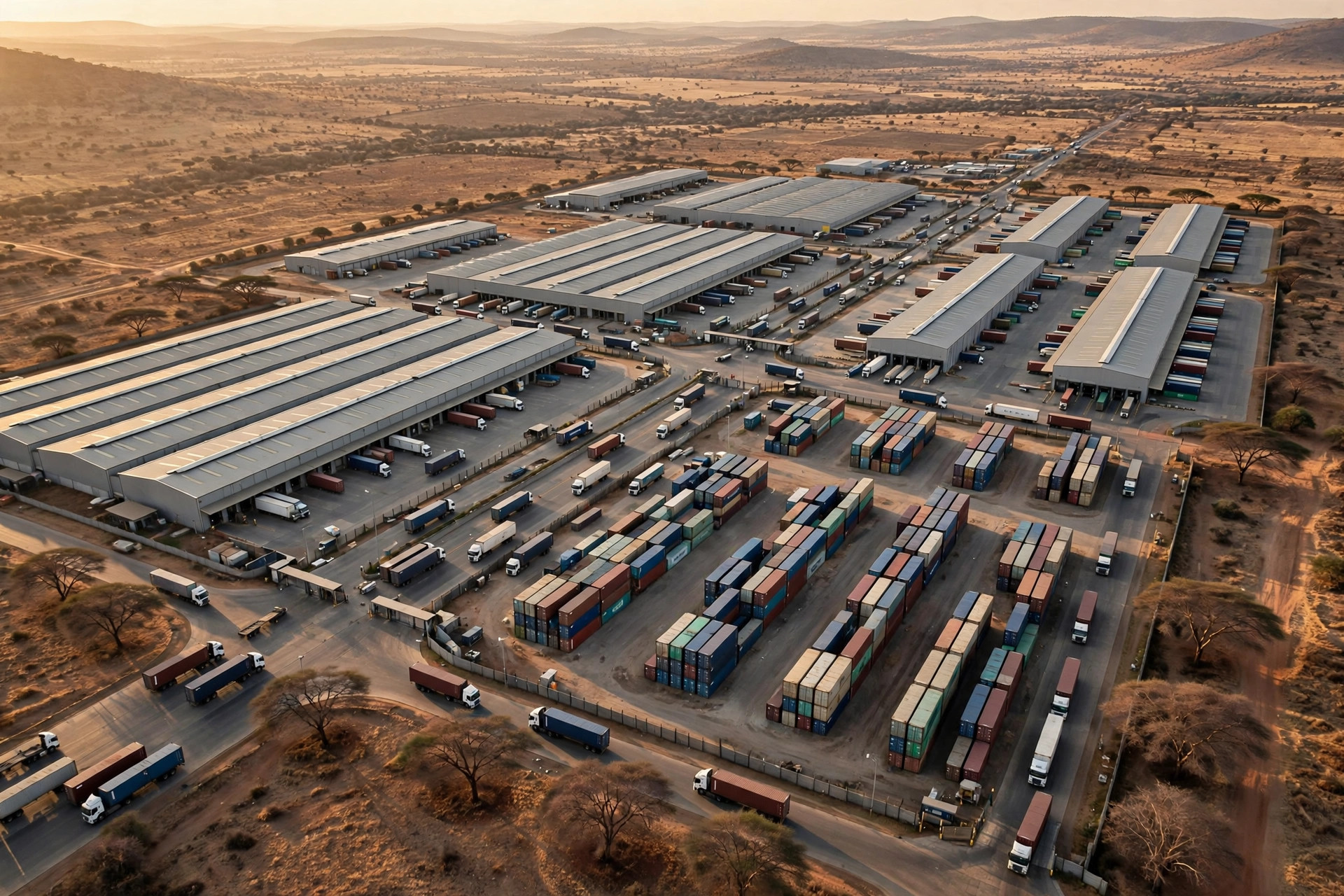
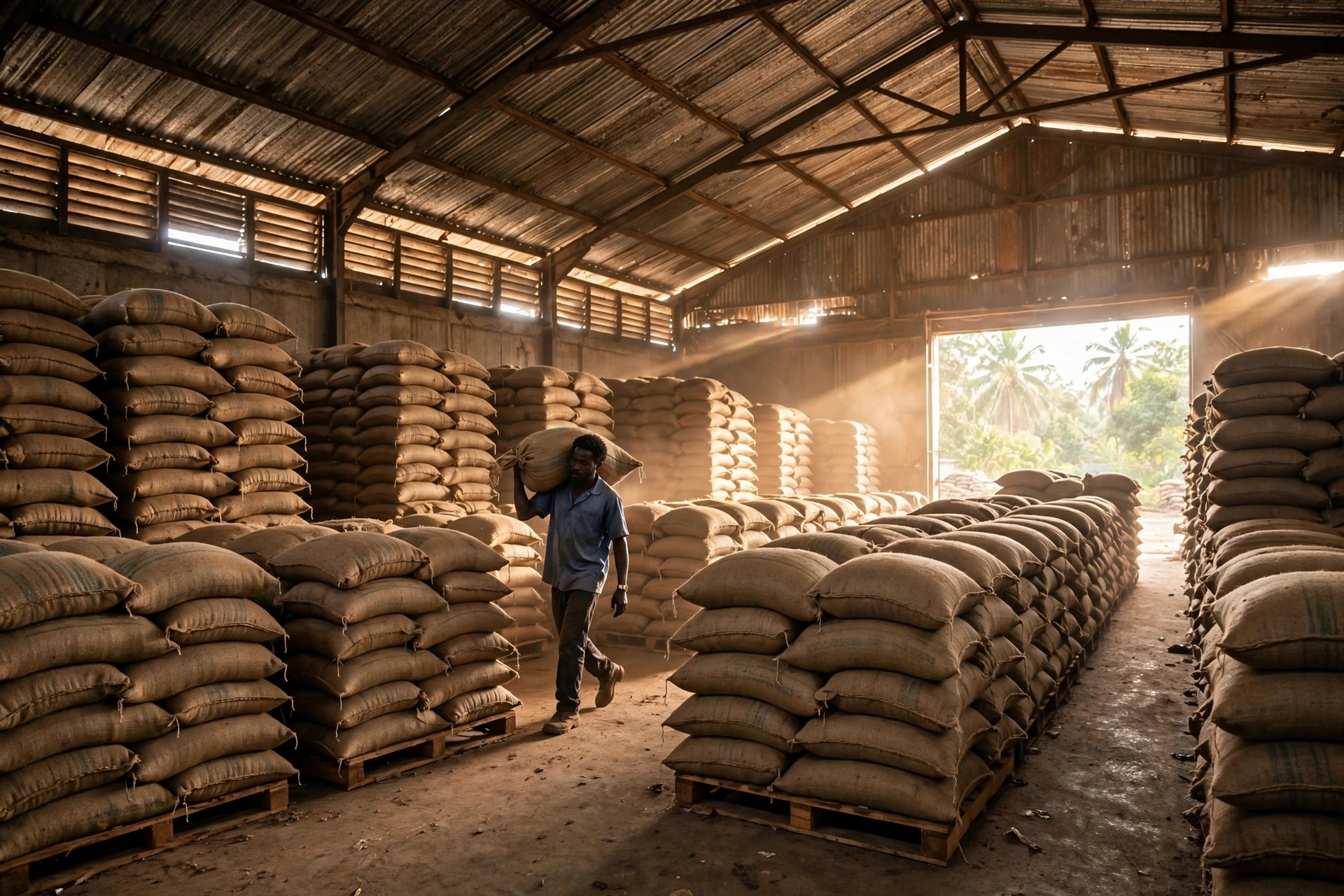
I've seen too many people underestimate this gate. ECX runs 20-plus regional delivery warehouses across the coffee belt — Hawassa, Dilla, Jimma and the rest (per published research). Truck after truck rolls in, and before anything gets weighed, a sample goes under the moisture meter.
ECX's official contract language is blunt: coffee moisture must not exceed 11.5% by weight (ECX published coffee contracts). Five Senses documented it on the ground at the Hawassa receiving warehouse: samples go straight into the office, the moisture reader is the first stop, and 11.5% is a hard line — pass, you're received; fail, you're turned away.
This cuts both ways. On one side, it's correct: wet beans mold in storage, pick up off-flavors, and one bad lot can poison a warehouse. The exchange can't take that risk. On the other side, a lot of perfectly honest coffee gets rejected. Farmers rushing to deliver during the rains show up with half-dried beans, test at 12.5 or 13 percent, and get bounced — back to the drying beds, or sold cheap to the middlemen waiting by the gate. A truck sitting at the gate for two or three days burns transport money and time for nothing. That's why anyone who knows the game tests moisture themselves before dispatching the truck. A moisture meter is cheap insurance.

Only after clearing moisture does a lot reach the real grading.
Grading: the Q-grader's palate costs more than the machine
ECX grading splits into two parts: 40% raw evaluation, 60% cup quality (per ECX methodology summaries). The raw side counts defects, checks appearance and screen size (typically 15–17, premium lots 18–19), and smells for off-odors. The cupping side follows SCA protocol: aroma, acidity, body, flavor, clean cup, sweetness, aftertaste. Lots land on a Grade 1 to Grade 8 scale; Grades 1–5 can be exported, anything below Grade 5 stays domestic.
Here's a detail I like: the Five Senses account notes the Hawassa grading office keeps five Q-graders on staff, and every sample gets cupped by two cuppers plus a supervisor before an official score is issued. The machine is only the first filter — the human tongue makes the final call.
Now the trade-off you can't dodge: ECX was built for commodity standardization, not specialty coffee. Beans from the same region get blended by grade; which farm, which hillside — all of that traceability gets washed out at the warehouse door. Specialty buyers who need farm-level traceability can't get it from ECX. That was the price of the design from day one. The specialty crowd grumbles, but millions of smallholders got fair pricing for the first time. Fairness or identity — you pick one, and ECX picked fairness. No right answer, just a choice.
The warehouse receipt: turning beans into collateral banks accept
Once grading is done, ECX issues the electronic warehouse receipt — the EGRN — confirming quantity, grade, and which warehouse holds the goods. Same beans, but from this moment they are financially alive: tradable, pledgeable.
This is the sharpest edge of the ethiopia coffee ecx warehouse receipt system. Ethiopia's Ministry of Trade and Regional Integration reports (via CB Insights, May 2026) that between 2020 and 2025, 141 farming communities used 55,316 tonnes of produce as collateral to unlock 2.2 billion birr in loans. Birr Metrics adds the recent run-rate: in the 2024/25 fiscal year alone, 375,892.77 quintals were pledged, unlocking over 1 billion birr in credit, and 13 partner banks have extended more than 3 billion birr over the past three years. In 2026, Ahadu Bank signed on as the 14th warehouse-receipt financing partner bank.
Let me run the illustrative math (hypothetical numbers, not market rates) so you see why this has legs:
| Sell at harvest | Warehouse receipt, borrow, sell later | |
|---|---|---|
| Timing | Harvest glut | Off-season, prices recovered |
| Price | Depressed, market bottom | 15%–30% higher (illustrative) |
| Cash | Paid once, at the low | Borrow ~70% of value against receipt |
| Cost | None | Loan interest + storage fees |
| Risk | None | Prices fall anyway; interest wasted |
The math is honest: you're betting the seasonal spread covers interest plus storage. Win the bet and the farmer keeps 20–30% more. Lose it and the interest is gone. A warehouse receipt isn't a money printer — it's leverage. In skilled hands it's a weapon; in careless hands it's a donation to the bank. Not polite, but true.
One more thing people miss: none of this works without the exchange's credit standing behind it. ECX requires buyers to pre-fund their exchange accounts before bidding, and its clearing department steps in as central counterparty, guaranteeing payment to the seller (per ECX mechanism summaries). Without that layer, a receipt is just paper. With it, banks say yes. Warehouse finance, at the end of the day, is a credit game.
Nigeria came to learn — still think African warehouse receipts are paper fiction?
On May 7, 2026, Nigeria's NIRSAL — its agricultural lending risk-sharing system — signed a cooperation agreement with ECX to import Ethiopia's warehouse receipt financing model (CB Insights). One country's agricultural finance system going to another country to learn how to run a warehouse and issue a receipt — that's institutional export, not a photo op.
Here's the plain truth: most African agricultural warehousing was never short of buildings. It was short of everything that happens after the goods arrive: who grades, to what standard, who recognizes the paper, and why a bank should lend against it. ECX spent well over a decade building exactly that: the 11.5% moisture hard line, Q-grader grading, the EGRN electronic receipt, a 13-bank pledge network. None of it is glamorous. All of it is load-bearing.
So the next time someone tells you African warehouse finance doesn't work, ask three questions: is there a moisture meter at the receiving gate, are the graders licensed Q-graders, and do banks accept the receipt. If they can't answer, it's not Africa that's unreliable — it's that they've never seen the real thing.
By Lao Mi, Supply Chain Veteran (20 yrs)