We have a client in Zhejiang who sells small hardware and building materials all the way into Ethiopia, final destination Addis Ababa. For the past decade, every container went through Djibouti — nearly all of Ethiopia's imports and exports ride that one corridor, the pricing is mature, and freight forwarders are everywhere. He came to talk warehousing and distribution with us, and his first question was: "I hear DP World took over Berbera Port and it's the most efficient port in Africa now. Can we get it cheaper?"
I put his Djibouti rate sheet down on the desk and told him: don't rush to switch ports. Berbera's math has to be worked through layer by layer.
What Berbera's Container Terminal Actually Looks Like
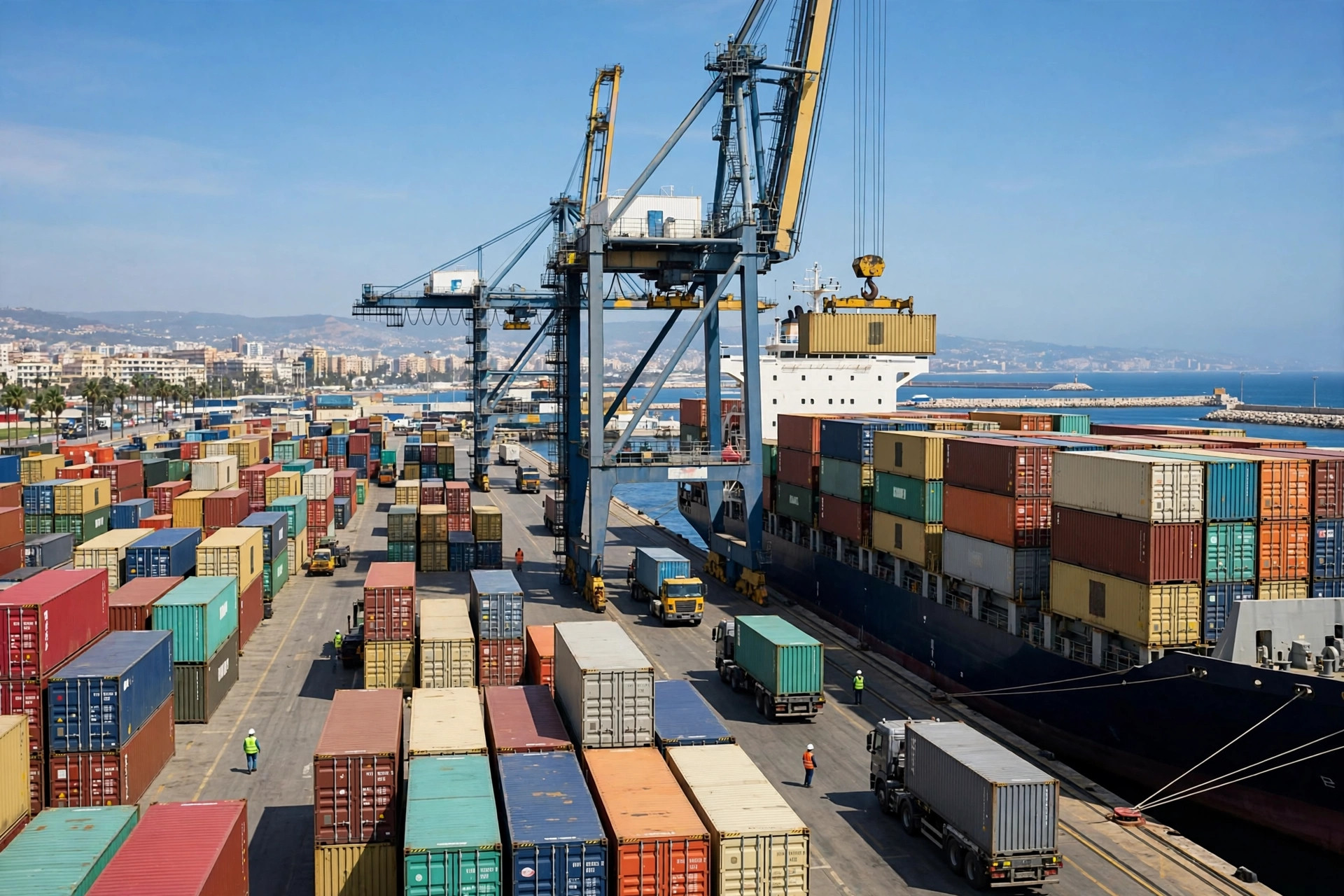
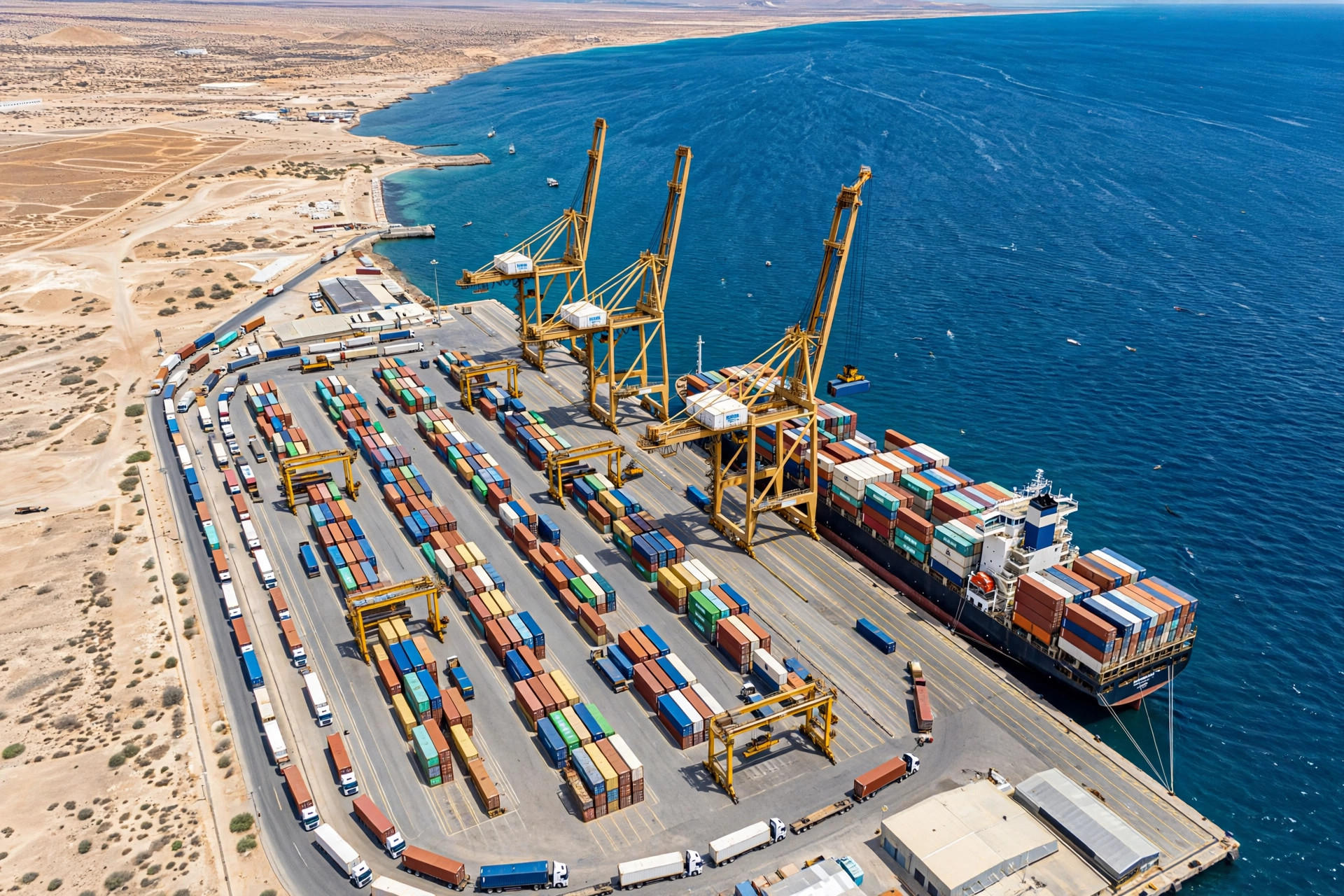
Berbera sits in Somaliland on the southern shore of the Gulf of Aden, right across from the Bab el-Mandeb — roughly 12% of global trade passes through that strait. DP World took over operations in 2017 and rebuilt the old terminal from scratch: the new container terminal opened in June 2021 with annual capacity of 500,000 TEUs, and phase two is planned to quadruple that to 2 million TEUs.
Doesn't sound like much? Check the World Bank's 2023 Container Port Performance Index: Berbera ranked 103rd in the small-ports group, while Djibouti — its rival just across the water — sits beyond 300. DP World says vessel productivity is up 450% since takeover, container volumes are up 30%, more than 14 container vessels now call each month, and the ship-to-shore cranes do 50 to 75 moves per hour against a global average of 23.5 cited by the World Bank.
But here's what I tell every client principal: terminal efficiency is terminal efficiency. How fast your cargo reaches Addis Ababa is a different spreadsheet entirely. Keep reading.
The Other Half of the Equation: 410,000 Head of Livestock
There's another client story that stuck with me — a trader moving live animals to the Gulf. More than 4.1 million head of livestock move through Berbera every year, worth over a billion dollars. That's Somaliland's real cash cow. Since the takeover, general cargo throughput is up 90% too.
What does that tell you? It tells you DP World's priority list at Berbera: containers are the showcase, but livestock and bulk cargo pay the bills. If you're shipping building materials, equipment, or consumer goods in boxes, don't expect the terminal to revolve around you — when the livestock vessels arrive in peak season, your containers will wait their turn. When you negotiate a warehousing contract, ask whether peak-season berth priority and yard guarantees are written into the service agreement. An insider truth from the 3PL side: DP World's standard contract leaves that line blank by default. You don't ask, they don't write.
DP World's Berbera Economic Zone: Where Distribution Actually Lands
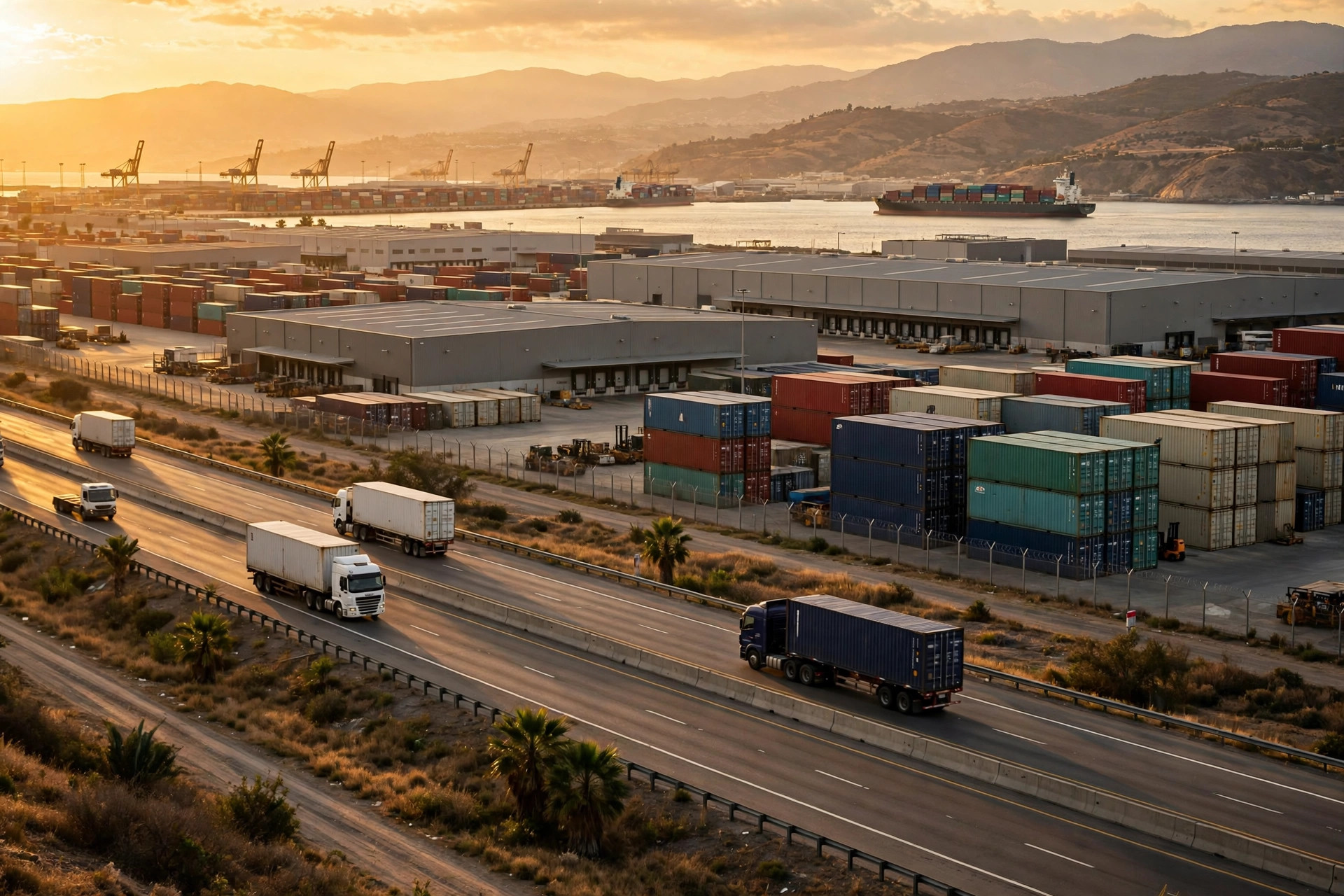
A terminal alone isn't enough, so DP World copy-pasted its Jebel Ali playbook. The Berbera Economic Zone opened its first phase in March 2023: 1,200 hectares total, phase one with 10,000 square meters of pre-built warehouses, build-to-suit plots, open yard storage, a DP World-operated common-user warehouse, and office space — all registration and licensing through a single one-stop-shop window, straight out of the Jafza model.
IFFCO, a major UAE food company, has already signed to build an edible oil packing plant inside the zone. DP World's own projection: by 2035, trade enabled by the port and zone will equal roughly 27% of Somaliland's GDP and 75% of regional trade.
In plain language: when you lease a warehouse here, you're negotiating with DP World, not a local sub-landlord. The contracts sit on English-law foundations and the rate sheets are clean. That's good and bad for a 3PL — good because it's hassle-free, bad because there's little room to negotiate. DP World's warehouse rates are essentially take-it-or-leave-it; don't expect the Djibouti game where a dozen forwarders undercut each other layer by layer.
The Ethiopia Corridor: The Biggest Prize and the Hardest Nut in the Horn of Africa
Berbera's real story isn't Somaliland — it's Ethiopia, a landlocked country of more than 130 million people that depends on Djibouti for almost all its trade. Whoever cracks this corridor eats the biggest growth in the Horn of Africa.
The hardware is being built: the Berbera Corridor road to the Ethiopian border plus the Hargeisa bypass, funded by the Abu Dhabi Fund for Development and the UK's development agency. In 2021 DP World signed an MoU with Ethiopia's Ministry of Transport to turn Addis Ababa–Berbera into a major trade corridor, with dry ports, silos, warehouses, and cold-chain depots planned along the route. In October 2025, a direct Jebel Ali–Berbera shipping service launched, sailing every nine days — Gulf cargo can now feed straight into the Horn.
And the software? That's where I do the math with clients. Ethiopia's customs, trucking regulation, and border-post efficiency are still the product of decades of the Djibouti system. Berbera's road is largely done; the border institutions haven't caught up. One more insider detail: most of the corridor's dry ports and cold-chain yards are still on planning drawings. The distribution contract you sign today will likely still route through the old corridor's transit nodes — meaning you pay new-corridor prices for old-corridor plumbing.
My verdict: this corridor suits long-horizon cargo — plant construction materials, long-term project freight, regional distribution of mass consumer goods. It does not suit fast-turn cargo chasing vessel schedules and quarterly replenishment.
Berbera Port vs. Djibouti: Warehouse Distribution Compared Before You Ship
| Dimension | Berbera (Somaliland) | Djibouti |
|---|---|---|
| Terminal capacity | 500,000 TEUs (DP World; phase two 2M planned) | An order of magnitude larger, mature |
| World Bank CPPI 2023 | 103rd, small-ports group | Beyond 300 |
| Route to Addis Ababa | Corridor under construction; road mostly done, border institutions catching up | Decades-old mature corridor |
| Warehousing | Zone phase one: 10,000 sqm pre-built + DP World common-user warehouse | Mature free zone, many forwarders to choose from |
| Rate flexibility | DP World take-it-or-leave-it | Competitive, negotiable |
| Political risk | Somaliland's limited international recognition | Sovereign state, different risk profile |
Here's the counterintuitive call: the most efficient port on paper isn't necessarily the fastest route for your cargo. Berbera's cranes can be the fastest in Africa, but if your container sits at the border for three days, Djibouti's sleepy terminal will have delivered to Addis Ababa first. A port is one link in the chain; the corridor's weakest link sets the speed of the whole chain.
Negotiation Advice for the Client Side
Back to that Zhejiang client. The plan we settled on: urgent orders and quarterly replenishment stay on Djibouti; the assembly-line materials for his Addis Ababa plant coming online next year go through Berbera's economic zone six months early — cheaper rent, clean contracts, DP World's common-user warehouse as a buffer.
Next time you negotiate a contract, ask these three questions:
First: how many free days of terminal storage are in the rate, and how is demurrage calculated? African port demurrage regularly costs more than the ocean freight itself. Berbera's policies are friendly now, but get it in writing.
Second: who owns the land leg, and who pays for border delays? Until the corridor fully matures, this line must be black on white.
Third: can the zone warehouse be signed in phases — common-user space first, dedicated lease later? Don't lock in three years on day one. Test your volumes in DP World's common-user warehouse, and negotiate the dedicated space once the volume is proven. Keep the leverage on your side.
Two bonus truths from the 3PL side. Somaliland's limited international recognition is unavoidable: don't set arbitration locally — put Dubai or London in the contract; DP World is a Dubai company and accepts that readily. And lock all pricing in US dollars with the currency clause nailed down — I've watched exchange-rate swings eat entire warehousing margins more than once. A five-point FX loss can wipe out the profit on the whole deal.
By Susan, 3PL Sales Director