Let me save you six months of vendor meetings: AutoStore and shuttle ASRS are not competitors. They are different species. Comparing them spec-for-spec is like racing a submarine against a speedboat — wrong dimension entirely. I have sat through a dozen "AutoStore vs shuttle ASRS" selection meetings in the last two years, and the top ten Google results are all vendor marketing. Nobody who has actually stood on the mezzanine tells it straight. So here it is, straight.
How the Two Machines Actually Work
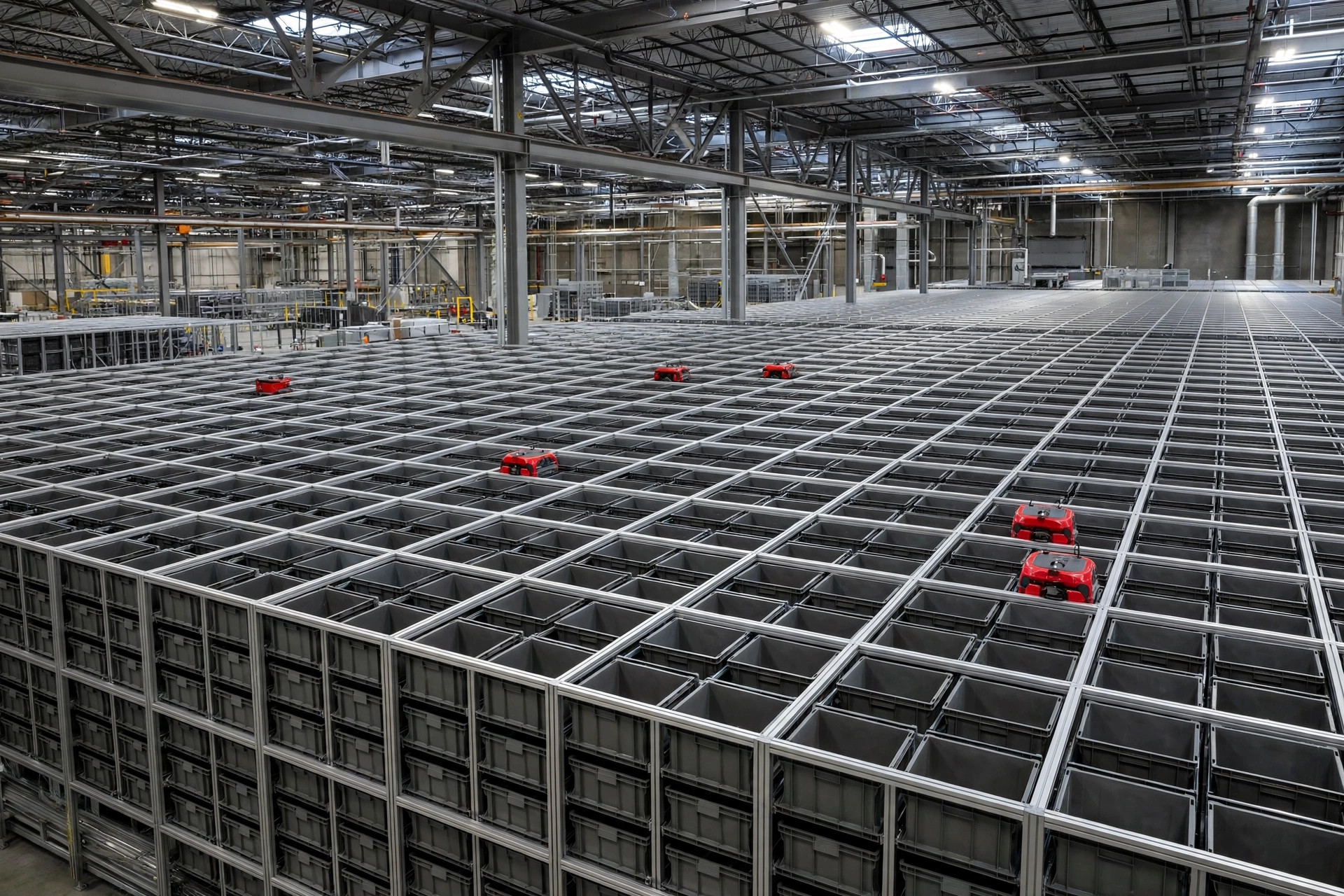
AutoStore runs on digging. Picture an aluminum grid with bins stacked up to about 16 layers high (published manufacturer spec). Robots run on rails across the top. When an order drops, a robot drives over the target bin, moves every bin stacked on top of it out of the way, then lifts the target bin and delivers it to a picking port.
Think of it like pulling the bottom block out of a Jenga tower. All the "finding" time is really "moving stuff out of the way" time.
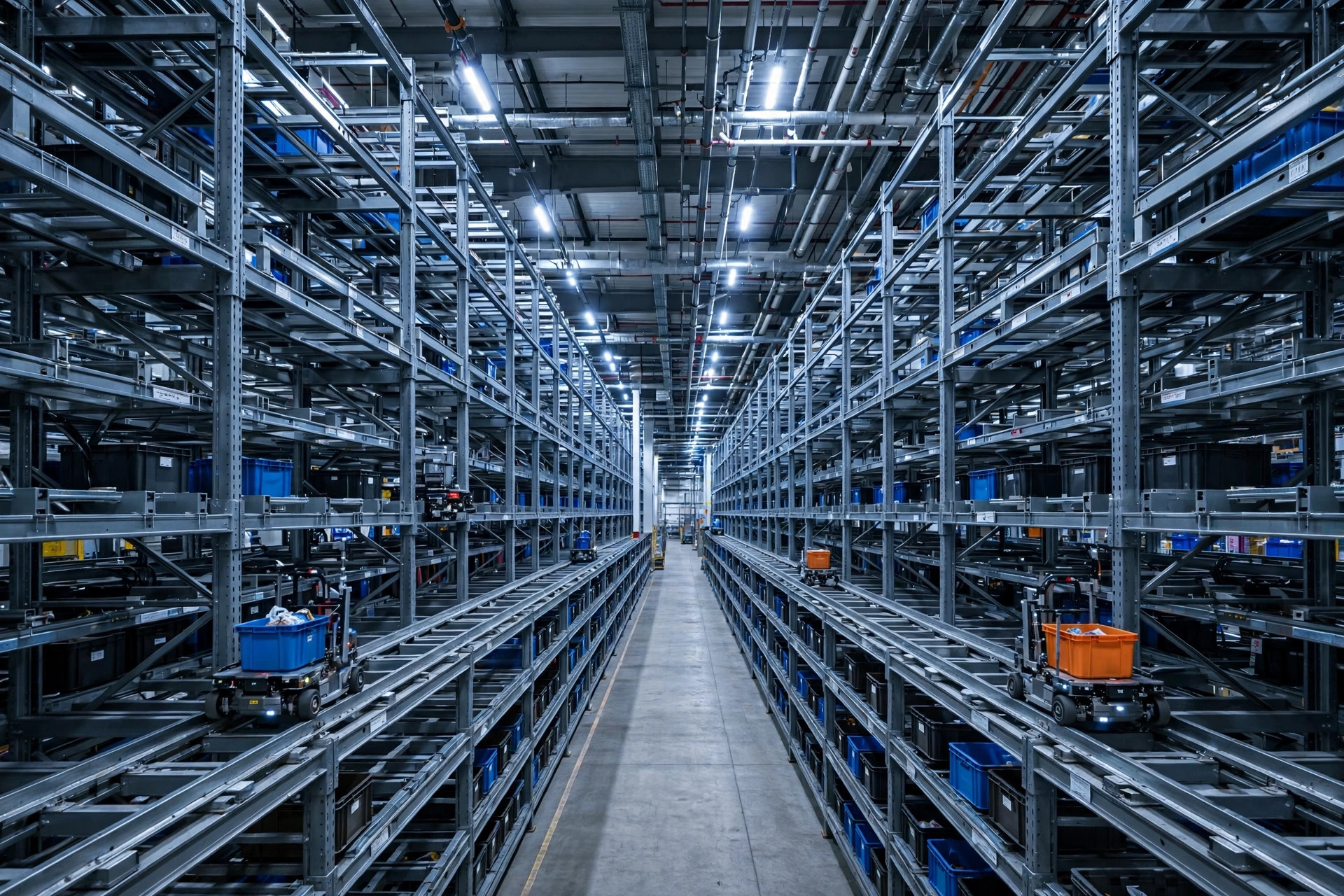
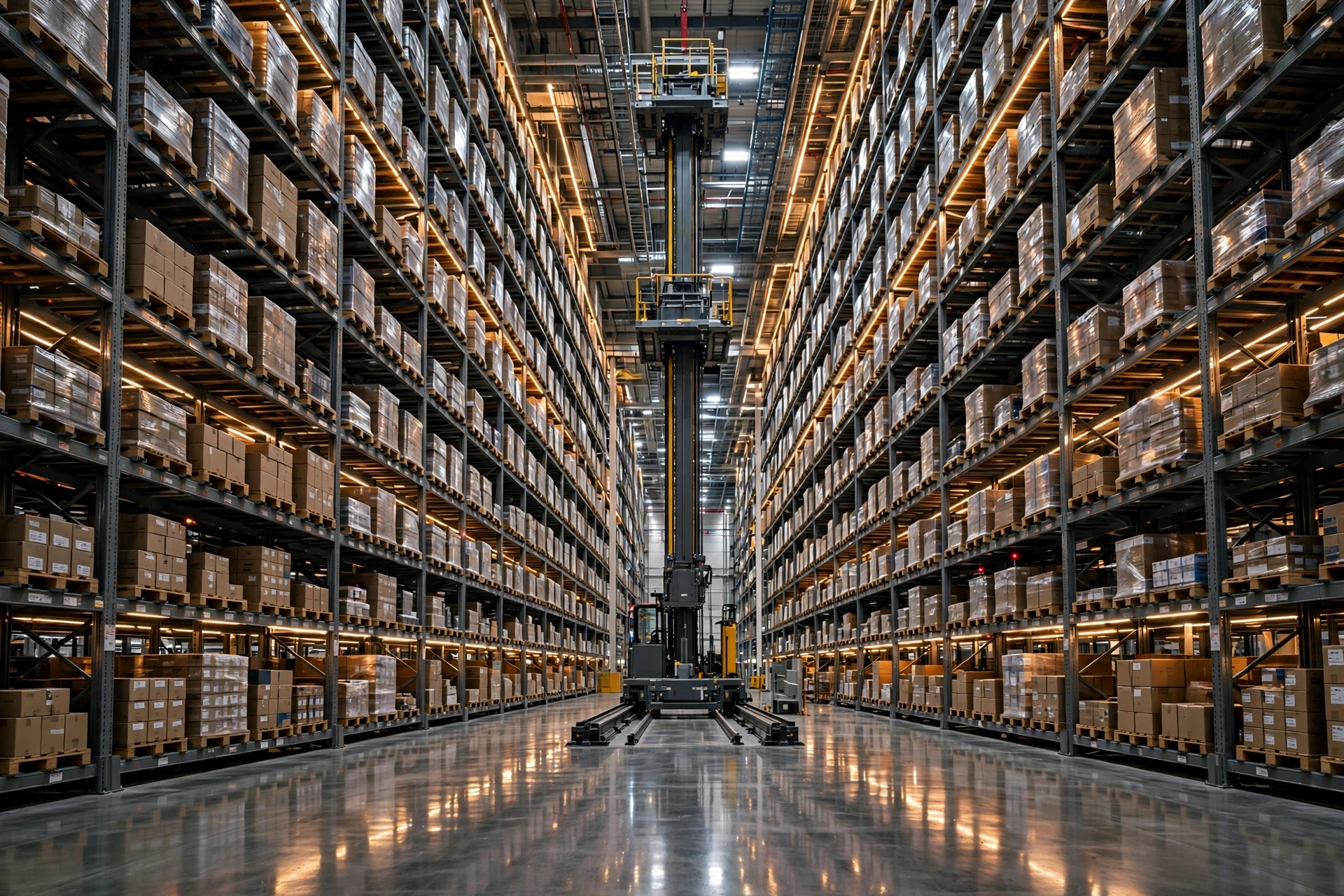
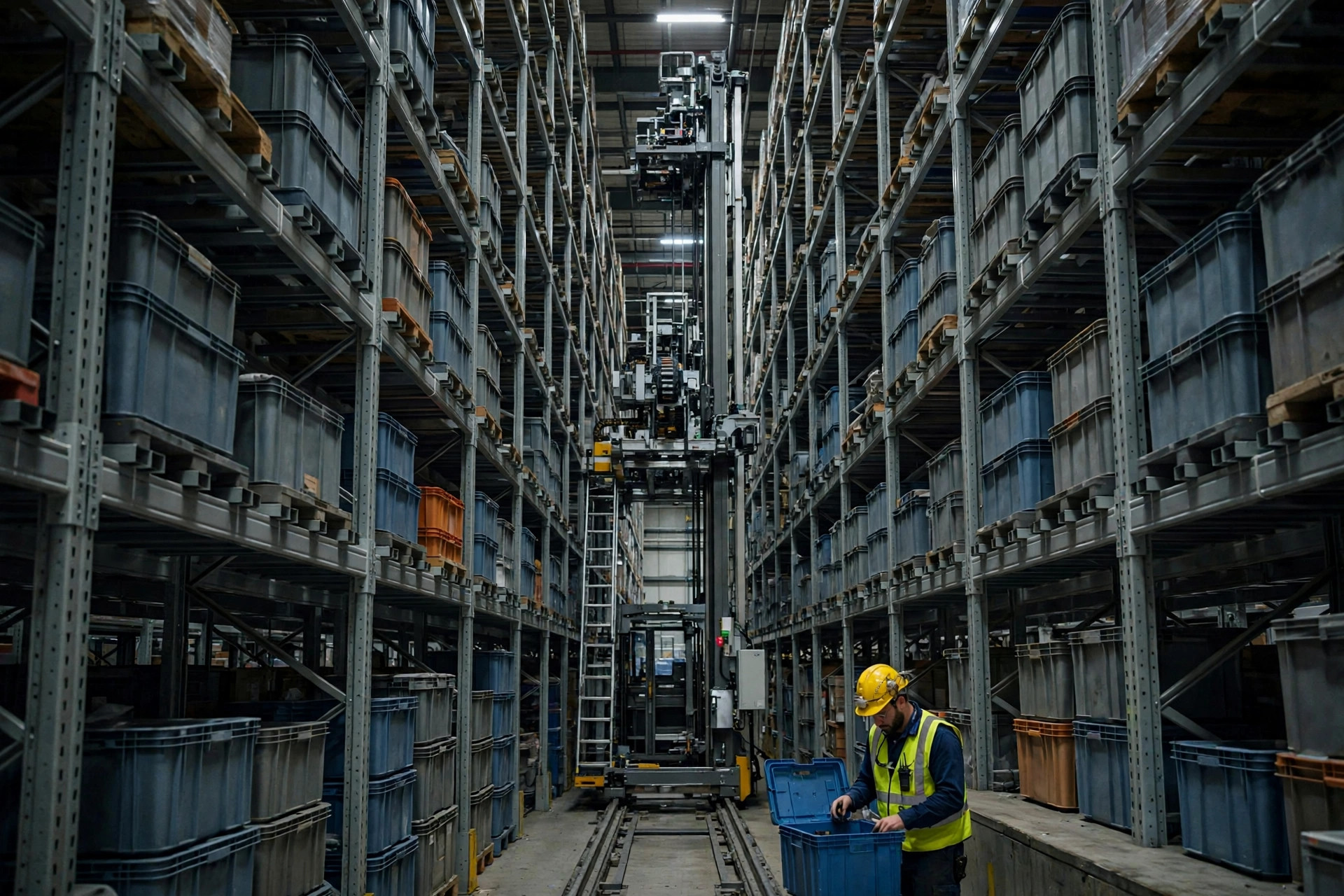
Shuttle ASRS is a different animal: racks, aisles, shuttles, and lifts. Each aisle has shuttles running on rails at roughly 4-6 meters per second (check the specific manufacturer's spec), carrying bins from the rack to a lift at the aisle end, which brings them down to the pick level. Every aisle is its own little elevator-plus-delivery-van operation, running in parallel.
So here is the first honest truth: AutoStore is a shared pool — every robot shares the whole grid, so losing one or two robots barely dents the system. Shuttle is feudal — one dead aisle means the inventory in that aisle is stuck. Their uptime math is completely different, so do not apply the same MTBF to both.
AutoStore vs Shuttle ASRS: Density and Throughput Are a Trade-off
This is the section that matters most.
AutoStore buys its density with throughput. Do the math: with bins stacked about 16 deep and SKUs distributed randomly, the target bin sits on average 8 layers down. For every bin retrieved, the robot first relocates roughly 7 bins sitting on top. Relocating takes just as long as retrieving — which is why a single picking port cycles at only about 60-75 bins per hour (per the manufacturer's solution design). Note that is the port's rate, not the robot's speed. No matter how fast the robots run, they cannot outrun the digging itself.
Shuttle systems have no digging. A single aisle can push several hundred bins per hour, and the bottleneck is nowhere near the shuttle's 4-6 m/s travel speed.
Counter-intuitive truth number one: in shuttle projects, the choke point is almost always the lift. One lift per aisle, shuttles flying down the aisle, bins queueing at the lift door. I have seen more than one project where the owner paid a premium for high-speed shuttles, only to watch aisles idle while the lift choked. Size the lift's cycle rate first, then talk about shuttle speed. Get the order right.
Counter-intuitive truth number two: more AutoStore robots do not mean proportionally more speed. The rails on top of the grid are a shared resource — past a certain robot density, collision-avoidance time eats more than the work itself. Adding robots buys peak throughput, not linear growth. Your sales rep will not volunteer that curve.
Where the AutoStore vs Shuttle ASRS Selection Line Sits: Your SKU Profile Decides
Principles are done. Now selection. Two real stories, names changed, numbers real.
In 2023, a beauty e-commerce warehouse in eastern China. 32,000 SKUs, 9,000 orders a day. The top 15% of SKUs drove 82% of outbound lines — classic hits-plus-long-tail. They bought density: a grid-based system with 8 robots and 4 picking ports. On promo day, the hot SKUs' bins were buried deep in the grid, robots spent half their time digging, and each port managed just over 60 bins per hour — 240 across all four. Orders were still being picked at 2 a.m. The fix was darkly funny: they paid for a row of flow racks outside the system just for the hot SKUs, picked semi-manually. They paid for density and throughput separately.
The lesson in one line: if your SKU velocity profile does not match, all the density in the world is just an expensive mausoleum.
In 2024, a 3C accessories distributor in southern China. 86,000 SKUs, 11,000 outbound lines a day, running a 12-aisle shuttle system. Year two, business grew 40%, time to expand. Adding aisles meant shutting down half the system and reworking the WMS aisle-allocation logic — 11 days of downtime. Meanwhile a peer company in the same city expanded their grid system: one more grid module, 6 more robots, done over two weekends with zero weekday downtime.
The expansion cost curves could not be more different. Shuttle expansion is stepwise — one aisle at a time, big lump investment, slow payoff, plus downtime. Grid expansion is linear — need density, add grid; need throughput, add robots. Two separate decisions, and you fix whichever hurts first.
Here is the comparison compressed into one table:
| Dimension | AutoStore (grid digging) | Shuttle ASRS | | Storage density | Extreme — bins stacked ~16 high | High, but aisles and lifts eat floor space | | Throughput per unit | ~60-75 bins/hour per picking port | Several hundred bins/hour per aisle | | Expansion | Add grid modules + robots, separately, online | Add aisles/levels, stepwise, usually with downtime | | Best-fit SKU profile | Huge SKU count, low velocity per SKU (long tail) | Concentrated fast movers, spiky peaks | | Single-point failure | Robots are a shared pool, losing a few barely matters | A dead aisle mostly stops that aisle | | Maintenance focus | Rail wear, robot wheels, digging strategy | Rail cleaning, charging contacts, lifts |
The decision framework is three questions:
One: what share of your outbound volume comes from the top 20% of SKUs? Over 70% — go shuttle. Long tail where nothing gets picked often — go grid.
Two: how many times your average day is your promo peak? Three times or more — go shuttle and size for the peak. Flat all year — the grid wins on cost.
Three: will you expand in the next three years, and by how much? If you cannot say, the grid's linear expansion is far friendlier.
Two out of three pointing the same way — stop debating. If it splits, listen to question two. Peak is a hard constraint; density is a soft metric.
The Maintenance Bills Nobody Puts in the Sales Deck
Finally, maintenance — the part nobody mentions in selection meetings and everybody curses after go-live.
The grid system's traps are invisible. Robot wheel and top-rail wear is gradual: uptime slides from 99.5% to 97% and you feel nothing, until one day a queue of robots is waiting on spare parts. The other trap is the digging strategy — if the WMS pick sequencing does not match the grid's heat stratification, hot bins sink to the bottom and robots dig all day for nothing. That trap is software. Nobody tells you that when you buy the hardware.
The shuttle system's trap is the headcount of failure points. Twelve aisles means twelve sets of rails, twelve sets of charging contacts, plus the lifts. Dusty rails make shuttles slip; oxidized charging contacts mean half-charged batteries — small problems, at scale. Your maintenance crew grows linearly with aisle count. Put that labor in the TCO, not just the equipment quote. Spare-parts strategy differs too: grid robots are standardized, so two spare whole robots cover you; shuttle spares must cover each aisle's critical parts — lift motors, drive wheels, charging modules — and missing any one can idle an aisle.
I will call out the fake requirement directly: some owners select on a single metric — bins per square meter. That is a fake requirement. Bins go in to come out; density you cannot pick from is hoarding, not storage. Size throughput first, then talk density. Get the order wrong and you have bought a very expensive mausoleum.
Whether the money is worth it comes down to one number: how many times per day does your busiest SKU get picked? If the answer is hundreds, stay away from the grid. If the answer is single digits, a shuttle system is overkill. That one number beats ten pages of PowerPoint.
By Da Liu, Automation Engineer