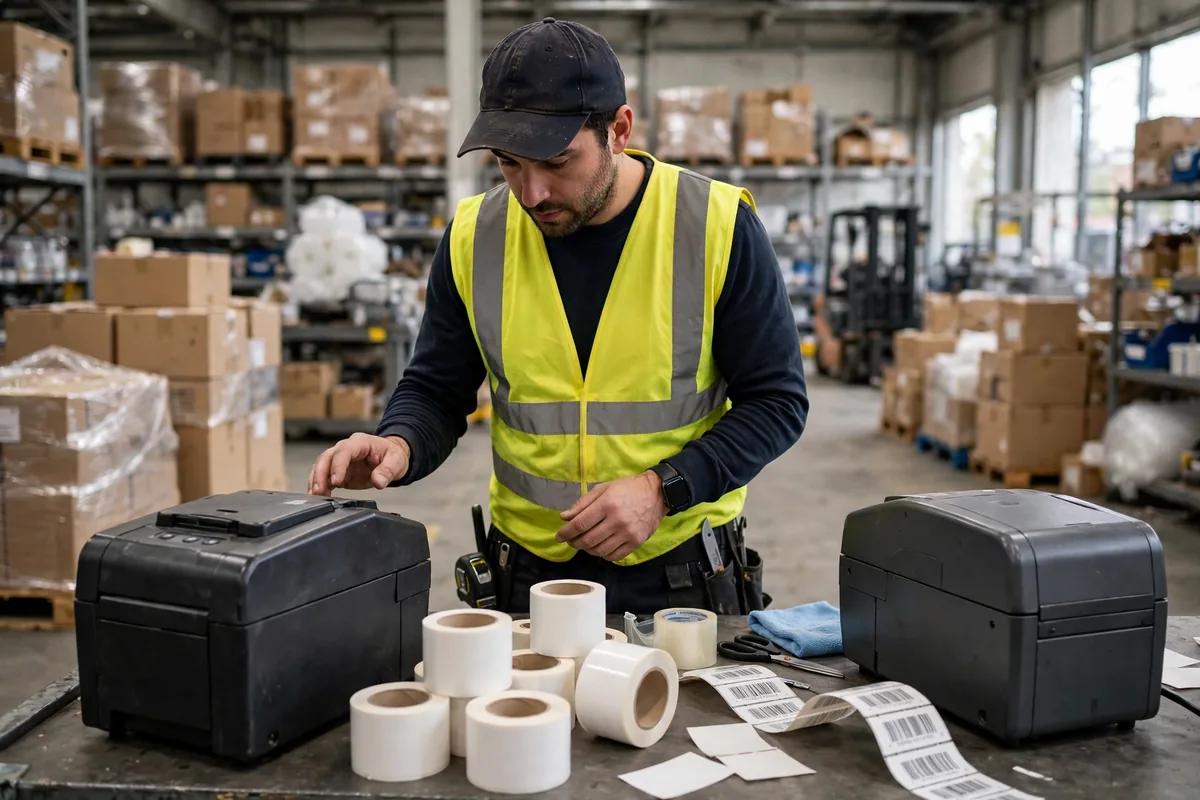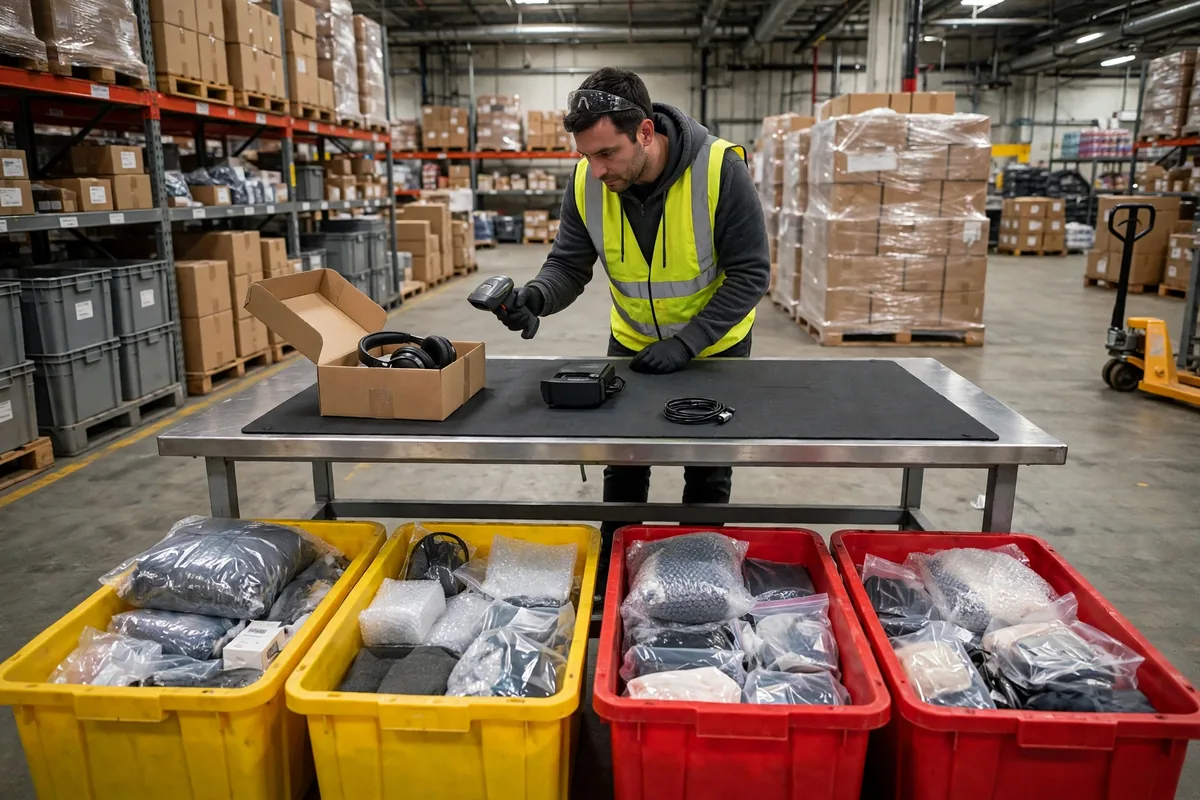
Here is my verdict up front: returns do not fall apart because a warehouse is short-handed. They fall apart because the system never forces a returned item toward a clear destination. A real wms returns management module is not a fancy way to log an RMA. Its job starts the second a box hits the dock: every unit gets graded, routed, and accounted for — restock, quarantine, refurbish, return to vendor, or scrap. Five paths. No sixth option called "leave it in the corner and decide later."
I have walked into too many operations where outbound runs like a Swiss watch and the returns area looks like a yard sale. Cartons in the aisle. A supervisor eyeballing a product and saying, "That looks fine, put it back." Maybe it is fine. Maybe it is a used unit missing a part, and you just shipped it to the next customer as new.
This cuts both ways, so let me be fair. If you process a few dozen returns a week, a shared spreadsheet and one accountable lead will carry you further than software will. Buying a module at that scale is burning money. But once you pass a hundred returns a day, across multiple channels or multiple clients, memory and good intentions stop working. And in returns, a single mistake — a used item sold as new — costs more than a year of the module.
The warehouse where "looks new" cost real money
In 2023 I visited a home-goods 3PL in California, roughly 120,000 square feet. In the two weeks after Black Friday, returns were running about 900 units a day. Their system had no returns workflow at all, so the team processed returns as a "special receipt": scan, print a fresh label, send it to the putaway zone. A lamp a customer had used for a month, missing one screw from its hardware bag, looked identical in the system to a brand-new lamp with a crushed outer carton.
You can guess the rest. In one month they logged more than twenty complaints about used goods shipped as new, and two of them escalated into marketplace claims that dragged down the seller's rating. When the warehouse added it up — second shipments, refunds, concessions — that month cost them close to twenty thousand dollars, not counting the hours customer service burned going back and forth. The supervisor told me the truth plainly: it was not that his people refused to inspect. At peak, with labor stretched thin, nobody had time to open every box and take photos.
The fix was not complicated, and it was not more headcount. When they added the module, I insisted on one hard rule: after the receiving scan, the system requires a grade before it will create any putaway task. No grade, no task, no shortcut. They kept grading deliberately simple — four levels. Grade A: unopened, straight back to stock. Grade B: opened, needs inspection. Grade C: defective or incomplete, goes to quarantine for a disposition decision. Grade D: damaged, routed to scrap or return-to-vendor. Because the system blocked the skip, peak season pressure could not quietly erase the step. Three months later I checked back. Used-as-new complaints had essentially dropped to zero.
What a wms returns management module actually has to do
Vendors love showing dashboards. Ignore the dashboards until you have walked the flow. There are four jobs that matter.
First, grading. Grading rules must be configurable by category, because "sellable" means different things for different goods. Apparel grading looks at stains, odors, and tags. Electronics need a power-on test. Opened cosmetics, in many cases, simply cannot go back into sellable stock. Grading also needs evidence: for high-value items, the system should require photos at inspection, stored against the return record, so that when a client or a marketplace disputes a decision six weeks later, you are not arguing from memory.
Second, disposition. Grading answers "what is it?" Disposition answers "where does it go, who decides, and by when?" A Grade B unit that passes inspection becomes sellable. One that fails drops to C. A Grade C unit might go to a discount channel, back to the vendor, or into a refurbishment queue — but someone with authority has to choose, inside the system, and the choice needs a deadline. A quarantine area without deadlines is not a process. It is a growing pile with a fence around it.
Third, restock and quarantine must be separated in the system, not just on the floor. Quarantine locations should be a distinct location type that picking waves can never allocate from. A red sticker is not a control. Sooner or later, under time pressure, somebody picks from the wrong pallet. If the system cannot physically exclude quarantine stock from allocation, you do not have quarantine — you have a suggestion.
Fourth, the money trail. Each return should tie back to the original order, the authorization, and the refund status. For a 3PL, disposition results must be reportable by client, because at month end every client will ask the same question: of the goods I paid you to handle, how many went back to stock, how many were scrapped, and why? If answering that takes a day of spreadsheet work, the module is not finished.
| Disposition path | Typical grade | What the system must do | Who approves |
|---|---|---|---|
| Direct restock | A, unopened | Create putaway task after scan and grade | Receiver |
| Inspect, then restock | B, opened | Create QC task, require photos, release only on pass | Inspector |
| Quarantine for decision | C, defective/incomplete | Move to quarantine location, set deadline, escalate if overdue | Warehouse manager |
| Return to vendor / refurbish | C or D | Consolidate by vendor, generate outbound order, keep carrier proof | Operations lead |
| Scrap | D, damaged | Photo record, two-person confirmation, write off inventory | Warehouse manager |
The counterintuitive part: more grades make returns slower, not better
This sounds backwards, but I have watched a warehouse roll out nine grades and end up with receivers tapping almost at random. Too many choices and people stop choosing — they just click whatever clears the screen. My rule: four or five grades, no more than five disposition paths, and let photos and notes carry the nuance. A good wms returns management module turns ninety percent of returns into a no-brainer conveyor belt and surfaces the ten percent that genuinely need a human decision. If a vendor demos a dazzling grading tree but cannot show you how quarantine stock is excluded from picking, or what happens when a disposition deadline passes, you are looking at a logging tool priced like a process system.
One more cost people miss: returns speed is a customer service cost. How quickly a received return shows a reliable status decides whether support can settle a customer in one contact or three. I usually advise grading completion as the internal checkpoint — standard categories cleared the same day, anything undisposed after 48 hours escalating automatically. Make the vendor demonstrate those timers and alerts live, in the demo environment, with your scenarios. If it only exists in the brochure, it does not exist.
The buying checklist I actually use
Ask these seven questions, in this order. One: does receiving force a grade that cannot be skipped? Two: can quarantine locations be fully excluded from picking allocation? Three: do dispositions carry deadlines, reminders, and escalation? Four: can high-value items require photos that are retrievable by return number? Five: can you report return rates and disposition outcomes by client and by channel — non-negotiable for a 3PL? Six: does return status flow back to the order and the service team without manual lookup? Seven: can grading records be exported to defend a marketplace claim?
If the first two answers are weak, stop the demo there. Everything else is decoration. Returns are unforgiving: one lazy decision becomes a refund, a reshipment, and a ding on someone's seller rating.
My closing advice is simple. Do not start by comparing prices. Take the twenty ugliest returns your warehouse handled last month and make every vendor walk them through the system end to end, scan to disposition. The ones that cannot finish the walk eliminate themselves. Tell me that is not worth more than a hundred pages of proposal, is it?
By Lao Mi, Supply Chain Veteran (20 yrs)