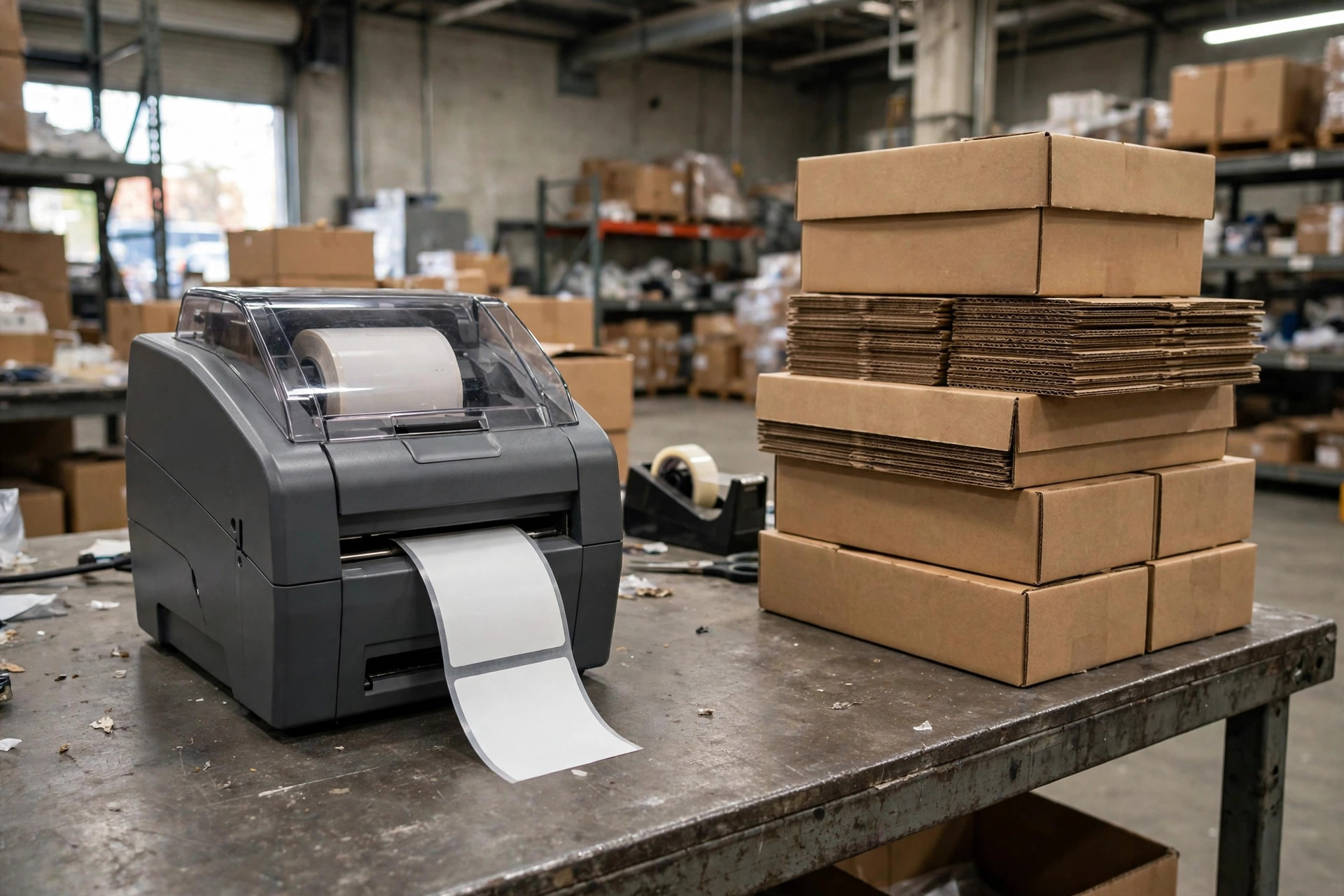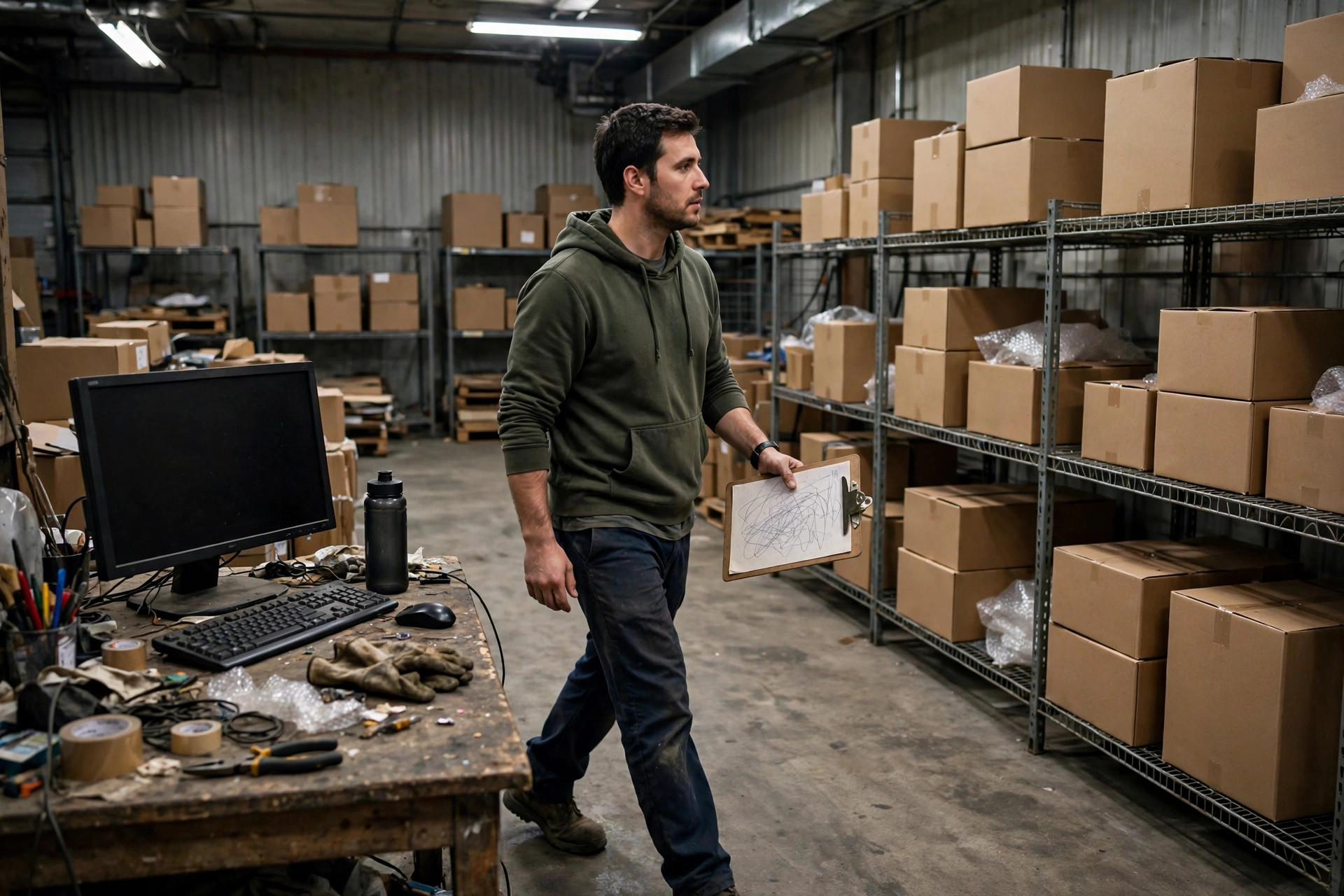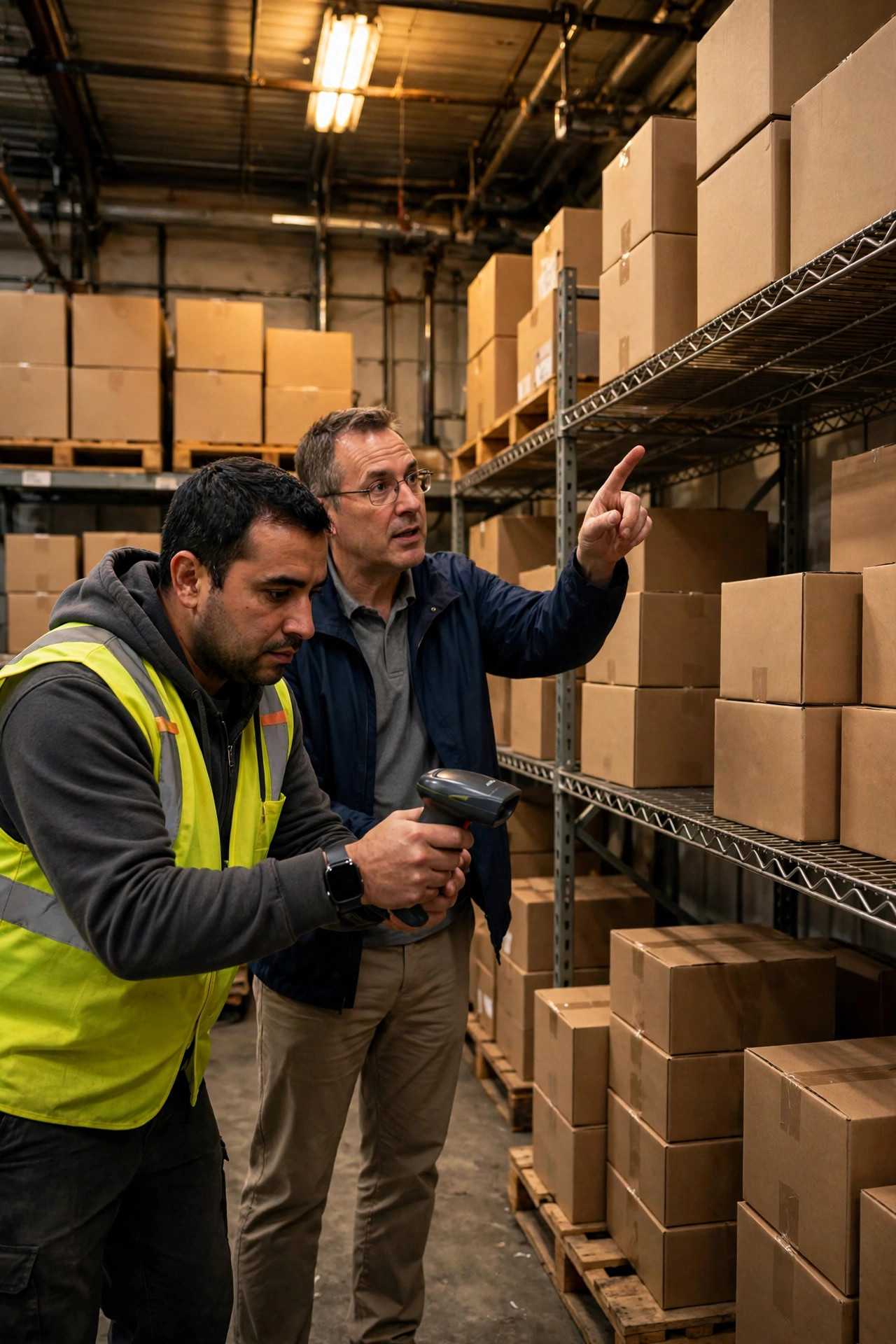
One brutal week last July, our cloud WMS went down for over four hours. The vendor was migrating servers. Phones went unanswered, support tickets vanished into the void, and their status page was a sea of red. That afternoon we still shipped 400+ orders — with paper, pens, and an emergency box I'd put together months earlier.
This isn't a story about active-active clusters or geo-redundant failover. We can't afford that stuff. This is about what happens after a WMS outage in a 3,000-square-meter warehouse run by nine people — and the decidedly low-tech disaster-recovery playbook that kept us shipping.
Why Enterprise-Grade WMS Disaster Recovery Was Never an Option
Two years ago I seriously looked into disaster recovery. I asked around: hot standby, off-site backups, a dedicated line plus a spare server. Every quote started in the six figures, plus annual maintenance, plus the vendor "strongly recommending" a dedicated IT person. Nine people work in my warehouse. Am I supposed to maintain an entire shadow system for an outage that might not happen once a year? Small warehouses like ours can't burn that kind of money.
Here's our entire IT estate, honestly listed: one router, one cloud WMS account, a few barcode scanners, and a printer with a mind of its own. The enterprise world talks about RTO and RPO. We talk about something simpler: can today's 400 orders go out on time, and will customers complain? Different goals, different playbook.
Our Low-Tech Answer: One Emergency Box, Three Paper Forms
Once I made peace with that, I spent less than two thousand yuan and built an "offline emergency box" that now sits in the most reachable spot in the office:
- Pre-printed blank forms: manual pick slips, manual outbound verification slips, and re-entry reconciliation sheets — 200 of each
- A power bank and a 4G backup router with a data SIM
- A USB stick: every Friday before clocking out, someone exports a full inventory snapshot from the WMS into Excel and copies it over
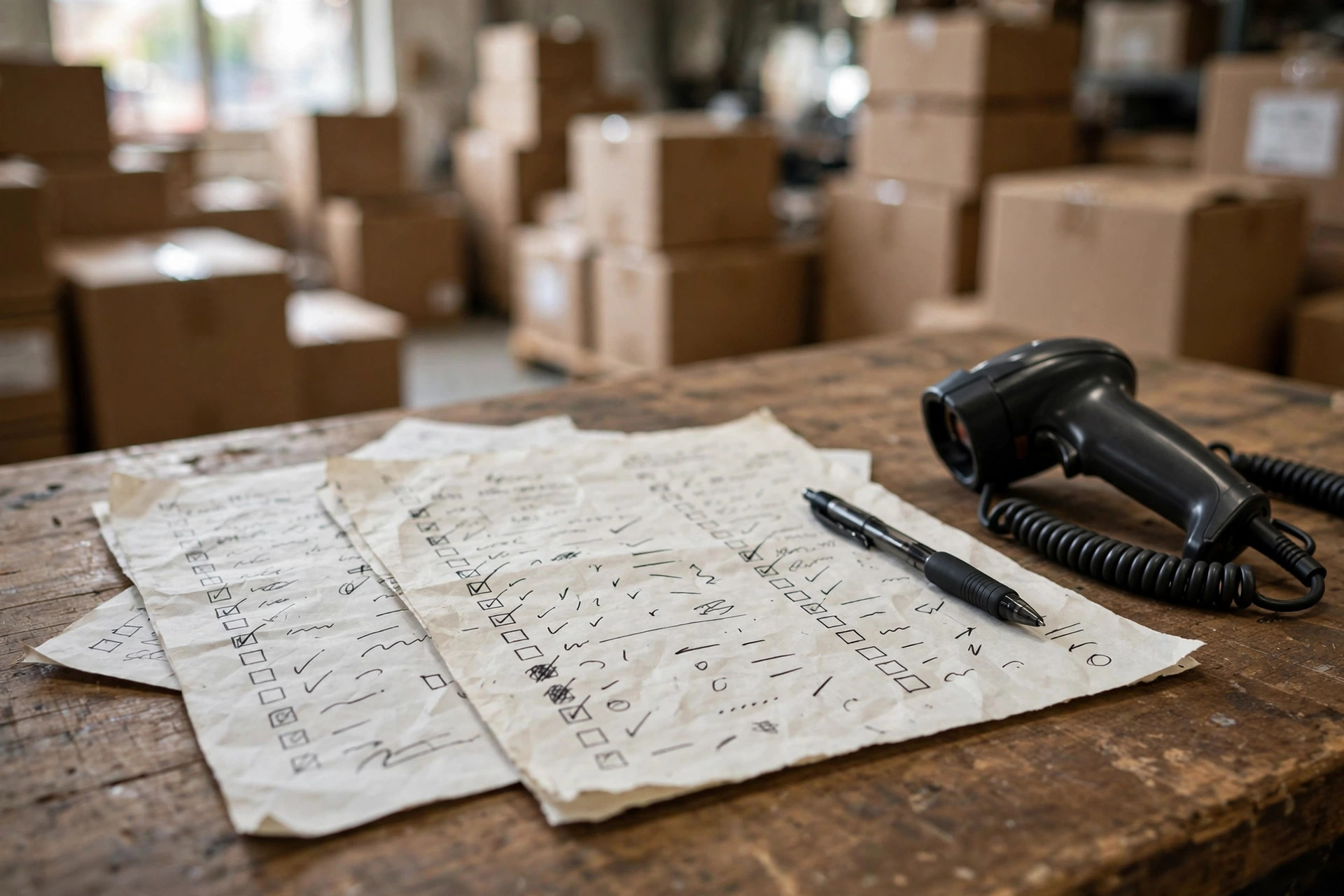
Each paper form has exactly one job. The pick slip records order number, bin location, SKU, and quantity, signed by the picker. The verification slip gets a second person's signature before anything ships — our anti-mis-ship checkpoint. The reconciliation sheet is for after the system comes back: who re-enters what, who double-checks, how discrepancies get handled, order by order.
The procedure is written down and taped to the wall. When the WMS goes down: spend ten minutes diagnosing — is it our network (try the 4G router) or the vendor's side (call them, check the status page)? If it's the system, switch to manual within ten minutes: customer service exports orders from the marketplace backend as Excel, prints or hand-copies them onto pick slips; pick, double-verify, ship; paper slips get filed by order number in an envelope, waiting to be re-entered once the system recovers.
Two details make or break the whole thing. First, the locations and SKUs on the paper forms must match the WMS character for character — I copied every field from the system screens when designing the templates. Second, that Friday inventory snapshot is the foundation of the entire fallback: with the system down, you at least know roughly where each SKU sits and how much is left, instead of flying blind.
Two Real WMS Outages: The System Died, the Orders Didn't
The first was July 2025, in Dongguan — the vendor's server migration, four hours and ten minutes of downtime. We switched to manual in twelve minutes and shipped 400+ orders that day. That evening, three of us spent two hours re-entering every paper slip after the system recovered. Reconciliation turned up three discrepancies — all caught and stopped at the verification step before anything shipped wrong. Zero customer complaints, because our ship times never slipped.
The second was January 2025: a scheduled power cut in our industrial park, announced in advance. Our UPS lasted twenty-five minutes; computers, scanners, and the printer all died. But the paper process never needed electricity in the first place — flashlights plus paper slips, and picking continued. One hundred fifty orders went out during those two hours; re-entry took forty minutes after power returned.
The math tells the story:
| Enterprise DR (active-active / hot standby) | Our grassroots fallback | |
|---|---|---|
| Upfront cost | Six figures and up | Under two thousand yuan |
| Annual upkeep | Tens of thousands, possibly plus headcount | Near zero (one export every Friday) |
| Impact of a 4-hour outage | Near zero | About 10% fewer orders shipped, 2 hours of re-entry labor |
| The real trap | Bought three years ago, never drilled — fails on the day it matters | Paper process gets battle-tested in every minor glitch, monthly |
Here's the counter-intuitive take: for a small warehouse, the best disaster recovery isn't a technology solution — it's a process solution. Enterprise gear you can barely afford often becomes shelfware: a standby system nobody has touched in three years is usually the first thing to break on failover day. Our paper slips, meanwhile, get exercised in every small outage and brownout, month after month. When the big one hits, the whole crew can run the drill with their eyes closed.
Five Tips for Fellow Small Warehouses
- Admit the system will go down. Treat the WMS as a useful tool, not your lifeline — that's the only mindset in which a fallback plan actually gets built.
- Build the emergency box today. Print the paper templates now, not when you're already panicking.
- Export that inventory snapshot every Friday. It's the foundation of the whole approach — without it, manual fallback is groping in the dark.
- Drill once a quarter. Pick a slow afternoon, kill the system for two hours, and run the whole crew on paper. One drill beats ten readings of a document.
- Write the recovery reconciliation in stone. Who re-enters, who verifies, who signs off on discrepancies — on the wall, not improvised.
Systems go down. Orders don't have to. Small warehouses have their own way of surviving.
By Xiao Ma, Small Warehouse Owner