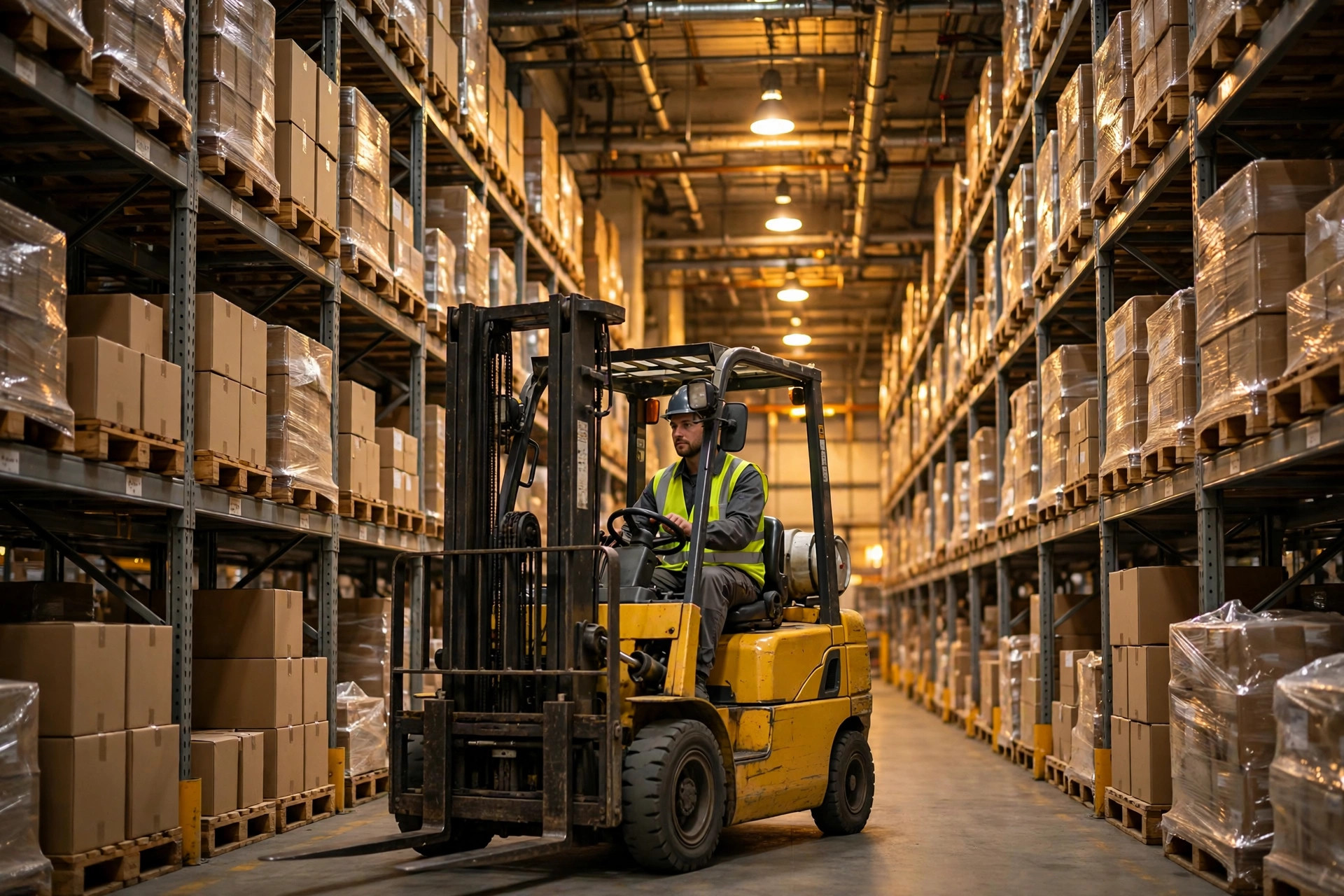
Last winter, 3 a.m., I rolled into a warehouse in Fontana with a full trailer. I sat at the gate for two hours. One kid on the night shift, still unloading the previous truck, and one of the forklifts was down. Let me tell you, in all my years on the road, I've lived through dozens of nights like that. Engine idling, the appointment window ticking away, my next stop already looking like it'll be late — I sat in that cab pounding the steering wheel.
Here's what that night tells you: when it comes to warehouse shift schedules, truck drivers get the first vote. The warehouse thinks "cut two people from nights, save some money." Meanwhile the driver burns two hours at the gate — fuel, schedule, the next appointment, all gone. You saved on overtime. The whole chain paid for it. Most warehouse owners have never run that math.
Three Schedules, Three Different Worlds From the Driver's Seat
8-hour, three shifts — handoffs three times a day. Days, swings, graves, covering 24 hours. The old-school setup. The good: short shifts, people don't burn out, fewer mistakes. The bad: three shift changes a day, and every changeover has a 20- to 30-minute dead zone — the outgoing crew is already gone mentally, the incoming crew isn't up to speed yet. That adds up to over an hour lost every day. The graveyard shift (11 p.m. to 7 a.m.) is the hardest to staff — plenty of warehouses run nights with just two people, so a driver showing up at 2 a.m. waits an hour minimum. Those are the warehouses I dread: dark gate, nobody around, and the receiving guy has to be hunted down.
10-hour, four shifts — four days on, three days off. Two shifts a day, 10 hours each. Very popular now; workers love the three-day weekend, so hiring is easier. But there's a trap here, and it catches California owners specifically: California law requires 1.5x pay for anything over 8 hours in a day, and 2x for anything over 12. If you want to run 4x10 without paying that daily overtime, you have to go through the alternative workweek process and get your employees to vote for it. Plenty of small warehouse owners don't know this rule exists — until the payroll comes back and explodes. Federal law counts by the week (1.5x only past 40 hours); California counts by the day. Two different animals. Check the California DIR for the current letter of the law — I'm just giving you the plain-English version.
12-hour, two shifts — fewest people, looks cheapest. Two crews, two handoffs, leanest headcount. But let me tell you: 3 or 4 in the morning is when a human being is at their foggiest, and you're putting them on a forklift between the racks. The back half of a 12-hour shift means falling productivity, rising mis-picks, rising injury risk. The payroll you saved has a funny way of coming back as workers' comp and damaged freight. I know an old-timer running a forklift in Mira Loma — his warehouse tried 12-hour shifts for a while, lost four veteran operators in three months. Nobody can take it. What's left is all rookies, and rookies on forklifts — you do the math on that risk.
Last fall, a warehouse in Rialto switched from 8-hour to 10-hour shifts, and the owner bragged to me about "saving a day of labor a week." Then I showed up at 6 a.m. one morning — right in the middle of their shift change. Day crew hadn't clocked in, night crew was bolting for the door, and I waited 40 minutes at the gate. In those 40 minutes, three more trucks stacked up behind me. Every dollar of labor he saved turned into driver waiting time — math he had never done. When I talked to him later, it clicked: shift change was set for 7 a.m., right on top of the morning delivery rush. He'd built his own traffic jam.
Let's Actually Run the Numbers
Here's the rough math, for the same 168 hours of weekly coverage:
| 8-hr, 3 shifts | 10-hr, 4 shifts | 12-hr, 2 shifts | |
|---|---|---|---|
| Handoffs per day | 3 | 2 | 2 |
| Handoff loss per day | about 1–1.5 hrs | about 40 min–1 hr | about 40 min–1 hr |
| California overtime | Night/weekend premiums separate | 2 hrs/day at 1.5x (without the AWS vote) | 4 hrs/day at 1.5x+, 2x past 12 hrs |
| Hiring | Graveyard is brutal to fill | 3-day weekend helps | Highest burnout, highest turnover |
| Late-shift productivity | Steady | Noticeable drop in last 2 hrs | Sharp drop in last 4 hrs |
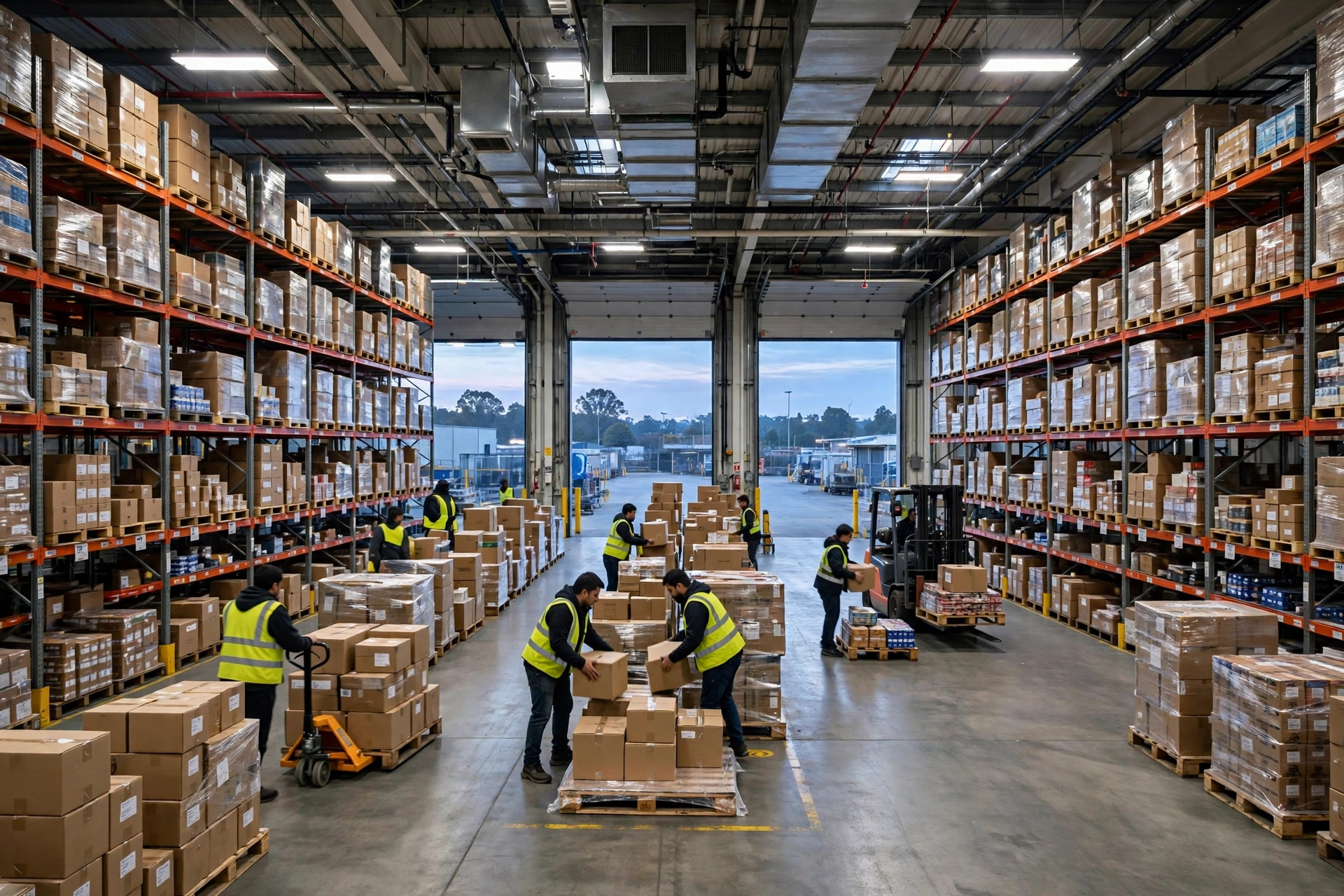
Now the contrarian take: longer shifts don't necessarily save money. In the last two hours of a 10-hour shift, accuracy and pace both slide. One mis-pick means a return, a reship, a round of back-and-forth with customer service — that costs more than the two hours of wages ever did. In all my years, I've watched too many warehouses count "labor savings" on the payroll and chalk "mistakes" up to bad luck. That's the math backwards — rework labor, reship freight, customer chargebacks, every one of them costs more than overtime.
And there's a hidden line item: driver waiting. You cut one headcount, three trucks stack up at the gate, each burning an hour. The driver loses the next appointment, the shipper loses the timeline, the warehouse loses its reputation. Some big shippers track average wait time per facility in their systems — wait too long, and you're out at the next bid. Where do you book that loss?
A Few Plain Words for Warehouse Owners
First, before you set the schedule, ask the drivers what time they usually show up. Your inbound peak is 6 to 9 a.m. — so don't set shift change at 7. Move it half an hour and the gate stays clear. Costs nothing. Just takes a little thought.
Second, don't cheap out on the night shift. One receiving guy at 3 a.m. — the minute he steps away, three trucks are sitting dead at the gate. One extra body costs you a bit over a hundred bucks a night. Three blocked trucks burn through far more than that in missed appointments and blown timelines. I've run that math for you. It's not a loss.
Third, California owners: get the alternative workweek vote done before you roll out 4x10s. Don't wait for the payroll explosion to discover the rule. Ask someone who knows. Small money now saves big money later.
And an old saying to close: sharpening the axe doesn't slow the woodcutting. Scheduling is one of those things where slow is fast. Get the shifts right — drivers don't wait, freight doesn't pile up, mis-picks drop — and you'll save many times what you were trying to squeeze out of overtime. Don't pick a fight with the drivers. Picking a fight with the drivers is picking a fight with your own on-time rate — and I say that after 15 years of learning it the hard way, mile by mile.
By Shifu Zhao, Trucking Veteran (15 yrs)