Here's my verdict up front: if your warehouse carries more than 5,000 SKUs, piece-rate pay is probably a trap. Throughput will climb, sure — but error rates, injury reports, and wage-and-hour lawsuits will climb right along with it. I've watched more than one operation run piece rate for a year, post beautiful productivity numbers, and then lose every dollar of margin to chargebacks and claims.
Warehouse labor costs have been brutal these past few years, and every owner wants money tied to output. Pay for what you pick — sounds like common sense. Early in my career I worked piece rate myself on full-pallet moves: a set rate per pallet, clean math at month end. But in this business, the more complex the orders get, the more dangerous piece rate becomes.
When Piece Rate Actually Works
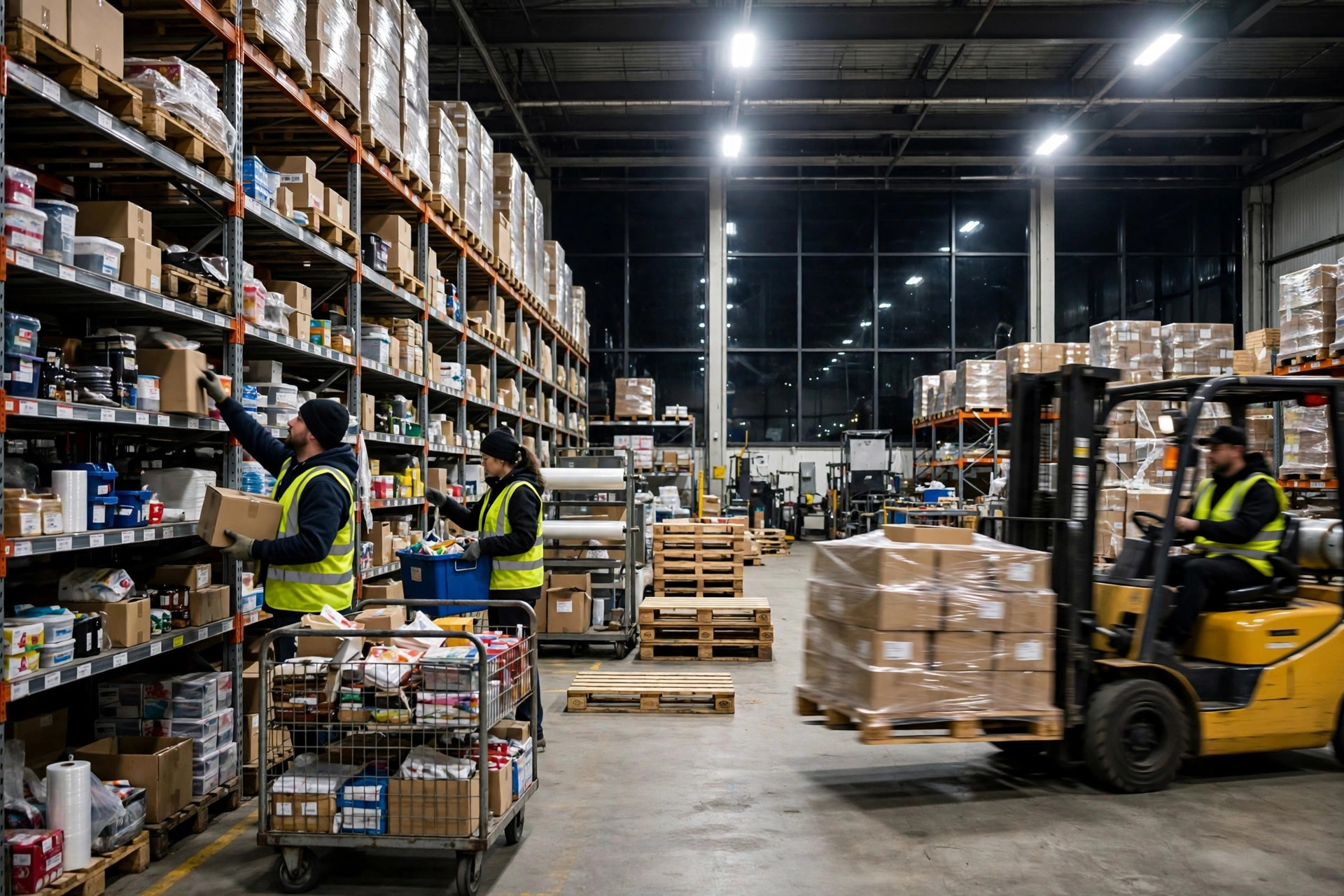
Piece rate isn't the villain. Put it in the right place and it's genuinely great: work that's simple, repetitive, and easy to inspect. Moving full pallets from the dock to storage, unloading containers, stretch-wrapping finished pallets — a few dozen SKUs, and anyone can see who did how much and how well. In that world, piece rate has the lowest management overhead and workers respect it. Nobody can coast, and nobody can claim favoritism.
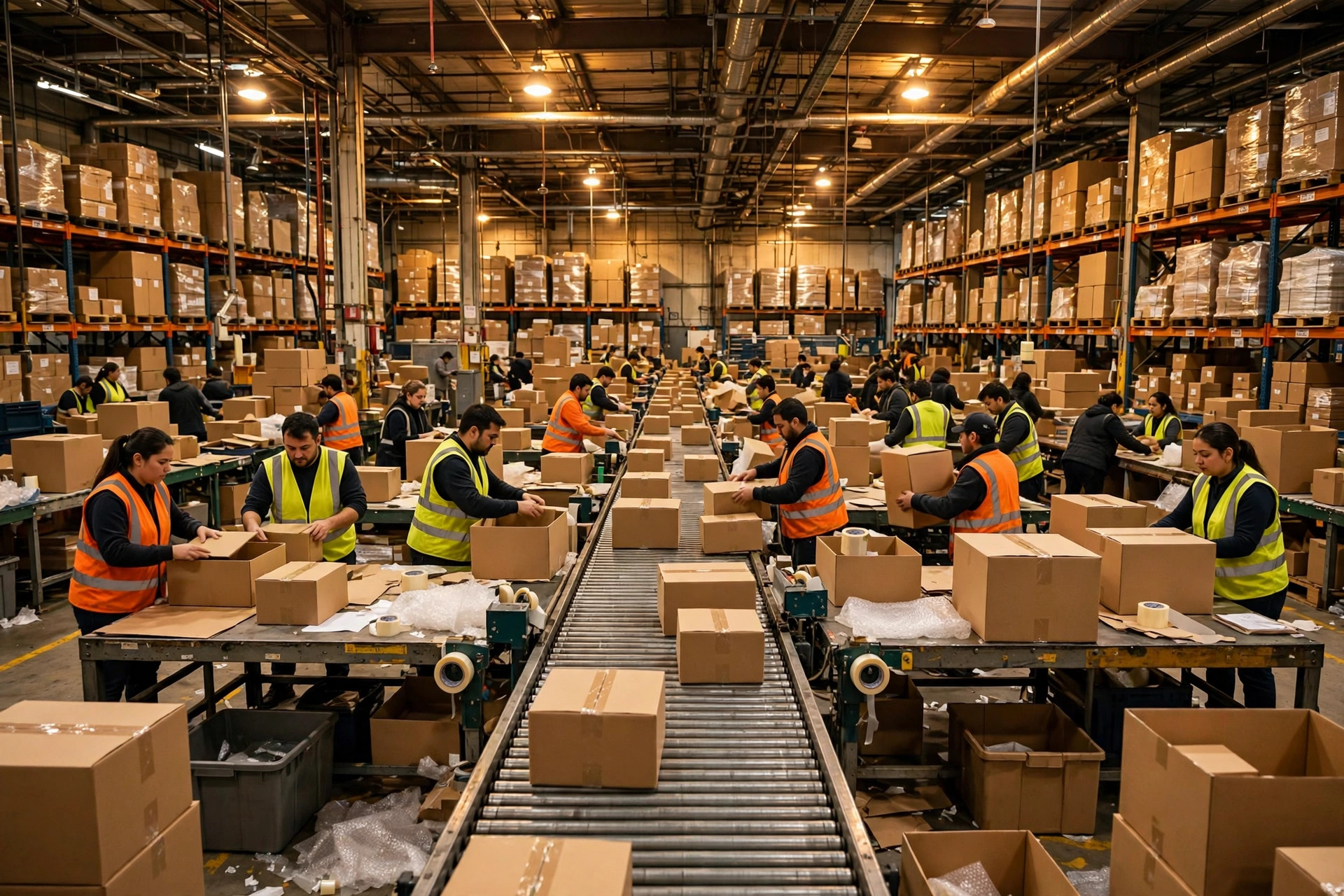
The trouble starts when piece rate gets dragged into warehouses it doesn't belong in. Back in 2019 I saw the counter-example at a 40,000-square-foot 3PL in Ontario, California: five or six thousand SKUs, small-parcel e-commerce picking, paid strictly per piece. Three months in, the pick error rate went from 0.4% to 1.2%. Why? Workers chasing volume started skipping steps. The verification scan was "too slow," so they tossed product from memory. PPE was "in the way," so it stayed in the locker — sprains and crushed toes doubled on the incident reports. One mispick meant the 3PL ate the reship cost plus the client penalty, adding up to thousands of dollars a month. The speed dashboard looked fantastic. The P&L did not.

That's the real trade-off of piece rate: you get the extreme version of whatever you reward. Reward pieces, and you get pieces — accuracy and safety get sacrificed along the way. Skipping the scan saves three seconds and gambles the whole order's accuracy. Skipping the safety gear saves a little discomfort and gambles on an injury. When the gamble pays off, the worker keeps the upside; when it doesn't, the owner pays — error penalties, workers' comp claims, OSHA citations. None of those are cheap.
There's a subtler cost, too: turnover. In a pure piece-rate shop, your slower veterans can't stay — working the same eight hours for $15 an hour while the fast hands make $22 breaks people eventually. What's left is a crew of pure speedsters, and speedsters are exactly the population with the highest error and injury rates. You think you're rewarding efficiency. What you're actually doing is systematically selecting for the workers who care least about quality.
California's 226.2 Red Line
Running piece rate in California comes with a legal red line: Labor Code 226.2, in effect since January 1, 2016. The backstory is refreshingly blunt — in 2013, the California Supreme Court ruled in Gonzalez v. Downtown LA Motors that piece-rate workers' paid rest breaks had to be compensated separately; you couldn't just say "it's baked into the piece rate." The legislature then tightened things further, specifically closing the loophole of unpaid rest and waiting time under piece-rate systems.
The law boils down to two requirements. First, rest periods — ten paid minutes for every four hours worked — must be paid at the higher of the worker's average hourly rate that week or the minimum wage. Second, "nonproductive time" — waiting for freight, shift meetings, sweeping up, standing around during an equipment breakdown — must all be paid separately at an hourly rate. "They earn plenty on piece rate, it averages out" is not a defense courts accept. Plenty of small warehouse owners have never heard of this statute, set a generous piece rate, and then got hit by a former employee's claim covering rest and waiting time for the whole crew.
At the federal level there's the FLSA trap: overtime for piece-rate workers is not the piece rate times 1.5. The correct math starts with the regular rate — total piece-rate earnings for the week divided by total hours worked — and the overtime premium is an additional 0.5 times that regular rate. Example: a worker earns $900 on piece rate over a 50-hour week. The regular rate is $18, and the 10 overtime hours each get an extra $9. Plenty of small operators pay piece rate × 1.5, figure they're being generous, and have the math wrong. When the Department of Labor audits, they catch it every time, and back pay plus penalties can reach back years.
If you're going to run piece rate in California anyway, your timekeeping has to be granular: productive time, rest periods, and nonproductive time tracked separately, never blended. Missed rest breaks trigger premium pay under California rules, calculated at the same elevated rate. Bottom line: piece rate isn't illegal in California, but its administrative overhead is far higher than most owners expect — and a small shop without someone minding the time clock will step on a landmine sooner or later.
My Playbook: Hourly Base Plus Quality Bonus
For high-SKU, high-error-cost operations — e-commerce picking, 3PLs, any station with a QA check — my answer is an hourly base with bonuses tied to accuracy.
Here's how I'd structure it as an example: pay an hourly wage at the upper-middle of the local market so nobody's anxious about making rent. Then add a monthly quality bonus — say a $300 base — multiplied by an accuracy factor. Hit 99.5% pick accuracy or better for the month, factor 1.0, take the whole thing. Land between 99% and 99.5%, factor 0.5. Drop below 99%, no bonus. And one safety veto: any recordable injury that month zeroes out the bonus entirely.
Why does this work? Workers don't have to rush to protect their paycheck, so the "slow" steps — scanning, verification — survive. Accuracy is measurable, so the bonus feels objective instead of political. And the legal exposure shrinks: under hourly pay, overtime and rest periods are clean bookkeeping, nothing to defend in an audit.
A few design pitfalls I've stepped in myself. First, accuracy has to come from the system — audit records in the WMS are ideal; if you're sampling instead, publish the sample rate and method up front, no black boxes. Second, individual or team bonus? Individual works for picking, where output is personal; team works for pack-out lines, with a minimum individual threshold so nobody free-rides. Third, pay it monthly, not quarterly — warehouse crews respond best to feedback they can collect next month.
The honest downside: hourly pay sets a floor, not a ceiling. Your star performer picks 20% more than standard and earns exactly the same — that wears on people. So I'd add one more tier: an overproduction kicker, a small per-piece add-on for volume above standard, but only when the accuracy bar is met. The order is non-negotiable — quality first, then speed.
So back to the opening verdict: if your errors turn directly into penalties and your SKU count is past 5,000, don't touch pure piece rate. If the work is simple and quality is visible to the naked eye, piece rate is a fine tool. Get the pay structure wrong and you lose more than productivity.
One question to take back to your operation: do you know your current pick error rate — and would you dare tie it directly to bonus pay? If the answer is no, the problem probably isn't your people. It's your process.