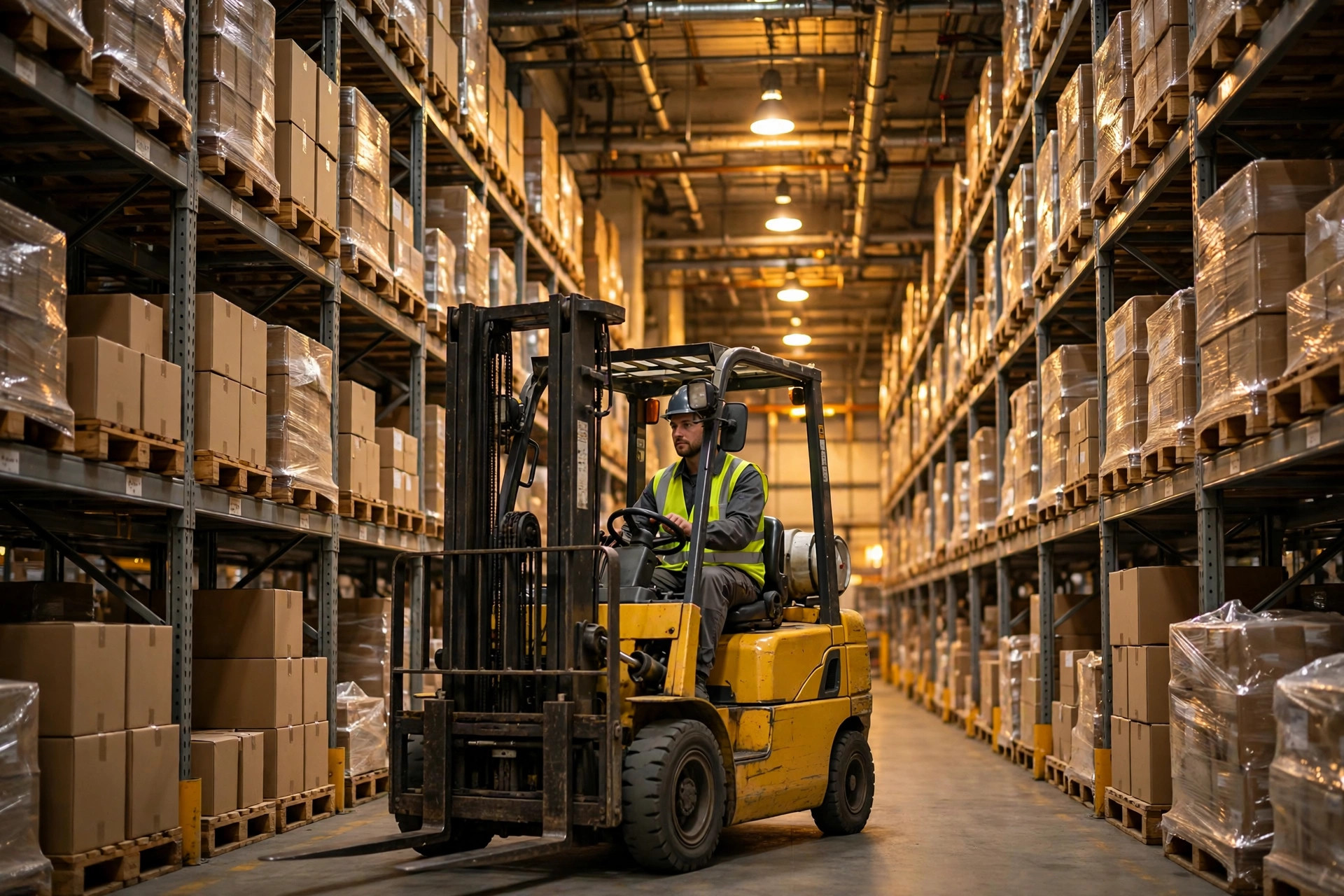
Peak season last year, my little self-run warehouse nearly died. Orders exploded right before Black Friday, I had four full-timers, and the pick-pack queue was backing up by the hour. And the thought crossed my mind — the same thought every seller has: just bring in a few 1099 temps. Pay by the hour, no FICA, no workers' comp, gone when the rush ends. Easy.
Easy? My buddy Lao Chen did exactly that last year. This spring the state came knocking, and it got ugly fast.
And here's the kicker: California signed SB 1444 in August 2026. Starting January 1, 2027, a misclassified worker can go to the Labor Commissioner and claim the misclassification penalty in their own name. It used to be the government coming after you. Now it's the temp in your own warehouse filing against you. Platforms change the rules on us every other month — California just changed the labor rules, and this one's nastier.
The Three Red Lines: What the IRS Actually Looks At
The IRS doesn't care what your contract says. You can write "independent contractor" a hundred times — if the relationship walks like employment, it's employment. The common-law test boils down to three things:
Red line one: behavioral control. Do you set their hours? Make the schedule? Teach them your pick sequence, your pack standards, your SOPs? Then you crossed it. A real contractor gets told what outcome you want; they decide how and when to do it.
Warehouses are brutal here. A temp can't do anything without your SOPs. You hand them the SOP, the schedule, the attendance sheet — behavioral control, maxed out.
Red line two: financial control. Paid by project or by the hour? Whose tools? A real contractor quotes per project, brings their own gear, eats their own losses. Your 1099 temp gets hourly pay, uses your scanners, your boxes — and loses nothing if things go south. That's a paycheck with a different name.
Red line three: the relationship. Ongoing or project-based? Is the work your core business? A "temp" who's been picking and packing in your warehouse for eight months — picking and packing IS your business. What exactly is temporary about that?
Cross one red line and you're in trouble. Cross all three and you're just waiting for the audit letter.
California's AB5 ABC Test: Warehouses Basically Can't Pass It
The IRS is strict. California is stricter. The AB5 ABC test requires all three prongs — miss one, you're an employer:
A: you don't control how they do the work. B: the work is outside your usual course of business. C: they're independently in that trade, with their own clients.
Warehouses die on prong B. Your business IS warehousing and fulfillment. Temps picking and packing are doing your core business. Fail B, and it's game over — the other prongs don't even matter.
So for California sellers running their own warehouse, staffing with 1099 temps is basically walking around naked. And don't tell me "my friend does it and nothing happened." Not getting caught isn't the same as being legal. When they catch you, it's per head.

The Math: What 1099 "Saves" vs. What Getting Caught Costs
First, the "savings." Let's do a hypothetical: 10 temps at $3,000 a month each — $360,000 a year in wages. On 1099, you skip the employer FICA at 7.65% ($27,540), unemployment insurance, workers' comp. Sounds like thirty or forty grand a year saved. Tasty, right?
Now the bill when it blows up — all from public, statutory sources:
In California, Labor Code §226.8: willfully misclassifying an employee as an independent contractor carries $5,000–$15,000 per violation. Pattern or practice? $10,000–$25,000 per violation. Note "per violation" — 10 temps means 10 violations. That's $50,000 minimum, and there's no ceiling on your anxiety.
Federally, the IRS comes for back employment taxes under IRC §3509: 1.5% of total wages (withholding portion) + 20% of the employee's FICA share + 100% of the employer's FICA share. That's the reduced rate, and only if you actually filed the 1099s. No 1099s? Withholding jumps to 3%, the FICA piece to 40%. Intentionally skipped filing? Relief's gone entirely. Interest and penalties on top.
Real case: in April 2026, California's Labor Commissioner announced over $4.4 million in citations against a Canoga Park company that had classified 144 caregivers as independent contractors. 144 people, $4.4 million — north of $30,000 per head. And that was home care. Warehouses are an even cleaner target.
Lao Chen's story: small self-run warehouse outside LA, eight 1099 temps at peak, hourly pay, his schedule, company vests, company scanners. All three red lines, crossed. After the state audit — back taxes plus penalties — in his words, "everything I saved on 1099s over two years, paid back with interest on top." Now he does it right: peak-season labor goes through a licensed staffing agency. The agency handles W-2s, insurance, workers' comp. He pays an hourly service rate, roughly 15% more. But he sleeps at night.
Another seller I know took a different route: four core full-timers converted to W-2, agency staff for the peaks, and 1099s reserved for genuine project work — installing a rack system, a one-time inventory system integration. Quoted per project, own tools, gone when done. That's what independent contractors are actually for.
The Pitfall List: Don't Believe These
"But we both signed an independent contractor agreement." — Worthless. The IRS and California look at substance, not paper. California's Labor Commissioner says it outright: signing a contractor agreement or issuing a 1099 doesn't prove contractor status.
"It's only three months, short-term is fine." — Short-term plus core business plus you calling the shots still fails. Duration is just one factor.
"Everyone does it." — From January 1, 2027, a misclassified worker can claim the penalty themselves (SB 1444). You used to bet the government was too busy to audit you. Now you're betting none of your 10 temps will ever file. Feeling lucky?
"I'll just convert them to W-2 if I get caught." — The IRS has the VCSP: come clean voluntarily (file Form 8952 at least 60 days ahead), pay just 10% of the most recent year's employment tax liability, no interest or penalties. But only before you're under audit. After the audit letter arrives, that door is closed.
So my rule is simple: anyone doing warehouse floor work is either W-2 or comes through a legit staffing agency. 1099s are for real project-based outside work only. This one I've personally tested and it works — 15% higher labor cost, in exchange for sleeping through peak season. Worth it? You tell me.
By Ah K, E-commerce Seller (5 yrs)