Let me be blunt: in Huaqiangbei, the stalls look shinier than ever, and behind half of them the warehousing is a mess.
Huaqiangbei delivers: 1.45 square kilometers, around 115,000 businesses, 35 specialist markets, over a million types of electronic components. Nowhere else on earth gets you a part the same afternoon you ask for it. But that's exactly why it's the deepest water in the trade: counterfeits, static damage, moisture, faked date codes. Miss any one of them in the warehouse, and what you ship out is a ticking bomb.
Five years in cross-border e-commerce — FBA inbound, DTC fulfillment — and I got dragged into components doing BOM kitting for clients. Everything below was paid for in returns and chargebacks. Here's how a Huaqiangbei component distribution warehouse actually runs without blowing up.
Huaqiangbei's Front Shop, Back Factory: Stalls Take Orders, the Warehouse Sits Outside
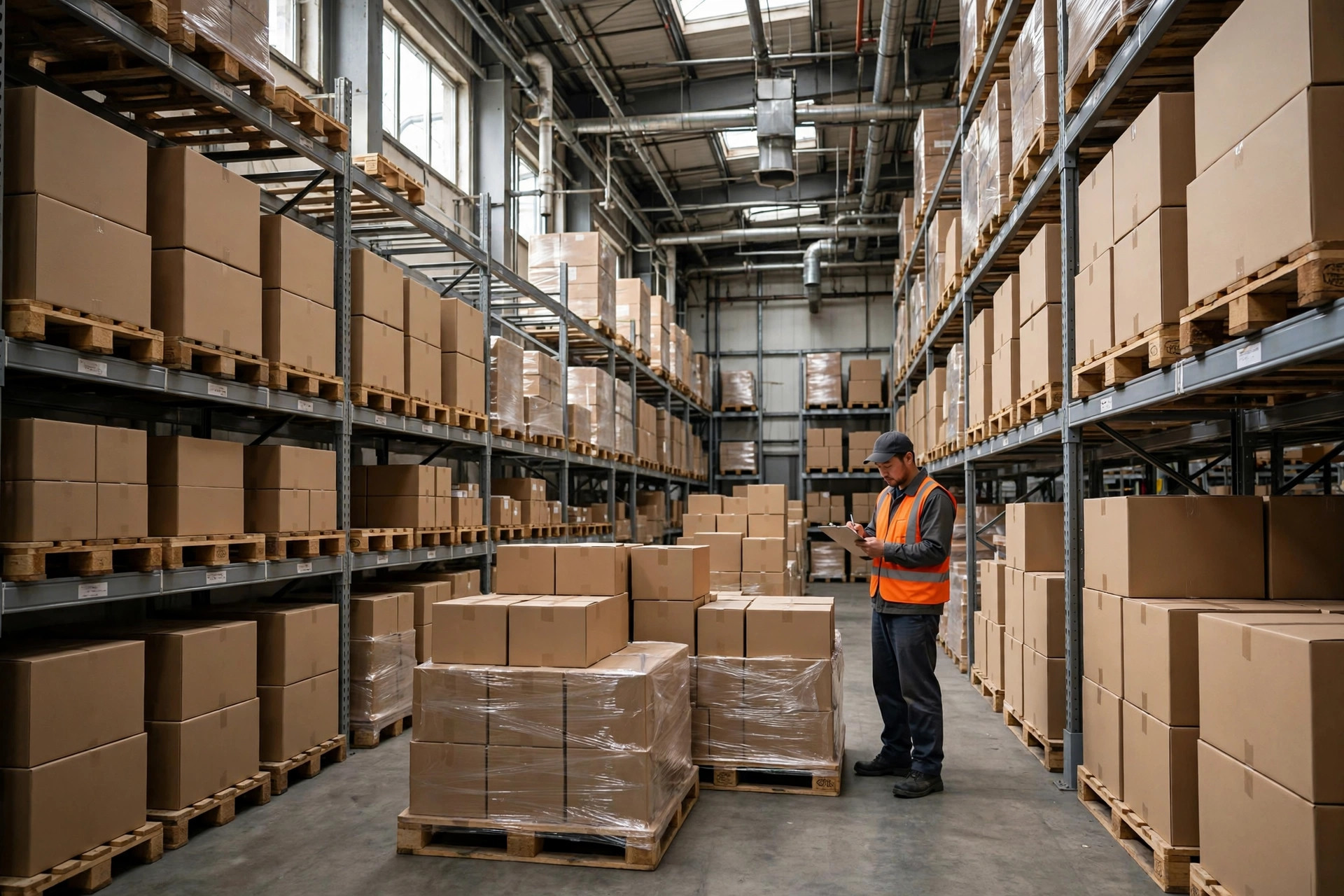
The standard setup is called "front shop, back factory": the stall sits in Huaqiangbei for orders, viewing stock, and negotiating; the real warehouse lives in Bantian, Longhua, or Guanlan.
Why? Do the math. Rents in the 1.45-square-kilometer core make stacking reels of components financial suicide, while warehouse space up in the northern districts costs a fraction, and it's half an hour's drive to Huaqiangbei. The stall needs stock, one phone call, the warehouse picks and delivers. That's the survival logic of distribution here: the stall is the face, the warehouse is the backbone.
I was an idiot when I started: to save trouble, I piled hundreds of thousands of dollars' worth of chips in a cubby behind the stall. Summer came, Shenzhen humidity did its thing, and moisture-sensitive devices (MSDs) I'd unsealed went damp within days. Shipped them out, popcorn defects at reflow, the whole lot came back. Since then my rule is one line: components don't live in "apartments." They live in a proper warehouse.
The Five Non-Negotiables in My Huaqiangbei Component Warehouse
1. ESD protection — stop treating it as optional
What's the number-one killer of chips? Static. That winter sweater zap — thousands of volts — and the chip is dead, with internal damage you can't see. Looks perfect, fails on the board.
My rule: wrist straps on before you enter the component area, mats grounded, components in ESD-safe packaging. The whole thing follows the ANSI/ESD S20.20 framework — no need to memorize the standard, just remember the trio: people grounded, benches grounded, parts in ESD packaging. I learned this the expensive way: one dry winter, workers skipped the straps to save time, and a batch of MOSFETs came back with soaring field failures. Traced it to ESD damage. What that batch cost would buy wrist straps for a lifetime.
2. Dry cabinets for MSDs — damp parts are dead parts
ICs, LEDs, anything moisture-sensitive has a shelf life once the vacuum seal is broken — the industry calls it floor life, governed by IPC/JEDEC J-STD-033. Want to keep using it past the limit? Bake it dry first, or reflow will punish you.
My setup: a row of dry cabinets in the warehouse, humidity kept low, every unsealed MSD goes in with the open date on the label. Whoever pulls stock logs it; the system flags anything past its floor life in red, and it doesn't ship until it's been through the bake cycle. A cabinet costs a few thousand RMB. What it protects is your reputation on every single order.
3. Reel storage: stand them up, don't crush them, keep them out of the sun
Reel-packed parts fear two things: pressure and sunlight. A warped reel jams the SMT feeder; a sun-bleached label means nobody can read the date code, and the customer rejects on sight.
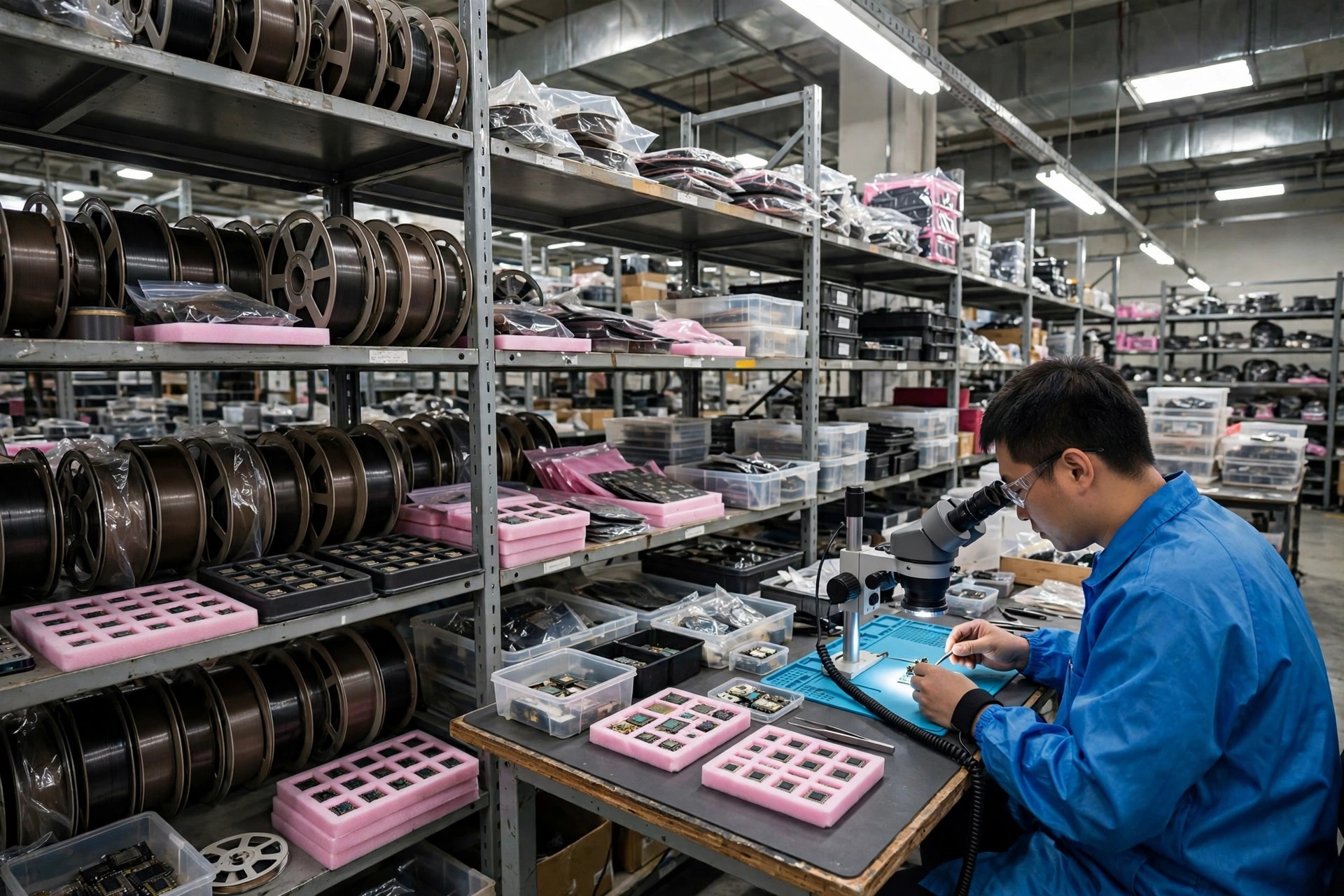
In my warehouse: all reels go on dedicated racks, standing upright, never stacked flat. Tray-packed parts get stacked within limits with ESD foam between layers. Every warehouse window is blacked out.
4. FIFO by date code — the iron rule
Components have an age. The date code is the birth certificate, and customers routinely specify "date code after such-and-such week." Warehouse discipline: first in, first out by date code. Old ships first, new stays back.
My WMS (a simple one — you can start in Excel) ties every part number to its date code, and picking auto-suggests the oldest batch. Don't underestimate this: once, a batch of capacitors with a three-year-old date code sat while workers kept shipping the fresh ones. Half a year later a customer returned a lot for parametric drift — the old stock had oxidized. Since then, date-code FIFO is a red line in my warehouse. Cross it and you're out.
5. Anti-counterfeit inspection at receiving — the microscope is standard issue
Here's the main event. Huaqiangbei counterfeits come in three flavors, and I've been burned by all three.
Re-marked: low-end chips sanded down and reprinted as premium part numbers. Detection: under the microscope, sanding leaves fine scratches, and laser-marked fonts have fuzzy edges. Genuine fonts are razor-sharp.
Recycled: chips pulled off old boards, cleaned, sold as new. Detection: look at the leads. Genuine leads have uniform, bright plating; recycled ones show solder residue, dull oxidation, or signs of re-straightening.
Clones: domestic dies packaged as brand-name parts. Detection: weigh them, measure dimensions against the datasheet, and sanity-check the date code logic — a part that only went into production in 2021 with a 2019 date code outs itself instantly.
My receiving flow: sampling rate scales with order value; expensive parts get inspected one by one. The microscope sits right at the receiving bench — a few hundred RMB of equipment standing between you and tens of thousands in losses. First-time suppliers must show procurement proof from the original factory or an authorized distributor. Can't produce it? I don't care how cheap the price is. No deal.
True story: a batch of "genuine" MCUs came in 15% below market. The supplier swore it was channel stock. Under the microscope: sanding marks on the leads, date-code font didn't match the manufacturer. Whole batch rejected. Later I heard another buyer grabbed it cheap, shipped it to Amazon FBA, got customer complaints, and took an account warning. That's Huaqiangbei reality: cheap goods, expensive consequences.
Stall Consolidation: The Art of Merging Scattered Orders
Component distribution orders are fragmented by nature: one customer wants ten part numbers, a few hundred pieces each, spread across five or six stalls. My method is stall consolidation: twice a day, every stall sends its outbound stock to the main warehouse, which sorts, merges, and re-verifies by order.
Consolidation does two things: it spreads freight cost, and it centralizes verification. Shipping scattered orders separately means a lost parcel or a mispick is hell to trace. Merged at the warehouse with a second verification before outbound, error rates collapse. The numbers: before consolidation, I had a few mispicks or shorts every month; after, barely one a quarter.
The Cross-Border Cutoff: Racing the Clock on the Last Mile
Merged orders head to the cross-border warehouse (FBA or an overseas warehouse). Every logistics channel has a cutoff — miss it, lose a day, and your customer stares at a stockout one day longer.
My rhythm: the warehouse sorts and packs in the afternoon, delivers to the cross-border warehouse in the evening, clearing the cutoff. New orders from the stalls get consolidated at the main warehouse before midnight and picked first thing in the morning. Once this rhythm runs smooth, order-to-cross-border-warehouse inside the Huaqiangbei circle can clear within 24 hours. Actual transit times depend on the channel and destination — check the forwarder's published schedule; I don't promise numbers I can't verify.
Four Pitfalls to Dodge
First, don't stock bulk inventory at the stall. The stall takes orders; it isn't a warehouse. Valuable parts and MSDs all live in the main warehouse. The stall keeps samples and same-day outbound only.
Second, inspection cost is part of your margin. Microscope, dry cabinets, ESD gear — all of it together costs little, but one counterfeit incident or one mass return wipes out months of profit. Do the math that way.
Third, the date code is your lifeline. Check it at receiving, check it at shipping, track it in the system — all three, no exceptions. When a customer asks, you quote every batch's date code on the spot. That's what professional looks like.
Fourth, tier your suppliers. Those who can show factory paperwork: tier A. Long-term partners with a clean record: tier B. New suppliers and small traders: tier C — small trial batches first, big orders later. Never go all in on day one.
Huaqiangbei has as many traps as opportunities. Build these five warehouse disciplines and your goods carry an extra layer of armor over the competition's. This one I've personally tested — from mass returns to zero incidents took me half a year.
By Ah K, E-commerce Seller (5 yrs)