Here's my verdict: if your inventory sits in more than one U.S. state, you don't just have a logistics footprint — you have a tax footprint. Every decision about where to stage inventory is also a decision about where you owe sales tax. I've spent 20 years in American warehousing and watched sellers learn this the expensive way, over and over. The lesson never gets cheaper.
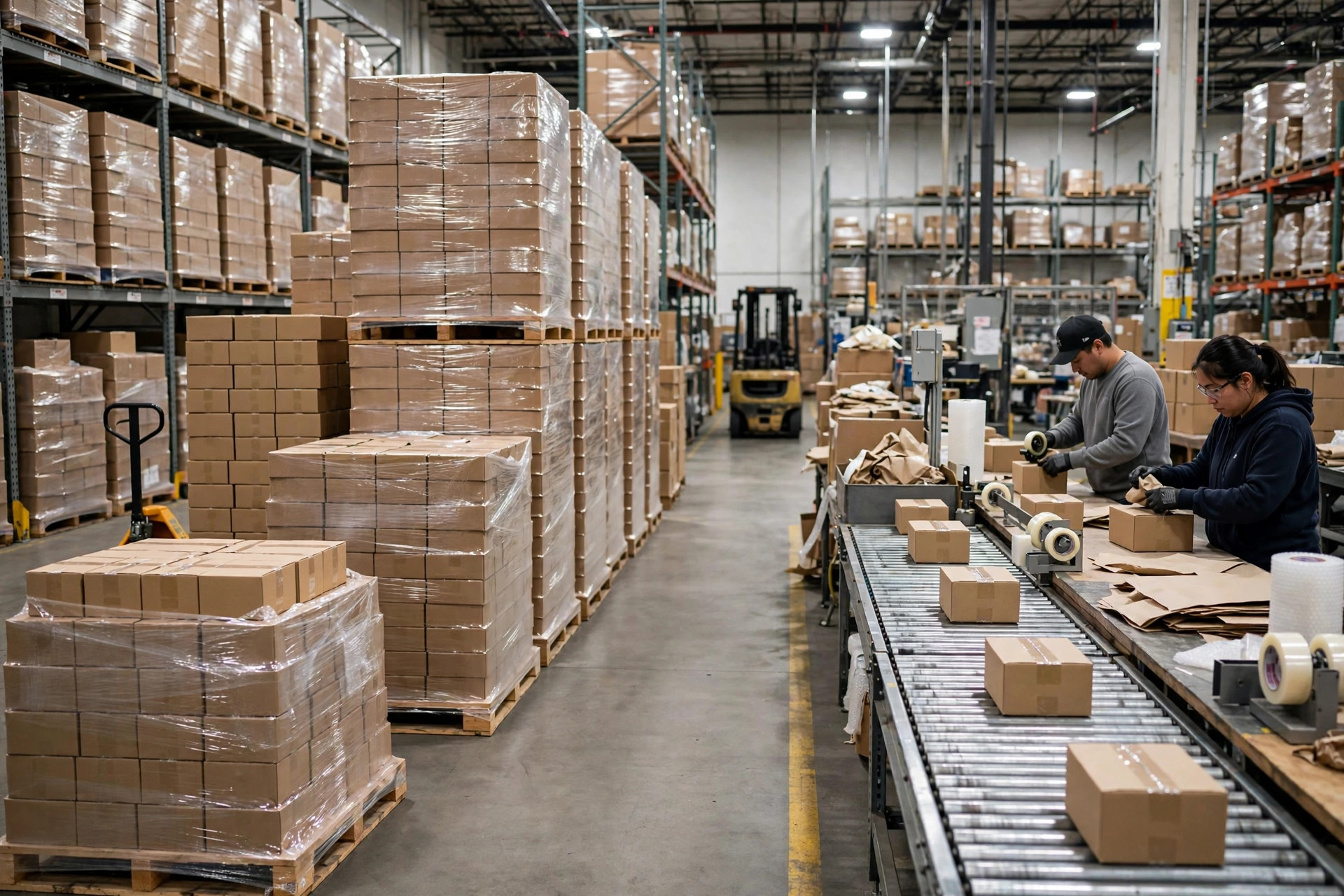
The boxes on the shelf are the nexus
Before 2018, the rule was simple: no physical presence in a state, no obligation to collect its sales tax. That came from a 1992 Supreme Court case, Quill v. North Dakota, and for online sellers it was a comfortable world.
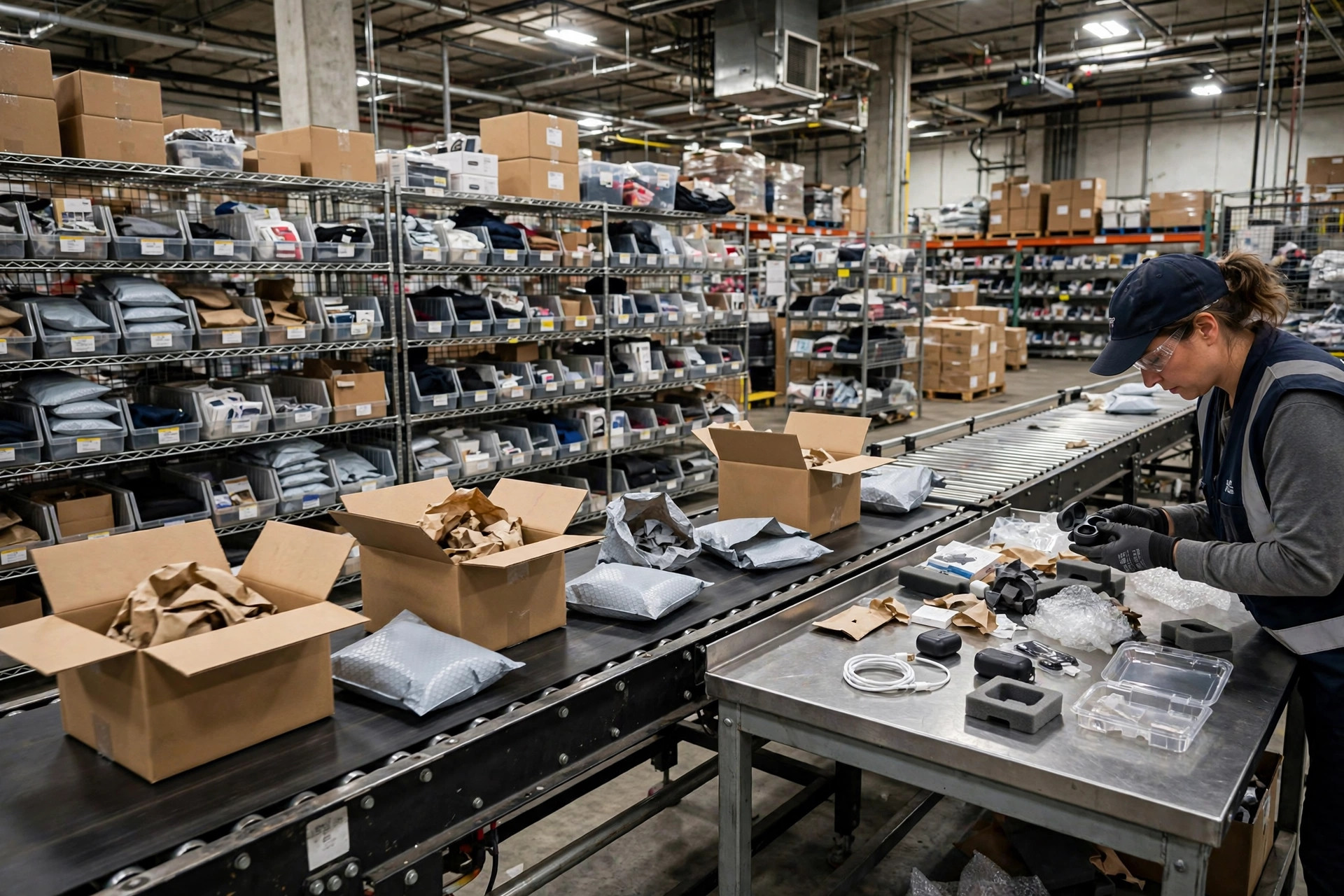
But "physical presence" never meant what most sellers thought it meant. It didn't mean your office or your employees. It meant your stuff. Inventory sitting in a warehouse — your own building, a 3PL's facility, or an Amazon fulfillment center — is physical presence in the eyes of state tax agencies. The goods are yours; the state does not care whose roof is over them. Third-party storage counts exactly the same as your own lease.
California and Washington figured this out early and pursued FBA sellers aggressively. Amazon shuffles your inventory across dozens of fulfillment centers to protect delivery speed. You can run the entire business from a laptop on another continent, but if your cartons spent time in a California fulfillment center, California's tax agency (the CDTFA) can demand registration and back filings. This was true before Wayfair, and it remains the fastest way sellers get surprised.
It also applies to nodes sellers forget about. A returns-processing center counts. A 3PL you hired for "just overflow storage during Q4" counts. Every new node you add to the network is a new state on your tax map — so when you're choosing between 3PL partners, the states they operate in are a tax question first and a freight question second. Ask where your inventory will physically sit before you sign, not after the first audit notice arrives.
My first practical rule: in Seller Central, go to Reports → Fulfillment → Inventory and pull the monthly inventory history by state. That report is the map of everywhere your goods have actually sat. Most sellers I meet have never opened it once.

Wayfair changed the question from "where" to "how much"
On June 21, 2018, the Supreme Court decided South Dakota v. Wayfair and threw out the physical-presence-only rule. The Court upheld South Dakota's 2016 law: sell more than $100,000 into the state in a year, or ring up more than 200 transactions, and the state can make you collect its sales tax — whether or not you have ever set foot there.
Every state with a sales tax now has its own version of this "economic nexus" test. The most common is the South Dakota template: $100,000 in sales or 200 transactions. The exceptions are worth memorizing: California and Texas set the bar at $500,000 in sales; New York requires $500,000 plus 100 transactions; Alabama uses $250,000. Five states — Alaska, Delaware, Montana, New Hampshire, Oregon — have no statewide sales tax at all, so they drop off the map entirely.
Two subtleties trip people up. First, what counts toward the threshold varies: most states measure gross sales, and some count sales that are technically exempt from tax toward the registration trigger. Selling $100,000 of exempt products into a state can still create a registration obligation there. Second, the trend is unkind to the small-seller excuse. States are dropping the 200-transaction trigger one after another — South Dakota itself, California, Colorado, Iowa, Maine, North Dakota, Washington, and Wisconsin have eliminated it, and Illinois followed on January 1, 2026. The logic is blunt: a seller moving 200 units of $5 phone cases owes a state almost nothing, but compliance would bury them. So stop comforting yourself with "I didn't hit 200 orders." Watch the dollar line. And verify each threshold against the state's own revenue department site before you act, because these numbers move.
"Amazon handles my taxes" is half true, which is the dangerous kind
The half that's true: all 45 states with a sales tax, plus the District of Columbia, now have marketplace facilitator laws. Tax on your Amazon orders is calculated, collected, and remitted by the platform. You don't touch it.
The half that burns people has three parts.
First, everything off Amazon is on you — your Shopify store, your own site, trade shows. I keep meeting sellers doing several hundred thousand a month on Amazon who treat a young direct channel as too small to matter, then discover the direct sales alone cleared the $100,000 threshold in a handful of states.
Second, some states count your marketplace sales toward the economic nexus threshold even though the platform remitted the tax on them. Amazon paying the tax does not make those sales invisible to the threshold math — a misunderstanding that has already cost sellers real money.
Third, registration and filing obligations don't evaporate because the platform remits. Washington, for instance, can still require you to register and file returns — even zero returns — for periods when Amazon handled the money. Registered but not filing draws the same unwanted attention as never registering at all.
Do the math, then do the work
The compliance side of the ledger is visible: registrations (free or low-cost in most states), monthly or quarterly filings, a tax-automation subscription, and somebody's hours every month.
The audit side is invisible until it isn't: back taxes, interest, penalties — and lookback periods. States auditing a seller who never registered can reach back years; stepping forward under a voluntary disclosure agreement often compresses that window to three or four years and can reduce penalties. Exact reach and rates differ by state, so check the state's published guidance rather than trusting a number you found on a forum.
My judgment call: once you're past roughly half a million dollars in annual U.S. sales, compliance will almost always cost less than a single audit. That isn't caution. It's arithmetic.
The work itself, in order. Pull the inventory-by-state report and register first in every state where your goods have sat — that's physical nexus, and no threshold debate applies. Then total your trailing twelve months of sales per state across all channels and register everywhere you've crossed the economic threshold; watch the measurement window, because most states look at the prior twelve months or the calendar year, while New York looks at the prior four sales-tax quarters. Get live tax calculation on your own storefront now — liability starts with the first order past the threshold, not when you feel big enough. If you're carrying years of unregistered history in inventory states, talk to a tax professional about voluntary disclosure before the state starts the conversation. And re-check the whole picture quarterly, because peak-season inventory pushes and Amazon's own rebalancing can walk you into new states without asking. I know more than one seller whose spring started with a "welcome letter" from a state revenue department after a big Q4.
Start tomorrow morning: export that inventory-by-state report. That spreadsheet is your nexus map, and until you've read it, you're flying blind.