Sixteen people. That's our entire warehouse, and I'm counting myself.
In September 2024, Fang — our fastest packer, seven months pregnant — walked up to me with a doctor's note: no prolonged standing, no heavy lifting. My brain short-circuited. First thought: count heads. Sixteen. The Pregnant Workers Fairness Act (PWFA) took effect on June 27, 2023, enforced by the EEOC, and it covers employers with 15 or more employees. We were exactly one head over the line. No escape.
Second thought: do the math. Call a lawyer? At several hundred dollars an hour, we can't afford that kind of money. Tell her to go home and rest? She was our best packer — who would cover her shifts? Hire and train someone new, eat a rookie's mis-ship rate for two weeks, and take the customer complaints? In the end I realized there was no dodging this one, so I did my homework. And you know what? It turned out way less scary than I thought. Small warehouses have their own way of handling things.
First, Figure Out What the Law Actually Wants From You
Plain-speak translation: the PWFA doesn't ask you to worship pregnant employees. It says: if she asks for something reasonable, accommodate her unless it genuinely can't be done. The legal term is "reasonable accommodation"; your shield is "undue hardship" — if a request would truly sink a small business, you can say no, but you'd better have a real reason.
The EEOC issued final implementing regulations in June 2024 with very down-to-earth examples: drink water whenever needed, extra bathroom breaks, sitting down on the job, switching to lighter duties, no night shifts. Notice: not one of them requires buying equipment.
Now the counter-intuitive part, and this is where a lot of small owners get burned: "We're under 15 people, so this doesn't apply to us" — think again. Federal PWFA starts at 15, but plenty of states have their own laws with lower thresholds and stronger protections. We're in California, where FEHA kicks in at just 5 employees and also requires pregnancy accommodations and transfers. So don't stop counting at 14 and relax — check your own state's law, and go by the latest official guidance.
Second counter-intuitive lesson: the "cheapest" move is exactly what the law forbids. Most small owners' first instinct: "Why don't you just go home and rest for a few months? We'll hold your spot." Sounds humane, right? But the PWFA explicitly prohibits forcing leave when a reasonable accommodation would work. Big-company HR departments know this cold. We small owners love this move the most — save a little money now, plant a landmine for later.
What She Asked For vs. What We Could Do: The Small-Warehouse Playbook
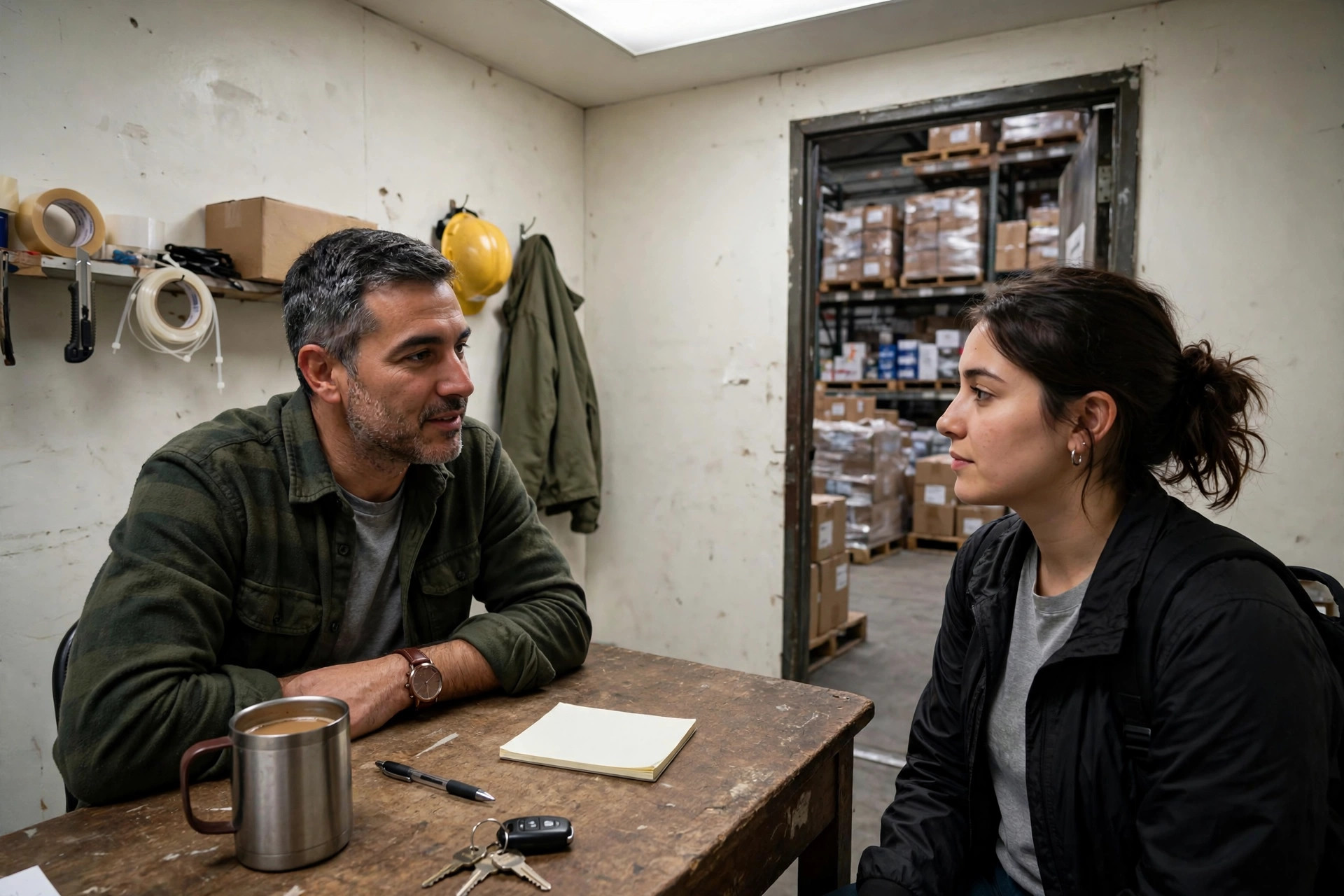
Once I understood the rules, I sat down with Fang for what I call a "let's figure this out" chat. Her asks were modest: sit while packing, get up and move for 10 minutes every two hours, no full-case heavy boxes. I made a table — the left column is the big-company solution (which we can't afford), the right column is our scrappy workaround:
| Common accommodation request | The big-company fix | Our small-warehouse hack | Cost |
|---|---|---|---|
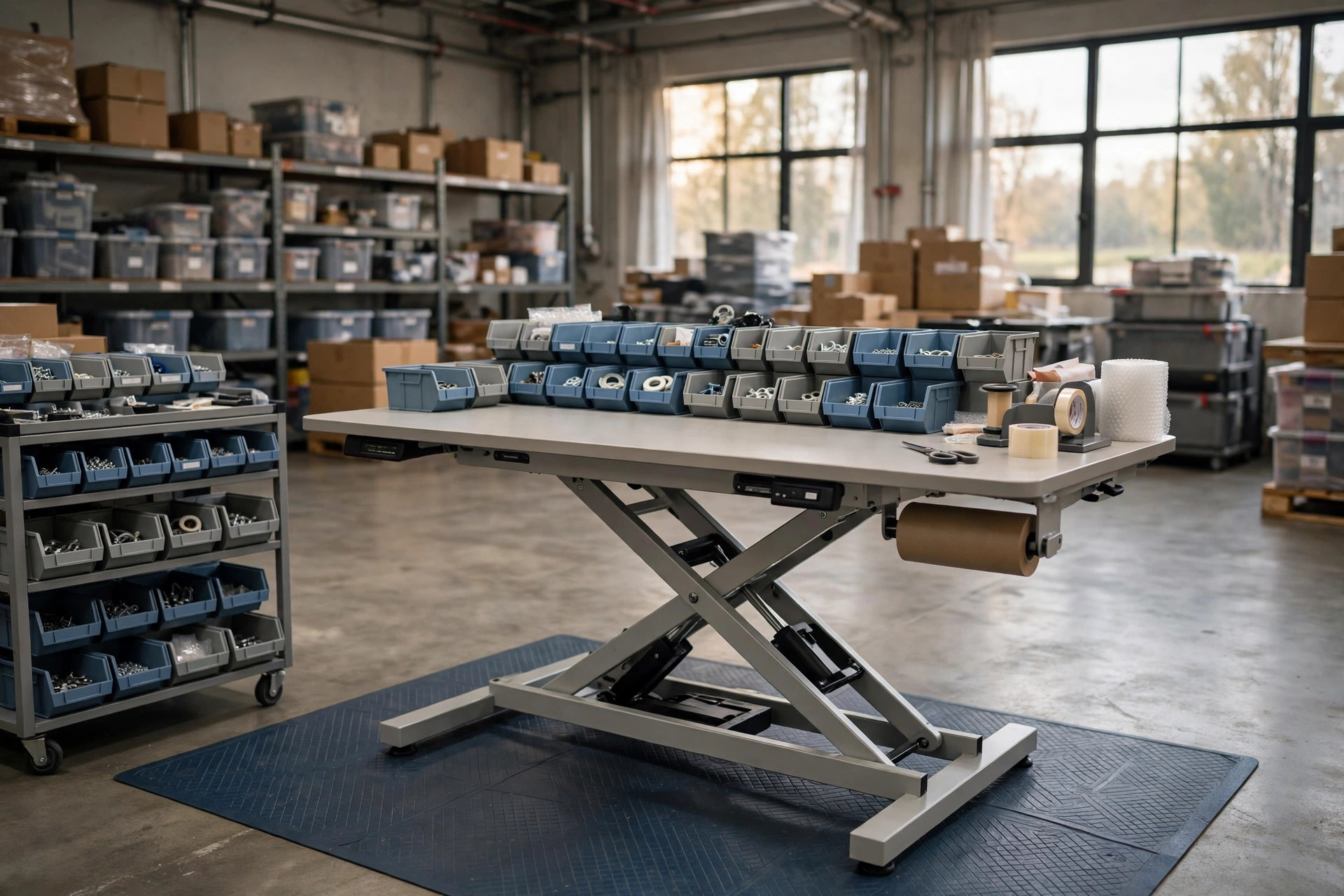
| Back hurts from standing, wants to sit | Four-figure sit-stand workstation | Secondhand ergonomic chair; wooden blocks under the packing table to lower it | Tens of dollars |
| Needs water and bathroom often | Install water fountains in the hallway | Thermos at her station; 10-minute rotation with her buddy every two hours | Basically zero |
| Can't lift heavy cases | Robotic lift assist | Swap tasks within the team: she scans and labels, the strong folks haul boxes | Zero |
| Forklift vibration and fumes | Transfer to an office role | Move to returns QC and photo uploads, seated at the receiving door | Zero |
| Can't handle night shifts | Open a new day-shift position | Swap with a coworker who prefers nights; I buy barbecue | One barbecue |

Case 1: Fang, September 2024, our sub-10,000-square-foot warehouse in California. 28 weeks pregnant. We ran the playbook: chair, lowered table, 10-minute breaks every two hours, all heavy cases reassigned to the new hire Zhao. She worked until two weeks before her due date, came back after leave, and now leads the packing team. I ran the numbers on the alternative: job ads, interviews, training, plus mis-ship claims from a rookie's first two weeks — enough to buy chairs for the whole warehouse. Keeping a veteran beats everything.
Case 2: Lisa, March 2025, our receiving forklift driver. Her doctor said no more forklifts after she got pregnant. Big companies would "transfer her to an office role" — but our "office" is my desk. Was she supposed to sit on my lap? Our hack: park her at the receiving door doing returns QC and photo uploads, seated. Surprise bonus — she cleared a two-month backlog of returns, and within three months our backlog hit zero. A customer even complimented our faster turnaround. Do accommodations right and they don't just cost nothing — they can pay you back.
Three Landmines — Step on One and You're Done
Hacks aside, there are red lines. Three of them, and small owners trip on all three:
One: don't force leave. If there's an accommodation that works, you can't push her into unpaid leave. Swallow the words "just go home and rest" back down.
Two: no retaliation. Cutting her shifts, passing her over for promotion, or sidelining her because she's pregnant — that's retaliation. The EEOC doesn't care whether your warehouse has 16 people or 1,600. Same law.
Three: have the conversation, and write it down. Sit down, talk through what she needs and what you can offer, and keep a memo — email, text, anything. Lawyers call it the "interactive process." I call it "talk it out, write it down." If things ever get disputed, that's your evidence.
Three Tips for Fellow Small-Warehouse Owners
After surviving this round, my takeaways are simple:
First, don't call a lawyer first. Talk to your employee first — most accommodation requests can be solved with scrappy workarounds, and the lawyer money buys the team extra lunch instead.
Second, check your state's law. Federal starts at 15; your state might start at 5. Don't break the law without knowing it.
Third, treat accommodations as a retention investment. One veteran packer is worth ten chairs. She comes back after leave and keeps working for you — that's a deal, not a cost.
Big companies have HR, legal teams, and budgets. We small warehouses have none of that — but we have heart and flexibility. The PWFA's text is rigid; people aren't. "Reasonable accommodation" translated into small-warehouse speak means: when she asks, don't rush to say "no." First ask yourself "how can we make this work."
Small warehouses have their own way of surviving.
By Xiao Ma, Small Warehouse Owner