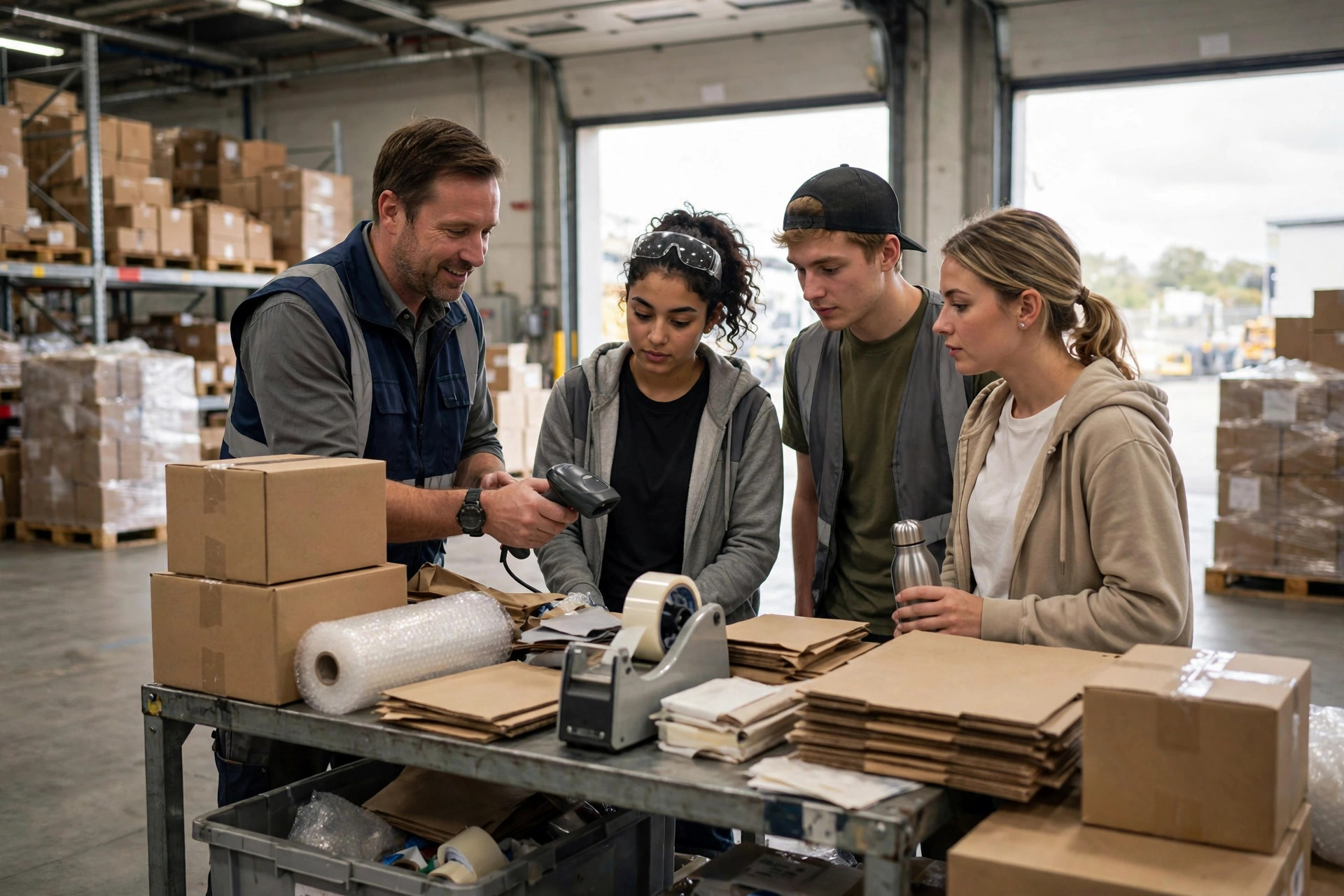
Every year around mid-October, the staffing agencies start calling. "How many do you need this year, Lao Mi?" I look at last year's outbound curve, give them a number, and hang up knowing the math: at least a third of them won't last two weeks, and half won't make it to Thanksgiving. Bringing on temps for peak season was never about recruiting — it's about buying time. You have days, not months, to turn people who have never set foot in a warehouse into pickers who can run a line on their own.
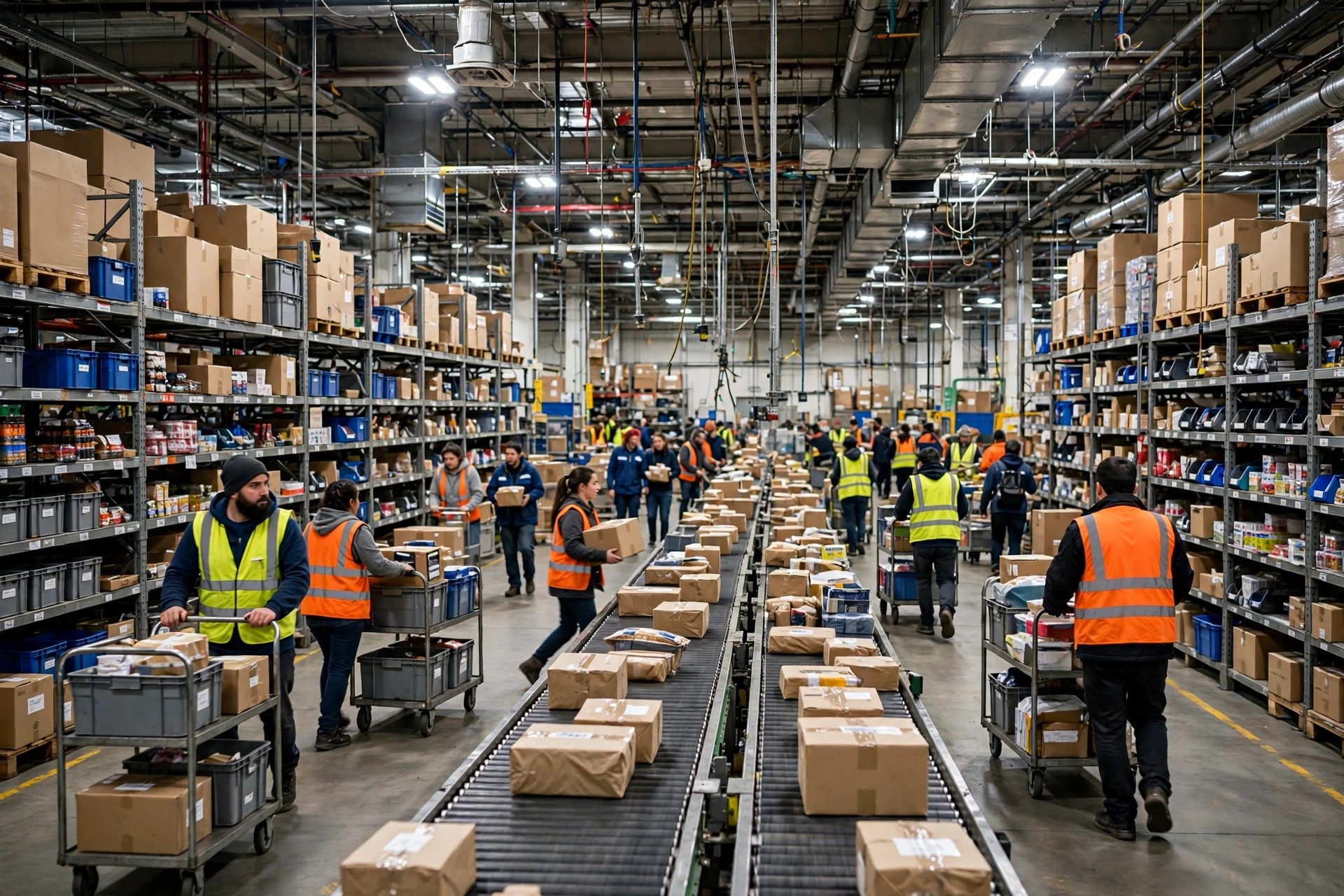
In 2021 I ran a 250,000-square-foot e-commerce fulfillment center in Ontario, California. During Black Friday week we pushed more than 40,000 orders a day with 90 full-timers and up to 140 temps at the peak. Three days is my hard limit for temp onboarding: anyone who can't work independently after three days is a liability during peak, not an asset. What follows is the three-day checklist I built the hard way — by getting burned.
Day One: Forget Picking. Teach Survival.
The mistake most supervisors make is teaching the pick process on day one. Wrong. A temp's biggest risk on day one isn't being slow — it's getting hurt, or getting someone else hurt. One new hire walking through a forklift aisle staring at a pick ticket can shut down your entire line.
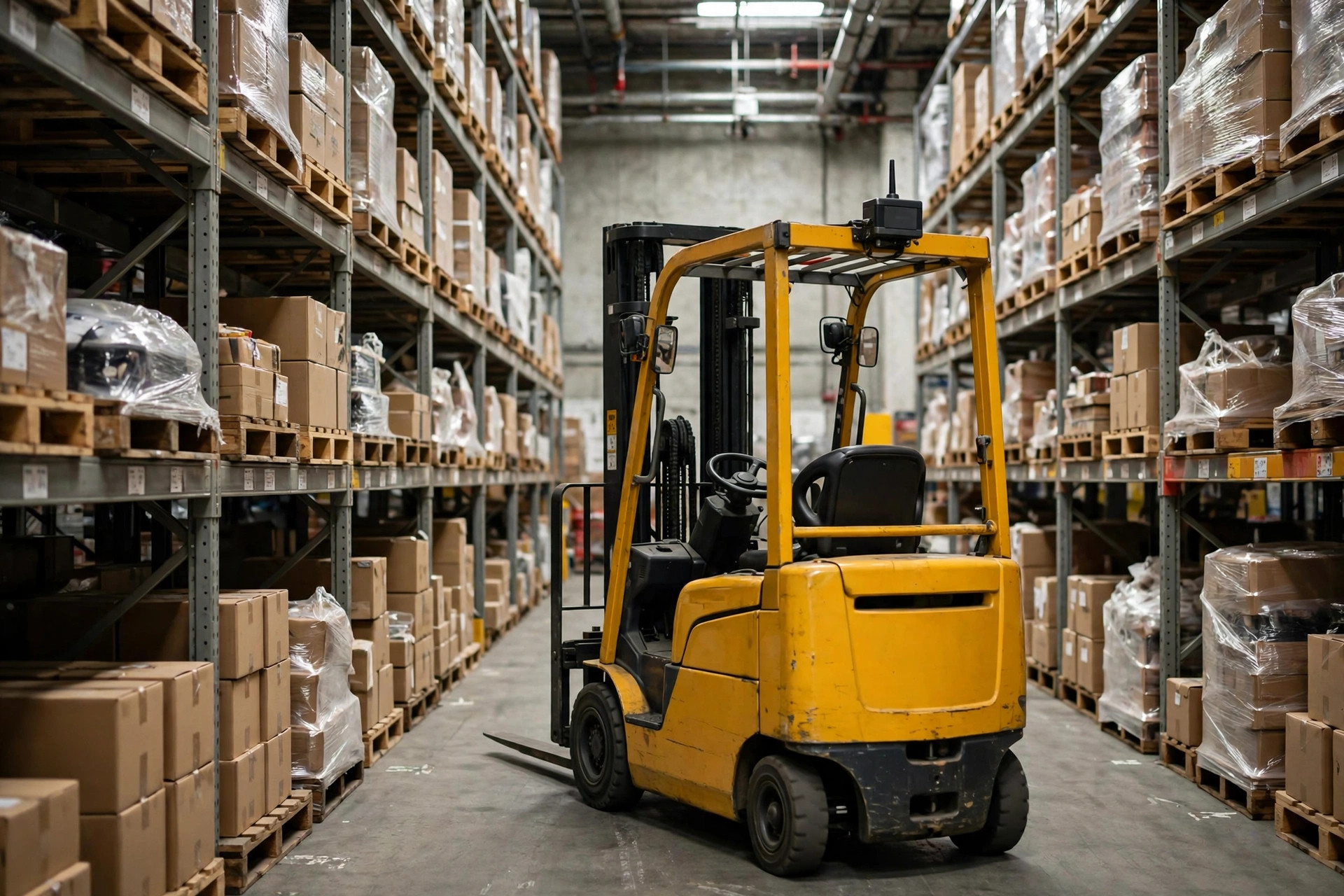
So day one is safety, and only safety. The morning covers three things. First, walk the floor with them: forklift aisles, pedestrian walkways, fire extinguishers, emergency exits. Point at the yellow lines on the floor and say it plainly — inside the yellow lines is equipment territory, and people don't go there. Second, the three red lines: never climb the racking to grab product from height, never stand on a pallet to reach something, never stack a pallet above the marked height line. All three go into a safety acknowledgment they sign on the spot. Third, the injury reporting chain: find a supervisor first, then get treated. Post it on the break-room wall and hand everyone a wallet card.
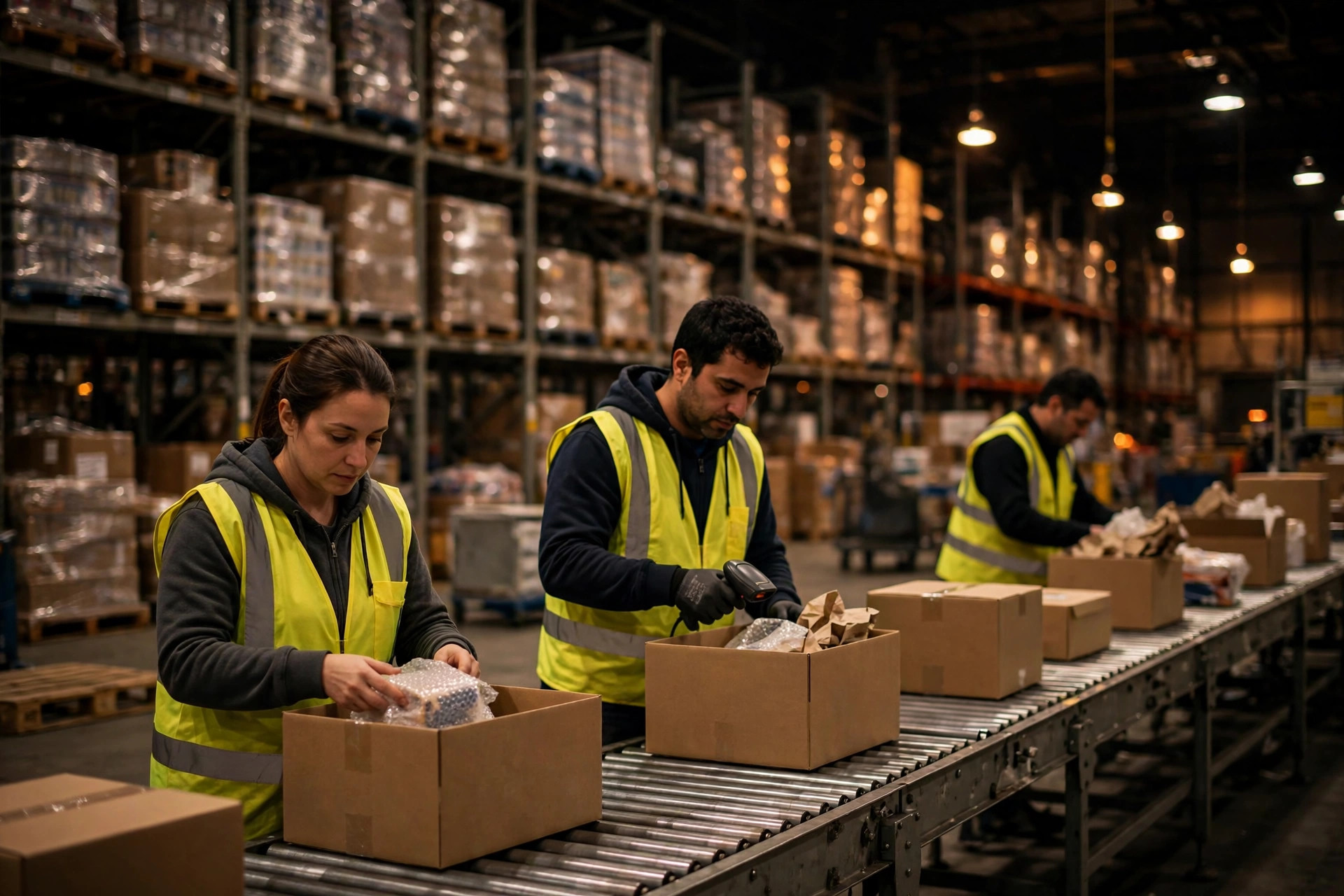
The afternoon is for the gear. How to hold the handheld scanner, how to scan, what to do when a scan fails, how to read a location code — aisle, bay, level, that sort of thing. Hand everyone a device and drill for thirty minutes. It sounds basic until you realize that at least three of the five most common temp mistakes trace back to day one.
Picking from memory instead of scanning — "I remember what it looks like." Don't fight this with trust; fight it with process. Configure the system so an order can't close without a scan confirmation. Mis-slotting — product shoved into the neighboring location, so the next person picks the wrong item. Prevention: every put-away requires a location scan, and the scanner screams when it's wrong. Hiding exceptions — shipping damaged product as-is, or fudging a short pick to make the count work. Prevention: drill one rule until it's reflex. Anything looks off, stop and raise your hand. There is no "good enough." Crooked, over-height pallets. Prevention: paint a height line in the staging area. Anything over the line gets restacked on the spot, no debate — losing face once is cheaper than a collapsed pallet rack. Quantity errors — over-picks and short-picks. Prevention: mandatory second verification on every order for the first three days. Nobody works unverified until their accuracy clears the bar.
Each of those five mistakes maps to a specific day-one training action. End the day with a ten-minute quiz. Anyone who misses more than two questions gets a dedicated buddy on day two instead of joining the main group — don't let them drag the whole class.
Day Two: Buddy Up. Day Three: Cut the Cord.
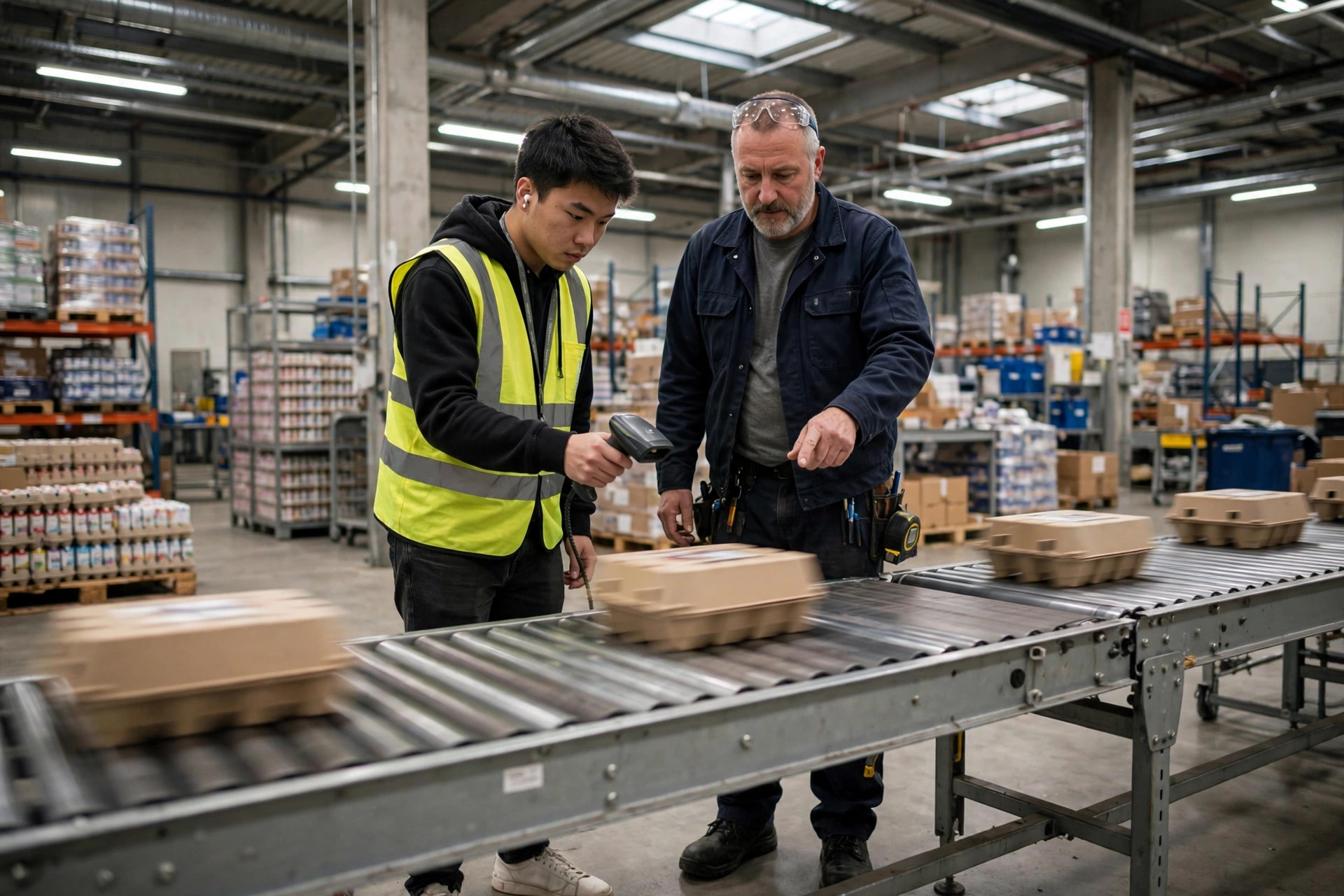
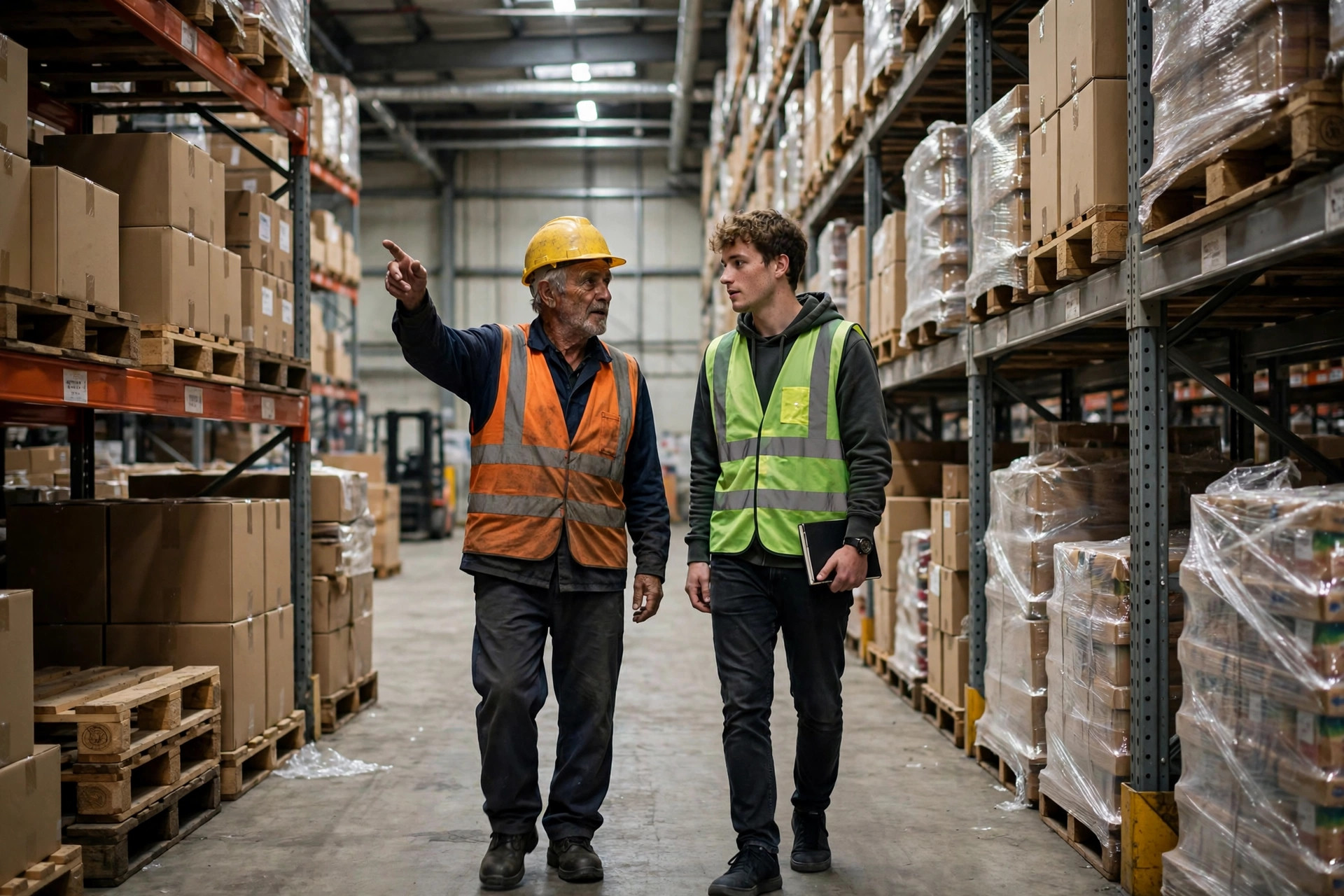
Day two starts the buddy system. One veteran mentors a maximum of three new hires — more than that and nobody is really being watched. The buddy's job isn't to hover. It's to walk the full cycle once, narrating the why at each step: pull the assignment, walk to the location, scan, pick, verify, hand off. Morning they shadow; afternoon they solo while the buddy stays a few meters back, stepping in only before a mistake happens.
Day three is the cutoff. Announce it at the morning huddle: today you work independently, and supervisors and buddies only spot-check. My rule for cutting the cord is non-negotiable — two consecutive shifts at 99%+ pick accuracy, and speed at 70% of the full-timer average. Miss it and you get another half day with a buddy. Still miss it and you move to pack-out as a helper. Packing tolerates mistakes better than picking does, so don't force someone to stay on a pick line they can't handle.
Here's a trap I fell into early on: when a trainee makes an error, whose record does it go on? It used to count against the trainee, and guess what happened — veterans stopped volunteering as buddies because it hurt their metrics. We changed it so buddy-period errors count half against the mentor and half against the trainee, and suddenly mentors cared. Pay the buddy premium, too. I usually add a dollar or two an hour (my estimate — it varies by state). It's not much money, but it's the principle. If you ask veterans to do extra work, acknowledge it in the paycheck.
After three days, the ones who can work independently stay. The ones who clearly can't get swapped out through the agency immediately. The deadliest habit in peak season is "let's give them one more chance." One slow worker drags the whole line's rhythm, and if you replace them on day five, you've already doubled your training cost.
Temps Aren't Cheap. They're Fast.
Plenty of owners think temps save money because the hourly rate looks lower than a full-timer's. That's an illusion. The agency's markup runs 30–50% in my experience — higher during peak — so the $24 an hour you pay might mean $15 or $16 in the worker's pocket. The hidden costs are worse. Temps in their first two weeks typically pick at 60–70% of a veteran's speed, with mis-ship rates two to three times higher. Every mis-ship costs you the return, the reshipment, and the customer-service time.
I've run the numbers. A temp who works the full peak stretch, from mid-October through December, costs 20–40% more per order than a full-timer once you add the markup, the training hours, and the rework. That's my estimate, based on small-parcel e-commerce operations — your mileage will vary, but the direction won't. Temps aren't a discount. They're flexibility. When the wave hits, you can stand up a crew in three days. When it's over, they leave, and there's no long-term headcount hanging over you.
Since you're buying flexibility, negotiate the agency contract on flexibility terms. Three clauses, non-negotiable. First, the fill rate. The agency will promise "as many as you need" on the phone; the contract should say a minimum 85% fill rate, with any shortfall backfilled within 48 hours or the service fee gets cut. Second, replacement terms. Anyone who doesn't work out gets replaced free of charge within 48 hours of notice, and you don't pay for the gap hours. Third, lock in early. Place your first order at least two weeks before peak. Everyone in the country is bidding for the same pre-Black-Friday labor pool, and if you order a week late, you're getting whoever's left after everyone else picked.
One more thing: never single-source. I always sign two agencies, roughly a 70/30 split. When your primary stumbles, the backup covers you — and having two of them keeps both honest on pricing.
Three-day training, a buddy rhythm with a real cutoff, and an agency contract written for flexibility. Get those three right and temps go from chaos agents to a usable crew. But honestly, after twenty years in this business, I still get nervous every October — because you never know how many of this year's batch will still be standing at Christmas.
How many days does it take a temp in your building to run a pick line solo?