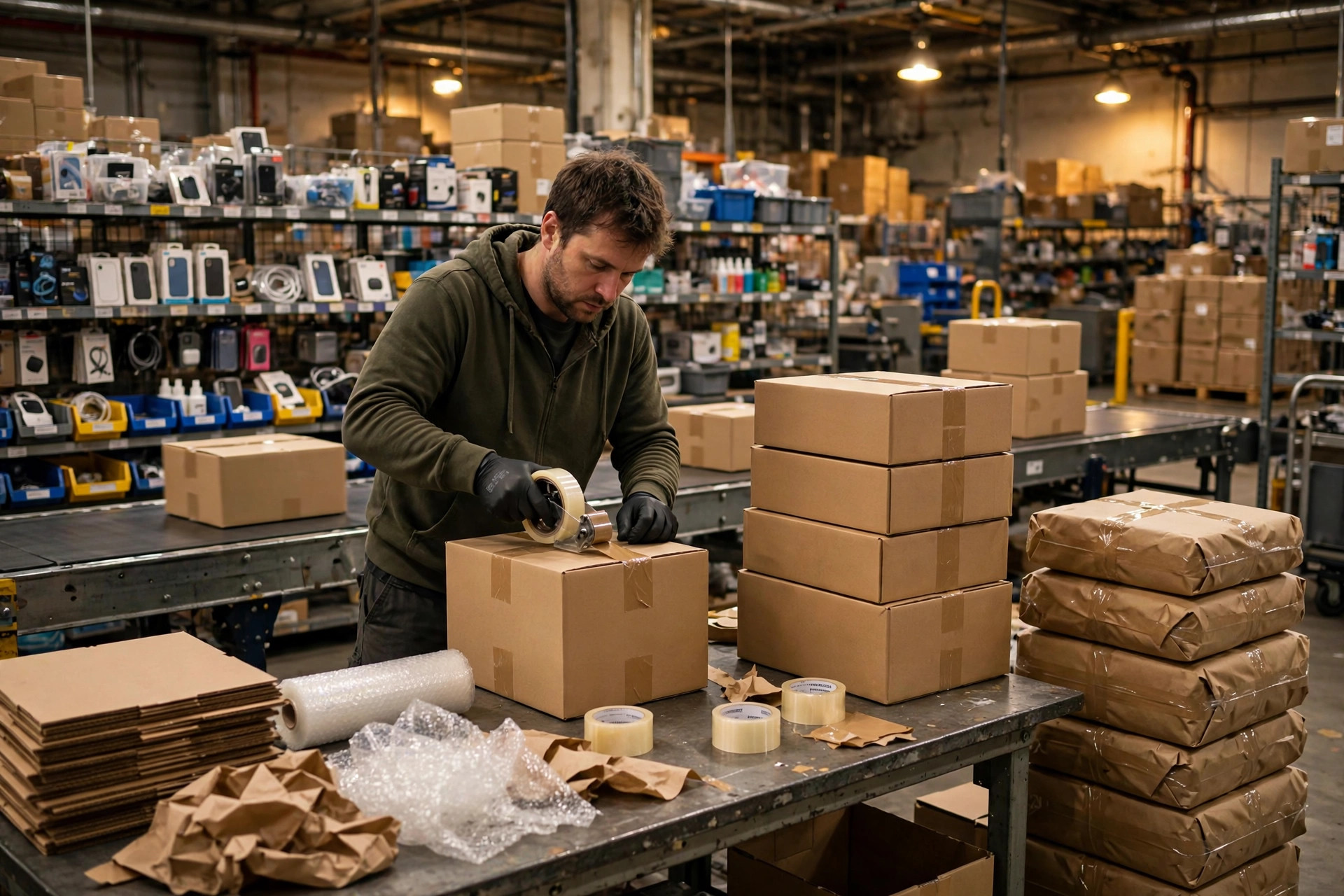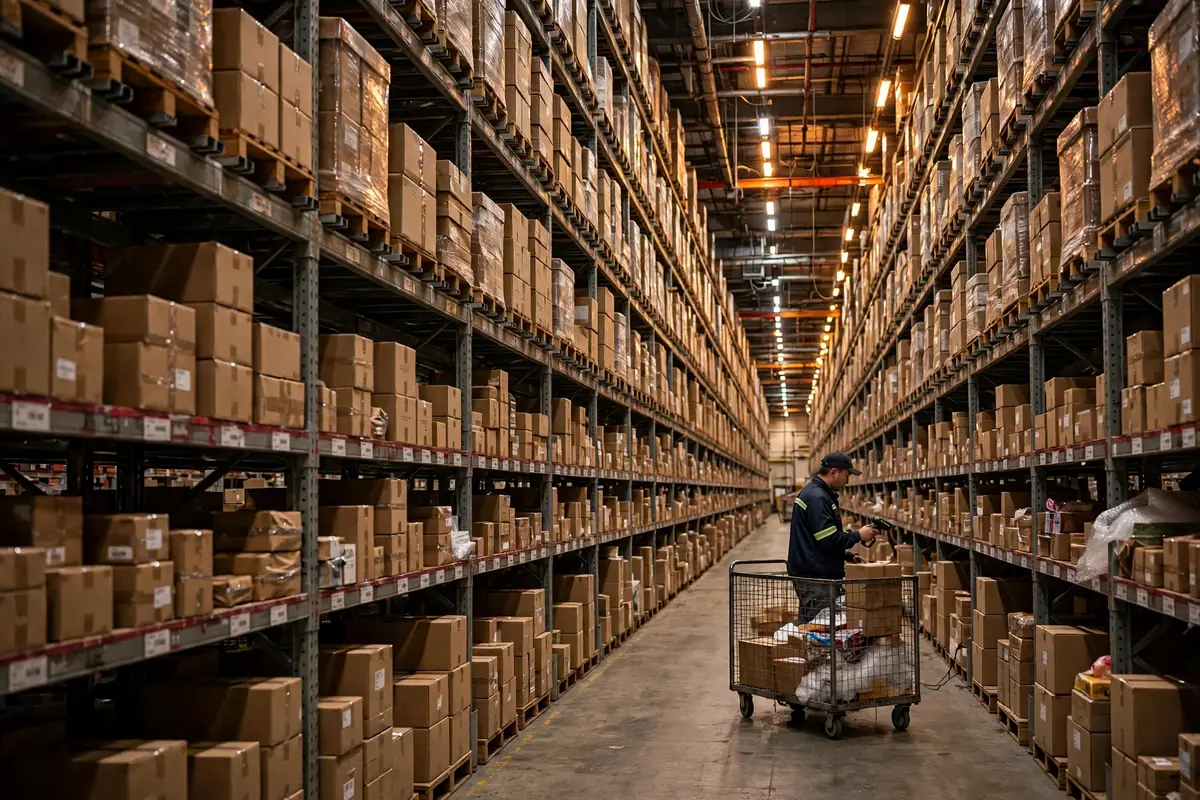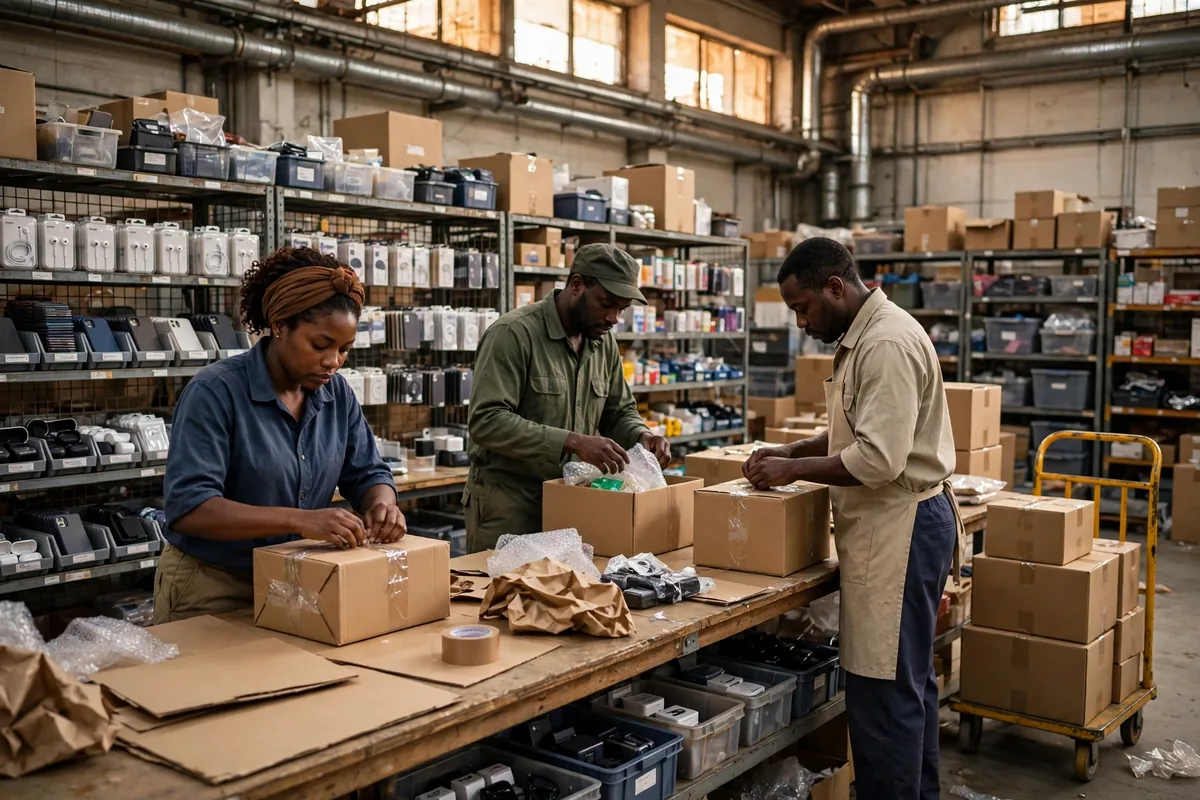
It was half past six in the morning. I had just arrived at the warehouse when I saw a small truck already waiting at the gate.
The driver was Old Chen. He sells phone accessories and runs a small shop on Jumia. Three cartons in the back, headed for a Jumia drop-off point in town. While we were loading, he asked me: "Feng, tell me straight — is it better to keep my stock in my own place and ship it myself, or push it into Jumia's warehouse and let them handle it?"
Let me be straight with you about who is writing this. I am not a seller. I manage a warehouse. I have run a big one, two hundred people on the floor at peak. This piece looks at the Jumia Africa ecommerce fulfillment warehouse question from the warehouse gate: whose building holds your goods, who calls the shots, and how the money actually works out.
How Jumia fulfillment in Africa actually works
Jumia is one of Africa's biggest ecommerce platforms, operating in countries including Nigeria, Kenya, Egypt, and Morocco. A seller opens a shop, orders come in, and the platform offers two ways to get the goods to the buyer.
The first way is Jumia Express. The seller sends stock into Jumia's warehouse. Jumia stores it, picks it, packs it, ships it, and takes the returns back too. Products carrying the Jumia Express badge sit higher up in the listings, and buyers trust them more.
The second way is to keep the goods yourself. When an order lands, you pack it, then drop it at a Jumia collection point or wait for a pickup. According to Jumia's own seller training material, an order should be processed to ready-to-ship status within 24 hours. Drag your feet and you will be penalised.
Both options are laid out in the platform's seller documentation. As for the actual rates, check the official Jumia seller pages for the latest policy — they differ by country, category, and season, and any figure I quoted would be out of date before you read it.
In September 2022, Jumia opened an integrated warehouse and logistics facility of about 11,000 square metres in Nairobi, on Mombasa Road, not far from the airport. The platform said at the time that the facility was built to grow Jumia Express, with next-day delivery in Nairobi and its surroundings. That is public record, and it tells you where the platform is putting its own money: faster fulfilment means buyers willing to order more.
What three cartons of phone cases taught me
Old Chen first stocked the platform warehouse before a peak season a couple of years back. Phone cases and charging cables. Small items, fast movers. His thinking was simple: when peak season hits, two people packing by hand cannot keep up, so let the platform warehouse take the orders.
The first month went well. Orders went up. Buyers saw the Jumia Express badge and ordered with more confidence. Old Chen told me he spent his days watching the stock levels on his screen, and the goods moved fast. He felt good about it.
The problem showed up in month two. One phone case model stopped selling. The stock sat in the platform warehouse. He wanted to pull it back and deal with it himself, and the process was slower than he expected. He wanted to cut the price and clear it, and price changes and stock adjustments had to go through the platform's process. When the goods were in his own warehouse, he could decide the same day: cut the price, bundle it as a freebie, move it through another channel. With the goods in someone else's warehouse, all he could do was wait.
Here is the counterintuitive part, and I will say it plainly: handing your stock to a platform warehouse does not save you money. It saves you worry. What you hand over is control.
When a product sells, the platform warehouse is an accelerator. When it does not sell, the platform warehouse is a car park. Your goods sit there, storage costs keep ticking, and you cannot move them. Most sellers only do half the maths. They count "platform delivery is fast, so I will sell more." They do not count "slow stock stuck in someone else's warehouse, how long before I can move it?" That second sum is where the money is lost.
This is how we run our warehouse now: before any batch of goods comes in, we ask one question — if this batch does not sell within 30 days, do we have a second way out? If not, we do not bring in too much at once. A seller stocking a platform warehouse should have the same habit.
Shipping it yourself vs Jumia fulfillment: doing the maths
Take Old Chen's phone accessories as an example. The numbers below are a hypothetical illustration I made up to show the method. They are not real rates.
Say you sell 1,000 orders a month at 10 dollars a unit:
| Ship it yourself | Jumia Express platform warehouse | |
|---|---|---|
| Packing labour | You or your staff pack it, and it takes your time | The platform packs it, your time is freed up |
| Delivery speed | Depends on how fast you get parcels to the drop-off point | Ships straight from the platform warehouse; next-day in major cities is what the platform promises |
| Returns | You receive them, inspect them, and relist them yourself | The platform takes them back and inspects them through its own process |
| Control of stock | In your hands — you change the price when you want | In the platform's hands — changes go through its process |
| What you fear most | Peak season packing falls behind and orders run late | Slow stock sits in the warehouse and you cannot shift it |
There is no standard answer in that table. What Old Chen settled on, in the end, was a mix of both: fast-moving bestsellers with low return rates go into the platform warehouse, where the speed and the ranking help. New products, slow movers, and items that get returned a lot stay in his own hands until they prove themselves, and only then do they go in.
One more detail sellers overlook. Plenty of orders in Africa are cash on delivery, and cash-on-delivery orders get refused and returned more often than prepaid ones. When the goods are with you, a return comes back and you can inspect it and relist it the same day. When the goods are in the platform warehouse, the return has to work its way through the platform's process, and the time before it is sellable again is longer. That time is also money. Count it.
Before you stock an overseas warehouse in Africa, get these things clear
First, do not stock to the optimistic forecast. The first time you put goods into a platform warehouse in a new country, send a small batch, watch how it sells for two or three weeks, and then decide how much to top up. We see it all the time: sellers who bring in three months' worth on day one and end up shaking their heads over clearance stock. The only number that matters is how many units actually leave the shelf each day. Steady, top up. Slow, stop.
Second, the category decides the route. Small, standard items like phone accessories suit a platform warehouse. Big, expensive, or easily returned items should start with self-shipping until you know the real return rate. A platform warehouse is not a magic answer for everything. Do not shove every product into it.
Third, ask about the returns process before you stock anything. Do returns come back to the platform warehouse or to you? How long before a returned item can be sold again? Who pays when something arrives damaged? Get the answers in writing and put them on your stocking sheet. Asking after the returns have already started is too late.
Fourth, keep an exit. Before you commit to a platform warehouse, work out what happens if the product does not sell in that market. Can the stock move to another country site, be cleared at a discount, or be shipped back? If you have an exit, stock it. If you do not, stock less.
Let me be straight with you: there is no universal answer to the Jumia Africa ecommerce fulfillment warehouse question. The answer sits in your category, your sales volume, and how fast your cash turns around.
If you are getting ready to stock goods in Africa, my reminder to fellow warehouse people is one sentence: start with a small batch, then decide whether to go all in. When your goods sit in someone else's warehouse, your speed of reaction is your profit.
By Chen Feng, Warehouse Operations Manager