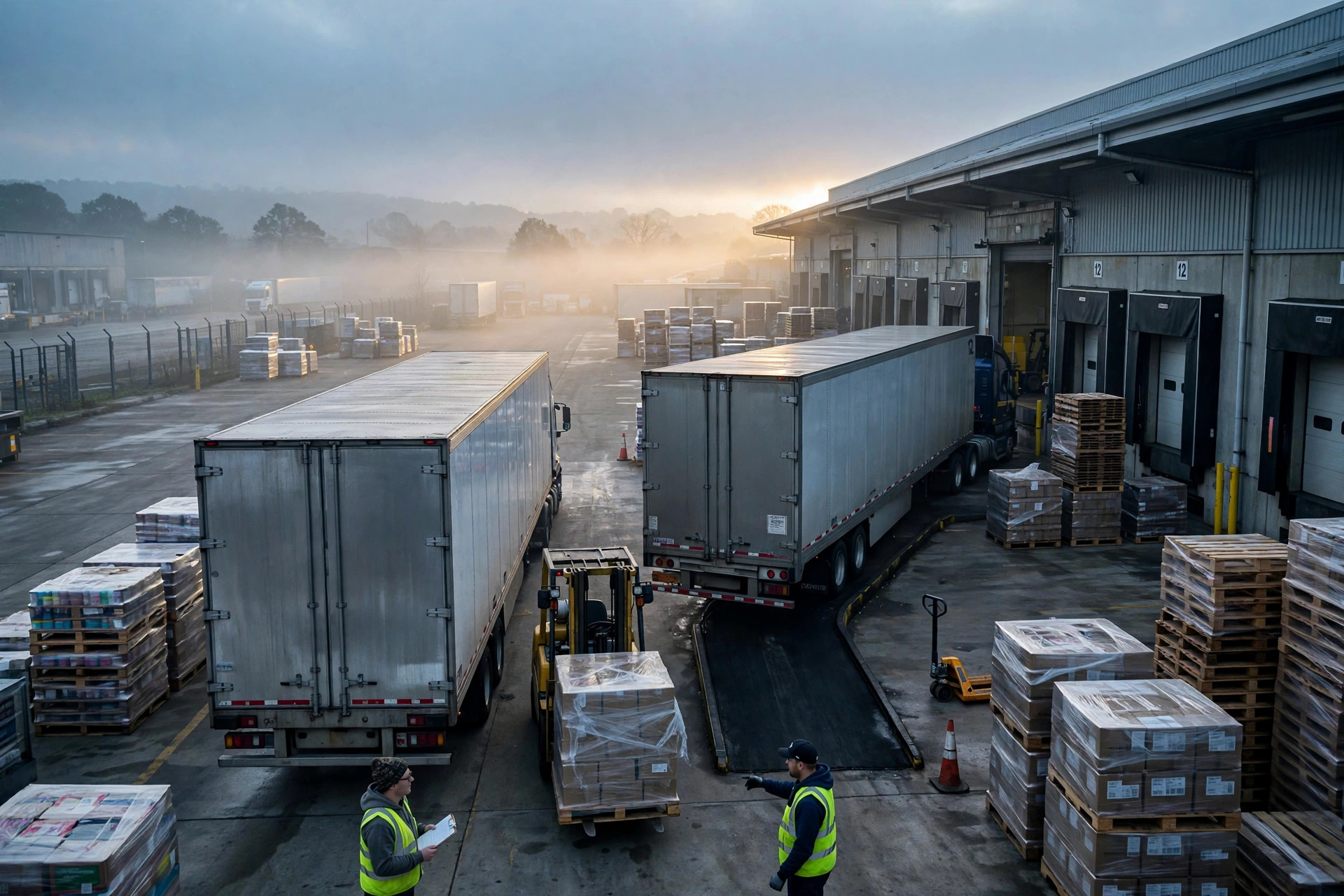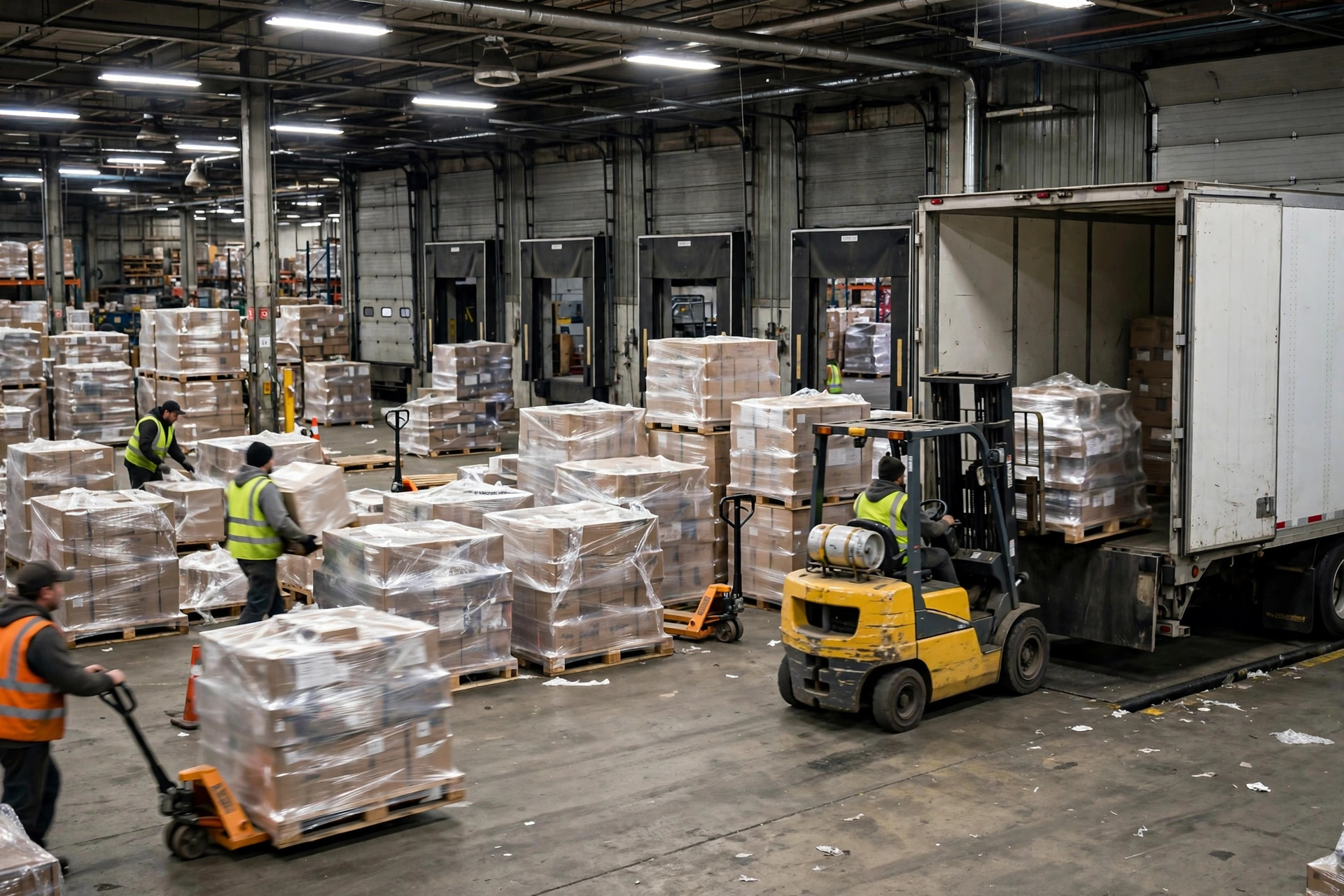
It was 6:40 on a Tuesday morning last November when I walked into the warehouse and saw our inbound staging area packed to the doors. The night-shift supervisor, Lao Zhao, cornered me at the dock entrance, his face darker than the night shift itself: "Boss, staging's full. Truck number nine is still waiting outside. The driver says if we don't let him unload, he's leaving."
Let me be straight with you — anyone who's run a warehouse knows that kind of morning. Nobody looks at the staging area on a normal day. The day it blows up, everybody comes looking for you.
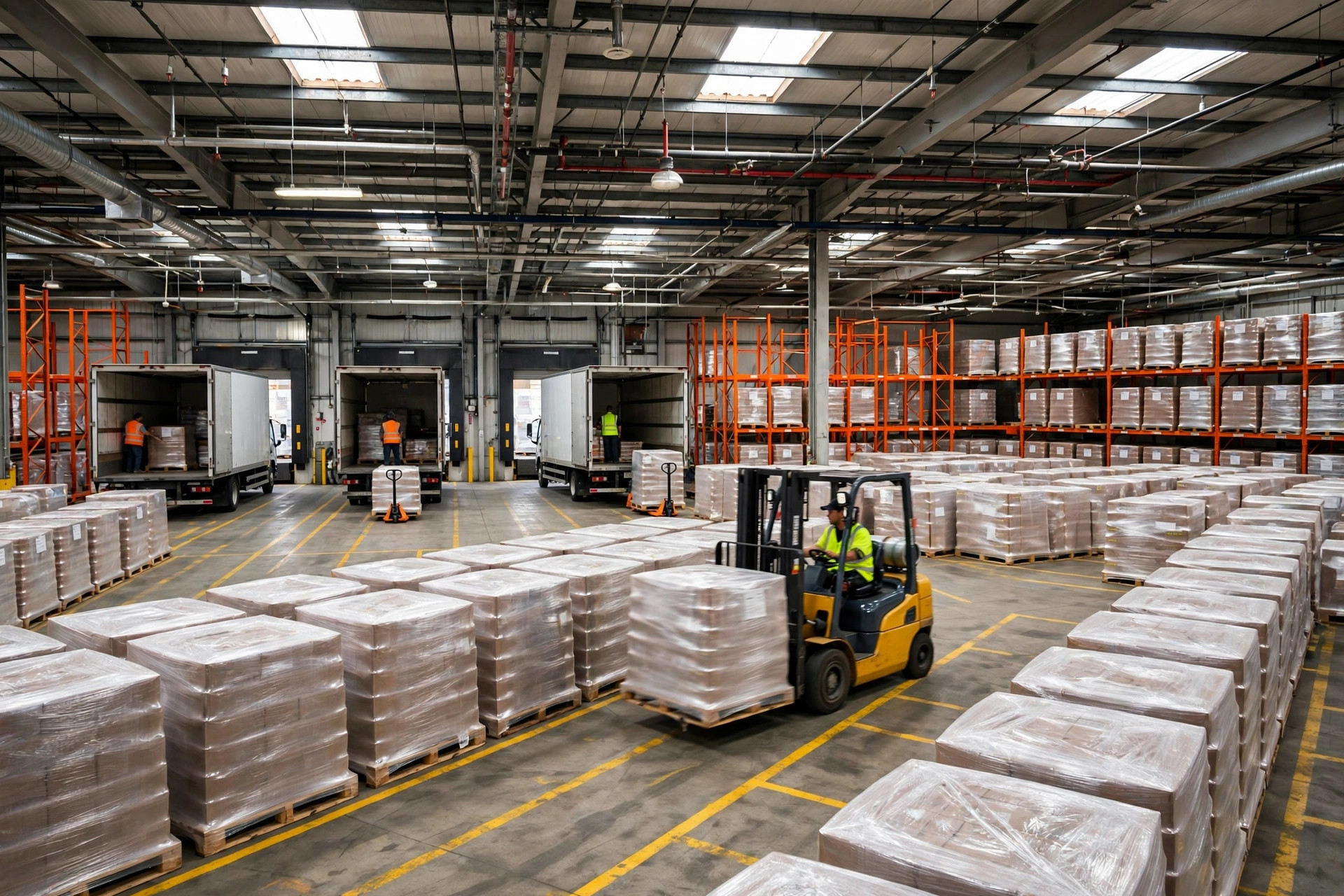
How did it get that bad? We measured for three days, and the root cause stared right back at us. From 6 to 10 in the morning — peak inbound — we'd get 38 pallets an hour. Six people on putaway, maxing out at 24 pallets an hour. Fourteen pallets an hour with nowhere to go; over four hours, that's 56 pallets. Our staging area holds 60 pallet positions. At 10 o'clock sharp, it blew. Not a minute early, not a minute late.
Folks, the math tells the story: when inbound staging overflows, the staging area isn't the problem. It's just the thermometer. The fever is putaway capacity and the inbound schedule.
We tried three fixes. All three hurt. Fix one: add putaway labor. Peak-season temp wages are brutal — and new temps kept putting freight in the wrong slots; every mispick cost half a day to find. Fix two: make drivers wait outside. By day three a driver refused the load outright, and dispatch chewed me out over the phone. Fix three: stack freight in the aisles as a workaround. That same afternoon, the safety inspector wrote us up — aisles are fire lanes; stacking freight there is playing with fire.
The breakthrough came in a review meeting. Lao Zhao said something that woke me up: "Boss, a good third of what we unload every day is leaving the same day — full pallets in, full pallets out. Why are they spending two nights in staging?" We pulled the data, and he was right: promo goods on full pallets, store replenishment by the case, direct-ship customer orders — freight that never needed putaway at all, just passing through and occupying slots and putaway labor for two nights for nothing.
The Cross-Dock Relief Valve: Three Hard Rules
What we run now is a "relief valve": at receiving, freight that qualifies for cross-dock gets split off immediately — never enters the putaway queue, goes straight to the outbound side. What qualifies? Three hard rules, and missing even one disqualifies the load:
Rule one: full pallet or full case, no broken-case picks. Anything needing piece-picking goes through the normal pick process, no exceptions.
Rule two: an outbound plan within 48 hours, with an actual order in the system. Freight with no order going cross-dock is just burying a bomb on the outbound side.
Rule three: packaging intact, labels complete. Damaged goods or unreadable labels go to QC first — don't tell yourself "we'll deal with it at outbound."
Who decides? The receiving lead. Before the trailer doors open, they check the appointment and the outbound plan and make the call within 10 minutes: cross-dock or staging. A wrong call hits their performance score — which is exactly why the rules have to be hard, with no room for "probably" or "close enough."
Sizing the Cross-Dock Valve: Five Days of Data
How wide to open the valve? You don't guess. We measured five straight days of inbound, checking every load against the three rules: 28% to 35% qualified. So we sized the valve at 30% — staging plans for 70% of inbound volume, and putaway staffing is scheduled at 70% too.
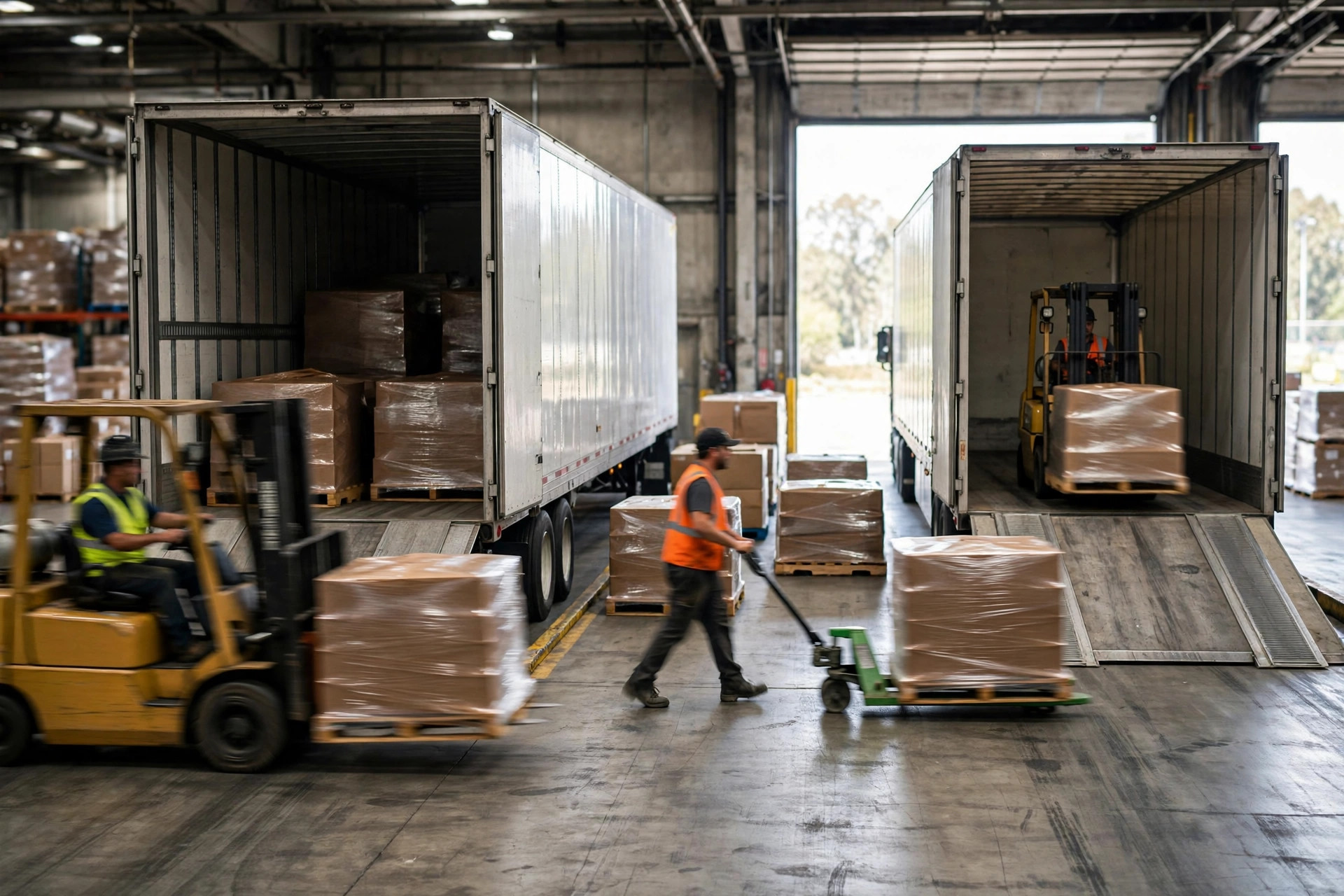
The fixed process: cross-dock freight goes straight to the outbound staging area after unloading, staged by outbound wave; the system books a virtual receipt and allocates it directly to outbound orders, paperwork closed out daily, never overnight. Reconciliation is the red line: cross-dock freight gets a daily cycle count; any variance gets investigated immediately.
The results? Last December's peak season, inbound volume ran 40% higher than November — staging never blew once. Putaway went from "never caught up" to "cleared every day," and morale flipped completely. The team used to work overtime every day with zero appreciation; now they clock out on time, and Lao Zhao grins at everyone.
The People Part
Honestly, the rollout wasn't smooth. The veterans pushed back hard in month one: "One more procedure — it slows down my unloading. Two fewer trailers a day, is that on you?" I didn't argue. I had the loudest critic shadow me for three days, watching freight he'd unloaded sit in staging for two days, then get touched a second time by a forklift before putaway. On day three he said it himself: "Fine. That work was pointless."
I also had a shouting match with a driver. Cross-dock freight has to wait for the outbound trailer, and one driver waited 40 minutes and blew up: "I unload, I don't wait for your dispatch!" We changed the rule after that: outbound trailers for cross-dock freight must be scheduled an hour ahead; if we're 30 minutes late, that's on dispatch — the driver can leave, and we figure out the freight ourselves. No shouting matches since.
One more lesson: opening the valve too wide backfires. One week we got greedy and stretched the rule to "outbound plan within 72 hours counts." The outbound side got clogged with orderless freight for three days, and the pick team came after us. Since then, the 48-hour line doesn't move. Cross-dock isn't about speed — the valve exists to divert, not to flood.
A Note for Fellow Operators
If your staging area blows up every day, do three things before touching anything:
First, measure for three days: the inbound curve (by the hour), putaway capacity (pallets per hour), staging slot count. Lay the three numbers out and the root cause speaks for itself.
Second, spend two more days checking every load for cross-dock eligibility. If less than 20% of your freight qualifies, don't bother with a relief valve — add staging or fix the inbound schedule instead.
Third, start strict, loosen later. Better to run 10% of freight through cross-dock in week one and widen it once it's smooth than to throw the gates open on day one. A relief valve is a valve, not a hole.
Staging overflow, at the end of the day, tests your math and your flow design, not your muscle. Ask one question when freight arrives — "does this load really need to spend a night here?" — and half your problems disappear.
By Chen Feng, Warehouse Operations Manager