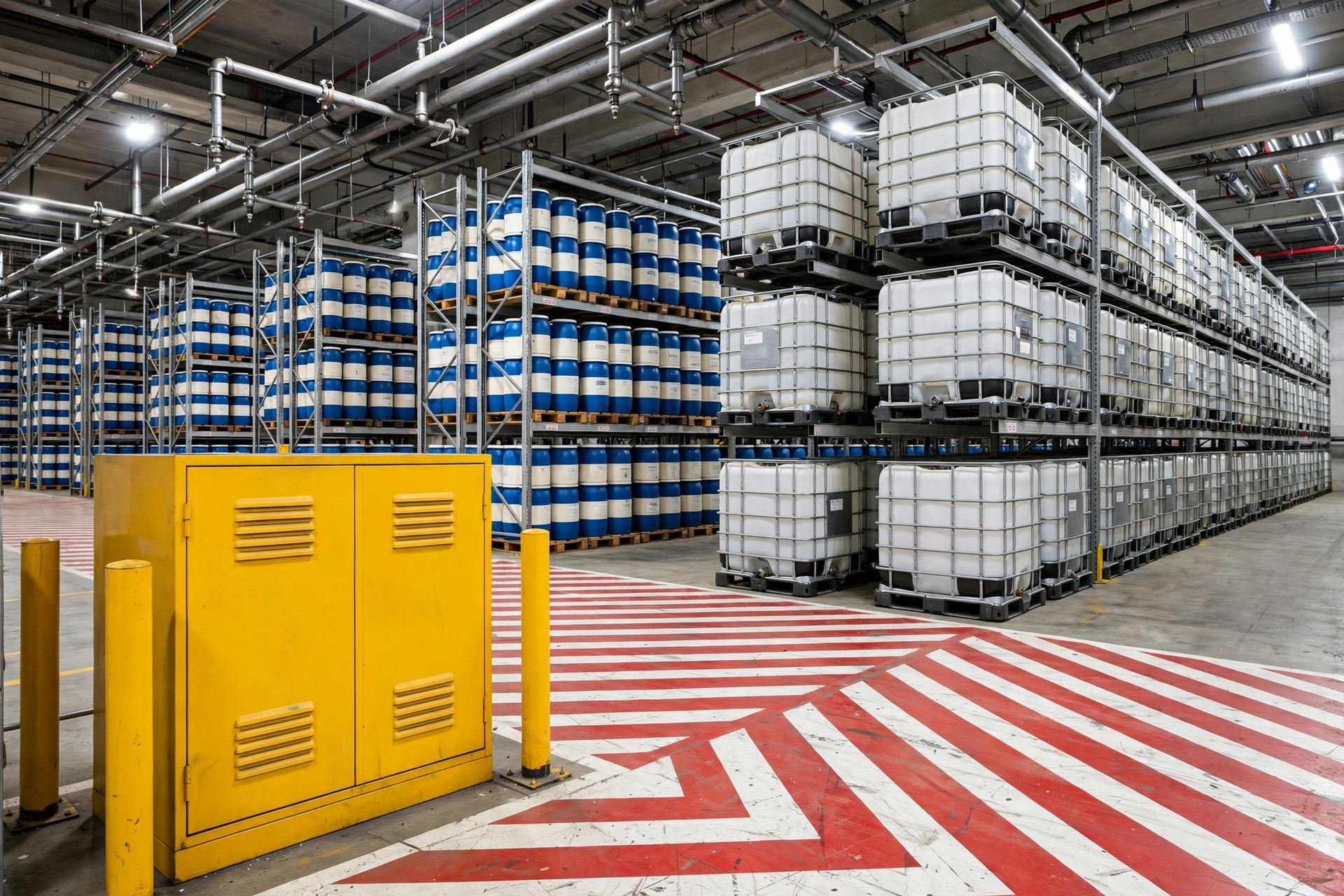
Here's my verdict up front: for most shippers, the answer to hazmat build vs rent storage is rent. Not because renting is cheap — it's not, it's brutally expensive. My point is that the "cheap" of building your own is fake. This cuts both ways: on one side there's the rent difference on paper, and on the other there's compliance, time, and who takes the hit when something goes wrong. People who only look at the first side always end up paying tuition on the second.
The War Story: A Nine-Month Permit Saga in Fontana
Back in 2019, I was working with a distributor of industrial cleaners and solvents out in California's Inland Empire. The owner moved a little over 3,000 pallets a year, roughly a third of it hazmat. He'd done the math: specialized hazmat 3PL storage and handling ran 2 to 3 times what he paid for his regular warehouse. So he decided to carve out 20,000 square feet of his own building as a hazmat zone.
The plan looked simple: explosion-proof lighting, upgraded ventilation, fire suppression, secondary containment flooring. The contractor quoted a little over $200,000, and the owner figured he'd break even in eighteen months. Then the fire marshal's review started — three rounds of plan revisions, sprinkler density, explosion-proof zoning, emergency egress, every single item non-negotiable. Permits plus construction dragged on for nine full months.
During those nine months, peak-season hazmat inbound had nowhere to go, so he emergency-rented space at a specialized hazmat warehouse at 1.5 times the normal rate. In the slow season you think they're too expensive; in peak season you're begging them to take your freight. I've seen this script play out too many times.
The final tally: the retrofit ended up costing close to $400,000 — double the budget. Nine months of emergency storage burned through another six figures. And in its first year of operation, the new zone got hit with two corrective actions during an inspection. The owner told me later: 'If I'd known about those nine months, I'd have just signed a three-year lease and slept at night.'
The Real Cost of Building Your Own Hazmat Space
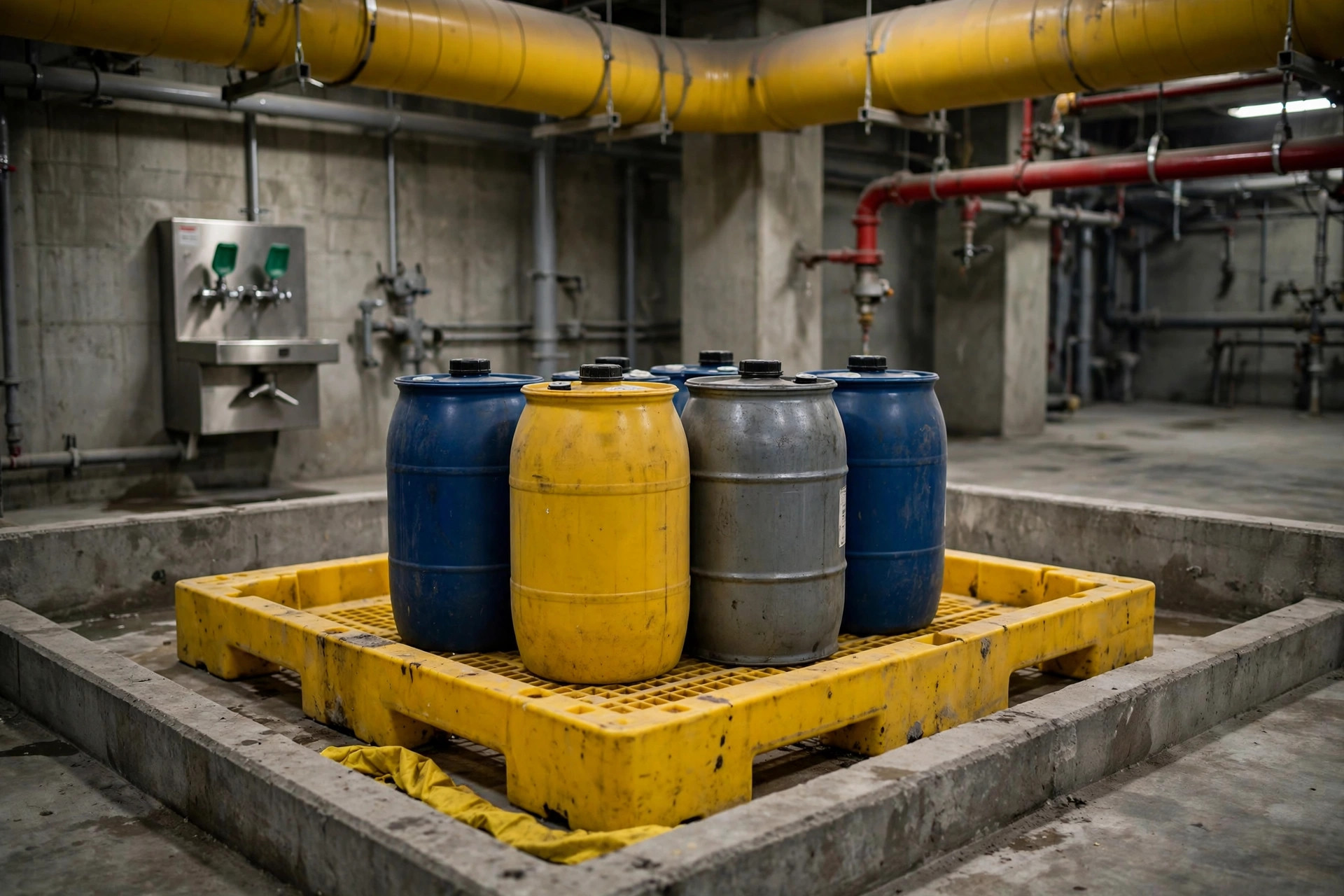
Most people price a DIY hazmat build by the square foot of retrofit cost. That's the wrong math. Let me be blunt: the construction bill is just the ticket to get in. The real costs come in four installments.
First, time. Fire marshal review from plan submission to permit in hand runs six to twelve months as a matter of course, and every rejected drawing restarts the clock. Planning around 'operational before next peak season' is basically gambling.
Second, people. A hazmat warehouse needs someone who actually knows the game — the OSHA, EPA, and NFPA requirements that apply (always check the latest official policies; I'm not your lawyer). Your regular warehouse supervisor can't just pivot into this. Hiring an experienced compliance lead means a fixed six-figure salary line that never goes away, and good ones are hard to find.
Third, the downside. One spill, one small fire — cleanup costs plus fines plus shutdown can wipe out years of 'saved' rent in a week. Incident cost has no ceiling, and it's the one line item that never makes it into the DIY spreadsheet.
Fourth, the ceiling. Today you store Class 3 flammables; tomorrow a customer wants to add Class 8 corrosives, and your zone layout may need to be redesigned from scratch. The more SKUs you carry, the less flexible a self-built zone becomes — and business never asks your permission before it changes.
Renting Specialized Space: What the Premium Really Buys
Specialized hazmat warehousing runs two to four times the cost of a regular warehouse. Strip away the mystique, and the hazmat build vs rent storage debate is really about buying down risk, not buying down cost. Where does that premium go? Three things you can't see on the quote: permits already in hand, a compliance team on payroll, and a decade-plus of trust built with the local fire marshal.
What you're buying is 'sign today, receive freight next week.' Take the lithium-battery accessories importer I worked with near the Port of Long Beach in 2022: 400 pallets a month in the slow season, 900 in peak. His specialized hazmat warehouse ran about 3 times the cost of a regular warehouse — but it swallowed triple the volume for three straight peak months without breaking a sweat. He'd run the numbers himself: build the zone for peak, and it sits half-empty burning money the rest of the year; build it for average, and peak season has nowhere to go. For volatile freight, renting isn't a choice — it's the only answer. For importers with volatile volume, when peak season doubles your inbound, the specialized warehouse just absorbs it. Your self-built zone, overflowing, can only stare back at you. And critically, you're not the first name on the liability list when something goes wrong — get the responsibility split written clearly in the contract (more on that below), and you'll sleep at night.
The Counterintuitive Part: Bigger Volume, Stronger Case to Rent
This cuts both ways, and most people get it backwards. The instinct says: rent when you're small, build when you're big enough to amortize the cost — economies of scale and all that. Hazmat doesn't play by those rules.
Bigger volume usually means more product classes, more SKUs, more frequent moves — compliance complexity grows exponentially with SKU count and handling frequency, while your rent savings grow linearly. Every dollar you save by building your own is a dollar bet against compliance risk, and the stakes keep getting bigger.
So here's my counterintuitive take on the hazmat build vs rent storage question: unless you check all three boxes — a single product class, stable long-term volume, and a dedicated compliance team — the bigger your volume, the stronger the case for letting the specialists handle it. Miss even one box, and don't touch the DIY route.
Build vs Rent: The Trade-Off in One Table
| Dimension | Build Your Own | Rent Specialized Space |
|---|---|---|
| Upfront investment | High — retrofit plus fire suppression, mid-six figures | Near zero — sign and move in |
| Permit timeline | 6–12 months, routinely | None |
| Compliance risk | All yours | Mostly the operator's — read the liability clause |
| Staffing | Dedicated compliance and ops headcount required | No headcount needed |
| Unit cost | Lower at large, stable volume | 2–4x a regular warehouse |
| Flexibility | Poor — product or volume changes mean new investment | High — scale up for peak |
| Exit cost | Sunk cost, nearly impossible to unwind | Walk away at contract end |
Three Rules to Make the Call
Here's how I'd frame the hazmat build vs rent storage call in three rules.
First: if hazmat is less than half your volume, you carry more than three product classes, or your volume swings seasonally — rent, no hesitation. You can't afford the volatility of a self-build.
Second: single product class, stable annual volume, planning to be in this for five-plus years — then it's worth running the build numbers seriously. But multiply the permit timeline by 1.5 when you plan, and never bet peak season on it.
Third: whichever way you go, get 'who's responsible when something goes wrong' written into the contract — that's the most valuable single line in the whole deal, worth ten times the rent clause.
The real question was never build or rent. It's this: if something goes wrong with that drum, do you want to be the one standing in front of the fire marshal — or would you rather have a professional standing there for you? Answer that, and the math takes care of itself.
By Lao Mi, Supply Chain Veteran (20 yrs)