Do the math on a 14-unit wholesale order sometime. Fourteen units, one boutique in Austin, retail-grade packing, a carrier pickup deadline at 3 PM. Now multiply that by fifty orders a day, fifty different ship-to addresses, and a picker who has to walk to the bulk storage area, crack open a full pallet, count out fourteen units, and reseal it — for every single order. That is the economics of small-batch wholesale, and most warehouses lose money on it for months before they admit the playbook is wrong.
I watched this play out at a 40,000-square-foot 3PL in Ontario, California last fall. They fulfilled for a handful of beauty and personal-care brands selling through Faire. The owner told me straight up: the wholesale orders were eating his margin alive. Fifty-some orders a day, a dozen or two units each, pickers walking miles, and month-end numbers worse than plain pallet-in-pallet-out work.
Wholesale in Name, Retail in Practice
Faire-style orders look like wholesale on a spreadsheet and feel like retail on the floor. The profile is consistent: small unit counts per order, highly fragmented destinations — fifty orders can mean fifty different boutiques from California to Florida, which kills any consolidation logic — and spiky frequency. Faire's headline pitch to retailers is extended payment terms, up to 60 days, which encourages small shops to try new products and order often. The result for your warehouse: orders arrive fragmented and urgent, and promo periods can triple a normal day's volume without warning.
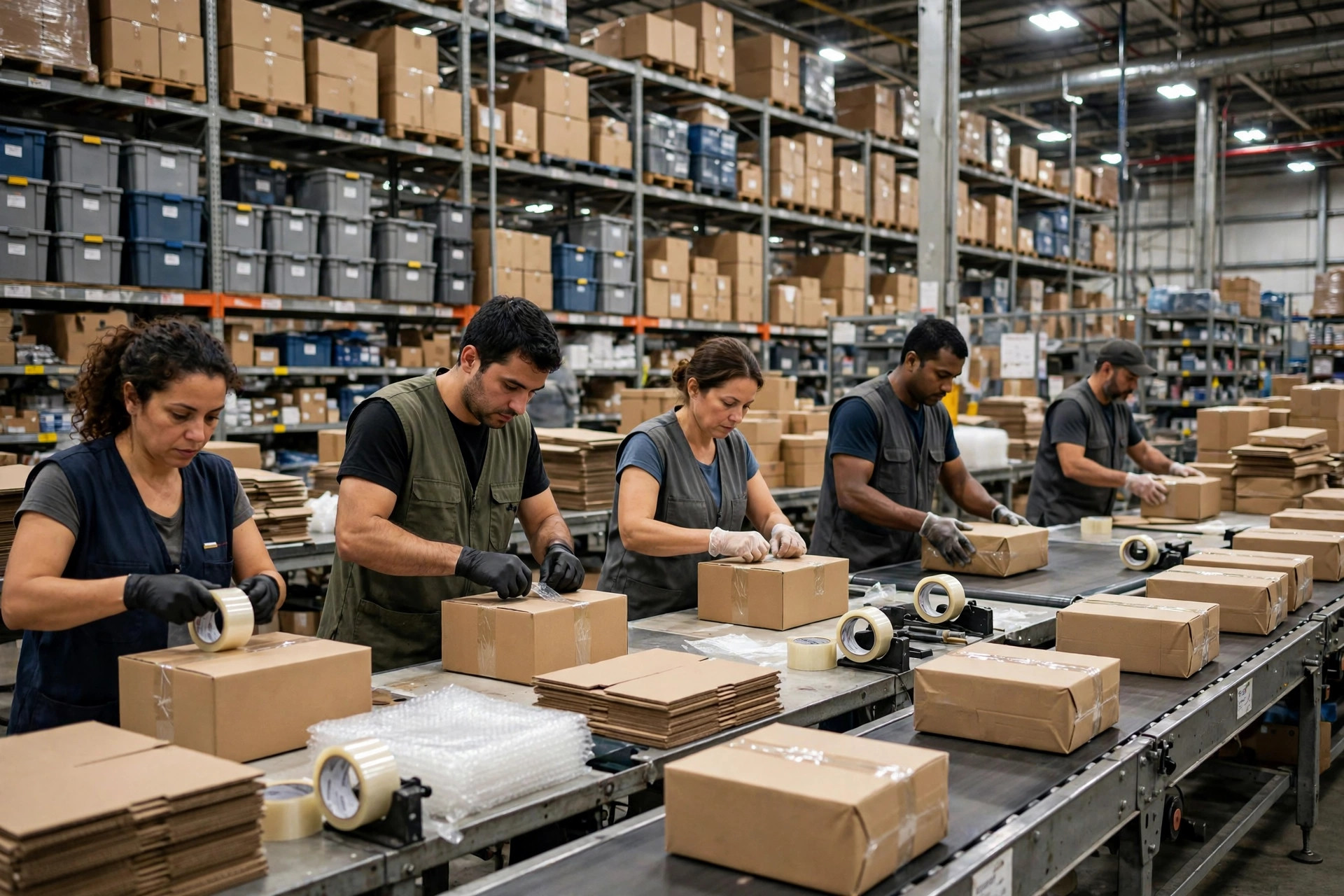
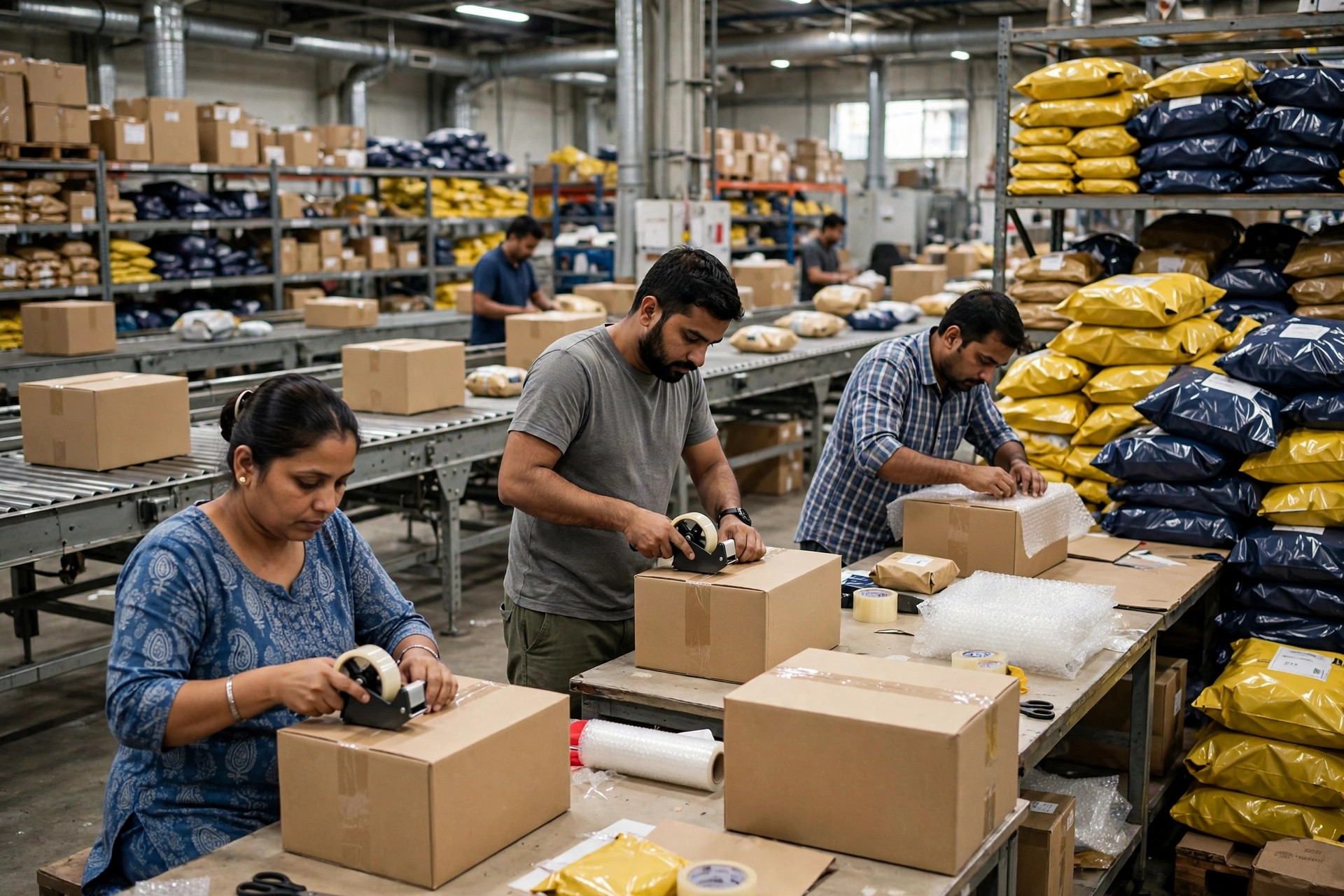
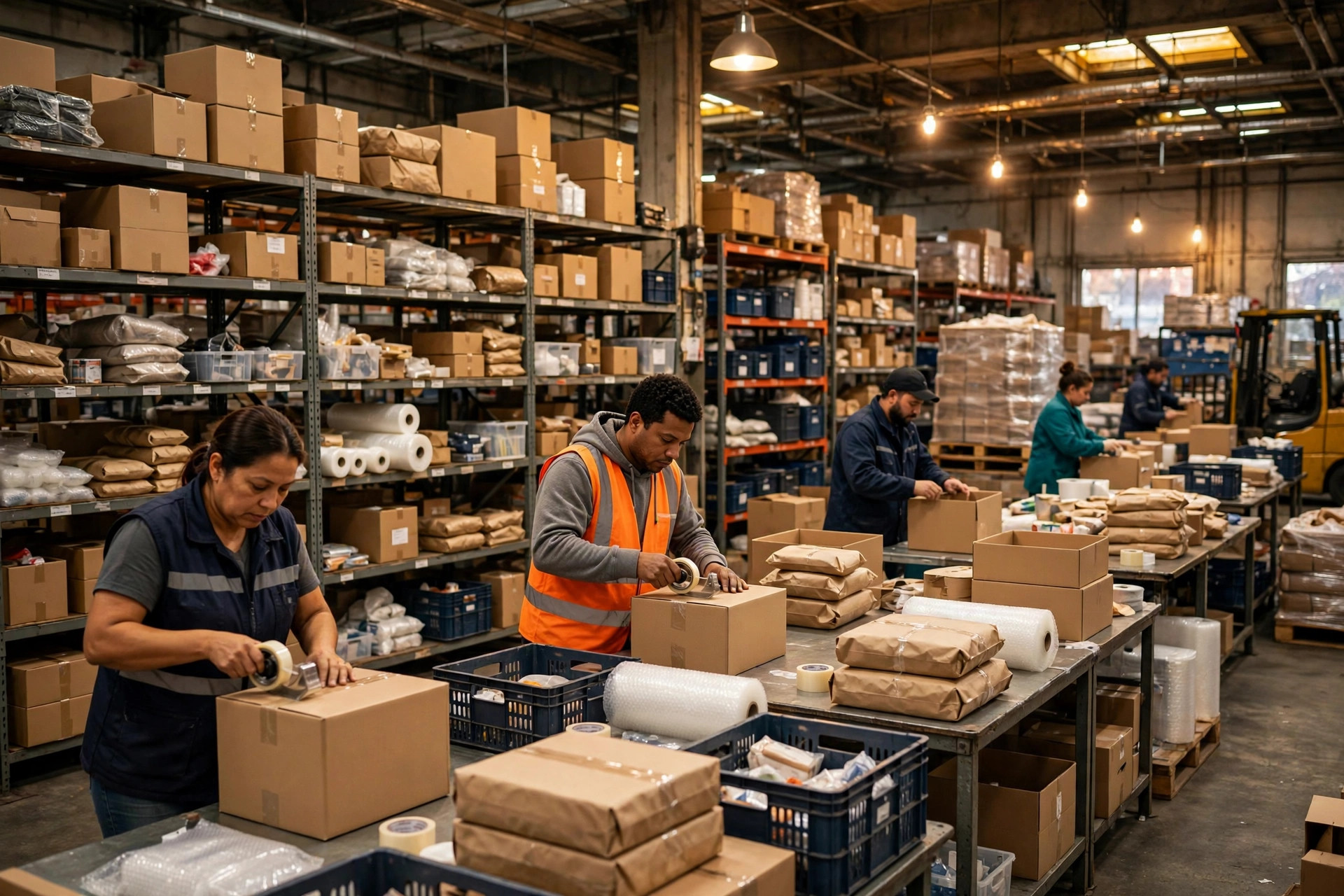
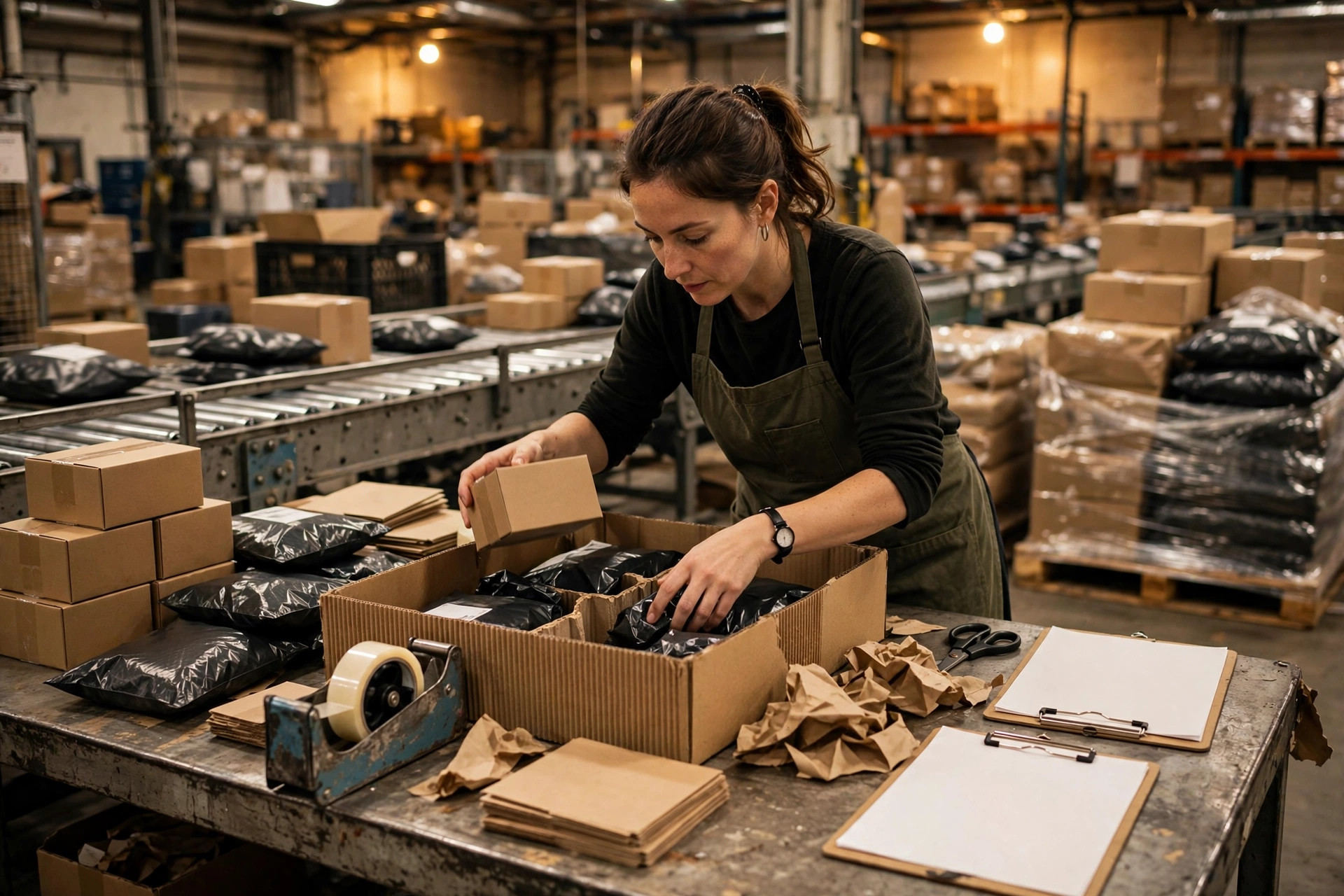
The fourth trait is the one that actually costs money: retail-grade packing expectations. Boutiques buy wholesale and put product straight on shelves. Many brands promise "shelf-ready out of the box," which means your pack bench has to deliver branded cartons, clean dunnage, consistent unit orientation. One dirty unit, one wrong item, and the boutique photographs it and files a platform complaint. Enough complaints and the brand comes after you, not the platform.
Stop Picking Small Orders Out of Bulk Storage
The Ontario warehouse's core problem was pick location. Fast movers lived in full-pallet positions. Every small order sent a picker on a long walk to break a pallet for a handful of units — ten-plus minutes per order, fifty times a day, two labor-hours burned on walking and pallet surgery alone.
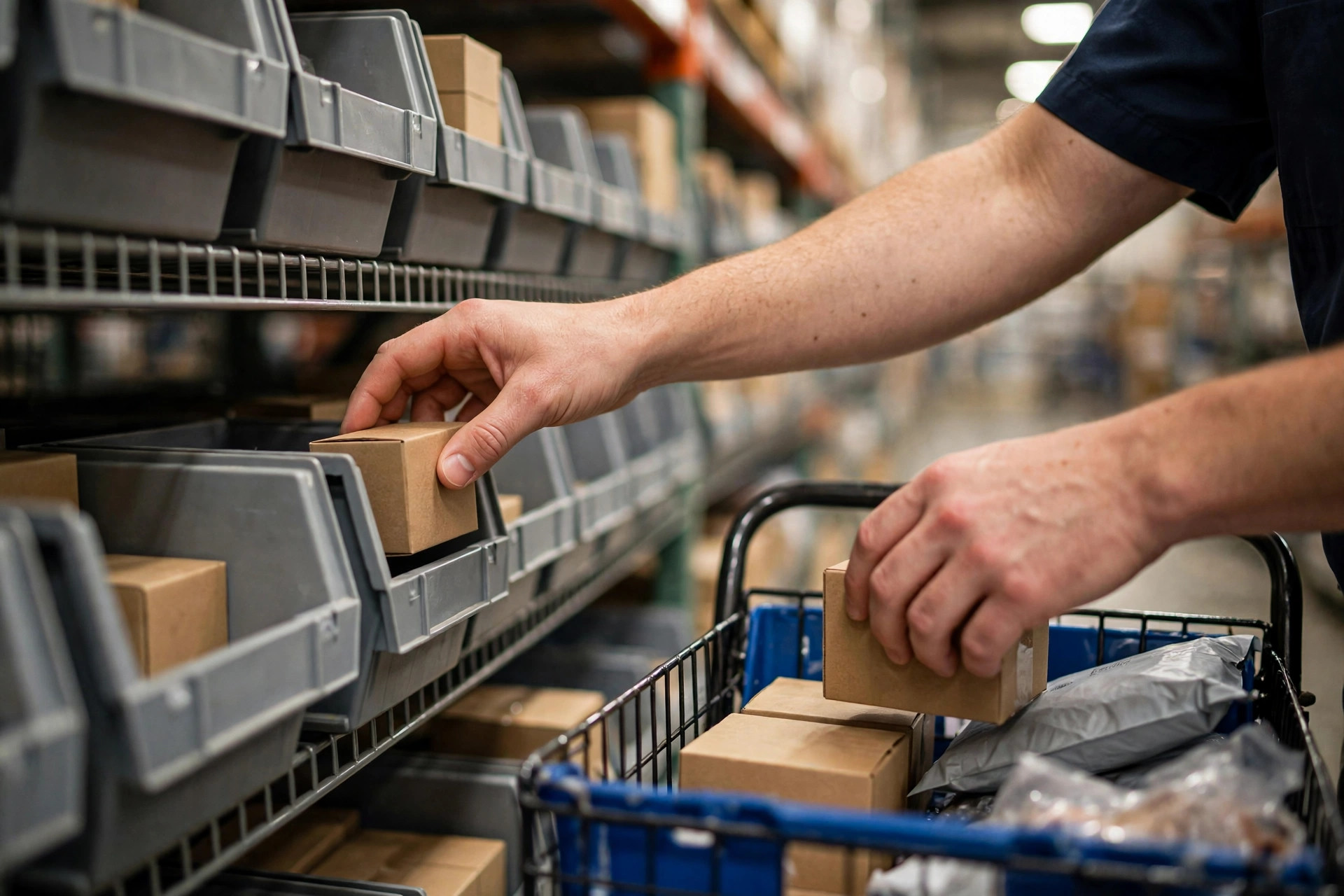
The fix is unglamorous: carve out a dedicated forward-pick zone, physically separate from bulk storage. Pull your top 20 to 30 SKUs by outbound velocity onto flow racks or carton shelving, pick by the each, set a minimum on-hand per location, and trigger replenishment from bulk once a day — nights or pre-shift, so the pick zone only ships during the day and the aisles stay clean.
Sequence your waves against carrier cutoffs, not against the clock on the wall. These orders ship small parcel, so if the cutoff is 3 PM, picking is done by 2. Batch-pick the same SKU across multiple orders, then sort by order — but scan-verify at the sort. I have seen warehouses skip verification to save time and double their mis-ship rate; one return wipes out the margin on three good orders in freight and rework alone.
That Ontario site did the whole rework in under two weeks, using a dead corner next to the pack area. Picking throughput roughly doubled per labor-hour. The trade-off is floor space, and the math only works at density — if you are doing ten orders a day, keep picking out of bulk and don't touch a thing.
Packing and Cash: The Two Quiet Margin Killers
Pack benches die on "every order is special." One boutique wants branded tape, the next wants a thank-you card. Push the brand to freeze packing into two or three standard tiers, put it in the SOP, and surcharge anything beyond standard. Your margin lives in those details. Size your cartons ahead of time, too — oversized boxes on small orders bleed parcel freight, and stocking three extra carton sizes is cheaper than paying for dimensional weight all quarter.
Then there is cash. Sixty-day retailer terms stretch the brand's collection cycle, which stretches how long your safety stock capital sits idle. Don't guess the pre-season build: take twelve months of weekly outbound data, cap the build at eighty percent of the prior peak week, and let replenishment speed cover the rest. Overstock and you trap cash; understock and you lose shelf scores. The worst case I saw was a warehouse that built three months of stock, the brand changed packaging, and boutiques refused the old cartons. All of it stranded.
One cost almost everyone misses on the first pass: returns. The return rate on small-batch wholesale looks low until you price the handling. A returned unit costs three times the labor of shipping it — open, inspect, relabel, find a home for it. And boutique return reasons are creative: ordered too much, didn't sell, one crushed corner on the carton. Get the return rules into the contract before the first shipment: what qualifies, who pays return freight, how defects are defined. Without that in writing, every return becomes a negotiation. Operationally, keep a separate returns inspection area away from normal receiving, quarantine everything until it passes inspection, and never restock an unchecked unit — shipping a bad unit twice costs you the customer, not just the freight.
The labor math deserves a second look, too, because this is where small warehouses talk themselves into the wrong decision. Fifty orders at twelve minutes of walking and pallet surgery is ten labor-hours a day. A forward-pick zone cuts that to roughly four. At fully loaded warehouse wages, that delta pays for the racking in a single quarter at any real volume. Below about fifteen orders a day, though, the zone sits half empty and you have paid for flexibility you don't use. Know which side of that line you're on before you move a single rack.
One housekeeping note: platform commissions and payment fees change. Read the current policy on the official site before you sign anything — never cost a contract off last year's screenshots.
If Faire orders start hitting your dock next week, do one thing first: pull your top 20 SKUs by trailing-three-month velocity and give them their own pick zone. That single move will probably cut a third off your pick time. Everything else can wait until the volume earns it.