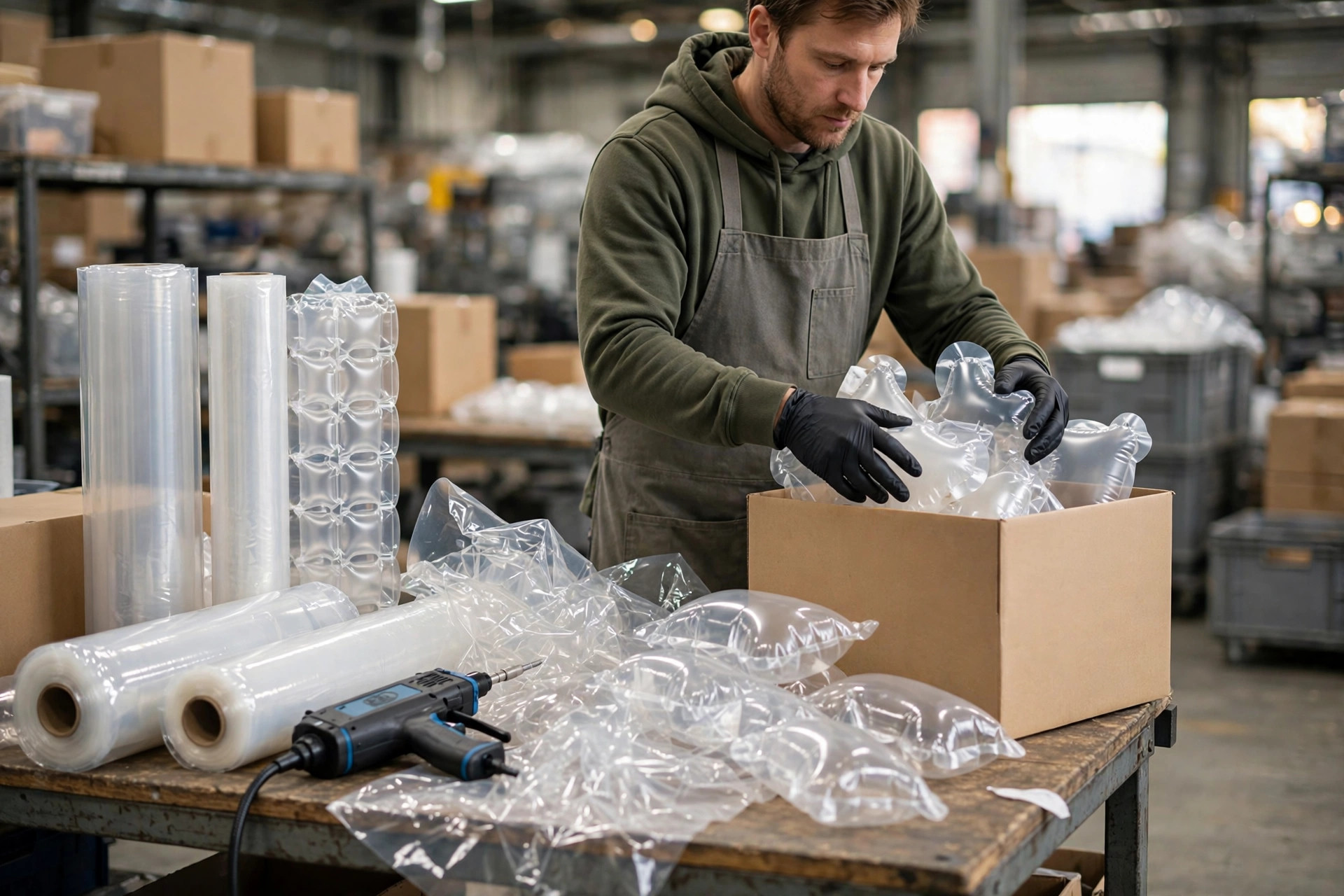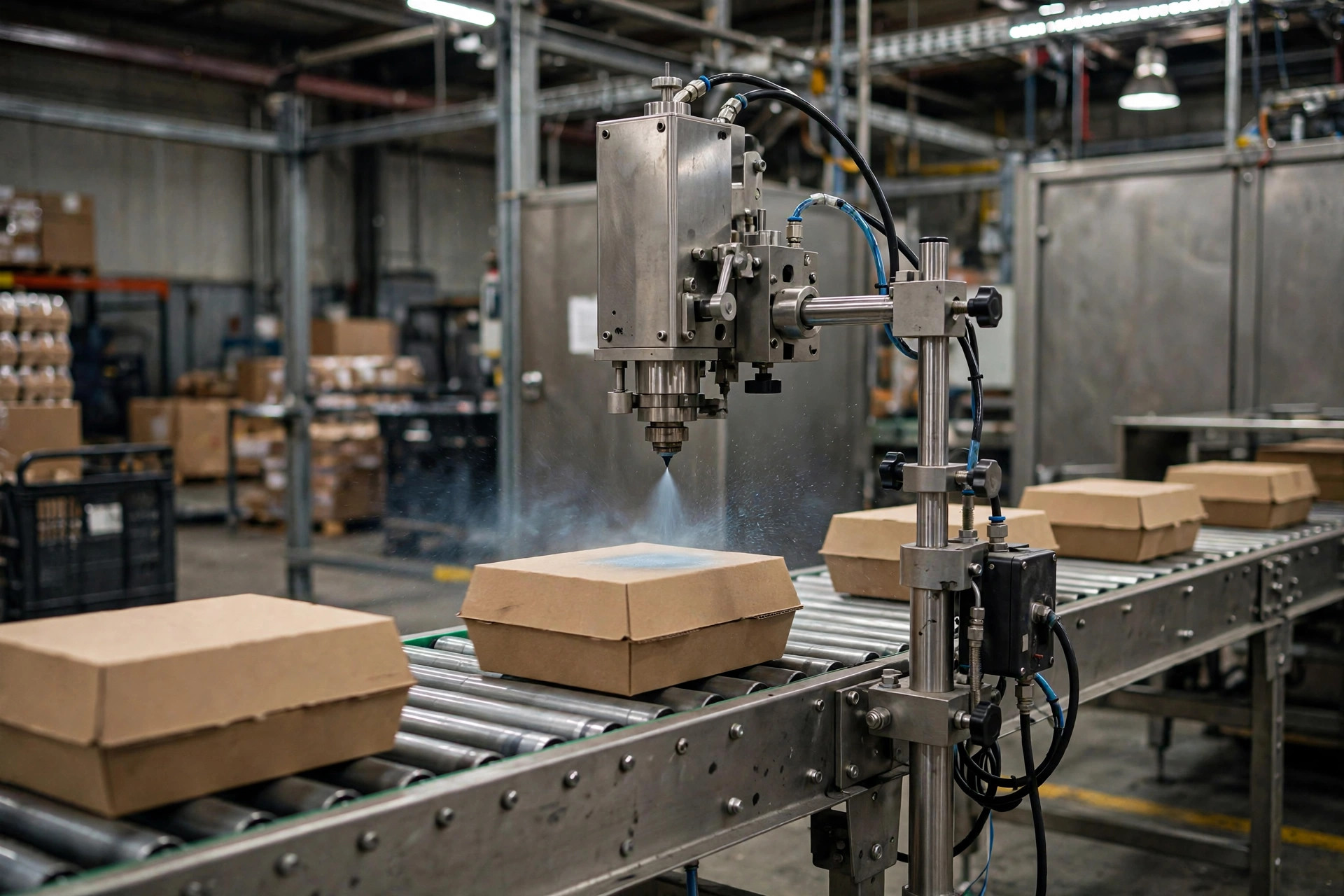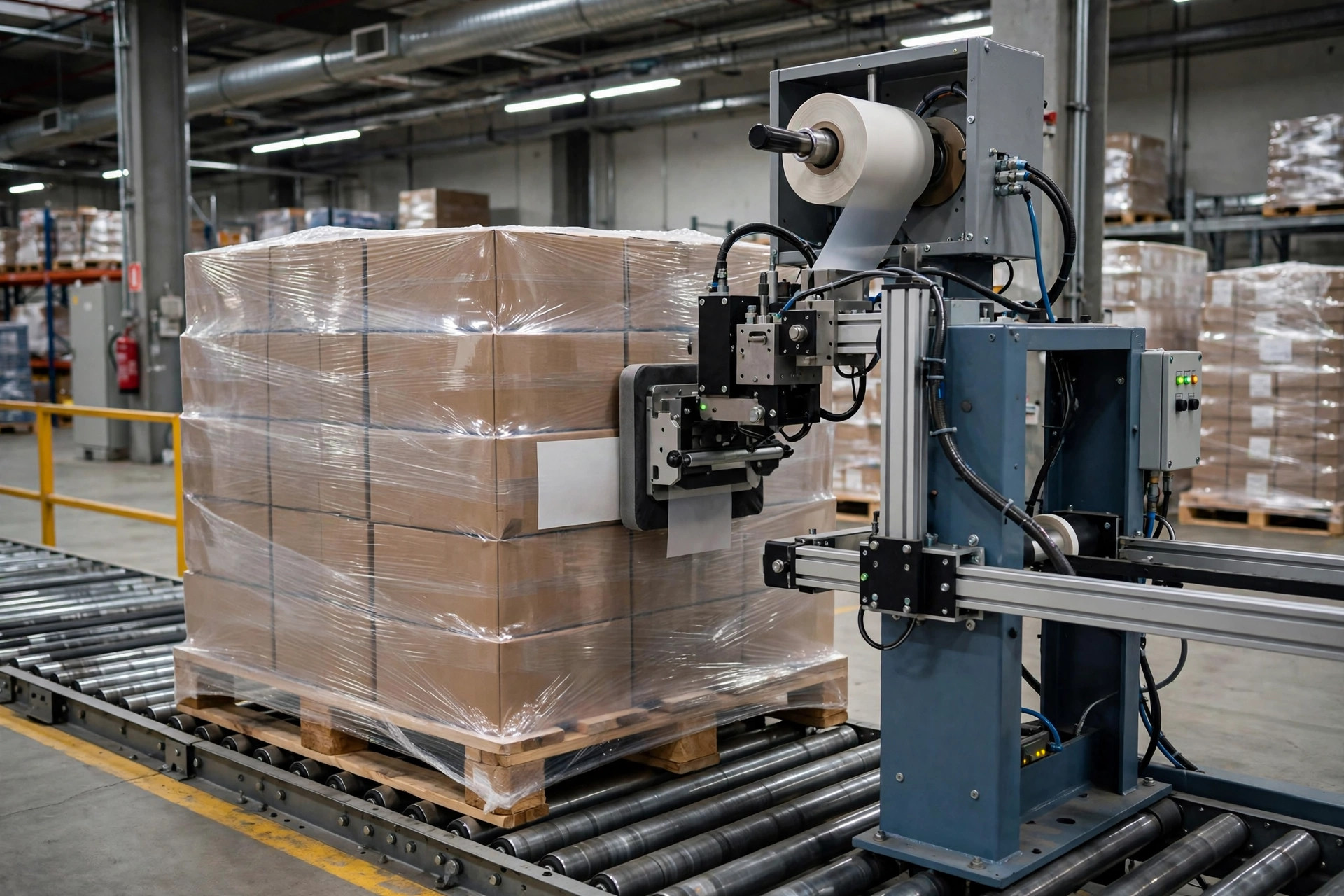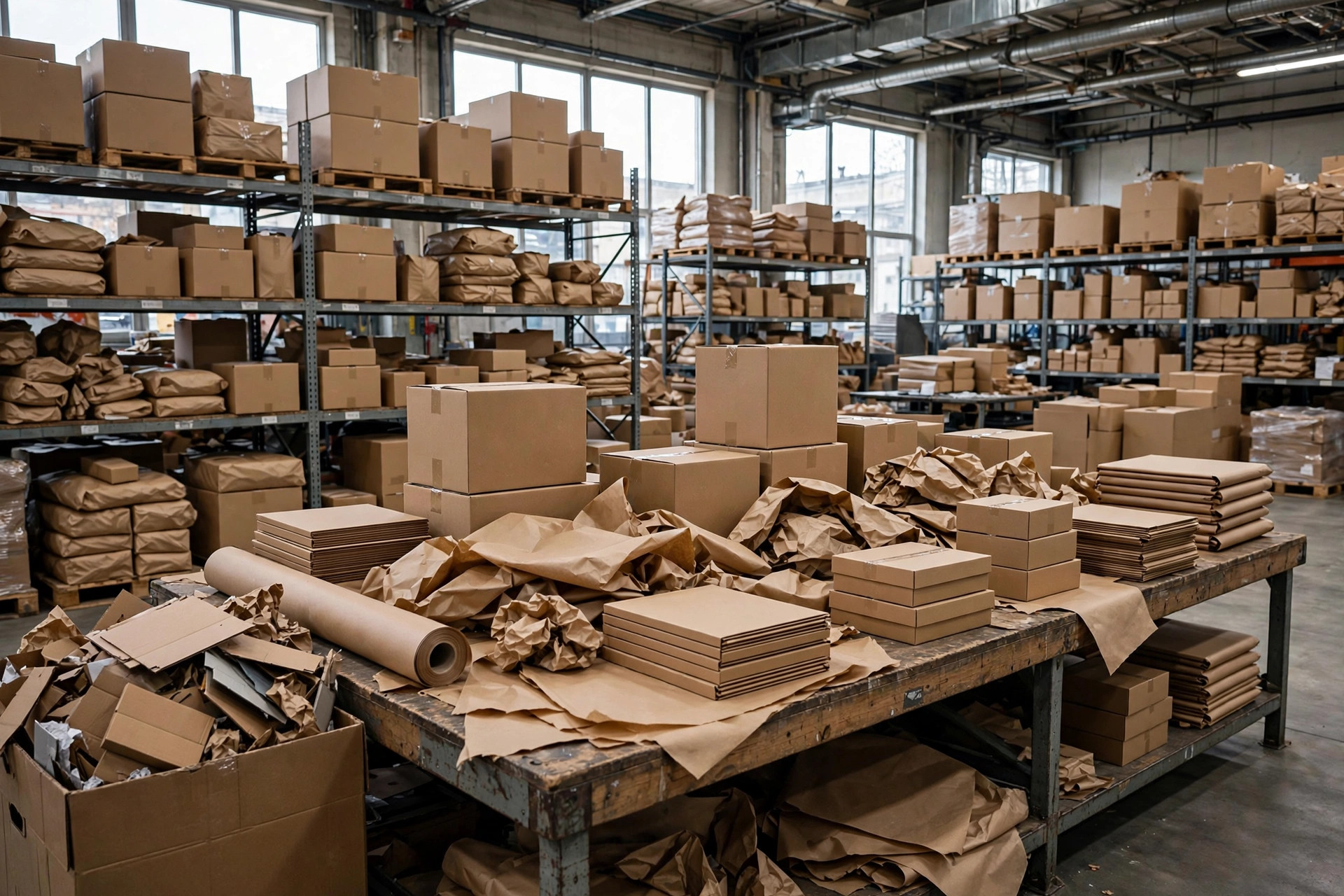
The EU's packaging EPR regime has been in application for nearly two months, and a new kind of market filter is taking shape: what gets stopped is not product quality or price, but the packaging itself. On 12 August 2026, the EU's Packaging and Packaging Waste Regulation (PPWR, Regulation 2025/40) — adopted in December 2024, in force since February 2025 — started to apply across all member states. According to the European Commission, it covers all packaging placed on the EU market regardless of material or origin. For pack lines, this means the old logic of "cheapest material wins" has, for the first time, a hard compliance ceiling.
In September, a Shenzhen-based seller of small home appliances received a notice from a German marketplace: more than 40 listings suspended for two weeks, all because of a missing LUCID registration number. The problem was not the product but the packaging. Germany's packaging law defines the "producer" as whoever first places packaged goods on the German market, and requires that party to register with the central packaging register (LUCID), join a dual system that handles packaging-waste collection, and report packaging materials and weights annually. According to published compliance guidance, violations can draw fines of up to €200,000 and an outright sales ban; LUCID registration itself is free, but selling without it triggers an automatic ban, and competitors can report violations and seek cease-and-desist orders. The seller spent three weeks completing registration and back-reporting before the listings were restored — two weeks of lost visibility right before peak season.
This is not an isolated case. PPWR harmonises the definition of "producer" as the party that first makes packaging available on a given member state's market — which is precisely the cross-border seller — and requires non-EU producers to appoint an authorised representative at EU level, with fees charged country by country. Compliance cost, in other words, scales with the number of countries served, not with export volume.
EU Packaging EPR: Where the Money Actually Goes
Break the EPR bill into three parts. First, per-country registration and authorised-representative fees — a fixed cost, paid once per country served. Second, per-tonne, per-material payments to each country's producer responsibility organisation — a variable cost. Third, the staffing and data cost of the reporting system — the part most easily underestimated.
The key variable sits in the second part. PPWR makes eco-modulation of EPR fees mandatory across member states: the harder packaging is to recycle, the higher the fee, with a harmonised modulation framework due by 2028. The UK's earlier experience offers a reference point (UK-system data below, useful only for the direction of travel): since 2025 the UK has rated packaging recyclability on a red-amber-green scale, with plastic packaging averaging around £485 per tonne and 45% of it landing in the hard-to-recycle red band. The direction is clear: hard-to-recycle packaging is subsidising the easy-to-recycle kind.
For the pack line, the real meaning of this bill is that material selection now carries a "compliance spread." The same carton in a recyclable design versus a hard-to-recycle composite will sit on two diverging fee curves. Procurement teams that still compare materials on unit price alone are pricing a bill that omits compliance.
Why the Pack Line Is EPR's First Checkpoint
The attribution works on three levels. At the first level is liability: packaging is the one responsibility a cross-border seller cannot outsource — suppliers can be switched, but the seller remains the "first placer" of the packaging. At the second level is enforcement leverage: packaging is the easiest layer for border and market surveillance to inspect — materials, labels, and registration numbers are all visible and checkable, and marketplaces can verify LUCID numbers automatically, delisting non-compliant sellers without human review. At the third level is cost structure: fixed costs charged per country make the compliance burden structurally heavier for small sellers. In September 2026 the German government tabled a simplification proposal in Brussels suggesting retailers placing under 10 tonnes of packaging per year be exempted from appointing an authorised representative — still only a proposal, not a rule, but revealing in itself: even lawmakers recognise the current cost structure works against small players.
A worked example makes the arithmetic concrete. The figures below are illustrative magnitudes; actual rates follow each country's published tariffs. Take a seller shipping 50,000 parcels a year to Germany, France, and Italy, averaging 0.4 kg of packaging per parcel — roughly 20 tonnes a year. Phase one means fixed registration and representative fees in three countries. Phase two means annual per-tonne payments that vary by material. If half the packaging is hard-to-recycle composite, its fee curve bends upward once the 2028 modulation framework lands. The conclusion is straightforward: the larger the packaging volume, the more the material bill in phase two matters; the more countries served, the heavier the fixed cost in phase one. Know which end you sit on before deciding where to spend.
A Three-Phase View of Packaging EPR Compliance Costs
Stretch the timeline out, and the bill reads most clearly in three phases:
| Phase | Window | Core actions | Cost character |
|---|---|---|---|
| Phase 1: registration compliance | Now – 2027 | Country-by-country registration, authorised representatives, building a packaging material-and-weight reporting dataset | Fixed cost: one-off setup plus annual fees |
| Phase 2: material substitution | 2027 – 2029 | Replacing hard-to-recycle materials; adopting the harmonised packaging labelling system from 2028 | Variable cost, scaling with tonnage |
| Phase 3: design upgrade | Around 2030 | Meeting the all-packaging-recyclable requirement; hitting recycled-content thresholds for plastic packaging | R&D and supply-chain cost |
A few dates to pin down: PPWR applies from 12 August 2026; the harmonised labelling system from 2028; from 2030 all packaging must be recyclable, with recyclability performance grades kicking in; the eco-modulation framework by 2028. For clause-level detail, the EU's official texts are the authority.
Here is the counterintuitive read: across the three phases, the most expensive line is usually not the packaging material itself but the phase-one data system. A pack line has to answer "what material, what weight, for every parcel" — without that dataset, reporting is impossible and material optimisation cannot even begin. Many operations still lack accurate weighing and material bills on the pack line. The first cut of compliance transformation lands on data, not on cardboard.
The trend judgment compresses into three statements. The window for material substitution is the period before the 2028 modulation framework lands — switch late, and you will have overpaid for two years of hard-to-recycle packaging. A wave of material replacement will arrive ahead of the 2030 all-recyclable deadline, and early movers will secure more stable capacity in compliant materials. And the per-country fixed-cost structure is not going away soon, so multi-country sellers should review their country portfolio early — in some long-tail markets, the compliance fixed cost already outweighs the market contribution, and pulling back is the rational move.
An open question to end on: once packaging compliance shifts from optional to fixed cost, how does the competitive landscape in Europe re-form? Small sellers retrenching, and compliance capability becoming a channel barrier, are both foreseeable. The more interesting possibility sits on the other side — whether a new class of service providers emerges to bundle multi-country EPR filing into a standard offering for cross-border sellers. The pack-line bill is now legible. The bigger question follows it: when every country charges separately, is "the European market" quietly being split into 27 small ones?
By Dr. Chen, Supply Chain Researcher