Let me start with a China-Vietnam cross-border trucking bill. A 12-ton load of small appliances, from a factory in Guangdong to a buyer in Hanoi: direct full-truck delivery versus staging at a border warehouse and consolidating from there. I ran both versions for a seller last year. The option with the cheaper freight rate ended up costing nearly 20% more in total. The difference sat entirely in the border leg.
That is the first thing to understand about warehouse planning on this corridor. The freight rate is only the visible half of the cost. The other half hides in border warehouse rent, transloading labor, customs waiting time, and holiday-peak surcharges. Compare freight rates alone and the math never balances. The breakdown below is built on measured shipments through the Pingxiang corridor for ordinary goods; figures are estimates from real runs, and duties and clearance requirements should always be checked against the latest official policy.
The China-Vietnam Cross-Border Trucking Cost Ledger: Where One Shipment's Money Goes
| Cost item | Direct full truck | Border staging + consolidation | Notes | | Domestic transport | ~35% of total | ~30% of total | Consolidation splits the domestic leg | | Border warehouse rent and handling | None | ~12% of total | Daily rate, rises in peak periods | | Transloading and loading | ~8% of total | ~10% of total | Consolidation adds one extra transfer | | Customs brokerage and documents | ~10% of total | ~10% of total | Complete documents are the precondition | | Vietnam-side transport | ~30% of total | ~28% of total | Slightly lower per unit when consolidated | | Exception and waiting costs | ~17% of total | ~10% of total | Queues, detention, rescheduling | | Total | 100% (baseline) | ~92% of baseline | Staging wins on total cost |
Two things stand out in this table. First, border staging is not a free lunch: it adds rent and an extra transload, and what it saves is domestic-leg sharing and exception costs. Second, the exception and waiting row is where direct trucking bleeds. A full truck that hits a queue at the border sits for a full day, the driver waits, the freight waits, the buyer waits, and waiting time always turns into money eventually.
Border Staging: Saving Freight or Saving Time
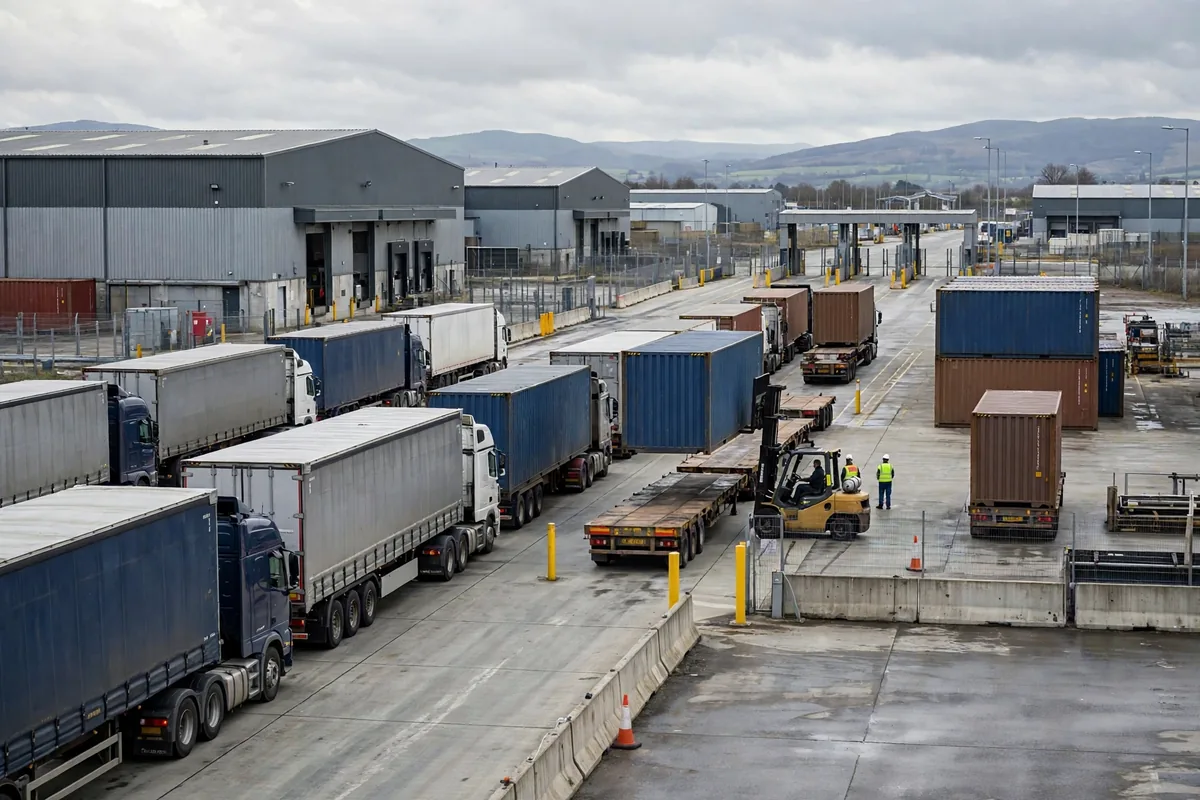
The real value of a border warehouse is not cheap rent. It is absorbing uncertainty early. Freight arrives at a warehouse near Pingxiang first, documents, transloading, and consolidation are all finished inside the warehouse, and the moment the border window opens, the truck rolls. Direct trucking bets all of its uncertainty on a single day at the border. Good day, smooth run. Bad day, everything waits.
A small-appliance seller I worked with ran direct trucks for the sake of simplicity. One peak-traffic week, his truck waited two days outside the border, his Hanoi buyer ran out of stock, and the final payment slipped by half a month. He switched to border staging: freight entered the warehouse three days early and moved the moment the clearance window opened. The staged shipment cost more in rent and transloading, but it avoided two detention days and one buyer claim. Net result: cheaper per shipment. The deciding number was not the rent. It was the number of detention days avoided.
But staging warehouses can also be chosen badly, and here is the counterintuitive part: the cheapest border warehouse usually produces the highest total cost. Cheap warehouses tend to sit farther from the border, run short-handed transloading crews, and work with older equipment. Freight goes in easily and comes out slowly. One transload dragging half a day wipes out the rent saving and then some. Judge a warehouse on three numbers first: drive time to the border, hours to transload one truck, and whether peak-period overtime crews exist. Rent comes fourth.
Consolidation and Transloading: The Other Side of Cheap
Consolidation is the most common way to save money on this corridor, and the easiest way to save yourself into trouble. What it saves is the shared freight rate. What it costs is a badly chosen partner.
A consolidation partner has to match on three things: weight and volume mix, clearance rhythm, and destination distance. Heavy freight paired with bulky freight balances chargeable weight against volume. Two shipments that both need clearance on the same day share one fate: one document problem holds both trucks. And freight bound for Hanoi consolidated with freight bound for Ho Chi Minh City means a wasted detour on the second half. I have seen a shipment save 20% on freight through consolidation, then lose all of it plus a buyer delay penalty when the partner's documents were returned and the truck waited an extra day.
So the consolidation decision is three questions, in order: are the partner's documents complete, does the freight mix fit, and is the delivery urgency in the same tier? Three yeses, then talk about the cost split. One no, take a smaller truck alone rather than boarding that consolidation. It looks conservative. On total cost, it is the cheapest option.
Holiday Peaks on the China-Vietnam Cross-Border Trucking Corridor: Stage Early or Pay for Spot Trucks
When Chinese and Vietnamese holidays fall out of sync, the China-Vietnam cross-border trucking corridor peaks. The pre-Chinese New Year export rush and the pre-holiday stocking surge on the Vietnamese side collide, and border traffic, warehouse rates, and spot truck prices all rise together.
The decision framework splits by monthly volume:
| Monthly volume | Peak strategy | Why | | Occasional small lots | Spot consolidation, no staging | Staging rent eats the margin | | Several shipments a month | Enter the warehouse a week early, move on the window | Locks space and transloading slots | | Fixed weekly departures | Reserve space, sign a monthly handling agreement | Price and slots secured through the peak |
A daily-goods seller I know paid the spot-truck penalty every year before Chinese New Year — spot rates ran roughly 30% above normal, and sometimes no truck was available at all. He switched to pushing freight into the border warehouse two weeks early and moving on the first window. Rent cost a little more, but he never paid a spot premium again. In peak season, small money spent early is always cheaper than big money spent in a panic.
One calculable conclusion to close with: when choosing a routing option for China-Vietnam cross-border trucking, do not start with the freight rate. Start with three numbers — border waiting days multiplied by daily detention and capital cost, the labor and damage cost of one transload, and the peak-period spot premium. Add those three to the freight rate and you have the real cost of the shipment. The freight rate is only the first line of the ledger, never the last.
By Lao Zhou, Logistics Cost Analyst