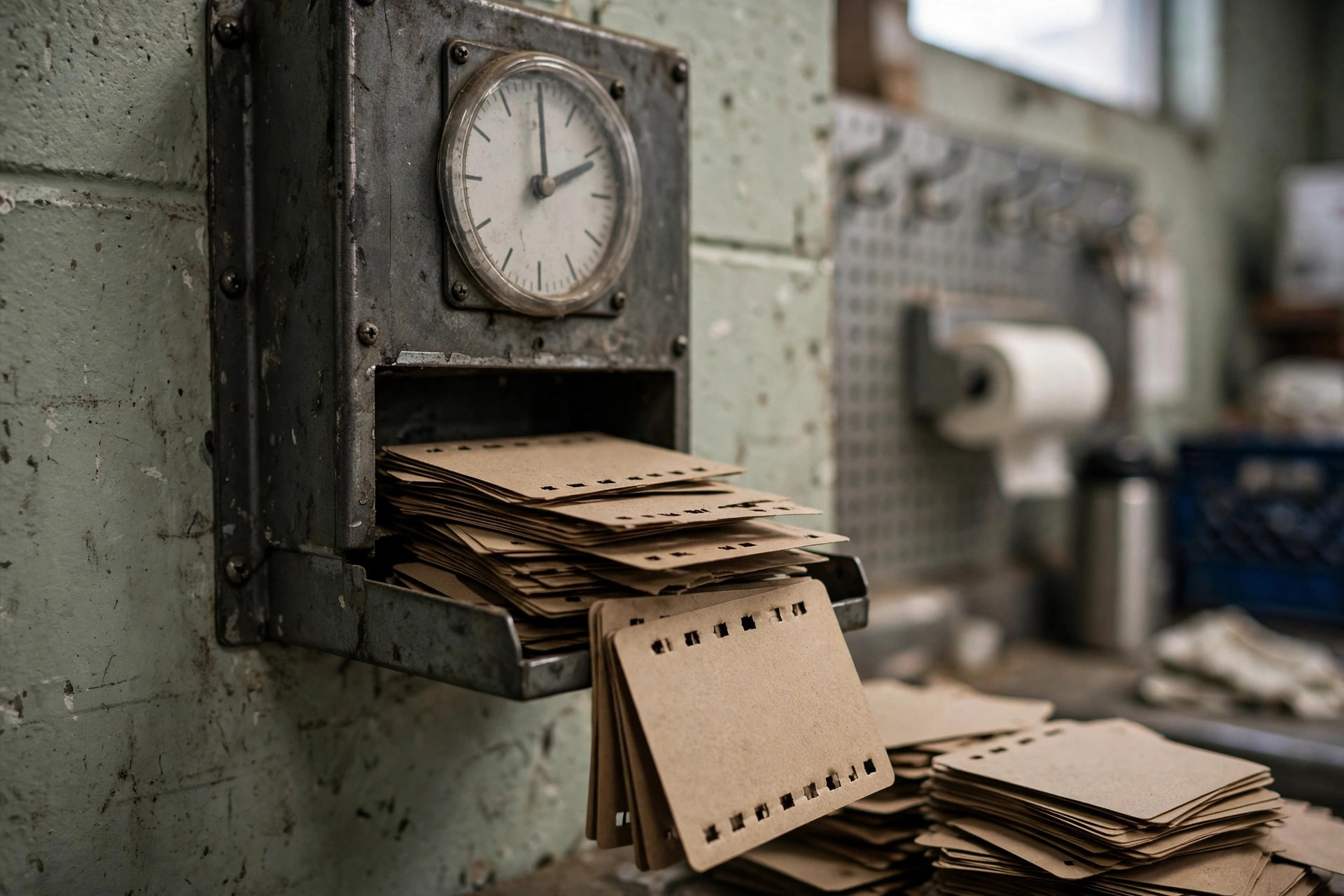
It's 11 p.m. on a Friday. Night shift started thirty minutes ago. A picker slaps his badge on the supervisor's desk — "I quit" — and walks out, leaving half a pick aisle uncovered. The supervisor calls HR. HR says, "He's gone, let him go. I'll run the termination paperwork on Monday." Monday comes, HR crunches the numbers, and the check goes out Wednesday.
The 72 hours California law gives you expired Monday at 11 p.m. From that moment on, every late day costs the company one full day of that worker's wages — up to thirty days.
I've watched this movie play out in California warehouses for twenty years. Our industry turns people over fast, and departures love to happen when the office is dark: night shifts, peak season, temp crews. The instinct of every supervisor and HR rep is the same — deal with it when we're back at our desks. California's final-pay rules don't wait for anyone. Every hour you sit on it, the penalty meter is running.
The single most important thing to understand: the law runs a different clock depending on who ended the employment.
Fired or quit? That answer sets your deadline
California Labor Code Section 201 covers involuntary termination. If the company ends the employment — fired, laid off, position eliminated, all of it — every dollar earned is due and payable immediately, on the spot, that day. Not the next payday. Not "when payroll gets back." I've seen warehouse managers shrug and say, "Payday's next Friday anyway, we'll just roll it in." In California, that's a violation. A discharged employee cannot be made to wait for the regular pay cycle.
Section 202 covers quitting, and it splits into two cases. If the employee gave at least 72 hours' notice, final wages are due on the last day — same as a firing. If they quit without warning, like the picker in my opening scene, the employer gets a 72-hour window, measured from the moment they walked out. Not from Monday morning. Not from when HR opens the file.
So in that Friday-night scenario, the real deadline was Monday at 11 p.m. HR starting the math on Monday morning was already cutting it close — if payroll runs through an outside processor and the check can't mail until Tuesday, penalties start accruing.
Here's a detail most warehouse managers never hear: if the no-notice quitter asks for the wages to be mailed, the employer has to comply, and the postmark date counts as the legal payment date. Mailed Wednesday, the penalty meter stops Wednesday — not when the envelope arrives. Flip side: an employee who hides from payment or refuses a properly tendered check doesn't earn penalties for the days they spent dodging. The law doesn't reward games on either side.
Warehouses have a special wrinkle here: the 2 a.m. firing. A supervisor terminates someone for fighting at two in the morning. Payroll is asleep. HR is asleep. How do you "pay immediately"? You don't figure that out at 2 a.m. — you figure it out now. Set up an emergency final-pay channel with your payroll provider, or keep a standing procedure on site: who triggers it, who signs off, how the money moves. California's labor commissioner will not accept "it was the middle of the night" as an excuse.

One day late, one day's wages: the penalty math hurts more than you think
Section 203 is where the teeth are. These are called waiting-time penalties, and the formula is brutally simple: from the day wages were due, the employee's daily wages keep "running" as a penalty — one day's pay for each day late — until you pay up, capped at thirty days.
Run the numbers and feel the pain. A picker making $25 an hour on an 8-hour shift earns $200 a day. Drag the final paycheck out thirty days and the penalty alone is $6,000 — on top of the wages you already owed. It gets worse: penalties accrue on calendar days, weekends and holidays included. Part-timers count too — even someone who only worked two days a week accrues a full daily rate for every late day.
And the bar for triggering penalties is lower than most managers assume. The statute requires a "willful" failure to pay, but courts read "willful" broadly. No malice needed. If you knew the wages were due and didn't pay them on time, that's willful. "We were swamped," "we didn't know the law," "payroll was on vacation" — none of these are defenses. The one real escape hatch is a genuine, good-faith dispute over how much is actually owed — say, the overtime hours are legitimately unclear and both sides have a real argument. "We don't think he deserves that much" doesn't cut it.
Then there are the traps warehouses fall into over and over.
Trap one: rolling final pay into the next regular payday. California says no.
Trap two: holding the check hostage until the uniform comes back, the keys are returned, the exit paperwork is signed. California expressly forbids conditioning final wages on any of that. Chase the property separately. Pay the wages on time.
Trap three: undercounting what's owed. The final check isn't just base pay. Accrued, unused vacation must be cashed out — California treats vacation as wages under Section 227.3, and "use it or lose it" is illegal here. Overtime, earned commissions and bonuses, unpaid meal-and-rest-break premiums — all wages, all due. Miss one line item and the penalty meter runs just the same. One thing people get backwards: sick leave generally does not have to be paid out at separation, unless your own company policy says otherwise. That's the opposite of vacation, and plenty of managers mix the two up.
This isn't theoretical. Bank of America once faced a class action from roughly 29,500 former employees over systematically late final paychecks and settled for $8 million. If a bank can bleed like that, imagine the exposure in an industry with warehouse-level turnover and a standing habit of "we'll get to it Monday."
The logic behind California's scheme is one sentence: when someone walks out, you don't get to owe them money. Instead of looking for clever ways to buy a few extra days, warehouse operators should turn final pay into a reflex — person leaves, process triggers, money moves. Preventing one penalty pays for the whole system.
I'm not a lawyer, and this isn't legal advice — it's two decades of watching what happens when warehouses get this wrong. For edge cases and anything you're unsure about, check the current text of the California Labor Code and talk to an employment attorney.
A final-pay checklist you can use tomorrow:
Figure out first whether it was a firing or a quit Fired: pay in full on the spot, no waiting for payday Quit with no notice: pay within 72 hours, counting from the moment they left Quit with 72 hours' notice: pay on the last day Include unused vacation, overtime, and break premiums — don't undercount Never hold wages hostage over a uniform, keys, or unsigned paperwork If they ask for mailing, mail to their address — the postmark date is the payment date Make sure night and weekend shifts can trigger the process too, not just Monday HR Keep a written record of when each final payment went out When in doubt, ask an employment lawyer — don't gamble