Let me tell you something. Fifteen years behind the wheel, and I've seen plenty of strange things on the road. But there's one kind of strange that makes me wince for the shipper every single time: the exact same freight, shipped twice.
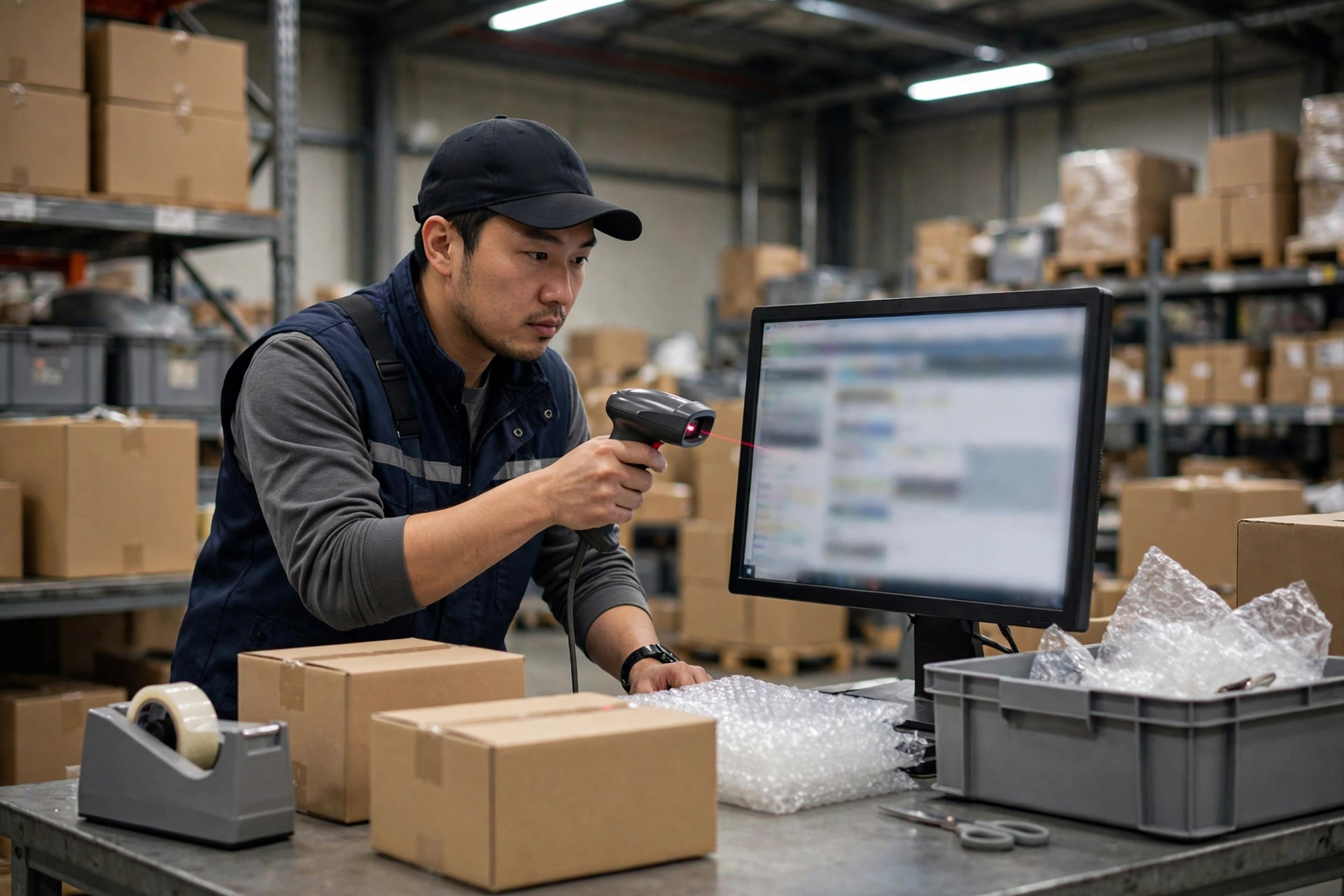
Late last November, right after Black Friday, I was waiting in line to load up at a distribution warehouse in Rancho Cucamonga. Old Wang, the warehouse lead, walked over and said, "Shifu, this load of yours looks funny." I glanced at the paperwork: same lane, same delivery address (an auto parts store in Phoenix), same SKU (brake pads, 48 cases), even the order numbers looked nearly identical — except for the timestamps. One order came in at 9:41 AM, the other at 9:45 AM. Four minutes apart. The system had generated two outbound orders, printed two shipping labels, and the pickers had already staged two identical pallets on the dock.
"Pushed twice?" I asked. Wang just smiled bitterly. "The platform's API hiccupped, never got the acknowledgment, so it pushed again."
That day I drove from Rancho Cucamonga to Phoenix with two identical loads of brake pads headed to the same address. I got two signatures. The receiving guy was baffled: "We only placed one order." The extra load got refused and hauled all the way back. That one round trip of wasted freight cost the shipper hundreds of dollars, for absolutely nothing.
And it wasn't my first rodeo. Back in the summer of 2024, I was loading at a home goods warehouse in Fontana, and the floor supervisor, Xiao Li, vented to me: during peak season, their system spat out hundreds of "suspected duplicate orders" every month — same buyer, same address, same product, ordered minutes apart. One specialist's first job every morning was manually hunting them down, flagging fifty or sixty a day during the big sales. The ones she caught were the lucky ones. The ones she missed? Shipped twice. Getting freight back is a whole different story — the customer refuses it or returns it, the freight money is gone either way, and the goods come back scuffed from the road.
So How Does This Actually Happen? Let Me Break It Down
It works exactly like a phone call.
You call the warehouse: "Hey Wang, send 100 units to Phoenix." Mid-sentence, the call drops. You don't know if he heard you, so you call back and say it again: "Send 100 units to Phoenix." He hears that and thinks — got it, two orders, send two trucks.
That's what happens between a sales platform and a warehouse system, except they call it an API order push. The flow goes like this: a customer places an order on the platform, the platform pushes it to the warehouse system through an API, and the warehouse system replies, "Got it." But sometimes the network stutters, or the warehouse system is swamped, and the acknowledgment doesn't come back in time. The platform assumes the order never arrived — so it pushes it again. Same order, a few minutes apart.
If the warehouse system doesn't have the sense to ask, "Haven't I seen this one before?", it treats the two pushes as two separate orders: two outbound orders, two labels, two picks, two shipments. When the driver loads up, the address, SKU, and quantity all check out on the paperwork. Nothing looks wrong. And just like that, the same freight ships twice. Here's where a lot of people get it wrong: this is not the picker's fault. Pickers follow the paperwork. The system says pick two orders, they pick two orders. The root cause sits one layer up, in the integration — nobody asked, at the moment the order arrived, "Have I already seen this order?"
What Does a Double Shipment Really Cost? Let Me Do the Math
A lot of folks think: so what, one extra shipment — just have it sent back. Let me break down what one duplicated small-parcel order actually burns.
| Cost item | Amount (USD) | Notes |
|---|---|---|
| Extra outbound freight | $8–12 | A 3-lb parcel, UPS/FedEx Ground across states, roughly this range |
| Return freight | $8–15 | Refused or returned — the shipper pays, and return labels cost more |
| Extra warehouse labor | $4–6 | Pick, verify, pack, label — all human hours |
| Customer service time | $5–10 | Complaints, tracking down the order, arranging the return |
| Packaging materials | $2–3 | Box, filler, label — once shipped, they're gone |
| Total | $27–46 | And that's per duplicated order |
Doesn't look like much, right? But volume does the damage. Take a warehouse doing 5,000 orders a day. Even a conservative 0.5% duplicate rate means 25 double shipments a day. At $35 a pop, that's $875 a day — over 300 working days, $260,000 a year. And that doesn't count the hidden costs: when a customer receives two of everything, their first thought isn't "what a generous seller." It's "this seller is a mess." Bad reviews, canceled orders, customers who never come back — those losses don't fit in a spreadsheet.
Practical Advice for Shippers and Warehouses
After all these years on the road, I've figured out one thing: the fix for this isn't on the loading dock. It's in IT. But shippers and warehouse owners need to know how to ask IT for it — in plain language. Otherwise IT thinks "the system runs fine" while the dock crew fights fires every day. Here's the translation.
First, every order number must be unique — and the system must actually honor that uniqueness.
Every order leaving the platform should carry a globally unique order number — like a VIN on a truck, never repeated. When the warehouse system receives an order, its first move shouldn't be generating an outbound order. It should check: have I seen this order number before? If yes, block or merge the second one. If no, proceed. That's called deduplication. Sounds fancy, but it's just "reading the license plate."
Second, the same request sent three times must have the effect of sending it once.
IT folks call this "idempotency." Scary word, simple meaning: whether you say "send 100 units to Phoenix" once or three times, the result should be 100 units — not 300. When you talk to IT, say it like this: "When the API times out and retries, the same order pushed multiple times must only ever produce one shipment." Let them figure out the how. You say the what.
Third, retries need a cool-down and a cap.
Retries themselves aren't the villain — if the network hiccups and you don't retry, the order gets lost, which is worse. But retries can't be blind and endless: push once, get no acknowledgment, wait a few dozen seconds, push again. Two or three tries, and if it still fails, hand it to a human instead of hammering away. A lot of duplicate orders come from a platform pushing the same order five or six times in a minute, with the warehouse system accepting every single one.
Fourth, the warehouse needs a human safety net.
System fixes take time. Until IT gets it done, the warehouse should spend 15 minutes every morning screening "suspected duplicates": same buyer, same address, same SKU, ordered within 30 minutes of each other — flag them for a human to confirm. That Fontana warehouse? That one trick caught most of their duplicates during peak season. Manual screening is crude, but crude tools save the day when it counts.
One last thing, and it's counterintuitive: a lot of warehouse KPIs actually reward double shipping. Warehouses get measured on pick speed — "outbound within 2 hours of order drop." When two identical orders pop up in the system, the picker, racing the clock, is glad to just get them picked. Nobody has time to wonder whether these two orders are actually the same one. The stricter the speed KPI, the more duplicates slip through. It's a trade-off: if you want speed, the system has to do the checking for you. If the system doesn't check, speed becomes "fast and wrong." So while you push for turnaround time, you have to budget time and headcount for verification — otherwise you're forcing the front line to gamble with the customer's money.
One more thing: don't tell yourself "we're too small for this to happen." Duplicate pushes don't care about your order volume — one network hiccup, one server restart, and a fifty-order-a-day warehouse gets hit just the same. And smaller warehouses feel it more: one duplicated shipment eats a bigger slice of a thin margin.
An Old Saying to Close
We drivers have an old saying: "Better to stop three minutes than to rush one second."
Same thing here: if the system spends one extra second asking "have I seen this order before," it beats burning dozens of dollars and a pile of headaches after the fact. Fast doesn't mean driving blind. When you talk to IT, bring them this saying — they'll understand.
By Shifu Zhao, Trucking Veteran (15 yrs)