One of our clients — a home-furnishings e-commerce company with a DC in Ontario — had their warehouse director walk into the boss's office early last year with a 40-page AI proposal. He walked in confident. He walked out pale.
David, the director, is a solid operator. He'd compared three vendors and picked AI vision inspection: cameras over the audit stations, catching mispicks and missing parts automatically. The tech was sound. The pilot data was beautiful: mispick rate down from 0.8% to 0.2%.
The boss listened for ten minutes and asked three questions: "What's the total cost?" "When does it pay back?" "If it blows up, who's responsible?" David couldn't answer — thirty of his forty pages were about accuracy rates, deep learning, and industry trends. Not one page did the math on those three questions. The boss slid the proposal back across the desk: "Think it over."
Three months later, David came back with one page. Approved. That page had three calculations and an exit plan. Let me break down what was on it — because on the vendor side, we've watched dozens of these internal pitches, and we know what bosses actually want to hear. This is the stuff a vendor's sales rep will never tell you over dinner.
Your boss doesn't care about accuracy rates
Here's the uncomfortable truth: your "99.2% recognition accuracy" means roughly nothing to your boss. He's not technical. He doesn't understand it, and he doesn't care. He cares about three things, always the same three: money, risk, people.
Money: how much, and when it comes back. Risk: what happens if it fails, and can we stop. People: layoffs? New hires? What happens to the current crew?
We've seen dozens of killed AI proposals, and they all die the same way: all technology, no business case. The more "empowerment," "closed loop," and "intelligent transformation" in the deck, the faster it dies. The folks on the client side sit through a dozen of these decks a month. They're immune.
David's second pitch had just three numbers.
Number one: the cost of the status quo. Their mispick rate was 0.8%. At 20,000-plus orders a day in peak, that's 160 bad orders daily. Cost per mispick — return shipping, customer service time, reshipping, bad reviews — by their own books, well over $200,000 a year. That's the baseline. Without it, everything else is hot air.
Number two: the pilot. Not the whole building — two audit stations, 60 days, capped cost. Notice those two words: capped cost. When a boss hears "capped," his shoulders drop an inch.
Number three: payback. Extrapolating pilot data to the full building, conservative estimate: 14 months. Note the word conservative. When a vendor tells you eight months, you discount it by 30% before you take it upstairs — that margin is your own survival room.
The boss approved on the spot. Why? Because those three numbers answered his real questions: how much (capped), when it pays back (14 months), what if it fails (pilot can stop, losses contained).
And the people question every boss asks — David handled it like this: vision inspection wouldn't cut headcount at the audit stations; the freed-up hours would shift to exception handling and secondary packing, exactly the flexible labor peak season always runs short on. That sentence matters. A lot of warehouse managers go vague when the boss asks about headcount. But what the boss really fears isn't spending on labor — it's morale problems on the existing team, and being told only good news. Lay out the people plan clearly, and you're telling him: no fire in the backyard.
Counterintuitive but true: a project pitch is not a technology review. It's a business review. You don't need to prove the AI is advanced. You need to prove the money works. Bosses aren't afraid of spending. They're afraid of spending on something they can't explain.
What's hiding in the quote
Once the project is approved, it's contract time. Here's the insider part — the part I most want to share: learn to take a vendor quote apart.
A typical AI project quote has four parts: hardware, software licenses, implementation and integration, and annual service fees. Many warehouse managers only look at the total. That's trap number one. On a $500,000 project, hardware might be $150,000 and implementation $200,000 — and implementation is where the margin is fattest and most negotiable. Whoever negotiates the implementation day-rate first is negotiating the page the vendor's sales rep least wants to discuss in detail.
Trap number two: the "free pilot." When a vendor says the pilot is free, ask: free of what, exactly? Usually only the software license is waived. Hardware still sells, integration still bills. Sixty days later you've spent well into six figures, and walking away? Sunk cost will drag you forward. Remember: the free stuff is the most expensive stuff.
Trap number three: annual service fees. Typically 15% to 25% of the first-year contract value, every year — check each vendor's current pricing. Over five years, service fees can exceed what you paid for the hardware. This number must be in front of your boss at approval time. Otherwise, at renewal in year two, you're the one who "didn't mention it."
One more that most people miss: the expansion clause. You're piloting two stations now; next year you want ten. Is the unit price locked? If not, the vendor quotes you fresh pricing — up 20% per unit — and you have zero leverage. A price lock belongs in the first contract. It's what vendors least want to give and what you most need to get.
The cautionary tale: the client who signed the whole building
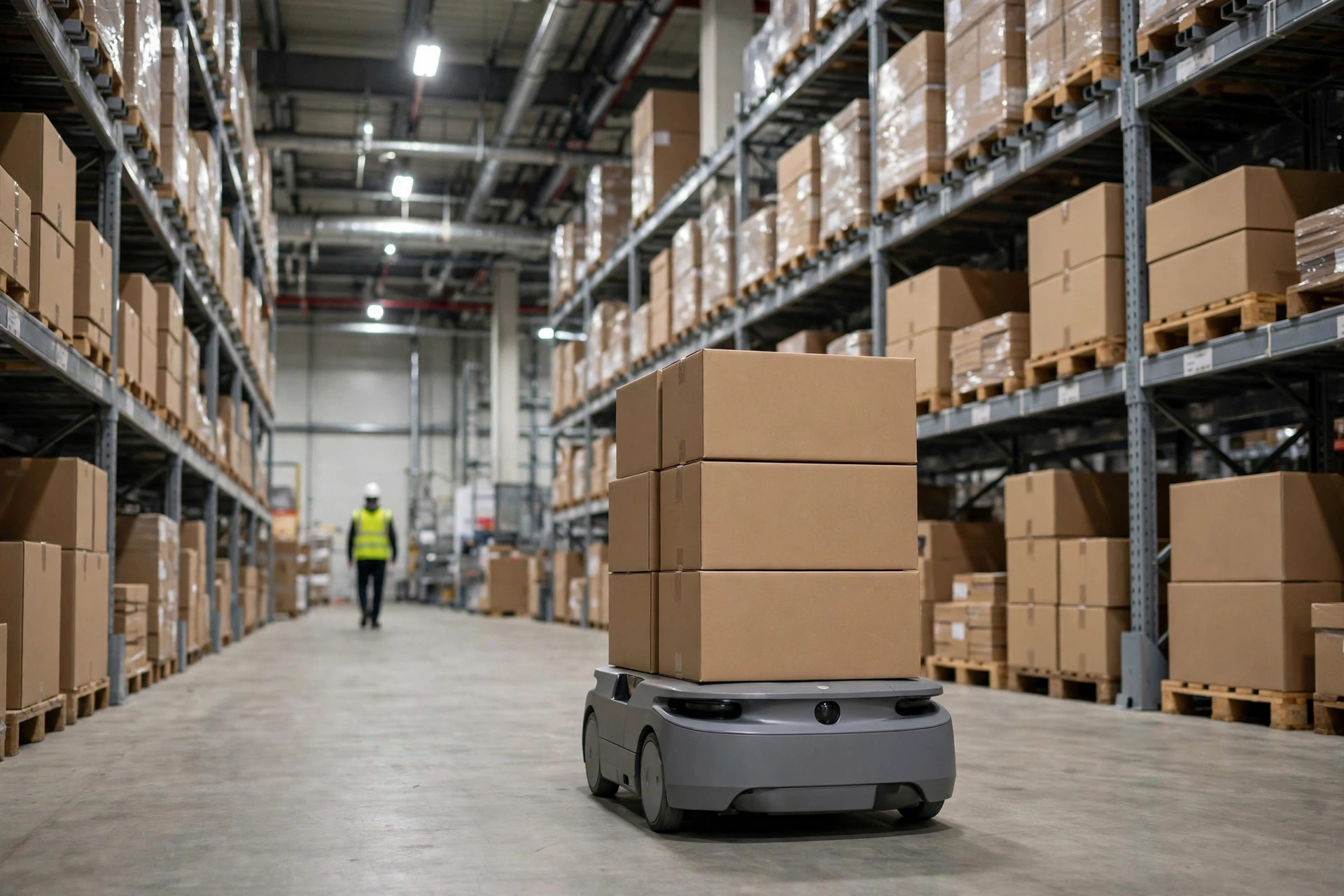
Now the other story. Another client of ours, a 3PL, bold boss, signed the full-building AMR deal in one go — a multi-million-dollar contract. Nine months after go-live, actual throughput still hadn't hit the pre-sales numbers. When they pushed back, they searched the contract in vain for a performance guarantee — the promised throughput lived only in the pre-sales deck. Remember this: decks don't count. Only what's written in the contract counts.
We stepped in and negotiated a supplement: KPI-linked terms, milestone-based payments, service credits for missed targets. It got fixed, but that tuition was avoidable.
So here's my advice: a pilot isn't about saving money. It's about buying negotiating leverage. Sixty days of pilot buys you three things: real data (payback math stops being the vendor's deck numbers), freedom to exit (if it fails, you stop, losses capped), and negotiating position (when you talk full-building rollout, you're holding real operating data, and the vendor can't bluff on pricing).
The one-page pitch checklist
Finally, the checklist. Next time you pitch, fill these five boxes on one page, then go see the boss:
| # | Fill in | What the boss hears |
|---|---|---|
| 1. Baseline cost | What the problem costs per year (your own books) | This is worth fixing |
| 2. Pilot plan | Scope, timeline, capped cost | Risk is contained |
| 3. Payback math | Conservative / base / optimistic cases | The money comes back |
| 4. Exit plan | Max loss if the pilot fails, can we stop | Failure isn't fatal |
| 5. People plan | Headcount changes, reassignment of current staff | No fire in the backyard |
Pilot contract versus full-building contract:
| Pilot | Full building | |
|---|---|---|
| Upfront | Small, capped | Large, millions |
| Data quality | Your own measured data | The vendor's deck |
| Exit cost | Low | Extremely high |
| Leverage | Grows as you go | Gone the day you sign |
One more piece of real talk: never take your boss a single option. Take two: Option A (pilot, small steps) and Option B (full building, all-in), with Option A's economics worked out clearly. Bosses are human — give him a choice and he feels like he's the one deciding; give him one option and his instinct is to find fault with it.
Next time you negotiate a contract, ask these three questions: One, what happens if you miss the promised numbers — is it in the contract? Two, if the pilot fails, what's my maximum loss, and can I stop anytime? Three, who owns the data, can the hardware be returned, and is expansion pricing locked? Ask those three, and the vendor will know you know the game. Half the padding in the quote will squeeze itself out.
By Susan, 3PL Sales Director