Conclusion first: for a US buyer, the most expensive part of importing Pakistan cotton is rarely the purchase price. It is the few steps after arrival that never got done properly. Pakistan cotton import warehouse inspection exists for exactly this reason. A bale count that does not tie out, moisture above the contract line, or contamination found only at the spinning line will cost far more than the half day of inspection you skipped. This is a mistake I have seen three times, and the script is almost always the same: the cargo looks fine, the paperwork is complete, and nobody runs the full check on the day the truck arrives.
Why does arrival inspection need to be its own step? Because cotton is unforgiving in ways other imported raw materials are not. It hates damp, it hates dirt, and it hates mixed lots. One bad bale can compromise a pallet, and once lots are mixed, they cannot be unmixed. Bale covers can tear in transit, a container can take on moisture, and different lots can be packed together at origin. Once cotton is on your racks, responsibility gets murky. Arrival inspection fixes the evidence while it is still clear.
Here is a scene I handled. One autumn, a spinning mill in the southeastern United States received several containers of Pakistan cotton during a production rush. To save time, the crew checked only the outer layer of a couple of bales, looked at the covers, and signed the goods in. Once spinning started, yarn breaks rose sharply. When the mill dug into it, several bales contained darker short fiber that clearly belonged to a different lot. By then the covers were gone and only a handful of photos of the original marks remained. The claim dragged on for rounds of negotiation, and the mill ended up absorbing part of the loss. The half day saved at receiving was repaid over weeks on the spinning floor.
The opposite scene shows what good looks like. A California importer insisted on the full checklist for every arrival: bale counts pallet by pallet, marks photographed bale by bale, damaged bales isolated, moisture and contamination samples taken and sealed on the spot. One container held a few bales that had gone damp and stiff. They were isolated in a quarantine area and never entered regular stock. The claim that followed had photos, sealed samples, and a same-day inspection record, so it moved through the contract process without much argument. The inspection time was barely longer. The difference was doing the work while the cargo and the responsibility were still clear.
Pakistan Cotton Import Warehouse Inspection: The Arrival-Day Bale Checklist
Work this list in order, and do not trim it on instinct. Do not rush goods onto racks before it is done.
First, count bales and spot-check weight. Count pallet by pallet against the bill of lading and packing list, and record any short or over shipment on the spot rather than reconstructing it later from memory. Weigh a spread of pallets, not just the most convenient ones.
Second, verify marks and lots. Marks, lot numbers, and contract numbers must agree. Keep mixed lots separate, and do not consolidate them onto one pallet just to make the warehouse look tidy. If a mark is illegible, photograph it first and then reconcile it against the paperwork. Never overwrite a mark.
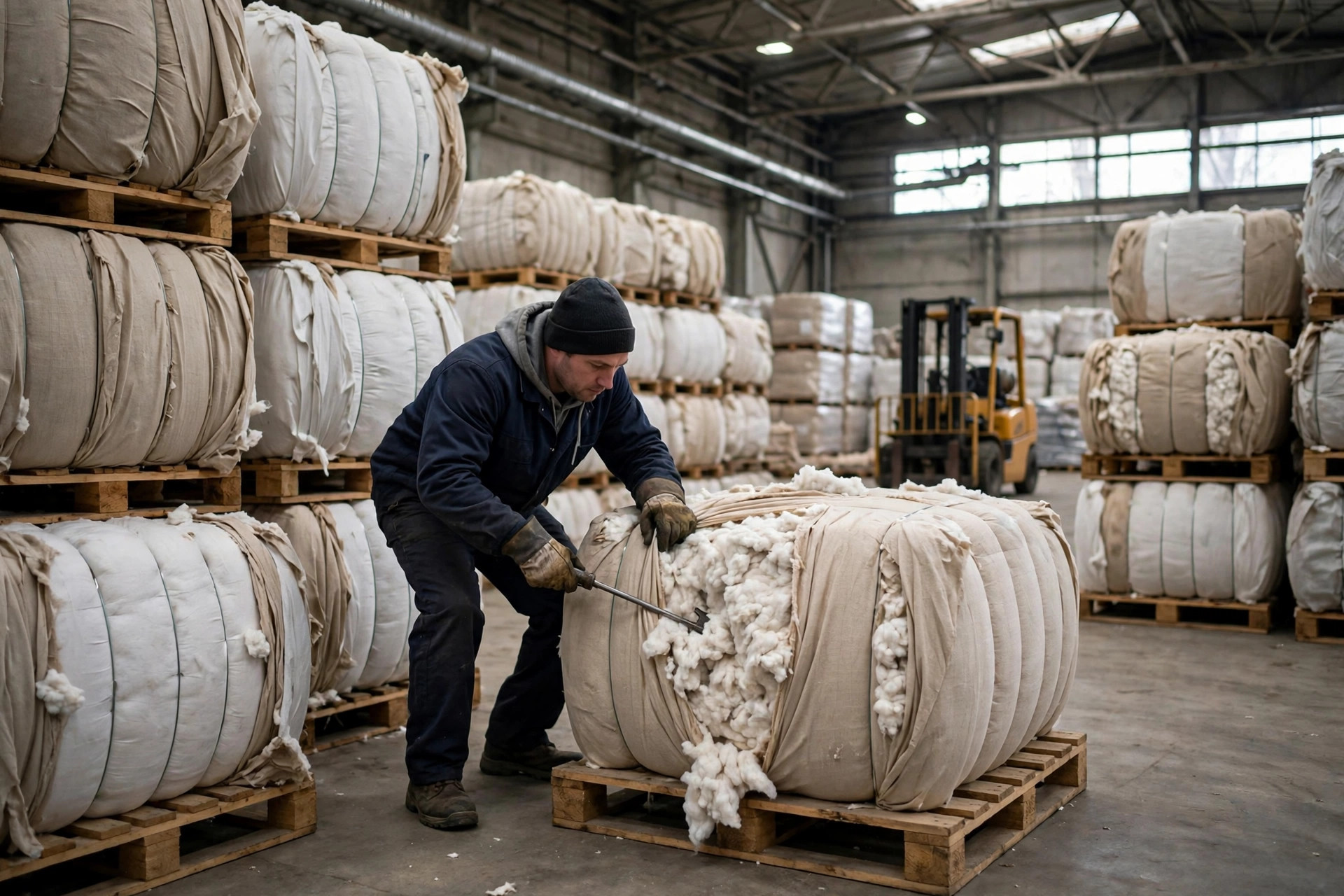
Third, inspect bale covers for damage. Any torn, ripped, or re-strapped bale goes to isolation first. Damaged covers let in moisture and contamination, and they are the bales most likely to be mistaken for good stock later in the flow.
Fourth, sample for moisture and contamination. Sample across pallets and positions, seal each sample, and label it with lot and date. Keep samples until the claim window has closed. Judge moisture and contamination against the contract, and where the contract is silent, against the buyer's specification. Do not invent a new standard on the dock.
Fifth, issue the inspection record the same day. It should carry bale counts, weight spot-check results, mark verification, the damaged-bale list, sample seal numbers, and site photos. Enter the record into the system before the goods are put away, not after.
Pakistan Cotton Import Warehouse Inspection: What to Do When Moisture or Contamination Fails
Finding a problem is not the disaster. Having no disposition path is. Fix four paths in advance so the dock does not have to argue about them:
| Finding | Disposition | Key point |
|---|---|---|
| Meets the contract | Release to stock | Put away by lot, with lot identity traveling with the stock |
| Cover damaged, interior looks sound | Isolate and re-inspect | Re-inspection record stays attached to the lot |
| Moisture or contamination above the contract line | Isolate and seal samples | Hold from issue, pursue the claim on samples and photos |
| Mixed lot or unidentifiable lot | Freeze the whole pallet | Do not break or consolidate the pallet until a written decision exists |
Here is the counter-intuitive judgment: the strictest inspectors end up with the fewest claims and the least hassle. When a supplier knows you will open bales, photograph marks, and seal samples on arrival day, their own quality control tightens before shipment. The loosest buyer, who looks like they are saving labor, is actually using their own spinning floor to cover for someone else's quality control. Strict inspection is not distrust. It draws a clean line of responsibility, and that protects the supplier too.
Storage handover follows inspection, and it comes down to four things: a dry warehouse, protection from moisture, protection from pests, and fire prevention. Do not stack cotton bales directly on the floor. Raise the bottom layer, keep bales off walls for ventilation, and keep newly arrived cotton out of the dampest corners of the building. Store lots separately with lot marks facing outward so anyone can identify stock at a glance. Follow the warehouse's existing pest and fire rules, and keep the cotton area especially clear of clutter and blocked fire routes. Hot work should stay as far from the cotton area as possible. These all sound like common sense, yet every post-incident review I have read finds at least one of them undone.
How Automation Helps the Inspection Step Without Replacing People
Automation is not there to replace the inspector. It is there to keep the evidence chain unbroken. When goods arrive, the system creates a lot record, and mark photos, sample numbers, and damage records hang off that lot, so tracing one bale's history does not mean digging through paper. Handheld scanning beats manual counting and removes transcription errors. Moisture meter readings that flow straight into the system remove the hand-copy step, and with it one more chance to copy a number wrong.
The go-live checklist lesson is worth stating plainly. Do not apply your established supplier's receiving rhythm to a new supplier's first container. Walk the first container all the way through, from unloading and counting to sampling and putaway, and fix on the same day anything that jams or any record field that cannot be filled on the spot. Many receiving processes were tailored to an old supplier, and a new origin or bale type exposes the gaps. Get the first container right and the rest can run on rhythm.
One more alignment point before you roll this out: the inspection checklist and the lot fields in your warehouse system must match before go-live. If the system has no field for the lot number, mark, or sample seal recorded on the dock, those details end up buried in free-text notes that nobody searches. Check the system fields first, add what is missing, and only then talk about execution.
The recurring failure points, for a final self-check: inspection records completed after the fact, with photos and samples that do not match the timeline; damaged bales put away to save effort, letting a problem spread across a pallet; mixed lots consolidated until lot identity is lost; moisture and contamination judged by feel instead of by contract; and samples thrown away before the claim window closes. Hold those five lines and the arrival step will stand.
One line to close on: spend the extra half day inspecting on arrival day, and you will not spend weeks hunting for the cause on the spinning floor. That is what Pakistan cotton import warehouse inspection delivers: the dock works the list, claims carry evidence, putaway carries lot identity, and storage handover connects cleanly.
By Lin Xiao, WMS Implementation Consultant