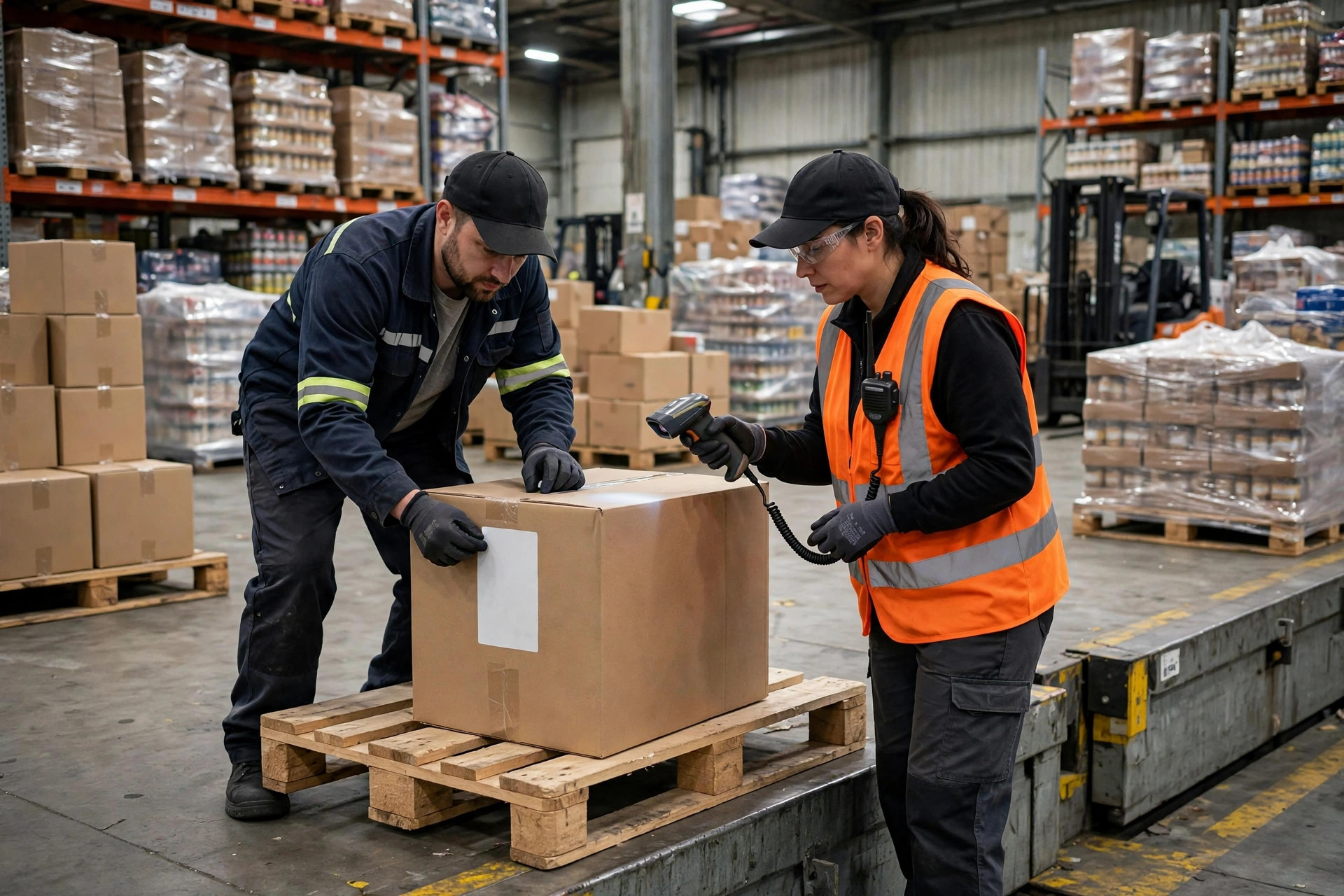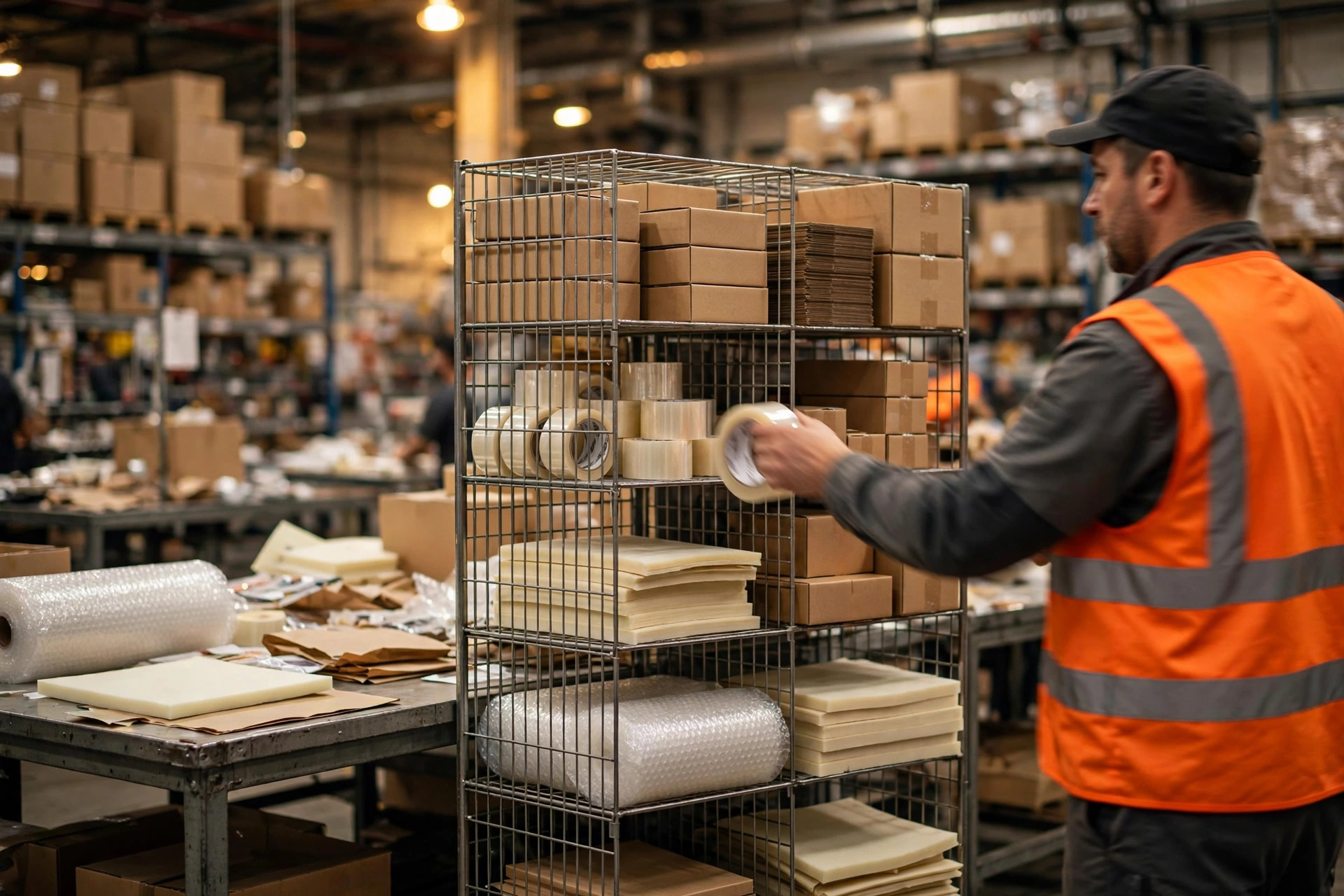
It was 2:17 in the morning when my phone rang.
Our night-shift lead, Lao Wang, sounded shaky. "Boss, we're out of packing tape. All twelve packing stations are dead in the water."
"What about the supply cage?"
"Empty too. We burned through the last two cases tonight."
That was day three of our peak-season rush, order volume running triple the normal. I'll be straight with you — packing consumables stockouts like this hit me a few times a year. Tape, cartons, bubble wrap. They take turns, and they always pick the worst possible moment.
The night the tape ran out
I drove to the warehouse that night. On the way, Wang called again: "Boss, can we borrow a few cases of tape from the warehouse next door? They've got a night crew too." I told him to have the guys stack the sealed cartons down the line first, keep the stations clear. When I walked in, all twelve packing stations sat there with empty tape dispensers, and seven or eight young guys were just squatting on the floor, waiting.
In the end I dragged our buyer, Xiao Zhao, out of bed at 3 a.m. He found a packaging supplier that runs 24 hours, paid a 30% premium, and the tape showed up at 4 a.m. The line came back to life, but the backlog from that night took the day shift two full hours of overtime to clear.
Here's the thing, brothers: when consumables run out, the expensive part isn't the tape. It's every minute the line stands still.
A stockout is never just "we forgot to order"
Afterward I did a postmortem, and the problem wasn't ordering. Zhao places his purchase orders on time every month, and the supply cage was never empty. The problem was rhythm.
Our buying cycle is monthly, the supplier delivers twice a week, and the lead time from order to dock is about three days. On a normal day we burn through roughly forty rolls of tape, and that rhythm works fine. But when peak season hits, volume triples and tape consumption more than doubles. A three-day lead time can't catch up.
Worse, warehousing and purchasing are two different teams. Only the guys on the packing line know when the tape is about to run out; Zhao sits in the office looking at last month's usage report. When the information lags by half a beat, a stockout is just a matter of time.
Cartons were even uglier. We launched a new product line, and the supplier dragged the custom carton tooling out by a full week. All we could do was substitute oversized generic cartons — small item, big box — and the carrier billed us on dimensional weight. That week's freight bill hurt. Honestly, running out of cartons is worse than running out of tape. You can buy tape at 3 a.m. if you pay up. Custom cartons? You just wait.
We tried kanban twice. The first attempt failed.
Our first instinct was the dumbest one: stock more. We doubled the supply cage — tape went from two cases to five, cartons filled half a lane.
What happened? Tape sitting too long goes yellow, the adhesive weakens, and cartons pop open with a fingernail — we picked up two customer complaints over it. The cartons were worse: stacked along the lane, a batch got damp and warped, and we sold them off as scrap. That day I learned my lesson: overstocking isn't safety, it's waste. The higher the waterline, the deeper your problems hide, and you don't even know what you're paying for.
Round two, we changed the game: stop fighting over quantity, fix the rhythm instead. We borrowed the kanban pull system from lean manufacturing, but ours is about as scrappy as it gets — the two-bin method.
Every packing station keeps exactly two cases of tape. One in use, one on standby. When the open case runs dry, the guys flip the empty case upside down and park it in the most visible spot on the rack. The empty case IS the signal.
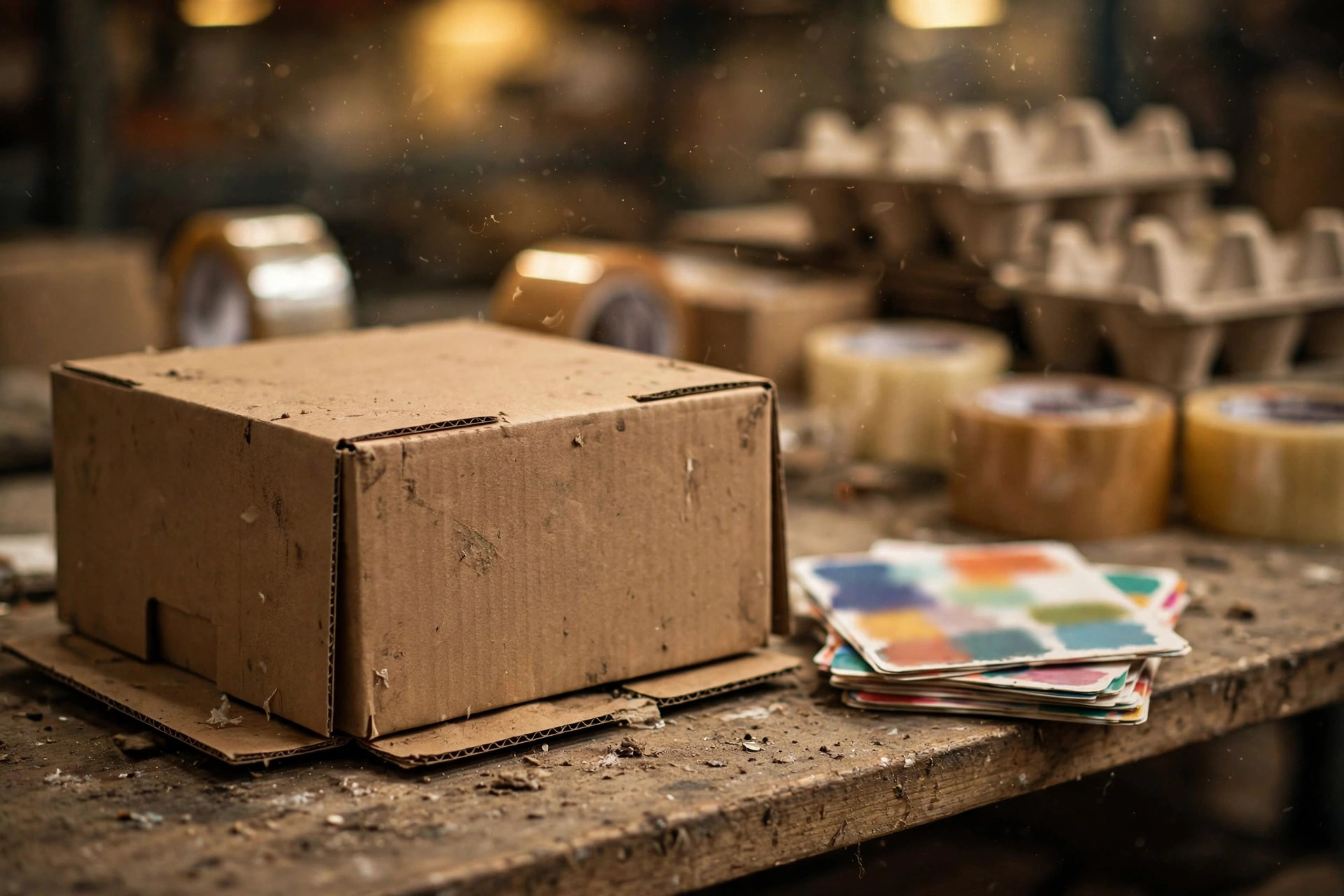
Inside each empty case sits a kanban card with four things on it: item name, spec, replenish quantity, supplier. Card travels with the empty case — whoever sees it walks it over to purchasing. Zhao gets the card, and the stock has to be back within three days. That's it. No system, no scanning. Eyes and legs.
How many kanbans do you actually need? Let's settle it.
Two-bin was settled. Next question: how many bins per consumable? No gut calls — we use the classic kanban quantity formula:
Number of kanbans = (Daily demand × Lead time × Safety factor) ÷ Container quantity
This is the standard lean formula; I cross-checked it against multiple sources before using it. Our tape, as an example:
- Daily demand: 40 rolls (average in a normal month)
- Lead time: 3 days (Zhao's order to supplier delivery)
- Safety factor: 1.5 (our house number; we raise it to 2.0 for peak season)
- Container quantity: 36 rolls per case
40 × 3 × 1.5 ÷ 36 = 5. Round up: five cards. So for tape, five kanban cards circulate through the whole warehouse, matching five cases of stock. One card's worth is with purchasing being replenished; four cards' worth is live on the floor.
Here's the counterintuitive part, and most people's first instinct is wrong: more kanbans is not better. More cards means a higher waterline — the stockout risk gets buried, not solved. You never learn your true consumption rate, and the next peak season blindsides you again. Kanban's whole point is making risk visible. Fewer cards, sharper feel for what you actually burn.
Cartons got the same treatment. For the standard sizes, plug daily demand and lead time into the formula, and each size gets its card count — crystal clear. Oddball sizes don't get kanbans; they go through ad-hoc requests. They don't earn shelf space.
How we run consumables replenishment now
This system has been running for over a year. It's our fixed routine now:
First, a dedicated kanban rack stands by the supply cage, zoned out: tape zone, carton zone, bubble wrap zone, label zone. Two cases per slot — one live, one backup. Flipped empty case means reorder. Anyone can read it.
Second, every Friday before clock-out, the shift lead spends ten minutes walking the rack. Cards all present? Empty cases delivered? Confirmed on the spot. No cycle-count system needed — just eyeballs.
Third, two weeks before peak season, every consumable's safety factor goes to 2.0 and card counts go up. It's a planned, temporary bump. The moment peak ends, it comes back down. No permanent high waterline.
Fourth, a new hire's first lesson from the veterans isn't how to pack — it's "see an empty case, don't hesitate, walk the card to purchasing." I say it to everyone now.
And the math. Setting up this kanban system cost us one rack and a stack of cards — under two thousand in local currency. Compare that to one stockout: forty minutes of dead line, twelve stations idle, a backlog that cost the day shift two overtime hours, and a 30% premium on an emergency 3 a.m. purchase. You do the math.
| One stockout | One kanban setup | |
|---|---|---|
| Direct hit | ~40 min of dead line, everyone waiting | One rack + one stack of cards |
| Knock-on | Backlog, 2 hrs overtime to catch up | 10-min visual check weekly |
| Emergency cost | ~30% premium on rush purchase | Temporary card bump pre-peak, then down |
| Hidden cost | Crew morale takes a hit, lead gets chewed out | Near zero |
One last reminder for fellow operators: kanban dies the moment it becomes theater. Cards go missing and nobody replaces them, empty cases get flipped and nobody delivers them, purchasing gets the card and shrugs — then the whole thing is dead. Ours survives on one habit: the shift lead glances at the consumables rack during every handover. Tools are dead things; people are the living part. It's an old cliché, but every stockout I've ever seen started with a person dropping the ball first.
By Chen Feng, Warehouse Operations Manager