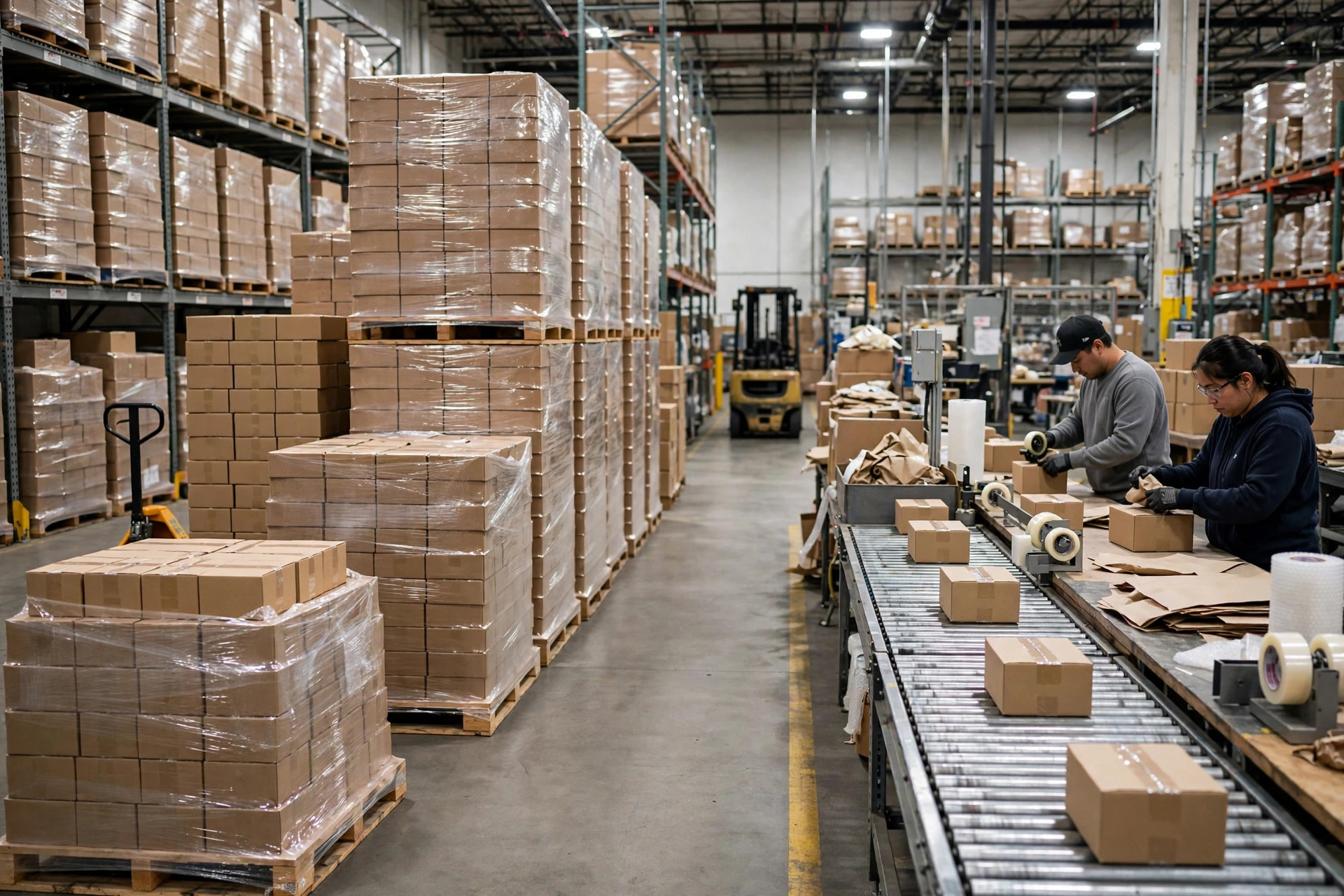
Let me start with our predicament. Our warehouse sits east of Los Angeles — 3,000 square feet, six people including me, fulfilling orders for a dozen or so DTC sellers. Big warehouses have fraud teams and lawyers. What do we have? Me, a secondhand label printer, and a heart that skips a beat every time the word "chargeback" shows up.
A chargeback is the e-commerce version of getting robbed twice. The customer — or "customer" — tells their bank "I didn't make this purchase." The bank yanks the money back, no questions asked, and the seller gets slapped with a dispute fee on top. The goods are already gone. For a small warehouse like ours, one $200 chargeback wipes out a month of fulfillment fees from that seller. We can't afford to burn money like that. Literally.
So over the last two years, necessity forced us to build a scrappy little system for blocking fraud orders from the warehouse side. No machine learning, no enterprise software. Just eyeballs, a spreadsheet, and discipline. Here's the whole playbook.
What a chargeback really costs: a painful little math exercise
Most people think a chargeback costs you the order value. Bless. Let me break down a real one from last December. A skincare seller we fulfill for — a $189 serum set shipping to Florida. Three weeks after delivery, the dispute notice arrived. The damage: $189 in product gone, $12 in shipping wasted, a $15 dispute fee, and three hours of back-and-forth with the bank. Total: $216 evaporated, not counting labor.
The collateral damage is worse. Push your dispute rate past 1% and your payment processor starts watching you. Push it further and they freeze your funds or shut down your account. For a small seller, that's a death sentence with a waiting period. So "it's just one order" is exactly the wrong attitude — chargebacks kill by percentage.
Here's the counterintuitive part: the dangerous orders usually don't look shady. They look like dream customers. Real shoppers compare prices, ask customer service "is this good for oily skin?", hesitate for two days. Stolen cards have one priority: speed. Ordered at 2 AM, overnight shipping without blinking, billing address in one state and shipping address three time zones away. Nine times out of ten, that "amazing customer" is here to shop — with your inventory.
Our redneck method: stopping fraud orders with a two-hour hold
Big companies have ML fraud scoring. We have Excel and eyeballs. Our process is embarrassingly low-tech, but in all of 2025, out of 40,000+ orders we fulfilled, exactly three fraud chargebacks slipped through.
Step one: the traffic-light triage. After the daily order cutoff, Xiao Li on our packing line spends 20 minutes scanning orders and tagging them on three signals.
Red light (hold the shipment, confirm with the seller by phone or email before it moves): billing and shipping addresses in different states on orders over $150. High-ticket orders placed between midnight and 5 AM. Same card, three or more different shipping addresses in 24 hours. The unholy trinity of expedited shipping plus brand-new customer plus high order value.
Yellow light (take a second look): first-time buyer goes straight for the most expensive item in the store. Gibberish email address. Shipping address is a freight forwarder or looks vacant — we've built up a little notebook of sketchy local addresses over the years.
Green light: repeat customer, address history matches. Ship it.
Step two: how the hold actually works. We nailed a small chalkboard to the wall next to the packing bench — yes, a physical chalkboard. Red-light tracking numbers go on the board. The box can be packed, but no label gets printed and nothing goes to the carrier. If the seller doesn't confirm within two hours, the order rolls to the next day. Slow? Sure. But what's more expensive — a two-hour delay or $216 down the drain?
Step three: address verification, the cheap way. No fancy tools needed. Google Maps the shipping address and check Street View — house or empty lot? The USPS website has free address validation. Phone area code doesn't match the shipping state? Flag it. All of this takes under two minutes per order.

When a chargeback still lands: building an evidence chain that wins
Even the best net has holes. Last July one slipped past us: Miami shipping address, New York billing address, $240. The seller was chasing a monthly sales target and told us to skip the hold and ship. Three weeks later — chargeback. $240 plus the $15 fee. You should've seen his face.
Fighting a chargeback (the industry calls it representment) is basically a trial with the bank as judge. Your odds depend entirely on your evidence chain. Here's what we now archive for every single order: the order screenshot (with timestamp and IP address), the AVS/CVV verification result from checkout, a packing photo with the weight (we mounted a $60 camera over the packing bench that snaps automatically), the carrier label stub, delivery confirmation (screenshot the tracking page showing "delivered" — download the PDF delivery proof from FedEx or UPS), and every message exchanged with the customer.
The dispute letter doesn't need to be eloquent. Lay out a timeline: ordered at X, paid with this card, AVS passed, packed and weighed at Y, handed to carrier at Z, signed for at W. Bank reviewers read hundreds of these a day. A clean timeline with complete documents beats clever wording every time. We've helped sellers fight 11 disputes and won 7. Every win had a complete evidence chain; every loss was missing either the delivery proof or the packing record.
One more trick: for high-value orders, pay the extra dollar or two for signature confirmation. In a dispute, that's your star witness.
Three suggestions for fellow small warehouses and sellers
First, stop thinking fraud prevention is a big-company privilege. Our traffic-light triage runs on one spreadsheet and costs 20 minutes of one person's day. You don't need a $5,000-a-year fraud platform. You need the discipline to pause shipments for two hours.
Second, put it in writing with your sellers (or your warehouse). Red-light orders don't ship without confirmation — that goes in the fulfillment agreement, not in a handshake. Our contracts now have a clause: if the seller overrides a hold and forces shipment, the chargeback loss is theirs. Get the awkward conversation done upfront and you'll never have the painful one later.
Third, know your "chargeback stop-loss line." Our rule: when monthly chargeback losses exceed 5% of fulfillment fee revenue, the interception process gets an upgrade — say, adding phone verification. Let the numbers tell you when to level up, not your gut.
At the end of the day, fraud defense at big companies runs on money and systems. At a small warehouse, it runs on attention to detail and process. It's not glamorous. But in 2025 we caught 40+ suspicious orders before they shipped, and at an average of $180 a pop, that's the team's year-end bonus right there.
That's the small-warehouse way of staying alive.
By Xiao Ma, Small Warehouse Owner