I have run d2c fulfillment warehouse operations for five years, and I am tired of one piece of advice: just hand everything to a platform warehouse and stop worrying. It does save worry. It does not save money. In my first year, I sent everything to a platform warehouse, and at year end my cost per order was nearly a third higher than shipping it myself, once storage, pick fees, and long-term storage charges were added up. A small warehouse can be tiny. The numbers inside it cannot be vague.
Why D2C Fulfillment Warehouse Operations Beat Platform Warehouses for Small Brands
In the summer of 2023, I shipped my first batches from a garage in Los Angeles. Some days I had only a dozen orders, and I packed until 2 a.m. with tape stuck to my hands. But I knew three things every night: how many orders went out, what each one cost me, and which product was eating the most shelf space. Later, when volume grew, I moved everything to a platform warehouse to save time. Within three months the pattern flipped. Slow sellers sat there collecting storage fees while bestsellers ran out of stock. I could not see my own inventory, change my packing, or fix a listing problem quickly. A platform warehouse is not bad. It just runs on its rules, not on your business.
Here is the counterintuitive part I learned the hard way: shipping a little slower sometimes makes more money. I changed my default promise from next-day delivery to delivery in two to three days, and my return rate went down. Customers expected less speed and were less disappointed on arrival. For a small brand, speed is not the whole game. Reliability is.
Setting Up Self-Fulfillment: One Table Becomes Three Workstations
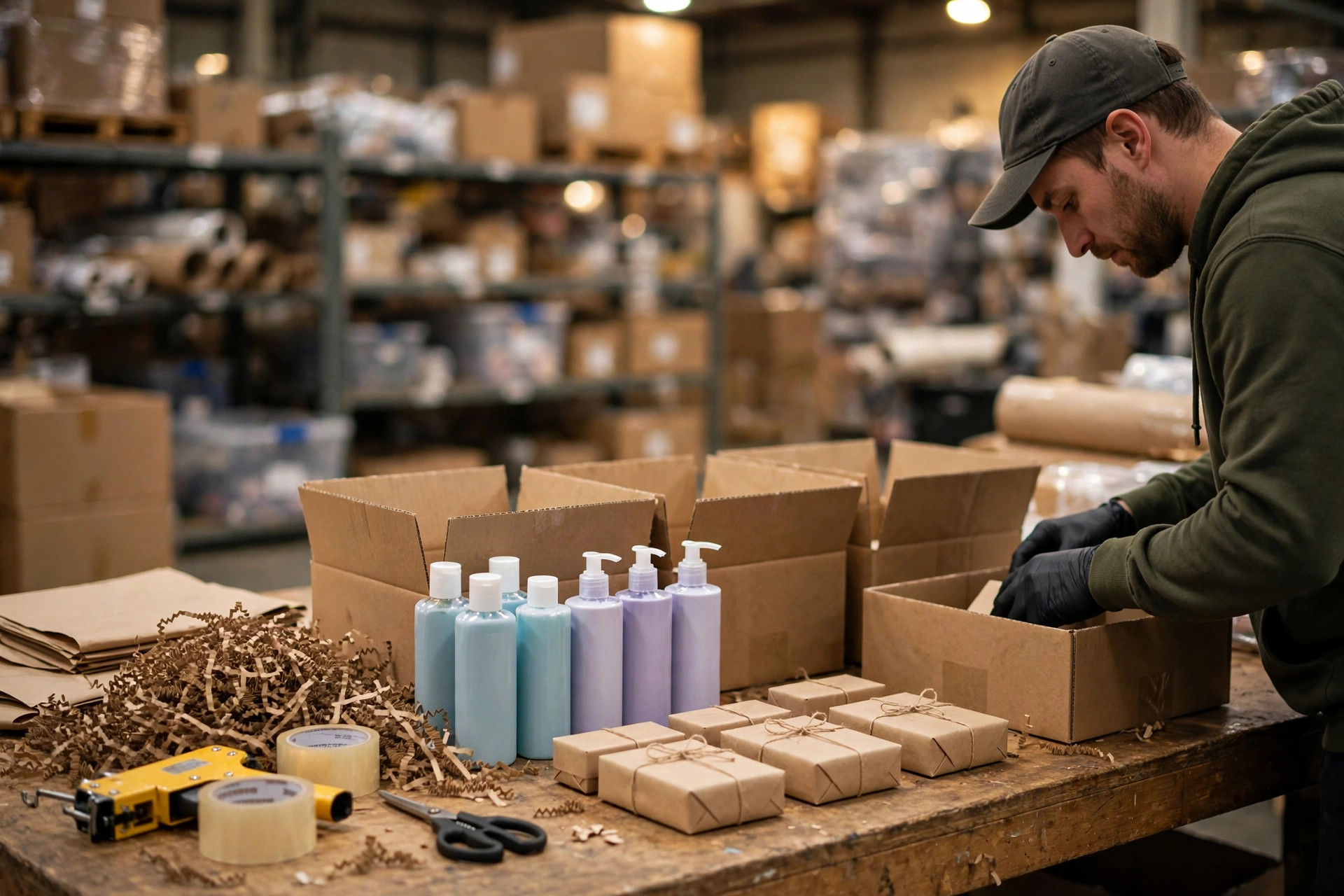
My garage started with one table. Over time I split it into three workstations: receiving, picking and packing, and outbound checking. That sounds like a big warehouse playbook, but in practice it was three tables and three zones that never stole space from each other. Receiving did only one job: open boxes, count units, and label locations. Picking held only that day's orders, never backup stock. Checking held the scale and the label printer, and every parcel was weighed, scanned, and photographed before it left.
In November 2024, during Black Friday week, that small California setup shipped 132 orders in one day. My previous record was around 60 a day. I did not hire extra hands. I moved bestsellers to the shelf closest to the packing table a week early, printed labels in advance, and kept the product with the highest return rate in its own zone. When the flow is right, you do not need more people. You need fewer mistakes. That day I mis-shipped only one order, and it was my own slip on a color variant.
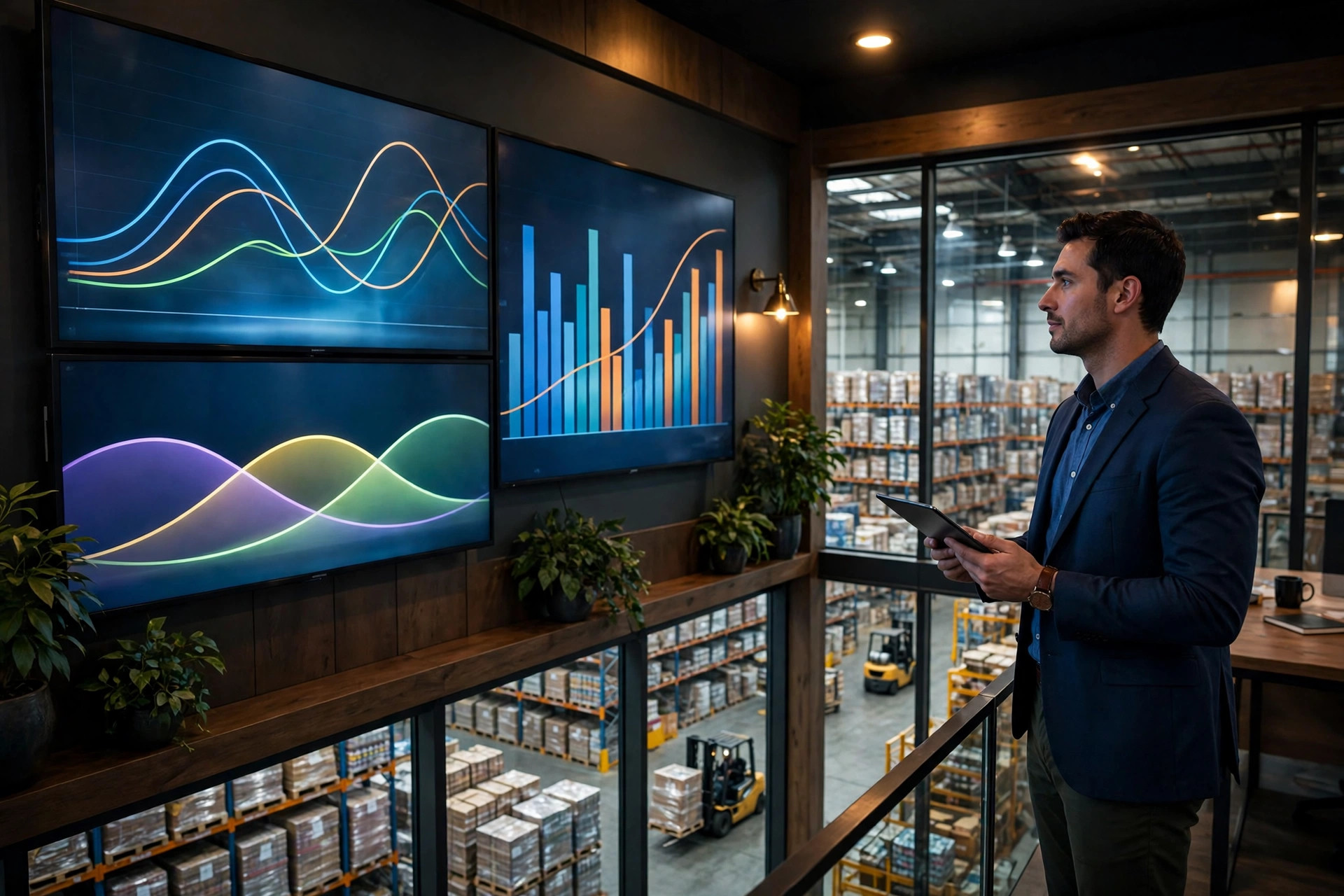
Inventory planning at my size is deliberately boring. I take sales from the past 30 days and multiply by a factor: 1.5 in normal weeks, 2.2 before a big promotion. That tells me how much to reorder. I keep about 45 days of cover for regular products, 60 days for bestsellers, and no more than 20 days for test products. If a test product does not sell, I clear it. Holding on to it feels loyal. Paying rent on it is not.
Packing, Shipping, and Returns: The Three Jobs I Check Every Day
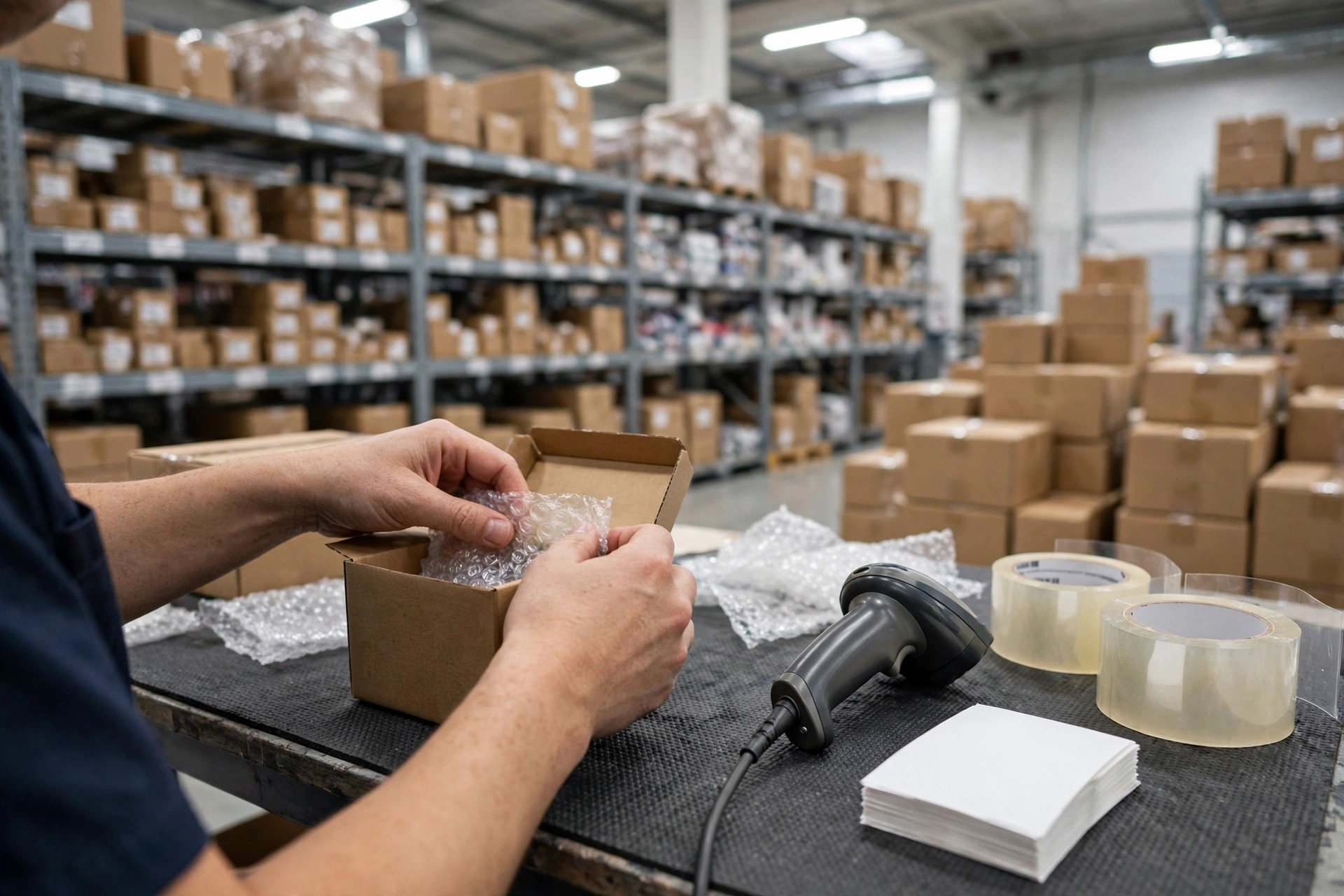
My shipping routine is written on the wall in five steps: receive the order, pick, check, weigh, label and dispatch. Every step gets a tick, even when I am the only person doing all five. The checking step is the one you must never skip. In March 2025, I shipped four orders with the wrong color because two variants looked almost identical. Four returns, two-way shipping, and repacking cost me nearly twice the profit on each of those orders. Since then, similar-looking variants live on different shelves, and checking means scanning plus looking at the actual item. Two checks, not one.
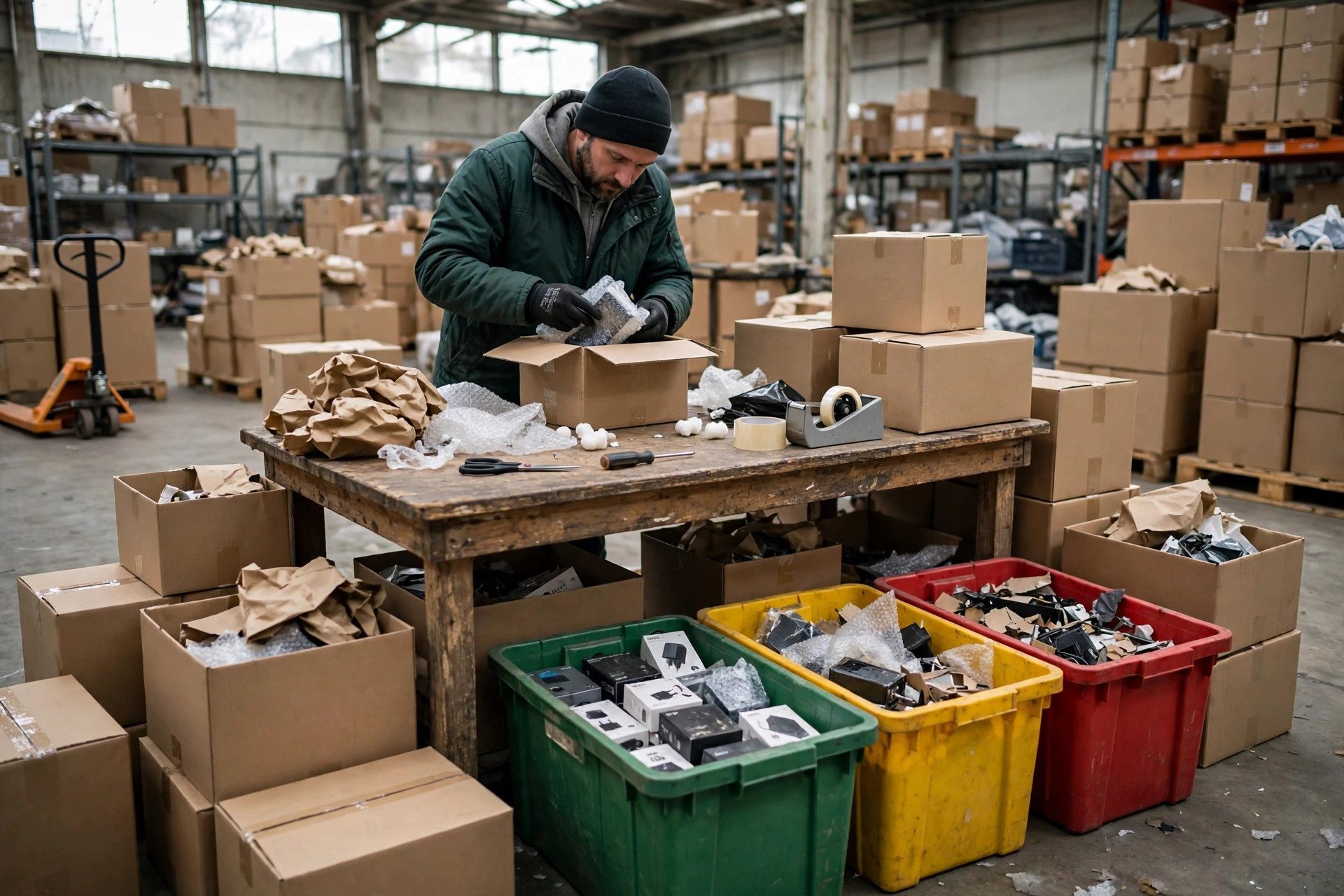
Returns are the cost small brands underestimate most, and in d2c fulfillment warehouse operations they are the easiest cost to leave out of the budget. Mine go into three piles: resellable, needs repair or new packaging, and scrap. Resellable items go back on sale within 24 hours, not after a week sitting in a returns corner. I tally return reasons every week, and the top reason is almost never product quality. It is customers ordering the wrong size or color. Once I put a clear size chart and true-color photos at the top of the product page, my return rate fell from around one in five orders to just over one in ten. That one page change beat every packaging upgrade I tried.
| Cost item | How I calculate it | Where the saving actually comes from |
|---|---|---|
| Packaging | Measured per order, not estimated from a supplier quote | Stock only three box sizes; every extra size is waste |
| Labor | Packing minutes per order, converted to cost | A smooth layout saves two minutes per order, and that adds up |
| Shipping | Check the carrier's latest policy; weigh every parcel | One overweight parcel can eat the whole margin |
| Returns | Return rate times round-trip cost | A clear size page cuts returns faster than any new box |
| Storage | Cost per pallet space per month | Clear slow stock after 60 days instead of renewing rent |
I update that table every month. Cost per order is not a one-time calculation. Packaging prices move, carrier rules change — always check the carrier's latest policy — and return rates drift. My rule is simple: if fulfillment cost per order passes twenty percent of the selling price, I do not scale that product. I fix the price or the packaging first, then talk about growth.
Five Mistakes That Break a Small Self-Fulfillment Warehouse
First, renting a big warehouse too early. Before you reach about a hundred orders a day, rent and management overhead will drag you down. My path was garage, then a shared small space, then my own small space. Each move was forced by volume, not by imagination.
Second, buying software that is too big for your order count. Many small brands buy a full system when they ship a few dozen orders a day, and then the system is busier than the staff. I still run on a spreadsheet plus a barcode scanner, and that is enough until roughly two hundred orders a day. Tools should match volume, not the other way around.
Third, choosing packaging for looks instead of strength. A pretty box gets thrown away after one opening, but one crushed parcel in transit costs ten times the box. My test is blunt: it must survive a one-meter drop and light rain. Strong first, pretty second.
Fourth, leaving returns without an owner. Unprocessed returns are money rotting in a corner. My rule is that returns never sleep overnight unprocessed. By the next day they are sorted, relisted, or cleared.
Fifth, trying to do everything yourself. Packing, customer service, photos, and social posts all in one person works until volume jumps, and then you are the first thing that breaks. Once I passed a hundred orders a day, I handed packing to one fixed helper and kept checking and inventory planning for myself. Dividing work is not a big-company luxury. It is how a small brand survives.
Self-fulfillment is not about square footage. Good d2c fulfillment warehouse operations are about control: knowing where stock sits, what has shipped, and what to do when something comes back. That control is what keeps a small brand alive. Get the warehouse small, the numbers clear, and the routine written down — then scale. This approach worked for me, order by order, and it is still how I run the warehouse today.
By Ah K, E-commerce Seller (5 yrs)