Let me tell you something. After fifteen years behind the wheel, the thing I fear most isn't a long haul — it's a road that disappears. Years back I was hauling bananas in Yunnan when a landslide buried the highway. The convoy sat for three days in 38-degree heat, and I can still smell those bananas cooking in the trailer. So when the 7.4-magnitude earthquake hit Colombia in August 2026 and cut the main corridor to Buenaventura, I wasn't surprised at all. Same script, just a few hundred times bigger — and this time it was Colombia coffee export warehouse logistics taking the hit.
The beans were fine. The 2026 harvest was forecast at 13.4 million bags (60 kilos a bag), up 7.2% on the year before — a bumper crop. But beans that can't move are just expensive decorations. The head of Colombia's coffee exporters' association put it bluntly: coffee export operations were effectively paralysed (statement reported by splash247). So today I'm going to walk you through the whole chain — farm to ship — do the math on what a dead corridor costs, and give you the three moves I'd make if I were in this business.
Four Stops From Farm to Ship: the Colombia Coffee Export Warehouse Chain
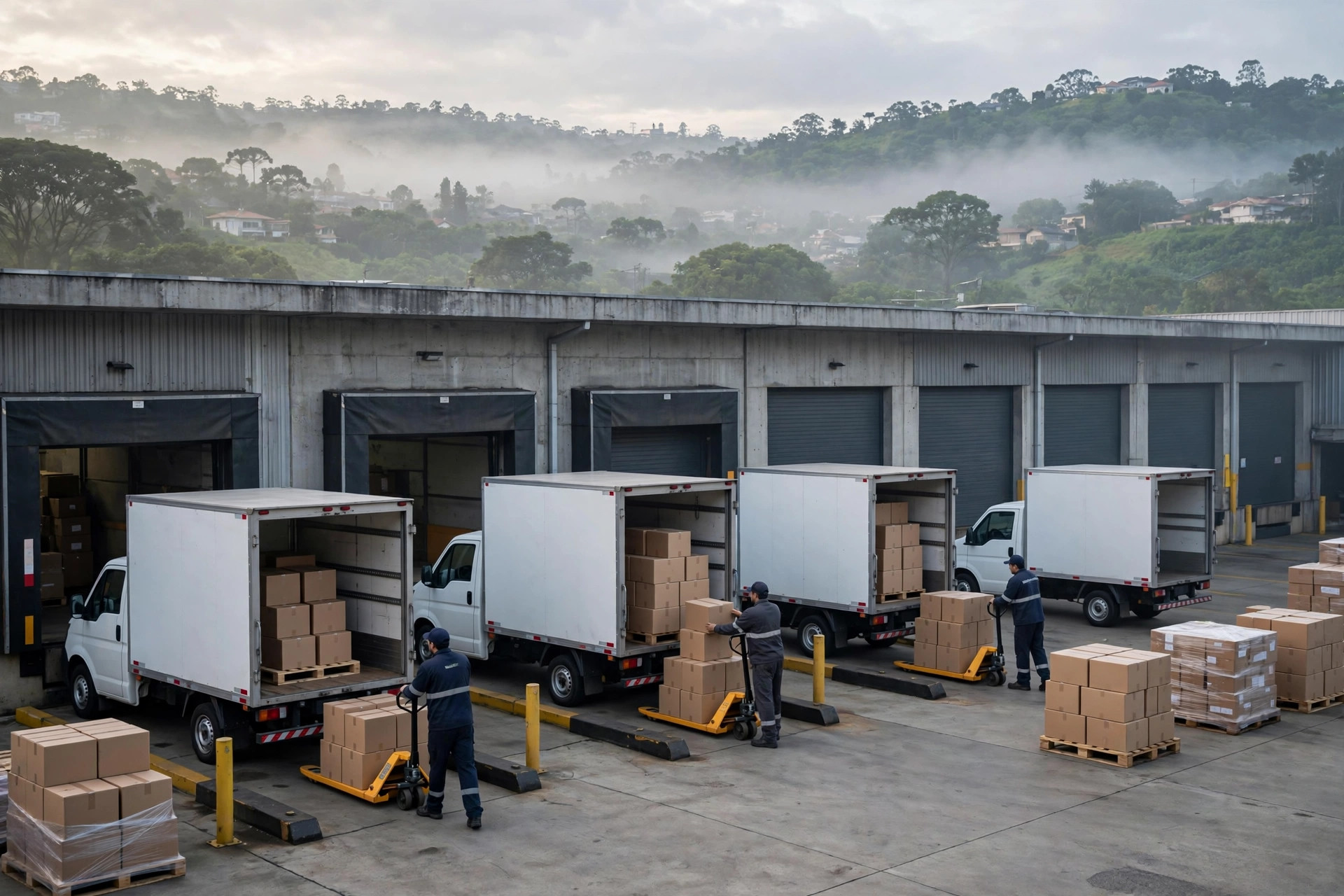
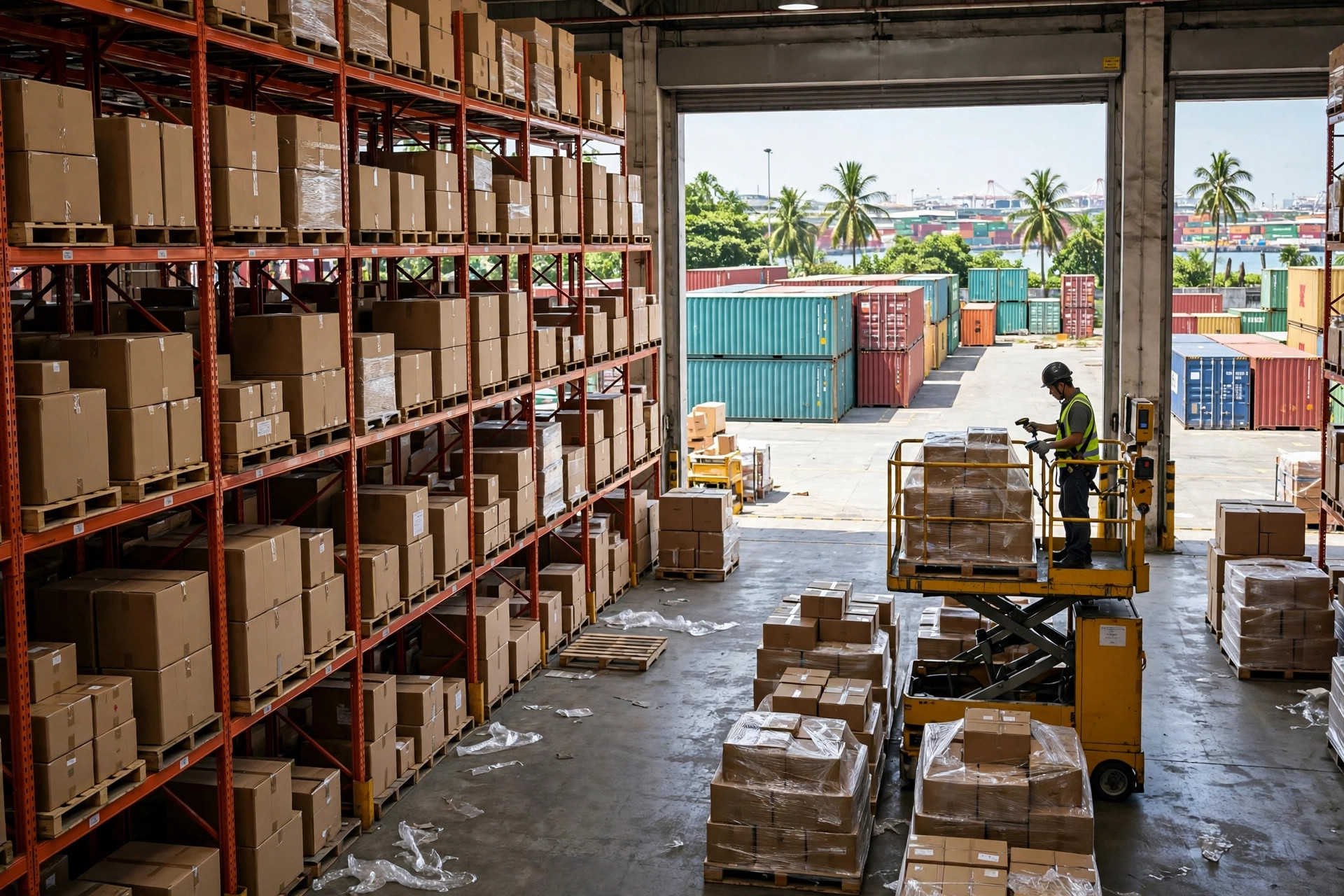
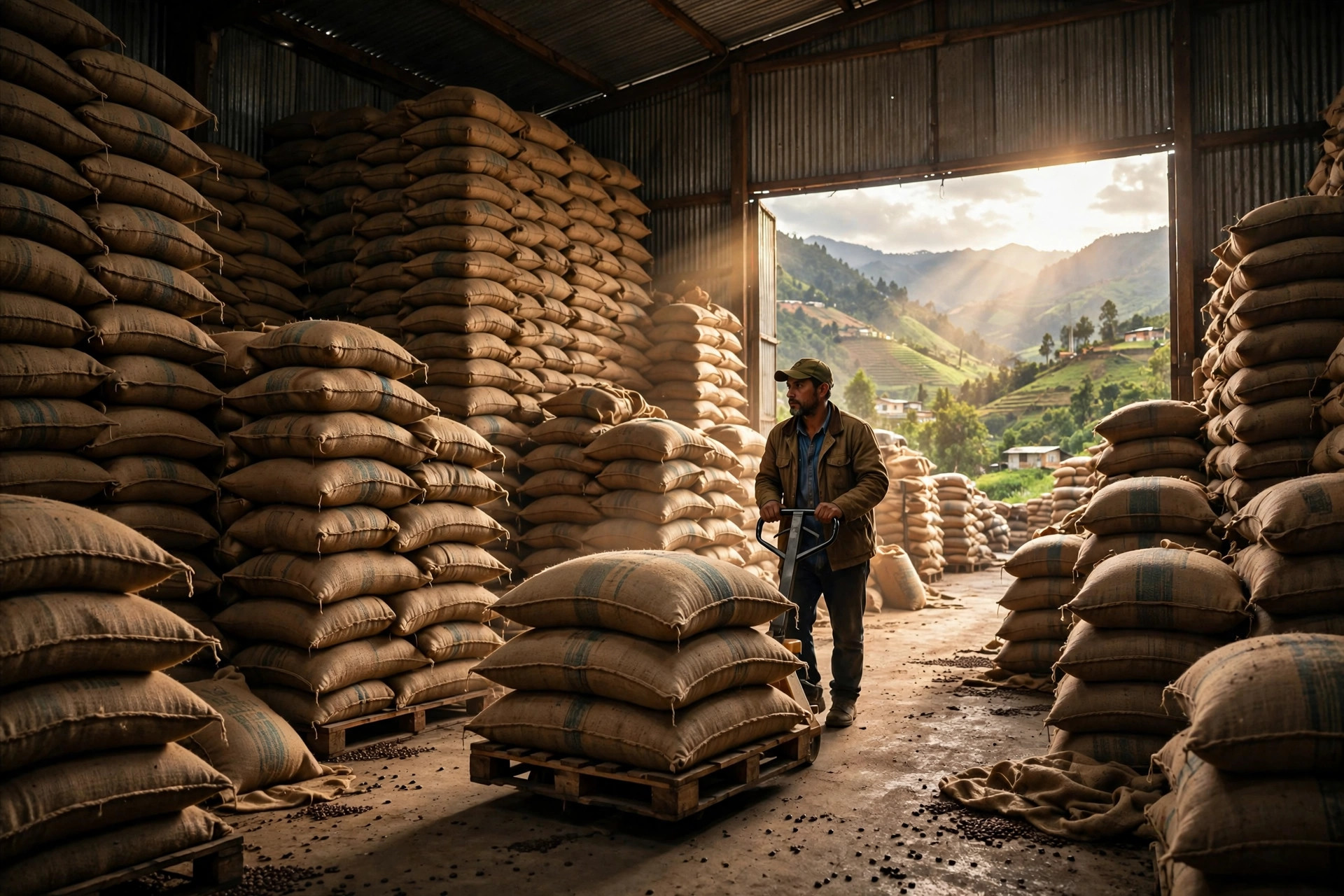
Here's how the Colombia coffee export warehouse chain actually works. Beans come down from small mountain farms to origin collection warehouses first — weighing, grading, bulking. Then they go to the hulling mills, the trilladoras, which strip off that papery parchment layer and leave export-grade green coffee. After hulling, the beans are packed into 60-kilo burlap sacks and trucked to the exporter's warehouse for consolidation and stuffing into containers.
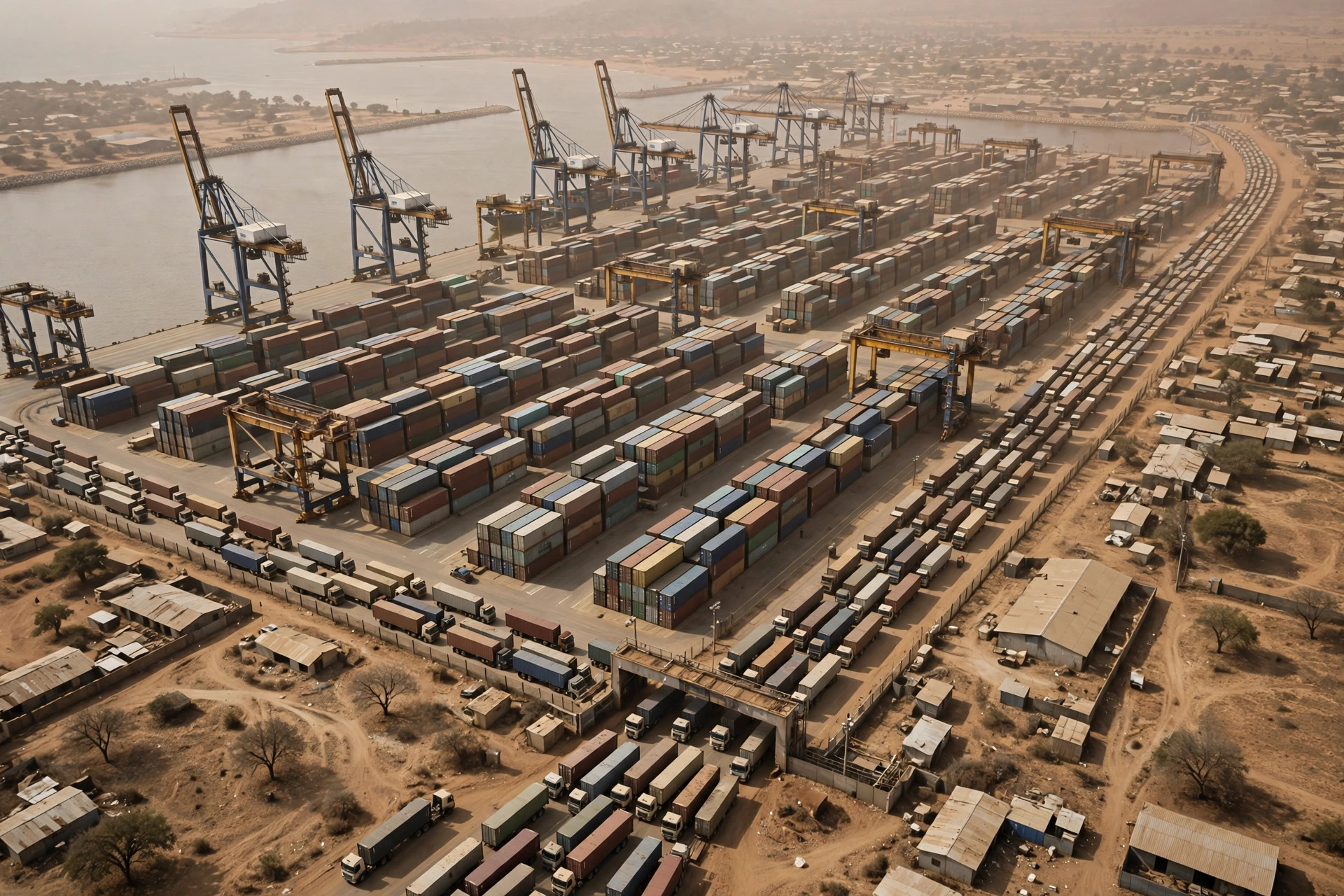
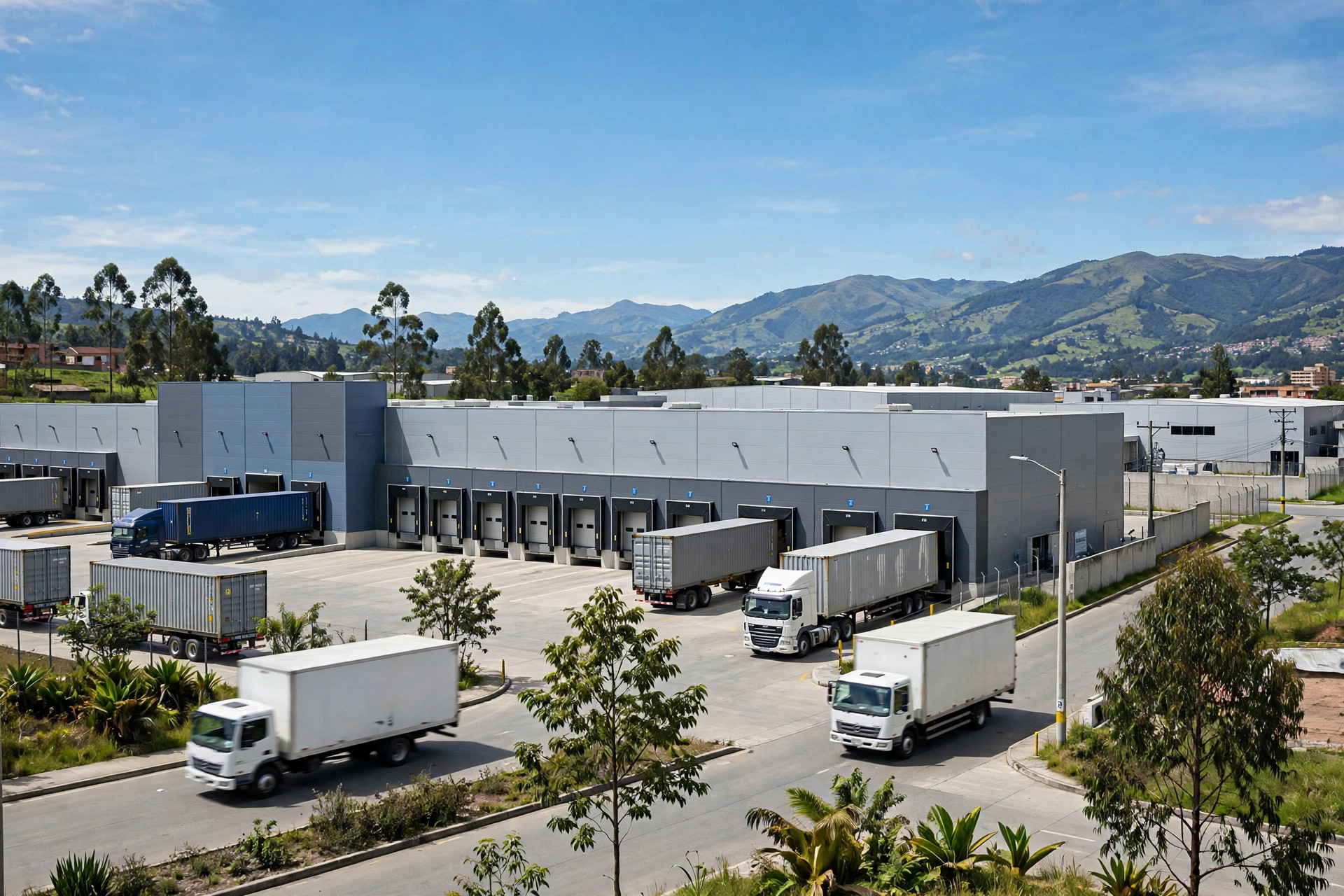
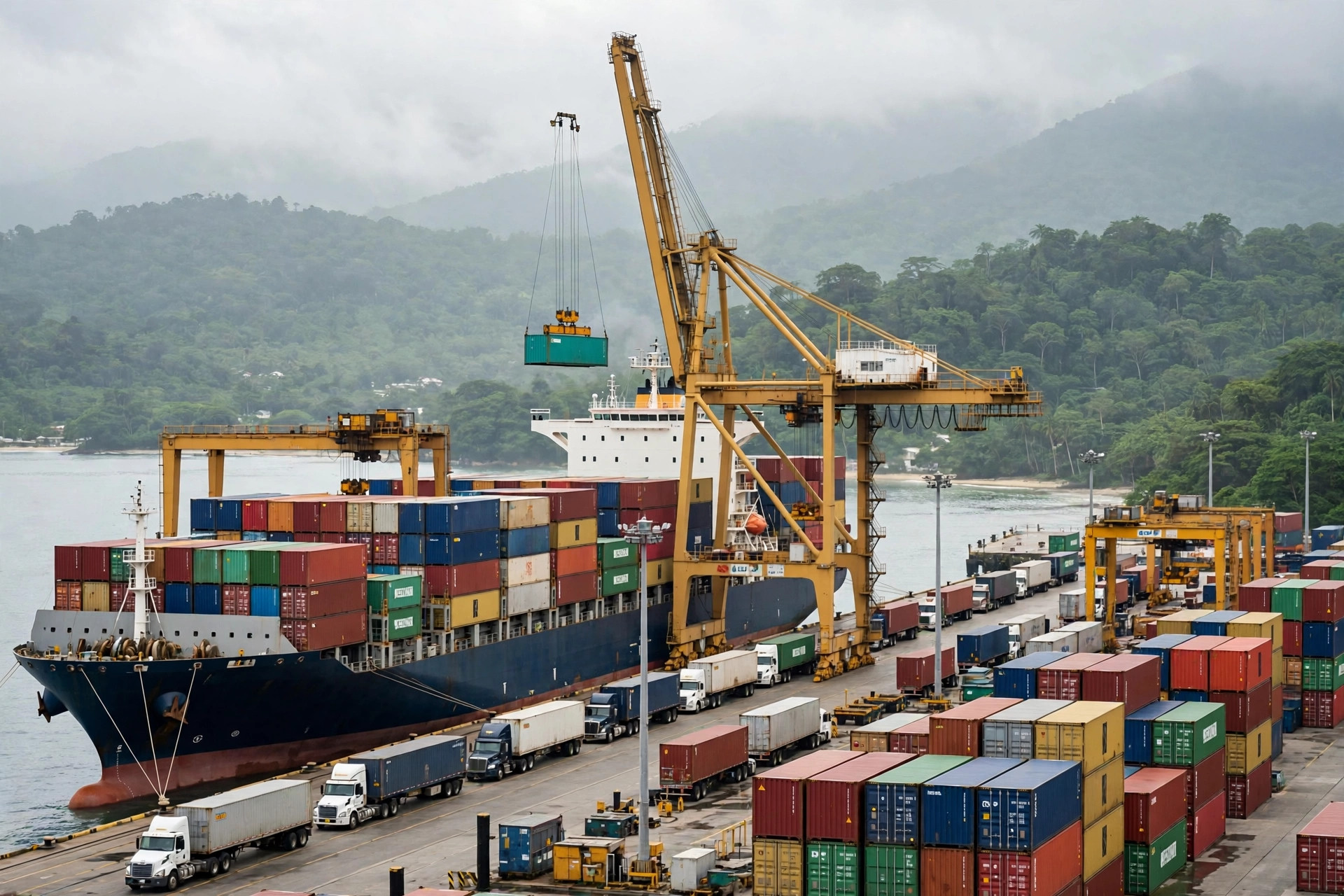
The last leg is the long road haul to the Pacific port of Buenaventura. And this is where a trucker's instincts start screaming: 60 to 70 percent of Colombia's coffee exports move through Buenaventura, about a million bags in an average month. Two-thirds of the country's coffee export business rides on one road.
Any long-haul driver looks at that layout and gets nervous. One corridor carrying seventy percent of the volume is efficient on a good day and a catastrophe on a bad one. There's also a working detail most desk analysts miss: origin collection warehouses run on tight receiving windows — you queue at the scale house in the morning, miss your slot and you wait for the next wave, and when the mountain roads turn to soup in the rainy season, trucks don't arrive at all. The warehouse is just a waystation. The road is the real business.
When the Corridor Dies: a Stress Test for Colombia Coffee Export Warehouse Logistics
The August 2026 quake proved the point. Corridor cut, port operations suspended, and the exporters' association reported more than 30,000 bags stranded every single day — roughly 2,000 tonnes (association figures, via splash247). Do the arithmetic with me: a million bags a month averages out to a bit over 30,000 bags a day. The earthquake didn't choke off "some of the cargo." It froze an entire month's shipping rhythm. Ten days of disruption and you've got 300,000 bags sitting still on paper — about thirty percent of a month's exports, going nowhere.
The timing made it worse. A forecast of 13.4 million bags, up 7.2%, should have been a money-printing year for exporters. Instead the beans piled up in collection warehouses and hulling mills while ships waited offshore and the road between them stayed shut. Here's the counterintuitive heart of Colombia coffee export warehouse logistics: the biggest risk in coffee exporting isn't running out of beans — it's having beans, having buyers, and having no way to connect the two. Coffee is a dry good. Unlike fruit, it doesn't rot in a few days, so nobody budgets for corridor risk. But when the corridor dies, that "it keeps fine" quality turns into a slow bleed — the cargo sits quietly in the warehouse, and your working capital sits quietly with it, burning a little more every day.
The big traders started hunting for a way out almost immediately. Sucafina, the coffee trader, put out a notice saying it was evaluating alternate routes. The backup ports named in public were Cartagena and Santa Marta, over on the Caribbean side. The instinct is right, but let me be honest with you: scrambling for an alternate port after the fact is expensive. Spot space has to be found, bookings and documents have to be reworked, the inland haul gets a lot longer — everything you didn't negotiate in advance becomes a surcharge on the day.
What This Really Means: the Corridor Is the Warehouse
Fifteen years of trucking boils the real lesson of Colombia coffee export warehouse logistics down to one sentence: for a coffee exporter, the real "warehouse" isn't the collection sheds — it's the corridor. Everyone in the chain watches inventory, hulling quality, vessel schedules. Nobody budgets for the road or rehearses what happens when it's gone. The road stays quiet until the day it speaks, and then it's the only thing that matters.
So here are three practical moves for anyone in this trade — or in any farm-export business with the same shape. All of them can start tomorrow:
First, size your buffer stock for a two-week corridor outage, not for a normal sailing schedule. Coffee is a dry good; sitting on it for two weeks costs you working capital, not the cargo. Keep a permanent "corridor-outage buffer" in your origin warehouses — it looks like wasted space and tied-up money on a normal day, and it's a lifeline on a bad one. My rule of thumb: take your average monthly volume, knock off thirty percent, multiply by two weeks. That's your starting buffer. Sounds like a lot until you remember August 2026 cost the trade 30,000-plus bags a day of standing still.
Second, negotiate your backup-port capacity before you need it. Cartagena and Santa Marta are further away and pricier on a normal day — but you're not buying cheap, you're buying the ability to switch within 48 hours when things go wrong. Have the hard conversation with your forwarder now: normal flow through Buenaventura, emergency space and re-documentation procedures at the backup ports agreed in advance and written into the relationship. Hunting for space on the day of the crisis means paying whatever price and sailing date the market hands you.
Third, when you pick a collection warehouse, don't just look at how close it is to the farms. Proximity saves you short-haul money on good days. But when the main corridor dies, what matters is how close your warehouse sits to an alternate route. Ask one extra question during site selection: besides the road to Buenaventura, can trucks here conveniently swing another direction? A warehouse with an escape route costs a bit more in normal times and pays for itself many times over when it counts.
And here's the three-option playbook for the next corridor shutdown. Pin it on the office wall:
| Option | What you do | What it costs | Who it's for |
|---|---|---|---|
| Wait | Hold cargo at origin warehouses until the corridor reopens | Tied-up capital, possible missed sailings and sales windows | Short, clearly-defined outages; cargo with flexible schedules |
| Reroute | Switch to a backup port (Cartagena/Santa Marta), rebook and re-document | Longer inland haul, re-documentation costs, needs pre-negotiated space | Shippers with a backup-port plan and high-value, time-sensitive cargo |
| Split | Hold some, reroute some | Management overhead on both tracks | Large volumes with mixed sailing deadlines across batches |
There's no textbook answer in that table. Only the prepared get to choose. In August 2026, Colombia coffee export warehouse logistics paid a steep tuition: 30,000-plus bags standing still, every single day. An old driver's saying: check the sky before you leave, check the road before you roll. Exporting works the same way — never bet the whole business on one road.
Do one thing this week: call your forwarder and ask — if Buenaventura goes down again, can our boxes shift to Cartagena within 48 hours? If they can't answer, find one who can.
By Shifu Zhao, Trucking Veteran (15 yrs)